Sunday, January 17, 2016

Ride Along 2 (2016) Review:

For the original Ride Along (2014), it was by no means a buddy cop movie that broke any rules or boundaries. It was mostly a standard affair of the usual buddy cop genre clichés that occasionally threw something new into the mix. One of the biggest differences for this feature among other cop comedies was the pair of main leads. Putting tough guy Ice Cube and comic short stack Kevin Hart together wasn't a bad idea at all. Even with the number of problems the picture had, Cube and Hart were able to make the watch a tolerable experience. Of course because this was probably one of the big reasons as to why that movie did well, Universal Studios green lit this sequel. And like other sequels that come after their originals, their lack of attention begins to show. There's nothing wrong with hiring the majority of the same crew to film a sequel but they have to know how to develop the story and not just run on auto-pilot; rehashing everything from the first entry. Sadly this is practically what occurs here.

Hart, Cube and Munn
Directed by Tim Story and written by duo Phil Hay / Matt Manfredi again, you would think there'd be some kind of change in where the narrative went. Not really. One of the biggest topics that is consistently brought up during this movie is the matter of "focus". The script to this sequel struggles to have that focus. Even with everything James (Ice Cube) and Ben (Kevin Hart) went through in Ride Along (2014), Ben is still not an official detective. After making their latest bust, James discovers that the drugs coming into where he lives is being delivered from Miami. With Ben's wedding is a few days away, James takes Ben on another "ride along" in hopes of having his sister realize she loves a fool. The premise is more or less the same concept except this time, the surrounding circumstances are altered slightly. Going back to what was mentioned earlier, the writers and director just seemed to be on auto-pilot for this project. Hardly any of it feels different from before.

Ice Cube and Kevin Hart still have a bit of chemistry together on screen but it now really depends on whether the viewer is interested in seeing familiar slapstick. Hart is loud and Cube fumes out the ears or stares in confusion. There are a couple of good quips each lead has but the comedy is more hit and miss now. There's also a new addition of supporting characters, which belong to Olivia Munn as Maya, a Miami cop and Ken Jeong as A.J., the main suspect who has a connection to the crimes. Although Munn doesn't have very much dialog that develops her character, she too gets a few good scenes in. Ken Jeong is alright in his role but he can get a bit annoying for those who already aren't fond of Kevin Hart's character. Jeong's role just adds to it. Playing the villain, Antonio Pope, is Benjamin Bratt, who downright nails the "bad guy" voice and look but fails to have any development written for him. This makes him even less of a threat than Laurence Fishburne from Ride Along (2014).

There are few other faces to be seen as well. Tika Sumpter playing Angela (Ben's soon-to-be wife) returns since she’s more or less a plot device than anything else. Carlos Gomez (from Desperado (1995)) plays the Miami captain of the force and it certainly was a surprise to see him. It's been a while. Lastly, Michael Rose plays a henchman of Pope. The only reason why I mention Rose is because for a while he looked like Robert John Burke. It's kind of an eerie resemblance. The action sequences are adequately staged and some parts of those are different when it came to using vehicles and such. The special effects were okay too except for one scene, which dealt with Ben relating an action sequence to a video game. This time, instead of Ben just stating to pretend it's a video game, the scene literally turns into one and its transition is jarring. It's somewhat inventive but at the same time, the visual downgrade makes it look like the crew was just trying to save money.

"Come with me,....I make this sequel so much betterrrr"
The cinematography has changed hands for this feature. Originally for Ride Along (2014), the director of photography was Larry Blandford who had some very uninteresting shots. In Ride Along (2014), much of the situations involved were inside buildings with dull colors. Here, Mitchell Amundsen takes over and it looks a ton better. The setting is in Miami, so there better be some wide scope shots of scenery. Even for the inside of buildings, the structural designs were much more elaborate giving viewers at least something to look at. Amundsen also worked on Transformers (2007) and G.I. Joe: The Rise of Cobra (2009). Lastly, the film score was once again produced by Tim Story collaborator Christopher Lennertz. Strangely enough Lennertz does not reuse his main theme from the original movie but at least keeps the same tone of his cues. A franchise like this should have a main theme to fall back on though. That would've made it somewhat more memorable.


Ride Along (2014) wasn't a great buddy cop movie but it did feel different. This sequel just re-does almost everything except the mission is different. Ice Cube and Kevin Hart still have likable chemistry and the cinematography has improved but much of the antics and formula are very much the same; making this feel too similar for its own good.

Points Earned --> 5:10

Friday, January 15, 2016

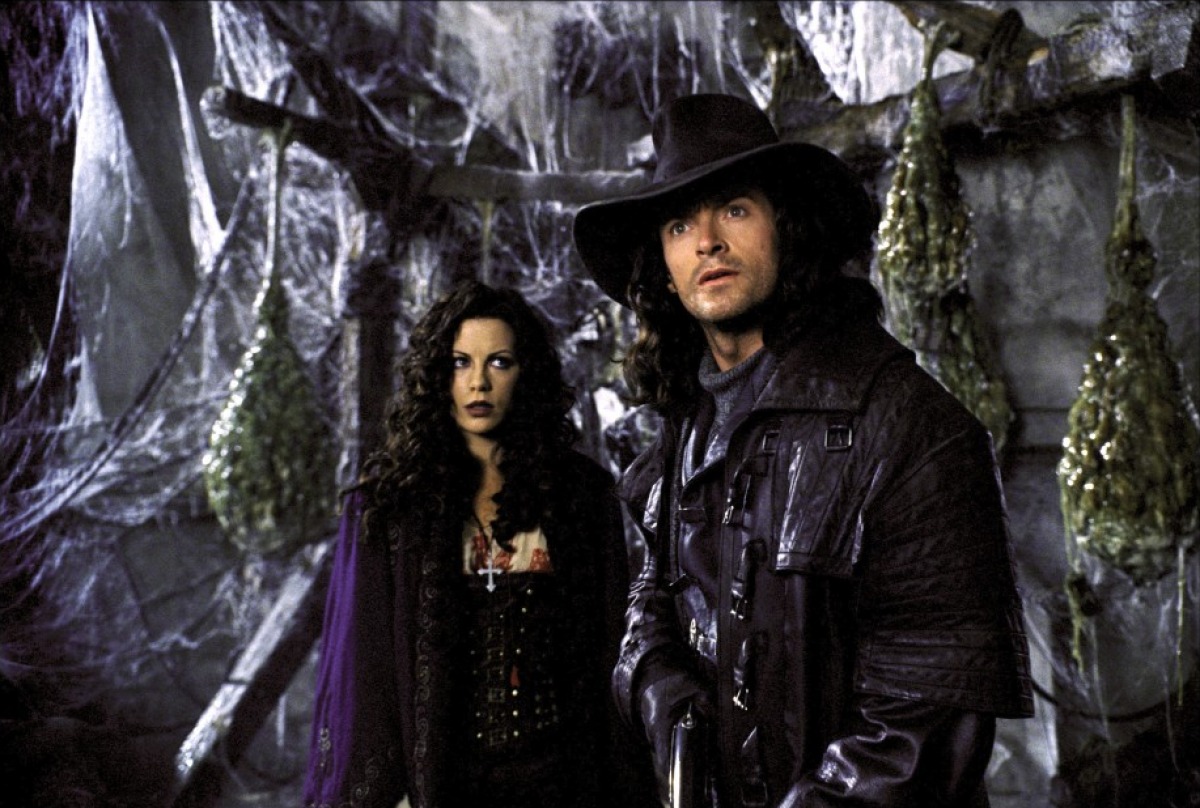
Van Helsing (2004) Review:

Hugh Jackman has had his fair share of films people always enjoy. The Prestige (2006) and Prisoners (2013) are of a couple that Jackman is well respected for. With this, Jackman has had a steady career of being cast in various films. By far the one everyone will remember him for though is his portrayal of Logan AKA Wolverine from X-Men (2000) and the numerous sequels and spin-offs that came after. There have only been a handful of features that Jackman probably thinks people shouldn't bother seeing. By now one of his highest choices would probably be Movie 43 (2013), which received extremely negative reviews. Before this though, Jackman was in another film that isn't exactly high end either. For that case it belongs to this film, an action fantasy movie that is cluttered with several things that make it a bore to sit through. It isn't the absolute worst but it gets very tiresome over time. There just needed to be less of what was present and perhaps it might've felt smoother.

"Come on man, this wasn't that bad a film"
Picking up where the animated prequel left off after chasing Mr. Hyde, Gabriel Van Helsing (Hugh Jackman) is assigned to go after Count Dracula (Richard Roxburgh) who’s after an ancient family bloodline lead by Anna Valerious (Kate Beckinsale). Turns out Drac wants the secret of life created in Frankenstein's monster (Shuler Hensley). After the financial success of The Mummy Returns (2001), Stephen Sommers came back for this project as the writer/director. This is probably where most of the problem lies. After the waves he made with his mummy franchise, Sommers just went on auto pilot, making action fantasy spectacles that became less and less engaging. Looking back I know my review to G.I. Joe: The Rise of Cobra (2009) needs a re-adjustment because after watching this, the same tropes are fairly much the same in there too. All the plots to the writing (whether main or sub) contain numerous genre clichés that are tired and simply uninteresting.

Before the leads even physically meet it is foreshadowed that Van Helsing will fall for Anna. That's no spoiler, it's plainly obvious. Even the plot itself is overused. Why must every movie that involves Frankenstein's monster have it be "the key" to whatever the villain is planning? There's also unexplained mythology about several parts to the plot. Dracula’s weakness and Van Helsing's backstory largely are just hinted at. Other than that there's no in-depth look; so why even bother? Another problem is pacing. This movie is over 2 hours long and felt painfully slow, as if there wasn't even a script to begin with. Plus, the plot dealing with Frankenstein's monster isn't introduced until around the halfway point. I, Frankenstein (2014) had the same overall plot, was a half an hour shorter and managed to make the viewing experience feel somewhat more enjoyable because of its trimmed running time. Here it just feels like a slow treck through action scene after action scene.

The last issue to this creature feature is the cast. Jackman and Beckinsale are probably the only two who play it straight. Jackman was the better half more because he has better quips for certain situations. Other than these two people, every other actor is hammy beyond belief. It's one thing if a single actor hams it up more than everyone else, but when the whole cast is being over the top, it just feels overly dramatic and in the most silliest of ways. Carl (David Wenham), Van Helsing's assistant is nothing more than a sidekick. Will Kemp is useless as Anna's brother. Kevin J. O'Connor as Igor (who looks like he has John Hurt's makeup from The Elephant Man (1980)) is wasted because it's shown he has opinions,...but that’s ignored. Shuler Hensley as Frankenstein's monster is cool looking but does a lot of screaming. The same goes for Richard Roxburgh as Dracula. He by far chews the most scenery; MORE than Richard Grant from Rocky V (1990). It's ridiculous.

Richard Roxburgh....
These are the positives to the film and they do make the viewing better but still not decent enough. Robbe Coltrane voicing Mr. Hyde was nice hearing again. The action, although too abundant, was mostly entertaining. Even though by today's standards compared to 2004, even the CGI looked fairly good. This goes for the action sequences or the slower moving shots. The cinematography shot by Allen Daviau looks adequate too. Daviau was also the DP for E.T. the Extra-Terrestrial (1982), Twilight Zone: The Movie (1983) and Empire of the Sun (1987). Composing the film score to this action fantasy movie was Alan Silvestri. Turns out for this score, Silvestri does not stick to his usual sound. Here he incorporates some synth into his motifs. He also arranged multiple themes for various characters and scene locations. Now if only his full score would be released, that'd be nice. If you can ignore all the bad things mentioned before you might enjoy this movie.

Action junkies and Hugh Jackman fans would probably get the most benefit from this film. It isn't terrible but it has enough issues, with its painful pacing, overzealous actors and foggy writing. The action, music and visuals are good but that's what most Stephen Sommers' films have in them. It's rather boring at times.

Points Earned --> 5:10

Friday, January 8, 2016

Update,...doing something new!

Hi there viewers!

For any of you who have enjoyed my written works on this blog and would like to see me do more reviews in person and on more movies click the link below and subscribe to my channel.

Right now there's only my channel intro but things are being developed and will be posted soon. Stay tuned to see more =)

PS ***this blog isn't going away either***

The Nitpick Film Critic's Channel!

Tuesday, January 5, 2016

Night of the Living Dead (1990) Review:

Remakes and reboots by far are one of the most despised and looked down upon ideas and concepts that many film goers and critics a like do not enjoy sitting through. Whether it's because Hollywood is trying to cash in on people's nostalgia or running out of ideas, nobody really favors their beloved pieces being redone. Another problem most fans have with these plans is that the people who make these decisions have no understanding of what made the original so beloved. Then they hire a group of people who have no knowledge either, it just insults many viewers' intelligence. But there have been occasions where the exact opposite happens. Take this project for example. To this day, director George A. Romero is best known for his feature film debut with Night of the Living Dead (1968). Being the first of his "dead" franchise, it was quite the groundbreaker. It reinvented horror for filmgoers at the time and had interesting characters to follow and sympathize with; a classic. Why would anyone remake it? Apparently Romero thought it could use an update.

Tony Todd & Patricia Tallman
The majority of the plot itself, written only by Romero, remains largely unchanged. Groups of people end up crossing paths at an abandoned house after they are driven away by cannibalistic dead people known as zombies. The characters involved are also the same. The leads Ben (Tony Todd) and Barbara (Patricia Tallman) work together to defend themselves in the home. They also meet couple Tom (William Butler), Judy Rose (Katie Finneran) and the Cooper family headed by Harry (Tom Towles) who wants nothing but to hide in the basement. Bill Moseley best known at the time for playing "Chop-Top" Sawyer from The Texas Chain Saw Massacre 2 (1986) even has a small role as Barbara's brother. Aside from these similarities, Romero does pen in some new ideas and changes up several events. One of the new ideas thrown in is Barbara being a strong female lead. Unlike her 1968 counterpart, Barbara takes charge and even questions as to why staying in the house is good idea if you can just walk past a zombie quick enough. All valid points.

Having a strong female lead in a horror movie was not a new thing by the 1990s, but for Romero's remake it was. Tony Todd as Ben plays it up well as the no nonsense type and isn't willing to play games. Even William Butler plays an empathetic character. Lastly, Tom Towles as Harry Cooper plays his role well as the antagonist of the group looking not to fight back. The characters are developed enough as well to where if an individual makes a mistake, the consequence is tough to accept. What's also appreciated is how first timer Tom Savini (who normally does special effects) directed the film. Savini takes Romero's script and helps bring the changes to certain events with ease making the execution almost feel like an alternate reality if things were to happen in a different way. However the film does suffer from its issues. A blatant problem is some of its continuity for unexplained reasons. There are certain things that happen to some characters that don't get an explanation to what exactly happened.

The overall effects to this remake look great too. Everett Burrell served as the special makeup effects supervisor to this project and as a stand-in for Savini, it's fairly decent. Before this Burrell also worked on well-regarded films like Re-Animator (1985), Aliens (1986) and Glory (1989); all of which had a significant amount blood squibs and dismemberment. The zombie designs in this creature feature are much more grotesque than before and that's good. However it's not even the kills in this movie that make this a zombie film, but more of the all the ways a zombie can be displayed. Here there are some severely gnarled up zombies that are quite comical to look at because of their persistence no matter how banged up they are. For a normal horror fan, the shock and scare value aren't much to be seen but there is enough tension buildup to make the viewer wonder “how are these people going to survive?”. The solution may seem trivial but from the past three "dead" films, in greater numbers, zombies aren't easy to fend off.

"Well,....can I have some help?"
It is surprising to know that the MPAA gave the original cut an X rating and required certain scenes to be cut. After all the gory films that appeared during the 1980s, it's amazing Romero's still received the deadliest of all ratings. There were other infamous films far worse than his were. Frank Prinzi was hired as the director of photography for this remake. Since the 1960s many filmmakers moved to color and seeing a retelling of the classic story in a different color tone is a nice touch. Prinzi keeps the scenes well lit even for night and keeps the camera focused as well. The musical score was a disappointment however. The composition was scored by Paul McCollough and looking at his prior work, it's rather unimpressive. The score is entirely made up of synthesizers and rarely does it work. With no main theme this remake feels like it has no identity. A signature tune somewhere would've helped but instead the listening experience is just garbled mess of sporadic tones. It could've been worse though considering it's a remake.

It's music feels largely uninspired and the script does suffer from continuity errors. But for a remake (which many do not support) it's rather decent. The updated script changes, the added color visuals and overall situation is enough to keep the audience engaged for the hour and a half.

Points Earned --> 7:10

Sunday, January 3, 2016

The Man from U.N.C.L.E. (2015) Review:

Although during the mid 1900s filmmakers were beginning to expand their range of experimentation in their projects, things were still very separate. Many genres during the time stuck within their boundaries. If you made a drama, it stuck to the highlights of personal conflict. If it was a sci-fi film, it focused more on the futuristic aspects of it. The same went for action, horror and comedy films respectively. As the 1980s rolled around, genres began mixing even more. One of the more popular hybrids of the time was the buddy cop genre, which was the fusion of the action and comedy. Now when it comes to adding in another genre to the recipe, that can get tricky. Depending on who's writing, trying to find an even blend for more than one category is not easy. The idea is to produce a product that appeals to each fan of the particular style without alienating them simultaneously. For director Guy Ritchie, it seems that making a feature length movie to the TV show of the same name seemed like no problem considering his previous works.

"Got your tux from Brooks Brothers huh?"
Before this comedic action spy film, Guy Ritchie also directed Lock, Stock and Two Smoking Barrels (1998), Snatch (2000), which were action comedies and the Sherlock Holmes (2009) series, which were action spy films. Written by Lionel Wigram (Sherlock Holmes (2009)) and also Ritchie, this spy action comedy successfully sets out what it was made to do and that's blending all the genres evenly together. During the Cold War era, American professional thief Napoleon Solo (Henry Cavill) and Russian professional KGB spy Illya Kuryakin (Armie Hammer) are paired up under their ruling nations to try and stop a unknown organization from distributing nuclear warheads. As far as overall execution goes, most of it is straightforward. Only occasionally does the plot get muddled with information for no real reason. This happens when information is being passed between informants. In some ways it's understood that the writers are trying to make this information hard to attain but it does feel overly convoluted.

Co-starring with the two main leads are Gaby (Alicia Vikander, Ex Machina (2015)) as their main ticket of getting access to the unknown organization because her uncle Rudi (Sylvester Groth) being connected to them. Suspected of possessing the warheads is Victoria (Elizabeth Debicki, The Great Gatsby (2013)) for being related to a World War II fascist. In it's entirety, almost all main characters receive the development they require in order for the audience to understand them. Of the cast, the top three rightfully go to Cavill, Hammer and Vikander. Hammer and Cavill have great chemistry for the bickering duo that they are. What's great is not only that they don't like each other because of each other knowing their partners' background, but also for the fact that one is Russian and the other is American. Working with the enemy probably is not a job anybody wants to do. The buddy cop trope of opposite personalities exists but instead of it being shown in attire it is demonstrated through personality, which is different.

Cavill plays it cool and slick, while Hammer plays it brash and hot tempered. These are two extreme opposites yet they both get the job done and that's extraordinary. This also helps in the comedic delivery because of how well they bounce their zingers off each other. Vikander also works because of her ability to be her own character and have her own moments. That also means she doesn't need Cavill or Hammer's character to support her; she can actually manage her own. The action is nicely stylized as well. More of this element goes hand-in-hand with the spy genre where Solo and Kuryakin are required to go around as other characters. Another situation might be when the two are trying to outrun another character so that they aren't caught and their cover is blown. It's crafty business and it looks fun with the energy put on screen. The only thing that may be a bit off putting is the costume design for the finale build up. The costume designer to this production was Joanna Johnston (Hellraiser (1987) & Forrest Gump (1994)).

Alicia Vikander
For the display on screen much of the color schemes and designs look very much like Cold War era clothing. Yet when it gets closer to the finale, Hammer and Cavill dress in military suits that resemble that of The Expendables (2010). The rest is fine though. The cinematography shot by John Mathieson is brightly lit and has plenty of landscape to see whether it's urban or rural terrain. The musical score provided by composer Daniel Pemberton is interesting too. Although he doesn't have a main theme for the franchise itself, he does give separate themes for the characters. An example would be Kuryakin where every time he gets angry. But even this, Pemberton also creates a score very close to that of what someone would hear from the era. It's psychedelic and also relaxing to listen to. Pemberton also includes drums and timpani for various action cues although they are a not as memorable as the other tracks mentioned before. However, this is largely a solid effort that should not be ignored.

Its main leads have natural chemistry thanks to some adequate writing. It does however suffer from infrequent times when the plot can get confusing for no reason because of it being in the spy genre. But it's not much to say when the music and visuals to the movie add to the style of how closely it matches the era that its source material spawned from. The action is also fun seeing how the characters get around.

Points Earned --> 7:10

Thursday, December 31, 2015

Pixels (2015) Review:

Although video games have not been around as long as the car or other significant technological advances, it certainly has an equal amount of an impact in today’s' society. Which only started as a couple lit up dots on a screen in the early 70s, has turned into a worldwide phenomenon of competitions of expanded universes with detailed landscapes as far as the eye can see. It's amazing looking at the transformation of video games. The time that was most nostalgic for much of the older generation was during the 1980s when video gaming was starting to become a big thing. Kids around the nation would line up in front of buildings filled with arcade machines looking to spend their 25 cents to see who would be the next gaming king. It was a time when things were much simpler but still just as fun. French director Patrick Jean had an interesting idea. What would it be like if the video games we used to play with began attacking our world? What would happen?

pixels-3.jpg (2837×1892)
The "Arcader" team
For the two-minute short film that Jean provided, it was a unique idea. For this big screen production of Jean's idea, the concept remains the same but now it has things added to it that don't make it as fun. Adam Sandler plays Sam Brenner, a frustrated electronics repairman who longs for his gaming days back in the 80s. However he gets this opportunity after what appears to be old video games attacking the city. So he gathers up his associates, Cooper (Kevin James), Ludlow (Josh Gad) and Eddie (Peter Dinklage) to help fight back. With a screenplay penned by Tim Herlihy (a frequent Sandler collaborator) and Timothy Dowling (Role Models (2008)) knowing what might be included in the story ended up being predictable. A major element that wasn't necessary to include was the love interest subplots for multiple characters. Practically every main character has a struggling relationship with somebody and they all look to better themselves.

Brenner ends up meeting a divorced mom, Violet (Michelle Monaghan) only through forced exposition of her son. What child talks to a stranger like that? There's also Ludlow's fantasy of being with Lady Lisa from a game he plays. Even Brenner's childhood rival Eddie wants to be with Martha Stewart and Serena Williams. All these threads tally up and just pad the film making the momentum slow down. Oh and don't forget the potty humor - a trademark of Happy Madison productions. There's also a series of plot contrivances that make no sense and a number of noticeable continuity errors that add to the confusion of how some video game characters are more developed than others are. A blatant example is Q*bert; how does he have a conscience but not Pac-Man? Even with these problems, this could've been tolerable if the characters were funny. Unfortunately very few are. Kevin James plays one of the goofiest presidents seen on screen and Josh Gad plays it mostly awkward the whole time.

Sandler occasionally spews out a line worth of a chuckle because he's trying to sound like an old timer, but it's not often. The rest of the time he just sounds like he's saying whatever came to mind at the time. It doesn't even matter that Sandler is cast with his usual buddies but at least switch up the role. His female co-star is equally sporadic. Dinklage just being snobby stuck up gamer was the best part. There are other appearances from credible actors like Brian Cox, and Sean Bean but they end up being wasted. It's sad that all these issues are just as powerful as the positives. For direction at least, Chris Columbus headed this project instead of Sandler's regulars. The visuals are a nice too. The special effects that make up the video game characters and how they pixilated the surroundings is wonderfully colorful. The director of photography was Amir Mokri (Man of Steel (2013) & Transformers: Age of Extinction (2014)), a guy who has plenty of work dealing with blockbuster scope films.

Q*bert's sad he wasn't used to his potential
The other bonus of to this movie is the nostalgic factor. For those who really enjoyed playing games like Asteroids, Q*bert, Frogger, Super Mario Bros., Space Invaders, Donkey Kong, Pac-Man, Centipede, Duck Hunt, Tetris, etc. - the fact that seeing these iconic games on the big screen is awesome looking. It does kind of go back to how video game movies don't work though because a gamer would rather play and be interactive than submissive and just watching a game happen. Lastly, the film score was decently made too. Composed by Henry Jackman (this would be his second video game score - his first being to Disney's Wreck-It Ralph (2012)), the score lacks a main theme but does keep the energy moving throughout the action scenes. Even for the slower scenes Jackman has tunes that sound okay. And of course, since this is a film that hearkens back to the 1980s, the soundtrack does include 80s bands like Loverboy and Queen. They even got Daryl Hall and John Oates to play a cameo. That's awesome.

The good is equally countered by the bad. It has decent music, colorful special effects, clear cinematography and a large nostalgic factor based on its library of retro video games. Sadly all this is bogged down cliche casting and character development, hit and miss comedy and not enough focus on the video games.

Points Earned --> 5:10

Sunday, December 27, 2015

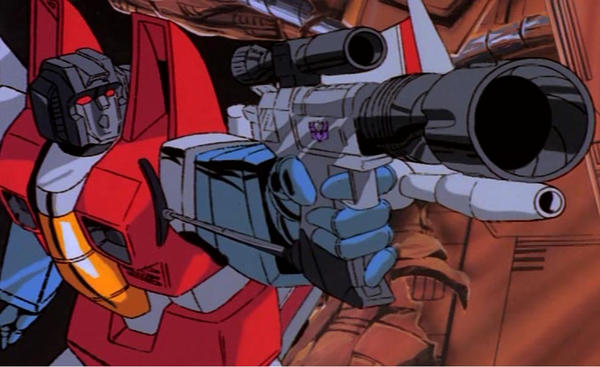
The Transformers: The Movie (1986) Review:

For the toy company of Hasbro, one of their most successful cartoon TV adaptations and iconic staples among many children are the transformers robots. Who knew that such a simple idea of a robot that could transform into item that we are familiar with everyday could be so entertaining? To many, the TV series is what made the toy line even more fun for people because at that point, they had characters with personalities and backstories that made them somewhat relatable to their viewing counterparts. Twenty years later or so action director Michael Bay got a hold of the rights turned it into even more of a phenomenon, spawning sequel after sequel. While seeing how popular the concept had become it's important to take note that the "robots in disguise" characters originally had their own animated movie two years after its official TV airing. With that said, expectations should be different for this viewing. The problem is even with a different set of expectations; the end result is disappointing. There is effort here, but it lies among a pile of questions.

"Look at my detailing!"
The story takes place in the midst of war between the Autobots lead by Optimus Prime (Peter Cullen) and the Decepticons lead by Megatron (Frank Welker). During this period they are interrupted by a massive cybertronian planet known as Unicron (Orson Welles) looking to destroy anything with life and can only be stopped by the matrix of leadership. The premise at first is acceptable but once immersed into the conflict all buildup is lost. Penned by Ron Friedman (who wrote for a lot of other TV shows), this feature length film was actually a connecting point between seasons 2 and 3 of The Transformers TV show. This is the immediate problem for several viewers. For those who never saw the TV show, are now required to see seasons 1 and 2 before even thinking about viewing this movie. On top of that, there are numerous characters listed and seen throughout the run time but yet are not mentioned, given backstories to or even speak dialog. This makes it all the more difficult for a viewer who is not familiar with the TV show.

Then there's the whole plot, which originally stated seemed easy to follow. However as the viewer watches, they will notice that for Unicron's motivations and background go untouched. Why does Unicron want to destroy all life and where did he come from? Why does he destroy his own kind? Even the plot point of the matrix of leadership isn't very clear. How does it keep Unicron from doing its business? All these questions go unanswered in the form of convenient contrivances. Perhaps this information was given prior in the TV show? Again though, how would this win over new viewers if they've never seen the show? This lack of exposition can make the viewing feel quite empty. Nonetheless there are still some elements that provide enough saving grace to keep this movie at an average level. One of the more noticeable things is for anyone who saw Michael Bay's live-action franchise before this, they will at least be able to point out any of the characters they've seen before but in their 80s version.

Another positive is the voice-actors cast for the characters. Of the most popular you can't go wrong with is Peter Cullen who will always be Prime and Frank Welker who is practically anybody and anything else. There are also vocal appearances for Grimlock, one of the dinobots (Gregg Berger), Shockwave (Corey Burton), Jazz (Scatman Crothers), Bumblebee (Dan Gilvezan), Starscream (Chris Latta), Blurr (John Moschitta Jr.), Hot Rod (Judd Nelson), Galvatron (Leonard Nimoy), Ultra Magnus (Robert Stack) and Kup (Lionel Stander). But the voice that stands out the most of this bunch is none other than the voice of the late Orson Welles. Although it was reported that Welles hated his role, the magnitude of his voice-work at which it is used for the massive planet destroyer is gleefully astounding. Welles voice is so deep and booming that it matches the look and presence of this memorable character with ease. Imagine if Welles voiced a character today? Holy moly.

Unicron
Helping at least make what's left of this product somewhat enjoyable is the overall visual design and animation. Directing this movie was Nelson Shin whose main expertise is being an animation director. So although he wasn't heavily involved in the actual steps of animation, his supervision was still critical. Other animators like Satoshi Urushihara (Akira (1988)) also worked on this project and most of the animation looks great. The entire look of the film has a very anime inspired feel to it, making the detailing on a lot of the backgrounds and close up shots look very intricate. Lastly, the musical score composed by Vince DiCola is actually well put together. Although he tried his best to score Rocky IV (1985) as his first attempt, his style just didn't match. Here however, DiCola feels like a better fit because of his reliance on synth musical instruments. It centers on robots so why not?  Also Stan Bush's "Touch" single is quite the catchy song. It rings all the more 1980s to anyone looking for a blast from the past.

It's not the movie some fans of the newer films may expect it to be. If you never followed the TV show then it will be confusing to understand much of the plot devices, extra characters and their motivations. This is where it fails. Yet even with that, it's hard not to enjoy the anime-style detailed animation, appropriate electronic musical score and respectable voice cast, including a final stoic performance from the late Orson Welles.

Points Earned --> 5:10

Wednesday, December 23, 2015

James and the Giant Peach (1996) Review:

Nowadays, the concept of stop-motion animation is quite unpopular. Thankfully it hasn't died but it is unfortunately not resorted to that often anymore. During the early 1990s, this classic and unique animation technique began getting dropped from film projects because of its "next best" replacement - CGI. With the demonstration of Terminator 2: Judgement Day (1991), that CGI could be controlled and used correctly, many movie studios want it to be in their upcoming projects. For that reason alone, stop-motion animation was left behind when it came to live-action films. But there were others who thought differently. Also in the early 1990s The Nightmare Before Christmas (1993) was released to the public and became one of the greatest holiday films of its decade. Behind the wheel of this vehicle was a small time filmmaker named Henry Selick. Since then his filmography has been quite small but to this day has made sure his films contained stop-motion in it. His second feature would be just as memorable to kids who grew up during this time and that was this.

"But first, let me talk a selfie,..."
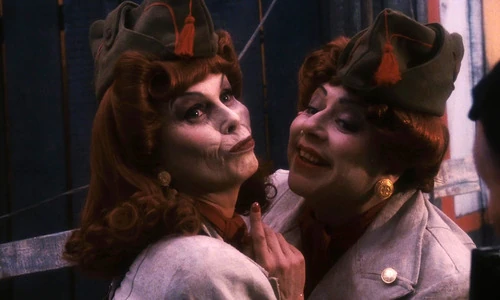
Based on a children's book by Roald Dahl, the story is about a English youth named James (Paul Terry) who looks to visit New York City but lives under the strict rule of his aunts Sponge and Spiker (Miriam Margolyes & Joanna Lumley) after the death of his parents. Then, unbeknownst to him, a stranger (Pete Postlethwaite) appears and gives him magical trinkets that'll help make his dreams come true. This arrives in the form of a giant peach that harbors future insect friends. These characters are Mr. Grasshopper (Simon Callow), Mr. Centipede (Richard Dreyfuss), Mrs. Ladybug (Jane Leeves), Ms. Spider (Susan Sarandon) and Mr. Worm (David Thewlis). The adaptation of Dahl's book was written by Karey Kirkpatrick (Chicken Run (2000)), Jonathan Roberts (The Lion King (1994)) and Steve Bloom (Jack Frost (1998)) and for the majority of the film, it's practically the same. Plus, the character development and overall message of the story is well thought out and optimistic.

The character development focuses on learning to accept one's differences and understand how each individual brings unique benefits to certain situations. The overall message in the story is to never stop believing and always look on the positive side of things. These are life lessons that everyone needs to know about no matter how old you are when viewing this film. For acting, although Paul Terry quit the profession not long after this film, for a child actor he's not bad (or annoying). His appearance is innocent and feels genuine in physical form and voice work. Miriam Margolyes and Joanna Lumley as James' aunts are quite the opposite and they do it well. Being gross and greedy is their shtick. The supporting cast of voice actors who bring James' bug friends to life are enjoyable too. Simon Callow as Mr. Grasshopper plays quite the upperclassmen that isn't snooty enough to talk to someone below his level. Richard Dreyfuss as the wisecracking centipede has a number of funny lines either when it comes to himself or certain situations he's in.

Jane Leeves as Mrs. Ladybug is sweet and also shows feminine strength when called for. David Thewlis as Mr. Worm plays with a Scottish accent and sometimes fears the worst but too learns to cope. Lastly Susan Sarandon as Ms. Spider uses a Russian accent and although she's a bit colder than her counterparts, she too has a charming attitude. However even with these positives the writing isn't perfect. One of the screenplays biggest blunders is its continuity. There were moments where claims are made about certain dangers and yet a minute later, the labeled danger will no longer be a threat for unexplained reasons. Another example is how James and co. weren't able to find their way to NYC without a compass, yet a map that James has clearly shows them which direction they are traveling as they move. Seems a little pointless to go find something that'll help you when you already have what you need. The other problem is that the way this story was written is the strange reality that James' lives in feels illogical.

That animation though,...=)
For this, there are certain things that should have an expected facial reaction but the exact opposite is portrayed. It just doesn't look right. For animation, as mentioned before stop-motion was used and it looks great. The jagged and tangible like edges to the characters give them a likable visual appeal. The live-action is also well done too. This also goes hand-in-hand with both live-action and animated cinematography provided by Hiro Narita and Pete Kozachik respectively. Narita's work efficiently shows the contrast between James' past and current life and how all the fun was sucked out of it. Kozachik on the other hand effectively conceals the illusion of various matte painting backdrops to help make the animated world feel bigger than life. Lastly Randy Newman composed the film score a year after the massive success of his work on Disney's Toy Story (1995). Here Newman's music feels like his, but also has bits that sound like Danny Elfman got in on a few areas too. Either way it is fun to listen to and with its catchy songs.

The script has decent character development and has important life lessons for people to reacquaint themselves with despite it having some noticeable continuity errors. Also some characters react oddly to certain implausible situations as if they were entirely acceptable. This aside, the characters are charming, the music is enjoyable and the visuals are delightfully engaging with the help of stop-motion animation.

Points Earned --> 7:10

Monday, December 21, 2015

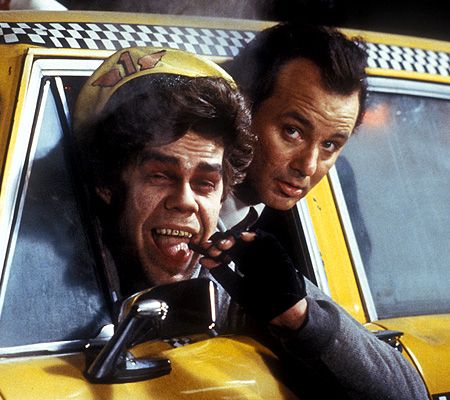
Scrooged (1988) Review:

For a person like Richard Donner, it would seem difficult to make a film that rides close to the middle of being just okay. Considering he's only directed a handful of films of which many of them gained lots of praise or went on to be cult films, it's surprising when moments like these happen. Richard Donner headed Superman (1978), The Goonies (1985) and Lethal Weapon (1987). So for this, it's even more confusing when a well-respected director is paired up with decent writers and a cast of good actors. For comedy legend like Bill Murray, being in popular movies like Caddyshack (1980), Stripes (1981) and of course Ghost Busters (1984), how can a pairing create an output so okay-ish feeling? It may be hard to believe but it is in fact a film that's better than average but only marginally. Apparently it was reported that Bill Murray and Richard Donner did not get along during production either so this could be why. Things could have always been worse though I guess.

"Say cheeeez"
The film screenplay is another alteration of the classic Charles Dickens story of the Christmas Carol. Here Murray plays Frank Cross, the head chair of a major TV studio that loves finding and attracting any viewer they can find. Until on the night of Christmas Eve, Cross will be given a chance to redeem himself as a better person. Written by Michael O'Donoghue (an SNL writer) and Mitch Glazer (probably his best known writing credit), the script to this holiday comedy can be hit and miss. For example, the studio will do anything it can to make sure its the hottest thing being watched, whether its making parody films of classic Christmas tales, straight out desecrating them or even making channel programs that appeal to cat and dog viewers. It's a bit of stretch there, especially the last one. A lot of these incidents feel over exaggerated and feels forced on the audience like they're supposed to believe that people would accept such things and find it believable.

What is a nice change of pace is Richard Donner's directing skills. The story execution is fairly predictable but there are some various changes to the script that make it feel like effort was put in to make sure it doesn't feel like an exact copy. Much of this is due to the supporting cast being so helpful in their comedic timing and how they knock up Murray's character. John Forsythe as Cross' dead business partner has possibly the best introduction than any other ghost who visits him. David Johansen as the taxi driving ghost of Christmas past is the second best character with his no-cares given attitude. Perhaps the ghost who gets the cutest and most violent personality is Carol Kane as the ghost of Christmas present. There's also characters played by Karen Allen (Cross' ex), Bobcat Goldthwait (the voice of XL from Buzz Lightyear of Star Command (2000)), Robert Mitchum, Michael J. Pollard and Alfre Woodard playing a Bob Cratchet-like role. Then there's Bill Murray who is surprisingly the exact opposite.

It's not that he is unfunny because there are occasional scenes that do produce a laugh, but the problem is he produces the least amount. Yes, Cross is supposed to be unfeeling but even unfeeling characters can have some kind of charm; but Murray doesn't pull it off. It's more obnoxious than charming. Another problem in the script is sometimes the story will spin off the main focus from Cross' development as a character and just wonder back into his reality to do whatever. It's distracting. Back to positives though, a visual element that works in this films favor are the special / practical effects. The special makeup effects creator / designers behind those scenes were Thomas R. Burman and Bari Dreiband-Burman (The Goonies (1985)& Die Hard 2 (1990)). There's also special effects supervisor Eric Brevig (Total Recall (1990), Hook (1991) and Men in Black (1997)) who shows that even before big Hollywood blockbusters he still had the talent needed to make things look good.

Karen Allen ^_^
Thankfully another visual treat is Michael Chapman's cinematography. Chapman is also the cameraman for Taxi Driver (1976), Ghost Busters II (1989), Space Jam (1996) and Six Days, Seven Nights (1998) all of which had decent lighting and steady movement. Also Chapman's work mixes evenly with whatever special or practical effects were put to screen. Lastly is Danny Elfman's score to the film that oddly enough sounds like a precursor to his future score for The Nightmare Before Christmas (1993). Sadly though, his score here feels underdeveloped. It is clear that its Elfman's signature theme with chanting choirs in a minor key, but after the title card appears it disappears for quite a long time. Then out of nowhere it rears its head and then abruptly vanishes again. Viewing Lala Land records website, it seems like there was a lot of material that wasn't used. It's also a shame when not even the original composition is that prevalent in the final product. What gives post production? Either way, when heard it is enjoyable.

This holiday comedy does have some unique mutations with its direction in the script, but it also suffers from its main lead (Bill Murray) not being that funny and the main story sometimes jumping around. Thankfully the camerawork is able, the creature effects are well crafted, the music (although not abundant) is appropriate and the supporting cast adding to the laughs.

Points Earned --> 6:10

Sunday, December 20, 2015

Southpaw (2015) Review:

Sports dramas are not uncommon among film studios. Almost every sport has received some kind of a film rep at some point. The most popular of these events probably would go to the boxing industry. Much of this was garnered either from actual boxing celebrities like Muhammad Ali or actors who portrayed their character in the ring like Robert DeNiro in Raging Bull (1980). Of the boxing films however, the franchise that would go down as the best known would be Sylvester Stallone's Rocky (1976) series. What worked with Stallone's franchise was how well grounded and retable its characters were. For this film, there's a certain texture that's brought to the table that not many other filmmakers could put on display for mass audiences. A combo of director Antoine Fuqua (Training Day (2001) and King Arthur (2004) and writer Kurt Sutter (Sons of Anarchy (2008) headed this visual style. And for what it's worth, everything made in this feature shows that everyone was invested in it. It still has its shortcomings though unfortunately.

"You got something on your shirt...."
The story is about the tragic fall and redemption of top-of-his-game boxer Billie Hope (Jake Gyllenhaal) who loses his wife Maureen (Rachel McAdams) after a fatal "accident" during a press conference. Making things worse is that his daughter Leila (Oona Laurence) is taken into child protection services. The idea itself has been seen before, but again the presentation to how viewers will see this story may feel different. Stallone's Rocky (1976) had grounded characters; so does Fuqua but he also grounds the very surroundings of the character. Even while Hope's family lives in luxury, the outside world feels gritty and cold. This is that combination mentioned earlier - Fuqua's direction and Sutter's script do a great job at demonstrating just how nasty things can get before anything gets better. That's also not excluding language and violence. Every scene has a much rougher tone to it, giving it that edge that makes it feel like its more adult oriented. Sadly this is where it falls flat in some places.

While it is Kurt Sutter's first screenplay, it is hard not to criticize him for penning a script with such a tough persona and yet following up with a story so safe. Perhaps this is because the premise has practically given everything away before the movie is even seen. When the only turning point in your film for the main character is when a key player is killed off, it kind of sets up the audience to already know how things will end. Everyone enjoys a well-respected return but it's also very predictable. If the loss of Hope's wife weren’t announced in the premise, maybe the death would've been a little more of a throw-off than a plot setup point. So the question is, why make a script with a tone so hard edge only to play it safe like every sequel made after Rocky (1976)? Sutter's only other flaw in his script is that after Hope's loss, the subplot of his wife's murder goes unsolved. It's not even mentioned as to if Hope just wants to forget or feels the rematch was enough - but it at least should be mentioned why.

However, besides these clerical issues everything else does work its best to make you forget about it. Jake Gyllenhaal and Oona Laurence have believable chemistry as a young father and daughter. Gyllenhaal definitely goes all out with his tough guy persona and pulls it off. Considering he's gone through multiple transformations for a lot of his films, it's no surprise here. Even for McAdams reduced role, she too is enjoyable to watch. Plus the supporting cast is well worth it. Forest Whitaker and 50 Cent provided good contrasts to the paths Billie Hope could take and whom he sides with in success. Young actor Skylan Brooks also helps bring some development to Gyllenhaal's role. Then there are appearances from Naomie Harris and Victor Ortiz. As for Hope's main antagonist Miguel Escobar (Miguel Gomez), the motivations are very two-dimensional. Although they could have been more developed, the focus was on Billie, not Escobar.

Rachel McAdams
The boxing matches were well staged and look believable too. There weren't a lot of matches for anyone who wanted a lot though. Helping make the fights feel as real as possible was Italian cameraman Mauro Fiore, who frequently works with Antoine Fuqua. Not only does Fiore keep the camera steady and only highlight what needs to be lit, but he also changes the perspective of some shots. For example, the camera will shift from a theatrical lens to found footage (but professionally) where the camera would be either Hope or Escobar's eyes during the fight. Since this involves movement, the camera won't be steady but it does give the viewer a brief minute to immerse himself or herself into the match as if it were a video game. Lastly, the music composed for the final time by James Horner before his untimely passing is not as immediately recognizable as some of his other works, but it still has its moments. The created tunes can move its audience because of the raw emotion the actors use and how the music plays out with solo piano and strings. A good last effort.

It does have a lot to be entertained with considering how believable the acting is, the emotional music, involving boxing matches and inventive camerawork. Yet with a tone that indulges in having less fluff, more rough, gruff, tough and buff, the script shouldn't play it so predictably. The outcome to this film can be seen even before the movie starts.

Points Earned --> 7:10

Friday, December 11, 2015

Noel (2004) Review:

During the holidays, Christmas is thought to many of being the most enjoyable time of year. Rightfully so. With all the bouncy and energetic music, it's difficult not to feel like there's something to be happy about. Then again, not everyone will be as happy as others will and that's understandable too. Not everything goes well during Christmas. All kinds of unfortunate and crappy things go down that remind people every year why the holidays stink (according to them). When telling a story there's nothing wrong with telling either end of the mood, but it would seem slightly more difficult for the negative view point because of how the season is perceived overall. Sadly the creators behind this film rather missed the point. It does have areas that endear to make sure the viewer watching the film tries to feel something, but as to what that is, is another story. Directed by Chazz Palminteri (mostly known for acting) and written by David Hubbard (his only holiday film credit) lack the required expertise to make this film an effective watch.

Susan Srandon & Robin Williams
The script is set up like another ensemble cast picture where a number of character threads come together and influence each other. Susan Sarandon plays a middle-aged loner who only focuses on work and cares for her unresponsive mother. Paul Walker and Penélope Cruz play a couple looking to get married but struggle with their own trust. Lastly is Marcus Thomas playing a lazy bum looking to relive one moment of his childhood for another year. All of these stories take place during Christmas Eve of where each main thread receives a special gift in some fashion. Of them, there are also appearances from Alan Arkin and Robin Williams. The stories sound okay but the way they're executed flat out underplays its own premise. Most of the stories are schmaltzy (which is average) but it's the wildly uneven tone that makes it hard to deal with. At first the story starts out normal to almost upbeat but then immediately drops to dreary and almost uncomfortably melancholy. Adding to that are the numerous contrived plot development moments that seem too convenient for its own good.

It's the mix of these problems that can make it difficult for audiences to connect with these characters. For a holiday film, it doesn't focus much on it and its tone is too melodramatic to feel like one. Regrettably this is not the end of its issues either. Making it more frustrating is the editing handled by Susan E. Morse. Having more than enough experience to know what makes a film flow easy, the editing between scenes are choppy and feels rushed when following the individual stories. Yet somehow, the pacing feels more than 90 minutes. How does that work? Plus few to almost no characters have the smallest bit of charm to them. Of the actors, Robin Williams and Paul Walker show more emotion than the rest even with their underdeveloped roles. The rest of the cast struggles to show any likability because of how troubled their characters are required to be. Of all this, the entire screenplay itself has trouble conveying its overall message.

Even the critically panned film Reach Me (2014) had characters with flaws and was able to make a positive moral statement out of it. There's no real lesson a viewer can take away from this other than "miracles happen". Whenever that is. That's not to say the concept doesn't exist but the majority of viewers will already know this. Visually, the camerawork is appropriate. Russell Carpenter was head of cinematography for this feature. Although his work wasn't anything to note of in Jean-Claude Van Damme's Death Warrant (1990), he did prove himself later with James Cameron's Titanic (1997) and Charlie's Angels (2000). Here it's about the same. All scenes are well lit and look aesthetically appealing. The musical score provided by Alan Menken thankfully was another plus. For although the actual tone presented on screen fluctuates between appropriate to overly downbeat, Menken's work tries endlessly to make the viewer feel something.

"What are you lookin' at?"
Working on films in the past like Disney's Beauty and the Beast (1991), Aladdin (1992), Pocahontas (1995) and Hercules (1997), which are films that have balanced emotions throughout their story should be proof enough that he knows how to work music. Even after wrapping up, the score continues to try and get someone's emotions stirring and by that it's not desperately doing it. It literally felt like there was something to care about but there wasn't. The sound itself is created through a series of strings mixed with choral progressions and piano cues to help give it that seasonal Christmas touch. This is not enough to save it though, there just isn't an adequate mixture of components to help make this collaborative work feel like a whole. Maybe a holiday film wasn't what they were aiming for but when your film's title says a Christmas related name on it, people will think "holiday movie".

It's an ensemble cast movie that wastes its given talent with a script filled with unnecessary twists, all-too convenient character development to feel anywhere relatable and an uneven tone to match anything close to the holiday spirit. Even though they show the most emotion not even Paul Walker and Robin Williams can help the script. The camerawork and music also do their job right but feel a bit late to be fixing anything.

Points Earned --> 4:10

Friday, November 27, 2015

The Imitation Game (2014) Review:

When it comes to war, frequent successes have been documented in and out of the battlefield. Sure, the act of participating in war results in a much different human being when it's all over Vs doing everything else behind the lines but either or, they all played a part in the meat grinder that is the lethal conflict between countries. During the first number of years in World War II, Germany had several nations on the run or at least just barely holding their own against Adolf Hitler and his Nazi followers. One of the reasons why Germany was so on top of the game was due to their communication system known as Enigma. Enigma was a crafty setup of transmissions that had a certain code attached to it but had a time stamp of only a day. Once the time expired, the Nazis would then reset their code and start with a fresh slate. For the allied powers (at the time excluding the US), this was a real pain because deciphering the code was difficult enough, but then having to figure out a new set every day turned out being more than many could handle.

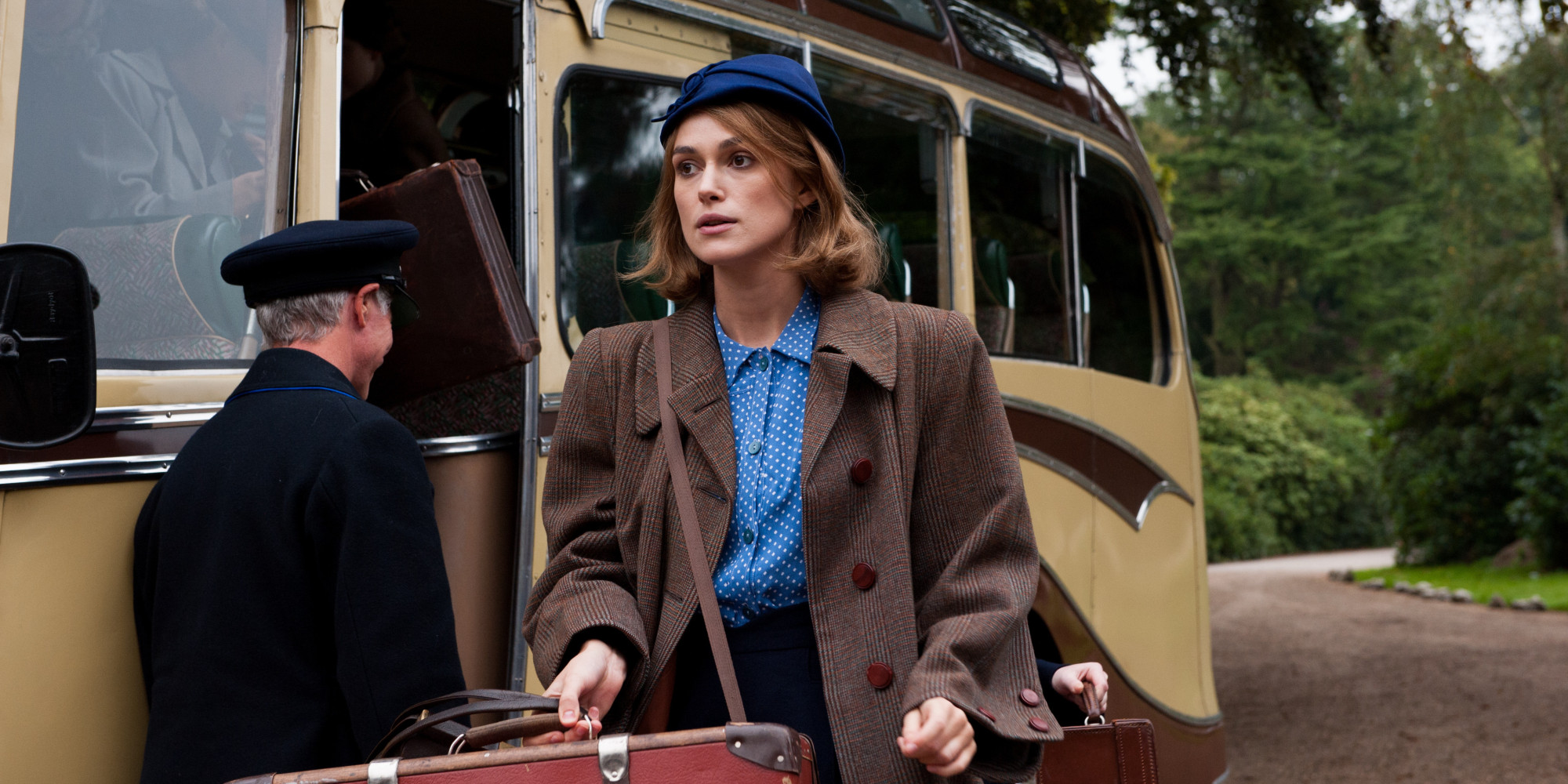
Keira Knightley
Enter Alan Turing (Benedict Cumberbatch), the man who would discover how to crack the complex Nazi communication code. The story mainly follows the points in time of how Turing works towards figuring out a solution to understanding how Hitler and his crew were so untouchable. Along with that are a number of flash forwards and backwards to help develop Turing as the main lead. Headed by Norwegian director Morten Tyldum and written by Graham Moore in their first British film with a west coast release, this movie has a number of points throughout its run time that demonstrate the point of this film is not about the triumph of good over evil in World War II, but of something deeper. World War II and cracking Enigma is more of a backdrop than anything else to this highly character driven story. Throughout the film, viewers are introduced to various other individuals that influence Turing in several ways. Keira Knightley plays Joan Clarke, a tough female who also cares a lot for Turing.

Matthew Goode plays a collaborative associate with Turing and although they both start off on the wrong foot, they end up mending their points of view for the better of others. Charles Dance plays the commander in charge of Turing and regrets ever giving him a chance after Winston Churchill put Turing in charge of the program. Mark Strong also has a role as 2nd in command and has further information given about him later. Last of importance is Rory Kinnear who plays a detective after the events of World War II who's looking to interview Turing. What's great about Kinnear's part is that he basically serves as the audience - asking certain questions in which the answers given can be interpreted by they themselves along with Kinnear's scripted reactions. The supporting cast is what truly helps give the story such a strong foundation. Without the right actors and a properly written script, the character development would not have been as strong. There are several moments that may even through the audience off guard.

Benedict Cumberbatch as Alan Turing gives a believable performance and as awkward as the main lead is portrayed, he still carries an enormous amount of charm. Much of this comes from the fact that Turing speaks his mind very bluntly. This is not because he's immature or does so just because. He does it because he knows he's right and the delivery at which it is given is deadpan. This in itself evokes the whole point and main theme behind the screenplay. The moral is to be yourself no matter what people say or think about you. Many viewers will be able understand and connect to Turing as time goes on. Turing was no Albert Einstein who is usually helmed as one of the greatest scientists of an older generation. Turing was a tragic hero, a person who faced failure and aggression everywhere he went all because of him trying to crack a Nazi code with radical ideas. Adding to that development is how Turing deals with discovering the solution and then running into more obstacles after that personally and professionally. It's not like once the solution was found everything was hunky dory, no sir.

"Are we going to stare all day or,...."
It is interesting to see the facts given in the epilogue to the story. Knowing and understanding the history behind it is an informative move. However once this happens, in some ways the film feels like it was trying to prove a conspiracy theory because of how top secret this operation was. This is stated because it will make the viewer wonder how things could've turned out if Alan Turing did not step up to the task of cracking the Enigma code. Outside of the written areas of the film, the other technical parts were adequate. Oscar Faura as the cinematographer produced well lit and clear shots for the film. No panning landscape shots were filmed but it was nice to see various clips of historical archive footage. The music composed by Alexandre Desplat was kind of a disappointment though. There are some effective tracks but not a whole lot of it stood out as memorable. Most of the score came across as largely generic with no reoccurring motif. Oh well, guess you can't have everything.

It's music feels somewhat underdeveloped and it sometimes feels like it's trying to unveil a conspiracy theory but it isn't a huge issue. The cast all act very well, the script develops its characters effectively and the its overall message about accomplishing one's goals is an inspiring tale told through Alan Turing's life experiences.

Points Earned --> 8:10

Thursday, November 26, 2015

Smiley (2012) Review:

If there is one thing to say about Hollywood that many filmgoers will agree on is that it’s no longer being original with their material. For most cases this occurs because many film makers, whether being the director, writer or actor are either lazy trying to get their yearly pay or because they really don't have an understanding of the project they were cast for. On the other hand, it could also be because the process of being original is not the smoothest task to begin with believe it or not. That's why the category of A-list actors is much smaller by comparison to anything below them. So when looking at horror genre films, it might be easier to understand why there haven't been many new horror icons of recent memory other than a few. A large portion of popular killers came from the 1970s and 1980s. After that, the challenge became much steeper for anyone who came after. Like much film students nowadays, much were inspired and influenced by such films. The director to this movie, Michael J. Gallagher, probably has been subjected to the same experience.

Because killing for fun is funny......smh
Having a script also written by the director already brings into question whether this could be made competently. As for the final product, it shows that Mr. Gallagher may have not been ready. Viewers are introduced to college freshmen Ashley (Caitlin Gerard), the daughter of a widower who lost her mom to suicide. After moving in with her friend Proxy (Melanie Papalia), they learn that a strange craze is taking over the campus. The craze is using a random Internet chat roulette program. When somebody wants the other person to die (of course, because any does), they type into the chat forum "I did it for the lulz" three times. As a result, the person gets stabbed by a character only known as Smiley for his face looking like an over fanatic fan of Zack Snyder's Watchmen (2009) pin. After Ashley and Proxy try it out for themselves to see if it was real, they get nervous and begin to feel like they might be next on Smiley's hit list.

Directly taking ideas from the "Bloody Mary" urban legend, the script is a giant mess of confusing logic with a number of other flaws. If anything, the killer has a grotesque design but even then it's also nonsensical. There's very little to talk positively about here. The cinematography handled by Nicola Marsh (Twenty Feet from Stardom (2013) and Pearl Jam Twenty (2011)) kept the camera steady for the most part. Marsh also gave as many clear shots as he could even for the lighting in this movie. The only other plus is there are roles filled in by some Internet / veteran celebrities most notably Shane Dawson. There are a couple others but the script makes them sound unintelligent and boring. Writing overall isn't convincing either. There are moments where the Ashley character is focused on due to mental disorder but it's only used to further the illogical story telling. Then there's Roger Bart (the singing voice of Young Hercules in Disney's Hercules (1997)) who plays what seems to be Ashley's only college professor of an unknown class.

Bart plays his character so strangely, he feels creepier than the villain. Not only does he openly address classmates strangely in public; he also likes to constantly stare at his students and casually drink whiskey (like its coffee, without even flinching) on his down time. What's up with this guy? Really the only purpose for Bart's role is to give obvious script fodder to the viewer so the main character continues to try and figure out their situation. Finally topping off the disappointment of actors to be seen here is veteran Keith David playing the head of the local police who does nothing but ignores Ashley's claims. He's probably the best part but also the worst because of how he's not used to the film’s advantage. It's Keith David! As for the villain himself, he too is sorely lacking any kind of development. With a backstory rushed in at the first five minutes at the beginning of the film it only shows how much thought was put into this character.

"Smile for your portrait"
Apparently this character stitched his eyes and mouth shut. First, how did he do it on his own? Plus, how can he still say understandable words and clearly see? And where did his nose go? Was it surgically removed? Making things even more confusing is how this villain operates. How does he know when you type "I did it for the lulz" three times? What if you do this to two different people at the same time from two different locations? There's no motive for any actions this individual takes. It makes no sense. The kills in this film are nothing to praise either. There's nothing that looks overly painful or gross. It's very standard with typical stabbings and shootouts. The scares are pointless too because all that Mr. writer/director knows how to do is jump scares. Lastly, the musical score to this production made by Dave Porter was of no importance as well. Almost entirely atmospheric, the film score is largely dull in several areas of the running time. There's no main theme or recognizable motifs for anything. It's really close to not worth it.

Aside from okay cinematography, internet and veteran actors having roles in the film, there's not much to enjoy other than how ludicrously inept the characters are made from a script with enormous plot holes. The horror aspect is MIA and the violence has no invention behind it.

Points Earned --> 3:10

Friday, November 20, 2015

Inspector Gadget 2 (2003) Review:

Disney today has gone through multiple changes throughout its history. There's the classical period, the slump period, the renaissance period and the rise to super studio power in the late 2000s. However even during the 1990s when Disney was breaking records in its animated films, they also were breaking records in flops in another type of film. Those films were in live-action, many of which were derived from cartoons from decades before. For those cases, Disney had made some pretty bad films. Mr. Magoo (1997), George of the Jungle (1997) and Inspector Gadget (1999) being relatively the last bunch of theatrical releases to be made, for the most part signaled the end of such cartoon live-action adaptations. But even for Disney, nothing would stop the studio giant from making a little extra cash even after that. Some years later, Disney would release sequels to some of these movies and for the poorly adapted Inspector Gadget (1999), he too got his own. The question is, is it worth a watch?

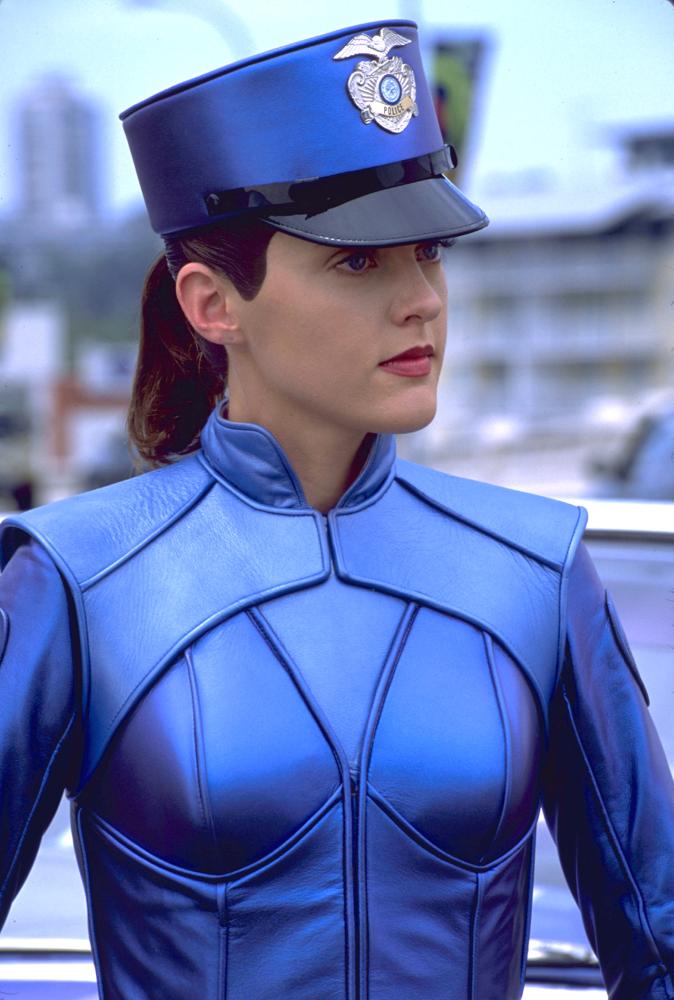
G2 (Elaine Hendrix)
Ehhh,...in some respects yes because there seems to be improvement. Then again, there really was no need to begin with because a sequel will not make up for the mistakes of the first. With a script written by the director Alex Zamm (Chairman of the Board (1998), Tooth Fairy 2 (2012) and Jingle All the Way 2 (2014)) and two other writers, the adaptation part of the film is more faithful to that of the original cartoon. And for some viewers, that may be all they need because the entirety of the movie does feel more cartoonish than that of the first movie. When Dr. Claw (Tony Martin) escapes from prison, it's up to Inspector Gadget (French Stewart), his niece Penny (Caitlin Wachs) and newly activated member G2 (Elaine Hendrix) to bring the evil mastermind to justice. The idea is as routine as ever but it again sticks to the formula that made the cartoon what it was. Also what makes this film more faithful than the one before is that most of Dr. Claw's face is kept concealed from the audience. It was a big gripe people had with the 1999 film.

As stated in the plot prior, much of the cast from the first film have been replaced or rewritten out. The only actor who didn't get replaced was D.L. Hughley as the Gadget Mobile; because people loved him the most? Also there's no mention of whatever happened to Joely Fisher's role as Brenda who played Gadget's love interest in the first movie.  French Stuart as Gadget looks more like his cartoon counterpart than Matthew Broderick. Caitlin Wachs taking over Michelle Trachtenberg's role performed okay but nothing special. As for Claw, Tony Martin's portrayal Vs Rupert Everett is not hilariously funny but it’s alright. Elaine Hendrix as G2 was okay even though her role was very contrived. It's pretty obvious what she serves as to Gadget. If there's one thing that stays true through this film is that almost every actor chews up the scenery around them. Almost every scene is super hammy. It's not bad occasionally or maybe for one character but even the less important characters are biting at the corners of every frame.

With that being said, the comedy isn't that funny either. Thankfully, Disney toned down the inappropriate humor from the first film but didn't bother fix anything else. The one liners are formulaic and predictable but they do at least sound more believable being delivered from Stewart than Broderick. Dr. Claw also has a bunch of stock henchman that do act like the cartoon but here just feel silly. Of all things, why would Dr. Claw hire a single ninja? Also sometimes the dialog doesn't make a lot of sense due to certain characters having knowledge that goes unexplained. How would one specific character know how a mechanical device works if the villain didn't even give the obligatory exposition to them? The stretch of the imagination only goes so far. Seeing Dr. Claw make a weapon out of 3 or 4 non-connective items is one thing, but knowing how it works without even being told? Yeah,...not buying it.

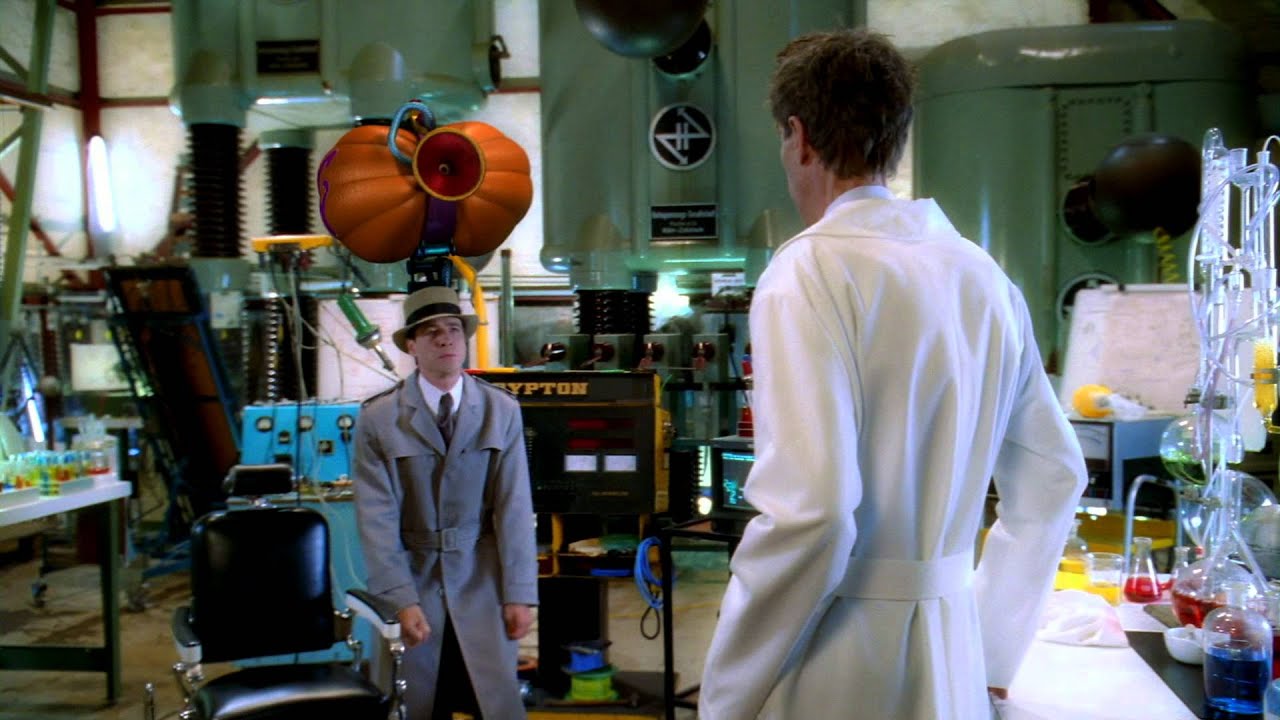
"Look how unimpressive my  CGI is...."
Even with this mediocre writing, there is still some visual integrity. The special effects to this entry are adequate for its budget even though they are not as polished as the first film. However considering it was 12 million Vs 75 million (estimated), that's not entirely bad. There are places where it’s noticeably fake though. The cinematography shot by Geoffrey Wharton who is usually just a camera operator does okay here. There's no strange angles or up close facial zoom-ins so that's praiseworthy. Anything else though is just standard shooting. The musical score composed by Chris Hajian is okay too. Even though the sound is not as bombastic as John Debney's version of the first one, Hajian retains the Inspector Gadget theme and does what he can to make it sound acceptable for a DVD sequel. The overall product is still messy but some may like it more than the original film.

Having its cast mainly replaced, the actors are a lot hammier, the comedy is still predictable and the effects do look somewhat cheaper. However some of the writing does follow the cartoon more this time than the first movie and although not everything makes sense it feels more like an extended cartoon episode. So that kind works in its favor.

Points Earned --> 5:10

Friday, November 13, 2015

Friday the 13th Part IV: The Final Chapter (1984) Review:

Horror icons are just hard to kill plain and simple. Hollywood studios has shown its viewers many a time that if an audience so desires to see one type of formula repeated and repeated and repeated, the amount of people it will appeal to will split. At some point viewers who will recognize the formula will get tired and want to experience something relatively new. Meanwhile, the viewers who enjoy ingesting the same material day-in and day-out will continue to watch what they find entertaining. A great contemporary example of that is Michael Bay's Transformers (2007) franchise. By the fourth entry, many of the fans from the first were not attending the screenings because the formula became so repetitive. The same can be said for the Friday the 13th (1980) franchise. What started out with a premise that caught many peoples attention, soon grew into a series of copies of itself almost on an annual basis with declining quality. Now although this entry isn't worse than Friday the 13th Part III (1982), it's showing no improvement.

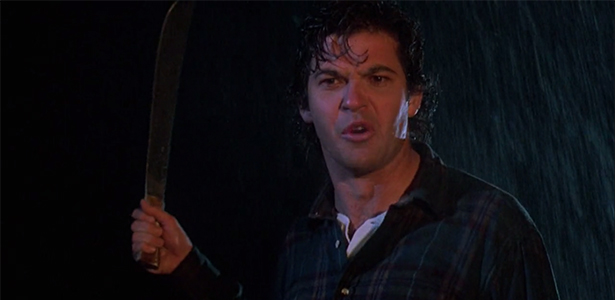
Rob (Erich Anderson)
After proving himself worthy of heading a horror movie with his own The Prowler (1981), director Joseph Zito was hired. According to sources however he was also expected to write, but instead hired Barney Cohen to do it for him. Before this film, Cohen had only written for a couple films in the late 1970s and some TV episodes; all of which were not in the horror genre. Is also probably safe to assume he did not view any of the other films before this entry because there is absolutely no originality in this screenplay whatsoever. With a beginning to this movie looking like how writer Alan B. McElroy got his idea on how to open Halloween IV: The Return of Michael Myers (1988), familiar viewers who are hoping for something new to happen in the plot will be disappointed. There is no story being told really. A bunch of sexually active teenagers (of which resemble the same set of personalities from the last three films prior) stay out in a rental home next to another family near Camp Crystal Lake. Once that's set up, Jason is all that is needed to complete the film.

Aside from one character named Rob (Erich Anderson) having a motive to why he's roaming around the same area, no other character is interesting. Anderson's character is related to a victim from one of the previous films, but the continuity is even less elaborated on than the continuity from Friday the 13th Part III (1982) had to Friday the 13th Part II (1981). No other character receives any kind of development other than who's going to sleep with one another in bed. Sure, everyone has a libido but it seems as if that's all this film has. A viewer who wants to be invested in a character can not react properly if they don't learn any kind of lesson. With that said, much of the characters on screen are just boring and make the pacing slow down. If anything, if viewers want to see what some actors looked like before they were well known this series seems to be good at doing that. There's appearances by Judie Aronson, Kimberly Beck, Crispin Glover and Corey Feldman.

Playing Jason Vorhees for this entry is actor Ted White. Mostly for doing a lot of unknown parts to other films like Tron (1982) and Starman (1984), he is able to fit the look of what people know Jason to look like. As for the actual part that Jason plays in, it feels almost wasted. For anyone who has kept up with the series thus far, why must the movie project its main villain as a mysterious character? Anytime the camera scans various characters as if they are being watched, an experienced viewer knows its Jason. So why even conceal it? There's nothing about it that could get someone thinking to themselves "Could that be him?". Sadly even the kill scenes are mediocre even with the beloved help of Tom Savini's practical gore effects. Although Friday the 13th Part III (1982) was more gimmicky than anything else trying to sell the 3D aspect, the kills were at least unique in the sense of trying to be three dimensional. Here, only small bits of the violence seemed inventive.

"Hmm,...guess I'm going to need new fingers"
Finally is camerawork and music. João Fernandes took on the role as cinematographer. For Fernandes, the camera remains steady, which is good. Anything resembling that of Jason's point of view shots remain acceptable. Is it anything to be impressed with? No but it's not bad either, it's just standard. The same would/could be said for Harry Manfredini returning to compose his signature score once more. The only problem is that sometimes even for this entry the music felt unnecessary in some scenes. With the main theme of various string progressions that gives the scene a sense of uncertainty, it occasionally feels too over dramatic. This is especially obvious when some viewers know Jason is not around. Plus, there's even jump scares for scenes that aren't even the list bit scary. It's difficult to say whether Manfredini was just on autopilot or was still trying to make the film scary. Either way, it wasn't the most effective as it could've been.

For a series with such a devoted fan base, it is amazing to how dull this series is getting. Jason Vorhees will always be a menacing character but so far, he's been surrounded by uninteresting characters and has had barely a plot about himself. The music is kept the same but is beginning to miss too. Not even his kill scenes were as memorable. The only things that may be worth someone's time is seeing various actors when they were younger, steady camerawork and some of the traditional practical effects.

Points Earned --> 4:10

Friday, November 6, 2015

The Peanuts Movie (2015) Review:

The daily newspaper comic strip of Charlie Brown and friends (AKA The Peanuts) has been around for decades. Created by Charles M. Shulz in the 1950s about a bald headed kid doing his best to get by in life like any other average Joe, seemed to stick with its audience. Schulz passed away in 2000, far too long to see his largely popular foundation publicized in this fashion – full on Hollywood style. It’s surprising that this even happened though. When most beloved childhood properties or cartoons become produced by a big budget Hollywood studio, people are less than pleased. The whole idea of taking something from the past is to either bring it to current time or at the very minimum reintroduce it to a new generation as it was when it was originally made from its inception. Schulz did have the classic animated specials for the holidays and even a short-lived TV show, but having it brought to the big screen never felt like it was ever a part of his intentions.  Perhaps it never was, but it’s safe to say this will not make him roll in his grave.

"Smile Charlie Brown!"
Taking a look at the credits, it is clear as to why this film is as good as it is. First, Steve Martino, the same director of Dr. Seuss’ adaptation Horton Hears a Who! (2008), directs it. Secondly, the descendants of the creator himself, Bryan and Craig Schulz were the writers. From that alone there seems to be a decent amount of people who care about this project. The plot is the classic story for new generations that are not familiar with The Peanuts crew. Charlie Brown and his friends discover a new classmate has come to their town. That new person is no other than Charlie Brown’s crush, the little red-haired girl. Meanwhile, Snoopy’s having trouble of his own with the red baron constantly fouling up his plans. Anyone who enjoys Snoopy and friends will continue to enjoy how this film takes the things people love about them and runs with it. There are numerous references to other iconic Peanuts moments; the list is long. There’s also a lot of new material as well. An example of this is when Charlie Brown ends up becoming the most popular kid in the school and how his life dramatically changes. These different scenarios are important because they put Charlie Brown in new situations probably not even the veterans of the comic have scene.

Also, Snoopy’s story arc is delightfully written as the allegory to Charlie Brown’s life struggle where the Red Baron is Chuck’s annoying bad luck that doesn’t cease to leave him alone. The voice actors to this production are well cast and perfectly blend with their animated counter parts. Noah Schnapp as Charlie Brown was perfect, Alexander Garfin as Linus was great, Hadley Belle Miller as Lucy had the best attitude to match, Bill Melendez (if were still alive would've been 99 this year!) voices Snoopy and it’s as cute as ever. The list is too long to fully mention but all cast members perform their roles spot on. For writing of various characters they all get a decent amount of screen time too and their own gags. There are times when they do act in ways that seem rather silly but these are children based characters, which makes them gullible so that is acceptable. If there's anything that doesn't make sense to this film is the fact that a cinematographer was needed (Renato Falcão). There have been animated films that have credited cinematography but it's not common. So as to what was filmed physically isn't answered but that doesn't diminish the quality.

The Flying Ace
The animation is another solid component to this feature. Headed by senior animator Joseph Antonuccio (Rio (2011) and Epic (2013)), almost every scene flows extremely well. There are areas where the animation looks choppy but this was apparently done on purpose to resemble that of the older films. As long as there's a reason. One thing though that stands out is the 3D texturing on this 2D film and that doesn't mean watching it in 3D either. The fact that Charlie Brown's shoes look like real tangible leather and Snoopy's fur is made up of individual follicles is astounding. Then there's the film score by Christophe Beck and soundtrack by various artists. Meghan Trainor's "Better When I'm Dancin'" and Flo Rida's "That's What I Like" both help bring forth the moral of the story about believing in oneself and not giving up. They are both catchy and optimistic songs. Christophe Beck's score is another added bonus. To hear The Peanuts main theme in full updated orchestra sound is truly something. Plus Beck adds in a lot of his signature instrument sounds with organ, drums and even bells. By far though, his most effective motifs are when he brings out the solo piano that reminisce of his Paperman (2012) score and it does tug on the heartstrings. Very effective and heart warming.

Seeing Snoopy, Charlie Brown and his crew for the first time in a long time with updated animation and music are great. The story is a classic and although it has been used before, it is still an original nonetheless. It’s new for people unknown to it and a favorite for the fans. Topping that off is the spectacular cast of child actors who helped bring the characters to life and a script with fortified character development.

Points Earned --> 10:10