Sunday, June 26, 2016

Paul McCartney Really Is Dead: The Last Testament of George Harrison (2010): Review

Conspiracy theories are one of those touchy topics for some people. In a day where as easy as the public has access to almost anything at the touch of their fingertips, one would think hardly anything would be private. Yet some people still believe there are individuals higher up that have their own agenda and continue to push it to this day. Whether it's true or not has yet to be proven and that goes for any other conspiracy theory. Even more of a reason as to why only select groups of people believe in certain theories is because there are so many for each case. Some of which contradict other theories, while some add or remove events or reasons from others. This is why when theories have conflicting proof, many people do not believe the ploy being made. Whether it's been about a celebrity or infamous criminal, there's been several suspicions made for these people. For this film, the premise is to prove that Paul McCartney from the popular English rock group The Beatles, truly is dead via narration George Harrison.

Clues galore throughout
Directed by Joel Gilbert, a producer/director to other documentaries and some conspiracy films, this documentary is the official one made for this case. There have been other films made but as for reaching the public's eye, this is probably the one. According to Gilbert at the film's introduction, his studio, Highway 61 Entertainment received an unknown package in July of 2005 with no return address. Inside it contained mini cassette tapes labeled with writing saying "The Last Testament of George Harrison". In these tapes the voice speaking reveals supposedly the entire true story that indeed Paul McCartney is dead and the one we know of today is actually the winner of a look alike contest who took his place. This alone (like any conspiracy) does raise some eyebrows because, the whole idea is crazy and questions the very nature of how incidents are handled. However, even before bothering to listen to the rest of the story from the cassettes, there are already some glaring holes in this story.

Looking at the packaged received date alone is a problem. The package was delivered in 2005? So who delivered it? George Harrison died in 2001 so who would Harrison entrust to deliver this important information? Also why wait until 2005? What's the significance? Another glaring issues is that Gilbert also states he had the tapes sent to three different forensics labs to determine the authenticity of the voice and match it to Harrison. The answer - "the results were inconclusive" he states. Okay,...then just play the tapes as is anyway and let the audience think for themselves. But no, instead Gilbert hires actor Lance Lewman to perform as Harrison and dub over the actual tapes. Is this to make the story sound more realistic? It won't if the audience knows it’s an actor redubbing the actual audio material. It's almost like Gilbert knew the actual recording wasn't close so they decided to make it sound close. That doesn't sound honest and it's very questionable on an ethical level.

Then there's the matter of execution to this documentary. The way it changes from chapter to chapter is fine but each chapter has clips of what looks like re-enactments but edited to not be very clear in its presentation. This is also a bit strange because it can confuse the viewer. Is it supposed to help the audience think up of what was happening while the story is being told? Even some of the photos used don't exactly look entirely correct and there's a lot more evidence to sift through. How did Lennon have roughly 50 more songs to make after McCartney's death and they all pertain to McCartney if Lennon and McCartney wrote these songs is another weird coincidence. At the same time though, even with all these inconsistencies, some of the evidence is oddly enough real. Things like the backwards replaying and hearing "Paul is Dead, Man, Miss Him Miss Him" or "Turn Me on Dead Man" is quite eerie. And it's not just the recordings that make this story sound plausible to some degree.

McCartney's double before surgery
Seeing all the albums being analyzed for deeper meanings and having certain areas pointed out that appear on all the albums that came out after McCartney's "supposed" death is strange in its own right. Why is it that the McCartney double is depicted with hands only over his head or how come he's always the only Beatle not facing the same way as the rest? It's always McCartney, so there has to be some kind of reason behind it. Since this is a documentary dealing with history, a cinematographer was not needed. But the historical pieces and archive footage from the past is well appreciated and helps give the viewer a better understanding how certain events led to the rest (or so its claimed). The music composed by Wayne Peet is another nice touch. Especially the main tune used in the introduction, the light flute triplets sound like it belongs in the 60-70s and stirs the intrigue a little more when it comes to understanding what allegedly happened in 1966. Who knows, maybe McCartney is who he is or not.

This conspiracy documentary does bring up some valid points and coincidences but there's a lot of contradicting and confusing evidence as well. With a re-dubbed narration and strange re-enactment footage, it doesn't solve or confirm anything. Thinking about it does sound disturbing though and the music helps with that too.

Points Earned --> 5:10

Friday, June 24, 2016

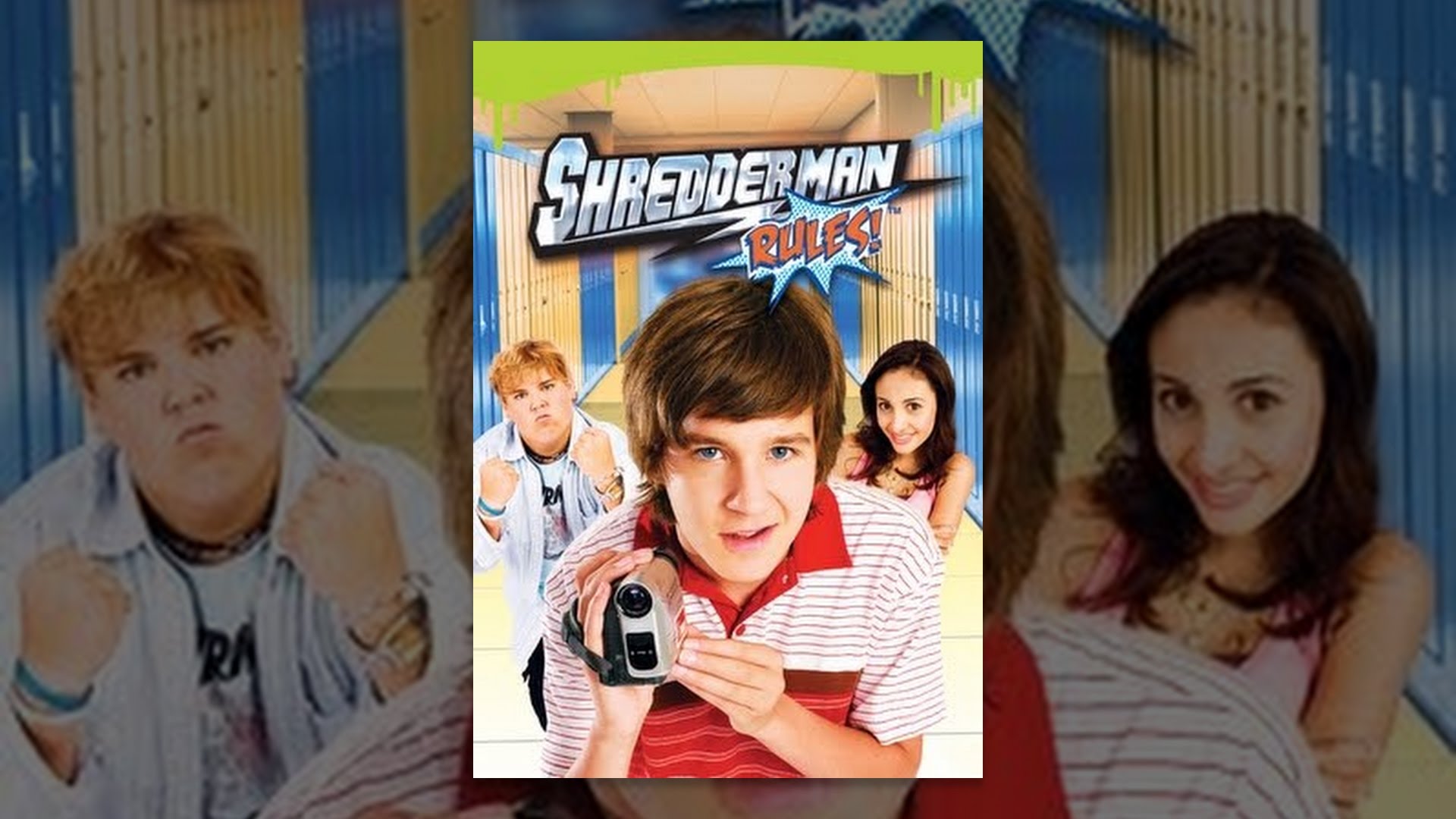
Shredderman Rules (2007) Review:

Growing up and doing acting, as a profession is not always the easiest thing for certain people. There have been plenty of stories time and again of various child actors who hit it big in one film and completely botched it when they hit their double digits. For cases like these, some have recovered, while others never made it (alive even). It's a sad day to see youth like this head down the wrong path. There's no excuse for it. There is still hope though, especially when looking at Nickelodeon's school-friendly TV show Ned's Declassified School Survival Guide. Starring a truckload of child actors, when looking up the cast and where they are now, it's nice to see several of them have gone on made a name for themselves. More importantly the lead character Ned Bigby played Devon Werkheiser, has been the front runner of all them. Coming out with two extended play acoustic albums, jump starting his own youtube series called Devon's Life Survival Guide and continuing to play in movies, Werkheiser has not slowed down.

Not the noogie
Slowly letting go of his schoolboy Ned Bigby image, Werkheiser began with this TV movie
after the series ended. Here Werkheiser plays Nolan Byrd, a nerdy kid who follows all the rules. He studies hard, doesn't bother anyone and has had a crush on a girl named Isabel (Francia Raisa) since he was little and met her at a lake they both liked. Now, Byrd is harassed by school bully Alvin "Bubba" Bixby (Andrew Caldwell), the son of crooked wealthy town sewage owner Bob Bixby (Daniel Roebuck). When being assigned in class by his history teacher Mr. Green (Tim Meadows) to bring an important situation to light, Byrd decides to create an alias known as "Shredderman" who reveals all of Bubba's wrong doings. Written by Russell Marcus and based on a book by Wendelin Van Draanen, this middle/high school comedy isn't that clever. It is a TV movie so that does limit it's budget and resources, but everything comes off as just very generic among all other things. Savage Steve Holland who has headed other Nickelodeon movies also directed the film.

What writer Russell Marcus doesn't understand is how overused all the school tropes that are shown in this feature and how exaggerated they are. Bullying is still a very serious issue when it comes to school but the way it's displayed here doesn't feel that relevant in today's time. Do bullied kids even get "atomic wedgies" or "fish hooked" anymore? If anything, cyber-bullying feels like more of a thing now. Besides, with these particular humiliations, surely someone from the faculty would see this and would not stand for it. Yet this is a continuous thing at this school at least. This leads into the next point - consequences. Sure there are moments where someone will get what's coming to them but it's all contrived due to plot convenience. Any other time that it's due, it will never show its face. How does a student gain access to old personal digital video files? And if they were, what makes them think they can get away with it? There is such a thing as digital tracking and that can go a long way.

Story wise there's nothing to ride home about either. Making the typical school stereotypes even more generic are the cliches that come with them. The fact that Nolan Byrd acts weird around the girl he likes and his crush not understanding him has been done numerous times before. It's also quite obvious to how it'll end too unfortunately. The story doesn't even try to develop them in a way that'll have its audience feel any other way towards it. It's that straightforward. However even with these problems, the film isn't garbage to sit through. All actors perform their roles the way they should play them; no matter how cliche they may be. Shining among all these actors is Devon Werkheiser for his likability as an actor and his ability to work with whatever he's given. Francia Raisa as his love interest is all right but her character's actions only prove to influence Nolan Byrd's motivational choices. There's also another girl named Miriam (Marisa Guterman) who also likes Byrd, but of course the same can't be said.

"Me tired....of cliches"
Miriam is a socially awkward character and written to be continually disliked by her classmates. Wouldn't it have been nicer to have them accept her more? But no. On a side note Daniel Roebuck also resembles that of a cousin to Donald Trump, it's very odd. Plus Tim Meadows plays a super relaxed teacher (which I don't know how he could've been hired) and Dave Coulier as Byrd Sr. The cinematography by William D. Barber, who normally serves as a camera operator works fine here. Knowing that it was a TV movie but had the look of something a little more than that was fine. There are some special effects shots though that weren't needed and they weren't that good. The music by Paul Doucette was okay too featuring a piano theme for Byrd and other instruments like organ and snare drum. Since it is a TV production, expecting an official release of the music would require too much money. So for what it's worth, Doucette's music is fine where it is being only in the film itself. It has its moments but nothing worth remembering.

Unfortunately the cast of likable actors, music and decent camerawork isn't enough to make this school bully story relevant in today's world. There are a lot of cliches in its story and characters that out date it rather than making it close to today's culture.

Points Earned --> 5:10

Sunday, June 19, 2016

Gone in Sixty Seconds (2000) Review:

Seeing actors early on in their transition stage moving from different genres sure can be surreal sometimes. Perhaps for some, their actual screen presence is not as prevalent as it use to be, but the name itself carries a lot of weight when it comes to how successful a film could be (most of the time). Now a days, when the names Angelina Jolie, Nicolas Cage, Scott Caan, Chi McBride and Robert Duvall are mentioned, all have their names connected to some well-known movie. However, when seeing actors in a transition state where their not the main lead or are but are not given the liberties to do what they did in later films, it just feels strange. The title to this film actually sounds like a knock-off of The Fast and the Furious (2001) franchise that started after that. Pricey, shiny cars, looking to be stolen in a heist film? Sure sounds aggressive enough to be one. But does it turn out like it sounds? Ehh,...kind of but it is a bit misguided in areas. Compared to its 1974 original, the story is more of a soft remake than anything else.

"Hmmm,...should I steal 50 cars today?".....
Written mainly by Scott Rosenberg who also wrote for High Fidelity (2000) and with uncredited rewrites by J.J. Abrams and Jonathan Hensleigh, the plot is about retired car thief Memphis Raines (Nicolas Cage) who is brought back to his old profession in order to save his younger brother Kip (Giovanni Ribisi) after a major screw up with car trafficker Raymond Calitri (Christopher Eccleston). The job Raines has to complete is stealing 50 high-end cars and have them ready to ship out, otherwise, Raines' brother dies. So in order to complete this task, Raines gets the help from his old crew played by actors, Angelina Jolie, Scott Caan, Chi McBride, Will Patton, Robert Duvall, Vinnie Jones and some others. All the while, police officers Castlebeck (Delroy Lindo) and Drycoff (Timothy Olyphant) are on Raines’ tail trying to figure out if the retired thief has re-entered his old profession. Directed by Dominic Sena who's only done a handful of films heads this production. Unfortunately, both the writing and direction have their issues.

Going back to what was mentioned before, one would think if the title suggests something will be gone in sixty seconds, then the end result will be a fast paced, action film. The thing is, there is action and fast cars, but the build up to this is slower than necessary. Half of this film is Memphis Raines getting his posse together and over time removing the respective cars from their location. However, when this happens very few times is anybody speeding. It's more like nonchalantly cruising off. That doesn't sound that exciting, especially when considering the padding. For almost two hours, there are definitely some scenes that either could've been trimmed or removed completely. This is in due part with the writing, which has a minor subplot about Memphis Raines and Sway (Angelina Jolie) being in love once. It's brought up at one point, then put on hold before having the cliche of "being back together" later for no real reason. What's the point? Audiences aren't exactly given the clearest of backstory to their relationship therefor so what?

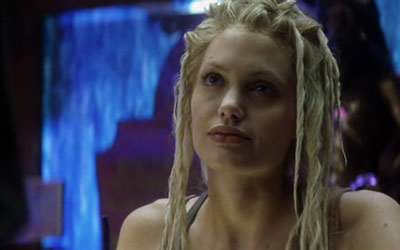
Another problem is the lighting and coloring. According to sources, Sena's trademark look are sepia tone / yellowish colors in his film. However, this practically the only color available because there isn't a whole lot of other things that stand out. It doesn't make the viewing experience that interesting. With that though, there are still some nice highlights. The main leads to this film do have their moments together as a crew. Nicolas Cage plays the fence in his acting changing between calm and ready beat anyone who comes to take him out. Angelina Jolie may not be as active in this feature as her later roles would be but she still has a presence that can't be ignored. Vinnie Jones is a character that never talks and isn't explained as to why but he too has some moments that showcase he's not to be messed with. On the other hand, Chi McBride and Delroy Lindo are probably the most vocal, being that they add some kind energy to their roles. Unfortunately, the rest of the cast aren't engaging because there’s too many and not enough development.

Angelina Jolie (action star "in transition" status)
There are however some nice deadpan comical moments delivered by Cage and that deals with his car named Eleanor who sort of has a mind of its own for some reason. It's dumb but funny. The cinematography by Paul Cameron (Man on Fire (2004) and Deja Vu (2006)) are well shot and work well the action scenes that do occur. Since it's wide screen, the look gives a broad range of view to see what surrounds the characters. The car chases that Nicolas Cage performs are decently exciting and are nicely edited. That's the way the rest of the film should have been executed. The music composed by synth enthusiast Trevor Rabin is a mixed bag. The score itself is pretty short surprisingly, clocking in only at a half-hour. Rabin does compose a main theme to Raines and Eleanor with a synth choir that pops up from time to time, but the rest of the tracks are somewhat muddled. There are some exciting cues that involve deep scratchy synth bases but they don't show up all that often because much of the tracks run on average about a minute. It's okay but could've been better.

The electronic synth musical score, cinematography and main leads make the viewing experience watchable but the premise itself is squandered by slow pacing and infrequent action. To be gone in sixty seconds, the momentum this feature creates takes much longer than that.

Points Earned --> 6:10

Tuesday, June 7, 2016

One Man's Hero (1999) Review:

When it comes films based on true events, it is in the filmmakers' best interest to keep all the facts as legitimate as possible without skewing the story all that much. The genre of films that probably receives the most critical of film buffs' attentions are the ones that have been historically recorded and not some fable spread by rumors and myths. Taking a deeper look, the type of historical film that gets this kind of focus is usually bio-pictures or war dramas. Further closing the gap, the war dramas that have received the motion picture treatment range; but several have depicted these tragedies during the Great War, World War II, the Vietnam War, the Revolutionary War and the American Civil War. Of course in world history, these are not the only confrontations that occurred, but for North American history, this is the usual batch. It is rare when another event is looked at that possibly was forgotten in the regular high school history books. The most recent that comes to mind is Heaven's Gate (1980), which was about a county war in 1890.

Marta & John Riley
Turns out this movie takes place during the 19th century as well. Lance Hool, a producer to other various films like Missing in Action (1984), The Air Up There (1994), Flipper (1996) and Man on Fire (2004), takes a turn in the director's chair to cover the Mexican-American War in 1846. Written by Milton S. Gelman (who passed practically a decade before this film's release), the story is about real-life soldier Sergeant John Riley (Tom Berenger) and his men who abandoned the U.S. army after being persecuted because of their Catholic faith. While leaving, they find refuge with fellow Mexicans led by Cortina (Joaquim de Almeida) and Marta (Daniela Romo). There, they both decide to join Mexico and fight for their freedom. Meanwhile, Colonel Benton Lacy (Mark Moses) attempts to get Riley back to the north before General Winfield Scott (Patrick Bergin) blows them all away. Running parallel to that, Marta and Riley start to become more attracted to each other every minute they spend together.

For problems, there isn't all too much to gripe about. The only script issues that are obvious deal with character motivations. From what is known, John Riley is somewhat a mystery but only after the Mexican-American war ended. There are documents of his existence but there isn't a clear answer as to what he did post-war. Did he marry for real? In this feature, Marta is Riley's love interest as is she to Cortina. The passion that Riley has for Marta is a constant subplot that is brought up every half-hour or so. Yet Cortina repetitively reminds Riley to stay away, but Riley doesn't listen. Soon, Riley and Cortina fight and immediately right after; it's water under the bridge for some odd reason. What was all the antagonizing for if it was going to be settled so quickly? Was it even worth writing in? The only other dilemma in this movie is more technical and that's the depiction of war. This film was Orion Pictures last release and many of the studio's films were rated R (as was this one). Still there seems to be almost no blood or gore.

That particular aspect was probably the most inaccurate component. War is not light and fluffy stuff. There are a couple scenes where blood does flow but it’s rated R. Gettysburg (1993) also should have been R but it was PG so the depiction of violence was much less gruesome and that's only appropriate because of its rating. Why give a movie the label of rated R if won't even play out as an R rated film? It's misleading. The cast to the film was also entertaining. Hearing Tom Berenger with an Irish accent is definitely a change in his usual speech pattern and it does sound authentic, as well as the soldiers played by Stuart Graham, Gregg Fitzgerald, Don Wycherley, Wolf Muser and Luke Hayden. Each actor equally matches Berenger in amiability. Daniela Romo as Marta is very pretty and it is obvious as to why Riley falls for her so quickly. Joaquim de Almeida is always fun to watch but in his role as Cortina, it’s hard to know how trustworthy he is. Mark Moses performance as Colonel Lacy is another great show. Moses knows how to have a presence.

Riley's Brigade
Visually, the film had an appealing look to it. All effects looked like they were executed practically, of which regularly gives a movie a more realistic viewing. Credit to João Fernandes as the director of photography for capturing wide shots of the western North American terrain. The actual depiction may not feel it has the right temperature to walk in casual clothing but it rightfully matches the environment of what the west was like. Fernandes was also the cinematographer for Friday the 13th Part IV: The Final Chapter (1984), Missing in Action (1984) and Red Scorpion (1988). The film score produced by Ernest Troost was another great element. Troost also composed the music to both horror comedies Tremors (1990) and Dead Heat (1988). Unlike Dead Heat (1988) though where the orchestra sounded like it came from an oldies monster film, Troost's orchestra to this film is much more full and contemporary. The main title is very applicable to the setting, with bagpipes representing Riley and his men. There's also a choir to boot.

It has some weird character motivations and underwhelming violence for an R rated war film, however it is an immersive film. The story provides a new history lesson to those unfamiliar of the Mexican-American war, the actors perform great, and the cinematography is befitting to the setting as well as the film score.

Points Earned --> 7:10

Saturday, June 4, 2016

Teenage Mutant Ninja Turtles: Out of the Shadows (2016) Review:

When it comes to Hollywood rebooting various nostalgic properties, fans have to be reassured that the right people are on board to make them. Since the late 2000s, the Michael Bay produced Teenage Mutant Ninja Turtles (2014) reboot had its fans up in arms from the very start of reports, pre-production and all the way until its release. It was one of those subjects that had endless debates between all kinds of fans on how the characters would be treated and whether the casting and character designs would properly represent the turtles today. Stepping back, the live-action CGI reboot to the original 1990 film was not a complete critical misfire but there were things about it that blatantly showed how much attention to detail was given to the production. Nonetheless the film brought in a hefty amount of money and two days later, a sequel was green lit. Of course, certain fans that already had their opinion would probably stick with it. However for this entry, there may be people who care after all. From what it looks like, things may turn around.

"Hey,...I think Raph's missing from this screenshot..."
The sequel seems to have taken note of big complaints fans had about the first and has worked to improve it. The first writers to the reboot, Josh Appelbaum and André Nemec continue to pen the script here. In the director's chair is no longer Jonathan Liebesman, but Dave Green, the director of Earth to Echo (2014). The premise to the story is straightforward. After the events of the first, the Shredder (Brian Tee) and two inmates named Bebop (Gary Anthony Williams) and Rocksteady (Stephen Farrelly) get broken out of police custody by his fellow foot clansmen and with the help of sci-fi wiz Baxter Stockman (Tyler Perry). Together they team up with squid alien Krang (Brad Garrett) to help conquer the planet. Thankfully the teenage mutant ninja turtles are willing to stop them with the help of Vernon (Will Arnett), April O'Neil (Megan Fox) and new addition Casey Jones (Stephen Amell). Noel Fisher plays Michelangelo, Jeremy Howard as Donatello, Pete Ploszek as Leonardo and Alan Ritchson as Raphael respectively.

Master Splinter is still voiced by Tony Shalhoub and Laura Linney plays the Chief of the police headquarters. Here are the only problems with the script. Where were the villain connections made? When and where did Baxter Stockman make connections with the Shredder? And the same could also be said for Shredder having connections with Krang. Also it's probably safe to assume Erick Sacks (William Fichtner's role) faded into obscurity or moved out of the country because he's never mentioned. Other than that, there are noticeable improvements in how things are carried out. Character properties were a major complaint among viewers and that was fixed. The footclan - yeah, they're ninjas now, not gun wielders. The turtles themselves are also focused on more instead of their human counterparts. This entry does not have the Michael Bay schtick humor where Michelangelo, Vernon or whoever else ogling over April O'Neil's looks. The turtles are still goofy yes, but no longer with hyperactive immature humor.

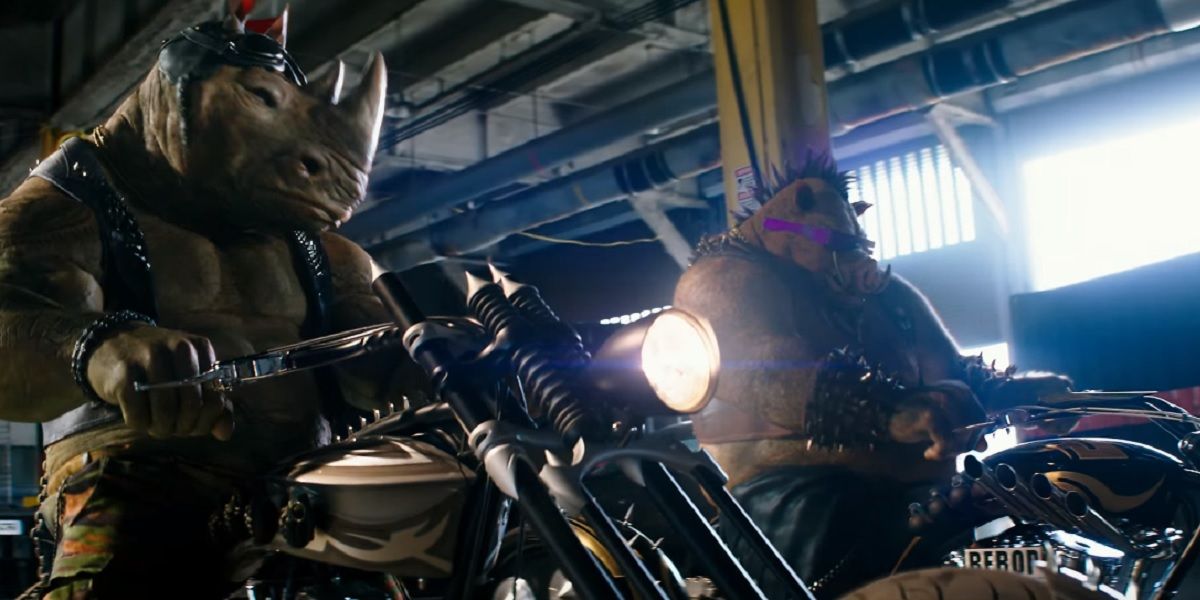
The development for the turtles also brings up further questions of teamwork, trust and mistakes. All of which serve as learning curves for each and help them grow as a family. Casey Jones even has a legitimate backstory. Stephen Amell as Jones may not have the long hair but he has the right amount of geekiness and comedic timing to his performance. The action is a nice ride too. There are still CGI fights when the turtles either battle Krang or Bebop and Rocksteady but they are well put together. Another character modification was toning down the CGI on Shredder's costume. Instead of being one giant magnetized mechanized suite with flying daggers, the only metallic parts are his helmet and arm guards and it looks completely acceptable. There's only one scene where the CGI looks a bit off and that's when Bebop and Rocksteady transform into their humanoid animal counterparts. For some reason they do not look completely polished. For a big action film though, Dave Green's direction and ability to handle such scenes is noteworthy.

CGI Live-Action Bebop & Rocksteady
The same could be said for Lula Carvalho as the director of photography. Carvalho's experience with mainstream Hollywood films starts at the remake RoboCop (2014) and this installment's predecessor. There are still some issues with how close the lens will get to the CGI character's faces but there isn't much else to knock on. All action scenes were handled easily and there seemed to be more lit areas too. Surprisingly the composer to the music swapped although the choice of replacement was no shocker. Taking over Brian Tyler's role from the first film is frequent Michael Bay collaborator Steve Jablonsky. Although Jablonsky does not keep Brian Tyler's main theme that Tyler had created from the first film, the new theme that is used has its own motif as well and it is memorable. As to why he couldn't have just added those cues to Tyler's is probably an answer nobody will get (if they're even asking a question like that). The action cues are well produced and definitely help with the momentum in the film.

Originally what seemed like would be just another clunky Michael Bay influenced movie; the sequel has made some significant improvements. The script still misses on explaining certain character introductions but it also focuses more on developing the turtles. Various character designs were fixed by fans’ critiques and the music (although different) is still an enjoyable listening experience.

Points Earned --> 7:10

Blade: Trinity (2004) Review:

Some people may not recognize it as the actual successful start of film studio Marvel comics but Blade (1998) was the original renaissance to where the company entered into profitable film making. It may have not had the intro credits like every property that came after it until its sequels or glowing reviews but the character was one of the few to have a much grittier and darker tone. This attribute would only go to Blade for the first five years until Daredevil (2003) and The Punisher (2004) were released. It was a special franchise that molded vampires from romantic / fantasy creatures into action / horror icons. Blade II (2002) reaffirmed this understanding although it was not as compelling as its predecessor. A couple years later, fans of the series would get their final entry in the series and very few left the theater happy. With a troubled production involving Wesley Snipes and Kris Kristofferson being unsatisfied with the script, the end product feels like not the entire crew was on board.

Blade with Hannibal King and Abigail Whistler
David S. Goyer, the now divisive comic book film adapter of multiple properties wrote and directed this feature. After accidentally killing a human, Blade (Wesley Snipes) is on the run from the F.B.I. and teams up with a group called the Nightstalkers played by Hannibal King (Ryan Reynolds) and Abigail Whistler (Jessica Biel). Together they must join forces to stop Drake AKA Dracula (Dominic Purcell) from bringing the world to an end. Sounds okay on paper (or screen) but the execution is different. Seeing Goyer's experience in other properties and being involved with this franchise from the very beginning, its confusing as to how Goyer messed up this much. Of the premise, the first subplot that does not belong is the killing of a human. It's not that it's a bad idea, but it never gets resolved so why even bother shoehorning it in? The cast is also a mismatch of actors. The only two actors who fit the best are obviously Snipes and Kristofferson; a close third could be Jessica Biel due to her character's relation to Blade.

But of this, Snipes and Kristofferson feel and sound the least invested and that only further cements the troubled production history. One of the biggest things that fans of the series will notice is how much Whistler and Blade take a back seat. Casting Ryan Reynolds would not have been a mistake if the character of King did not eat up all the dialog on the script. Blade barely says anything in this feature. Here and there yeah he does say a couple of good lines, but it's not that often. Most of the time, he just stares into space or grimaces. There's more to Blade than just that. The same could be said for Biel's role. Her character enjoys listening to music when fighting vampires; that dates the film a lot. Dominic Purcell as Drake (is that supposed to modernize his name?) isn't terrible but he also looks awkward in the role. His face looks as though he doesn't quite know what he's playing so he'll just be himself to some degree. His minions played by Paul Levesque (Triple H) and Parker Posey are actually more convincing vampires than he is.

There's also a distinct lack of action and horror throughout this picture. The special visual effects are actually better than a lot of the CGI stuffed scenes that were in Blade II (2002) but the count is much lower here. There are a couple of decent action scenes but the rest are rather underwhelming. Even the battle between Drake and Blade looks less exciting than what has been put to screen before. There are vampire stabbings, bitings and some blood but it's not as heavy as the violence depicted in this franchise's earlier years. Again going back to tone, Blade (1998) and Blade II (2002) roughly had equal tone with each other. The atmosphere of the universe Blade lived in felt dark and unsafe. The locations used in this entry are just uninteresting and boring. The Nightstalkers' headquarters has nothing special about it and the city itself feels more clean and shiny than in past representations. What was the purpose of this? Was it to just add to the fad at the time of other supehero films? It takes away what the series had going for it.

"How do I look?!"
Handling the camerawork was Mexican cameraman Gabriel Beristain. Beristain had also filmed for Blade II (2002) and S.W.A.T. (2003). Thankfully for much of the film, Beristain's experience kept the shoot steady. Beristain delightfully changed the aspect ratio from the previous entry to a wide lens and that always gives the movie a much bigger scope in visuals. The music was also enjoyable though this series has never had a solidified composer attached. Producing the music to this entry was German composer Ramin Djawadi and for some reason his official score has gone unreleased. There are a few areas where bootlegs can be found but there's no real way of obtaining the music. Only a few actual tracks exist, which mainly highlight some of the action sequences. One called "Shooting Around Corners" uses mainly synths but with an energetic fashion that actually is fun listening to. There are some cues that are organic like "Drake's Parting Gift" using real orchestra but it's not as memorable as the scores released it before.

Unfortunately, the last series to the original Blade (1998) franchise is just middling. The music and visuals are acceptable but the casting feels misguided. The main leads don't sound invested, the action is infrequent and Blade doesn't do all that much wisecracking or say much at all.

Points Earned --> 5:10

Wednesday, June 1, 2016

Smokin' Aces (2006) Review:

Like several jobs around the world, only a hand select group of people get the best jobs and are called back frequently to continue their style of work. This type of search goes the same route for those looking to show their skills in the movie making business. Only some people get their name in the trailers as "..., the director of..." or something along those lines. This particular headline also isn't biased on the critical fame of the designated individual. As long as the director to the movie makes the studio a truckload of money, it doesn't matter. Unfortunately, this doesn’t let other possibly qualified people of that profession to excel. The person to represent this group is the man to this film; Joe Carnahan. Heading only six movies in the last fifteen years or so, Carnahan has proven that he has what it takes to be an acceptable action director along with critical flair. It was actually the release of this film that got him recognized to direct The A-Team (2010) reboot. Weird how that happened because this isn't a good film.

Piven just realized the mess of a movie he's in
Joe Carnahan positioned himself as writer/director to this feature and this could be why it just isn't even decent. Being a solo writer/director is not easy. Anyhow, the story is a collaborative character plot where a bunch of assassins head out to kill a once famed magician named Buddy Israel (Jeremy Piven) who decided to turn on the mob that made him filthy rich headed by Primo Sparazza (Joseph Ruskin). While Israel hides in his penthouse suite, F.B.I. agents Messner (Ryan Reynolds) and Carruthers (Ray Liotta), amateur assassins Jack Dupree (Ben Affleck) and his buddies played by Peter Berg and Martin Henderson, a rogue trained assassin Pasquale Acosta (Nestor Carbonell), chameleon killer Lazlo Soot (Tommy Flanagan), Neo-nazi hillbillies Darwin (Chris Pine), Jeeves (Kevin Durand) and Lester Tremor (Maury Sterling) and lastly fem fatales Sharice Watters (Taraji P. Henson) and Georgia Sykes (Alicia Keys) all converge on that point to kill him. With all that said, hardly any of these characters have development.

For a two-hour film one would think some kind of story would occur. Instead, there's a subplot about as to why Buddy Israel needs to be kept alive but it's written as some kind of government plan that is unnecessarily convoluted. Without saying much more, the story will in fact waste the time of the viewer. It completely makes everything pointless. Imagine realizing that after the movie ended, sitting and watching two hours of nothing. Substituted for that is an overstuffed cast of personalities that are difficult to connect with in any way and the list of names mentioned continues. There's also appearances from Common, Andy Garcia, Jason Bateman, Joel Edgerton and more. There's just too much to go around. That's not to say the cast can't act or don't have distinct personalities, they just feel rushed and wedged in. Along with that are unresolved character threads that do not conclude the way they should; they just go missing. There are also inconsistencies with security being a thing. How does someone get into a hotel with a sniper?

There are also comedic bits thrown in but that's a mixed bag. Seeing Alicia Keys being a complete tough girl and spewing manly lines is fun. Then there's also a couple scenes where a knock-off karate kid shows his moves to one of the assassins. By golly is he annoying; why was he even included again? It's just unfunny padding that makes no sense. However, even with all this said, the technical quality of the film still thrives. Action-wise, again director Joe Carnahan proves that’s his genre. He doesn't rely on the shaky camera effect to make action look real. He films real cinematic action and it's very entertaining. The type of action to this movie are just gunfights but its rated R so there's decent blood effects. At some points it even goes beyond that to the point of demented horror action. That's mainly credited to the Tremor Neo-nazi brothers for their weird antics. Speaking of which, Chris Pine had a stupid comical scene. Not hilarious, just enough to create one laugh.

Alicia Keys =O
The director of photography to this picture was Mauro Fiore. Fiore was also the guy behind the camera for Training Day (2001), The A-Team (2010) and Southpaw (2015). All of which these films did not involve much of or if any shaky camera movement and that's commendable. There's no particular scene that isn't well lit nor is it frustrating to follow what happens. Clint Mansell composed the musical score. The scores Mansell has produced for various films range in critical praise but some are movies like Requiem for a Dream (2000), Sahara (2005), Moon (2009) and Black Swan (2010). Mansell's Smokin' Aces (2006) score may only be forty-five minutes, but there are number of solid action and emotional cues. Soft electric guitar and strings highlight the action, which helps get the blood pumping. The softer cues that easily stir the correct emotion use more acoustic guitar, and more drawn out strings in a tragic key. Mansell shows that he is proficient at both ends of the spectrum.

Joe Carnahan is naturally a well-equipped action director and his technical crewmembers hit the mark as well in music and cinematography. The actors can act in their roles but with little development, very few come out feeling likable in any way. The story wastes time and the plot is bloated with too many character threads.

Points Earned --> 4:10

Thursday, May 19, 2016

Thinner (1996) Review:

In the mid 1980s, fans of the horror genre were introduced to an up and coming director that showed promise in his career. That man was Tom Holland. Moviegoers will remember him best for directing two films that now have a cult status; that being Fright Night (1985) and Child's Play (1988). Other than this and directing a few episodes to TV shows, Holland hasn’t done much else. He did go on to make one more horror film before he was diagnosed with Bells-Palsy (putting him out of Hollywood's spotlight for a decade), and that film was this, based off of horror novelist Stephen King's best selling novel (one of them at least) of the same. Unfortunately, several viewers do not find this to be that entertaining. It's weird because this film does have its flaws but it's not a harrowing experience to sit through. This may also be one of Tom Holland's lesser appreciated projects but that's not saying a lot considering there are ton of other films that have bottom of the barrel quality.

"Why you no thin yet?"
Adapting Stephen King's novel was also director Tom Holland and Michael McDowell (the writer of Beetlejuice (1988) & The Nightmare Before Christmas (1993)). The story is about Billy Halleck (Robert John Burke), a gluttonous 300lb obese lawyer whose all about himself and food. One day after winning a big case, he accidentally kills the daughter of gypsy witch doctor Tadzu Lempke (Michael Constantine) in a drive by. Angry that Halleck was not properly prosecuted, Lempke places a curse on Halleck that rapidly sheds his weight at an alarming rate; to a point where it continues no matter how much he eats. Not realizing until it's too late, Halleck looks to find Lempke and have him remove the curse. Meanwhile, Halleck suspects his wife Heidi (Lucinda Jenney) is cheating on him with his friend Mike (Sam Freed). The issues that arise among these plot threads are convenient twists that get placed throughout the running time. How is it that Lempke knows certain pieces of information when he was never around? How does he have the power to curse people?

Moments like these feel strangely placed more than proper timing. There are also a few continuity errors that don't make a whole lot of sense either. One minute someone is irreversibly damaged; a scene later that exact thing that was damaged turned out being completely fine. Lastly for those who are really looking for some nasty imagery, this isn't that kind of film. As a whole, the movie just isn't that scary. This is one of the tamest "body horror" genre films and it's still rated R. That doesn't mean it doesn't entertain though. It's just that because the plot device is thrown into the light so quickly, there isn't much to be scared over, especially with all the plot contrivances that occur. However if one can get past that, the actual experience is quite the captivating thriller. Seeing Halleck go from a whopping 300lbs to less than 150 is shocking. The makeup effects were done by Greg Cannom, the same man who worked on A Nightmare on Elm Street 3: Dream Warriors (1987), Dick Tracy (1990), The Shadow (1994) and The Mask (1994).

The acting is acceptable by all cast members too. Robert John Burke as Billy Halleck was fun to watch. Taking into account he could have dropped out of acting after the critical and financial flop that was RoboCop 3 (1993), he demonstrates he's still a credible actor. Burke also had a number of good scenes that show just how deranged his character becomes.  Michael Constantine as Lempke isn't that deep in motivations but is good at being a crusty old man, with a wicked sense of humor. There's also appearances from Howard Erskine (a court judge) and Daniel von Bargen (a police officer) playing friends of Halleck. Bethany Joy Lenz as Halleck's daughter and Lucinda Jenney as Heidi act like an ordinary family as well. There's also a gangster named Richie Ginelli (Joe Mantegna) who knows Halleck and uses his connections to help him out. If there's one thing to say about anybody else other than Burke, it's just that his or her characters aren't that engaging. They can act but their character arcs aren't as magnetic as Halleck's.

Robert John Burke
Plus like many of his other adapted books, author Stephen King himself has a small part in the movie as a store clerk. Behind the camera to this picture is cinematographer Kees Van Oostrum. Van Oostrum has a lengthy filmography but the two projects he might be best known for are Ronald F. Maxwell's war epics Gettysburg (1993) and Gods and Generals (2003). Even though this film does not have any epic scope, many scenes are competently lit and confidently show the troubles of the bloated lawyer. The music was another added bonus. Composed by Daniel Licht, the same composer to the impressive score to Hellraiser IV: Bloodlines (1996), the film score to this feature is a great listening experience. Licht composes a memorable main title motif for the movie using majority strings and tambourines to emphasize the gypsy context of the plot. There's also a few tracks involving the piano with unsettling tunes that are cued when Burke's character begins having emotional bursts of anger. It's a film score that should not be overlooked.

Not all of it's characters are inviting enough to be fully captivated (even though the cast can act), there are a couple of storytelling issues in the script and the overall feeling isn't that scary. However, it still has some thrills thanks to the makeup effects, notable film score, camerawork and a compelling performance from Robert John Burke.

Points Earned --> 6:10

Thursday, May 12, 2016

Maniac Cop 2 (1990) Review:

Slasher / horror films throughout the 1980s were a big thing in its time. Many popular icons arose from that decade of which many still resonate with fans today. Several moviegoers remember the mainstream villains but there are also groups of people that remember the lesser known ones too. Of those, William Lustig's Maniac Cop (1988) was one of them. Although the concept itself borrowed ideas from past films like Halloween (1978), the idea of having a killer cop on the streets causing hysteria among the citizens of the local police force was rather inventive. The premise of corrupt cops has long been used before in movies, but an undead cop was another story. The other component that made it captivating to watch was that it played out like a mystery thriller. The maniac cop wasn't actually figured out until much later in the movie, which helped build tension to the reveal. And like any other successful movie opening, a franchise was created. Let's see how it holds up.

Laurene Landon & Robert Davi
Larry Cohen (the writer from the original) pens the continuation of the story. William Lustig also returns in the director's chair, yet there are noticeable problems, this time a little more than the first. As it was revealed at the ending of the first movie, Matt Cordell, the maniac cop (Robert Z'Dar) is alive and returns to exact his mission. The only people who still believe he's around are the cop from past events Jack Forrest (Bruce Campbell) and Teresa Mallory (Laurene Landon). Unconvinced of what they say, their captain, Edward Doyle (Michael Lerner) sends them to cop psychiatrist Susan Riley (Claudia Christian). Instead, Forrest and Mallory work to persuade Riley that Cordell exists. The only other person to think their actually telling the truth once he starts to see the puzzle pieces align is Detective Sean McKinney (Robert Davi). This is fine for a premise, but as soon as this is set up Lustig and Cohen add extra unnecessary elements.

Cohen and Lustig's biggest mistake was mixing in an assistant to the maniac cop. Leo Rossi plays a serial killer named Turkell and he ends up teaming up with Cordell; to a point where he can communicate with him (via one-sided conversation). This would have been much more entertaining if Rossi wasn't so over the top in his performance. There's actually more focus put on Turkell than Cordell at certain points. This movie is called Maniac Cop 2 (1990) right? Also at one point, Turkell asks Cordell about his past and viewers are given the exact same flashback from the original Maniac Cop (1988) film. Even another jail mate named Blum (Clarence Williams III) joins Turkell and Cordell, but has very little significance. This is all just padding, it's not story telling. Lastly, there's a rushed subplot about some inside conspiracy dealing with Cordell and his death. The problem is that it comes from nowhere so abruptly; it's confusing as to why Cohen didn't mention it in the original movie script.

Among these problems, everything else is commendable. The cast can all act well together. Bruce Campbell and Laurene Landon are still believable in their roles, Robert Davi and Claudia Christian make nice additions and there are a number of other actors that have small roles. Charles Napier, Danny Trejo, Marco Rodriguez and even Sam Raimi make quick appearances and it's enjoyable to see that. Robert Z'Dar as the title character continues to intimidate with his stature and presence. It's still confusing as to why nobody ever thinks of shooting Cordell in the face though. Everyone aims for the abdomen; not the face, why? For violence, nothing is seriously gore heavy but there are still some good kills. There's even a scene with a chain saw that may catch people off guard due to what's expected. One thing's for sure, the maniac cop loves snapping necks. Cordell's face is much more hideous this time too. There was only one scene though where it looked like a cheap mask.

"No hard feelings, but I'm taking over..."
For cinematography, James Lemmo handled the camerawork. Lemmo was also the cinematographer to director Abel Ferrara's Ms. 45 (1981), Fear City (1984) and also to the original Maniac Cop (1988). Like the first movie however, there are very few (if any) daylight scenes. It's fine to show night time, but it gets a bit difficult to see things when everything is shrouded in the dark city. Nonetheless the camera is always steady and gets what it needs to show. Jay Chattaway returns as well to compose the film score. Much like his previous effort in the franchise, Chattaway thankfully maintains the main theme of the series with synth keyboard and drawn out ominous horns. There are added themes though, which may not have been crucial to include. This involves a church-like choir in the background for some tracks. Yeah, there's always that idea that putting in holy or childlike songs in a minor key sounds creepy but it makes the film feel like it was supposed to have a religious tone. Not sure.

Casting, music and violence all make this sequel watchable. It is disappointing however when majority of the original crew members return and shift the focus from the title character to some other forgettable over the top one. There's also a rushed subplot about Cordell's case and it gets wedged in way too quickly. Still decent though.

Points Earned --> 6:10

Wednesday, May 11, 2016

The Jungle Book (2016) Review:

With Hollywood updating, rebooting and remaking past movies all the more frequently now, one would think to take note of how Disney has done it thus far. At least from what has been presented, it seems that the producers of Disney have figured out a way to revamp their old properties into live-action territory and maintain the hype about them.  Disney's The Jungle Book (1967) has remained one of the most popular family children films around, most notably for its comedy, simple story, memorable characters and catchy music. So who would have the credentials in order to jumpstart the movie and do the original justice. Enter Jon Favreau, a director but mainly actor who earned his stars by igniting what people now know as the Marvel Cinematic Universe with Iron Man (2008). Favreau also directed Elf (2003), a holiday film that also has a strong fan base. To have Favreau again starting another series feels appropriate. The real question is though, does he do it right? Mostly yes.

Bagheera, Mowgli & Baloo
The screenplay was written by Justin Marks, who surprisingly only wrote for one other theatrical production. That film was Street Fighter: The Legend of Chun-Li (2009), so it is very surprising how well this story was crafted compared to Mr. Marks last effort. For the most part, the story setup is the same. Abandoned man cub Mowgli (Neel Sethi) is found by the panther named Bagheera (Ben Kingsley) and has him raised by the wolf pack led by Akela (Giancarlo Esposito) and Raksha (Lupita Nyong'o). But one day, Shere Khan (Idris Elba) the tiger notices Mowlgi's presence and demands he is rid of. From there, it's up to Bagheera and another friend named Baloo (Bill Murray) the bear to get him back to the man village. Aside from plot, there are some added layers to the characters and their motivations. Shere Khan, Akela and Raksha receive much more development in their relationship to Mowlgi. Meanwhile, Bagheera and Baloo remain likable and well developed in their main roles.

The only character who doesn't have a significant presence is Kaa played by Scarlett Johansson. Kaa in this film is more a plot device than any other use, but the knowledge that she also has comes into question. How did she know where Khan got his scars from? Was she there when it happened? Another weird thing is that only some animals in the jungle can communicate with Mowlgi. Why can't the elephants, vultures or monkeys? Then again, the reason why this is called the "jungle book" and why a bear is in a jungle never made sense either even for the original. Christopher Walken plays King Louie and at certain times rips off The Godfather (1972) and himself. Just for fun, Favreau, Russell Peters and even Sam Raimi have small voice roles. When it comes to voice work (and acting) though, everyone performs well. Neel Sethi as Mowlgi is a great child actor and looks seriously engaged in his role. For some voice actors though, there could have been better choices.

As stated before all voice actors do very well though. The best actor who fit his role was Ben Kingsley as Bagheera. Kingsley is no Sebastian Cabot but he gets very close. Scarlett Johansson as Kaa in replace of Sterling Holloway was a unique choice too. Johansson's voice makes Kaa sound even more seductive than before with her hypnotic eyes. Both Giancarlo Esposito and Lupita Nyong'o make their characters likable too with their calm performances. The only two characters who probably could have been cast better were surprisingly Baloo and Khan. Since this movie supposed to be grounded in tone, having Elba as Khan is understandable. Unfortunately, Elba misses some of the class George Sanders gave in his performance as Khan. For Murray, it's obvious that he wanted to lighten the mood but that shouldn't include his voice. Phil Harris fit Baloo very well, and even though it's not as popular, John Goodman from The Jungle Book 2 (2003) would've been a better choice.

Khan =O
In spite of this though, the visuals were on point in this film. The special effects were groundbreaking with the amount of detail that went into each animal. Even for a 2D viewing, the animals look as though one were at a petting zoo. That's how authentic the pelts of these animals look. The layering from the furs to the jungle surroundings is just breathtaking. The director of photography was Bill Pope, the same man behind Darkman (1990), Spider-Man 2 (2004), Men in Black 3 (2012), The Matrix (1999) and its sequels. Every shot, whether it's a clear or rainy day, every scene has the right lighting. Composing the film score was John Debney. Having worked with Favreau before, this is a natural pairing. Debney easily morphs the 1967 original themes into a much bigger sound and bravado. The only two songs to actually be sung by characters are "Bear Necessities" and "I Want to Be Like You", but this is only for a brief time. Definitely not as lengthy as the original.

One would think that rebooting beloved classics is a risky choice. However, Jon Favreau showed many were wrong. The writing is just as equally flawed in some places like its original but it still has an enjoyable story. More thought could have been put into casting the voices for certain characters but it's not a huge issue. The robust film score, acting, special effects and camerawork really shine in this live-action reboot.

Points Earned --> 7:10

Sunday, May 8, 2016

Raggedy Ann & Andy: A Musical Adventure (1977) Review:

Many people of the latest generation just are not fond of dolls. Dolls have gained a reputation for being ominous and foreboding, with creepy smiles and endless stares. However, this is only seen in the horror genre of movies. Rarely are dolls seen in any other form of light when it comes to cinema. If there are any recent mainstream productions that come to mind, majority would likely recollect Toy Story (1995), which involved dolls / toys. Even then, there were some dolls that were portrayed in a relatively grim and unsettling light. Yet for some reason, not enough youth know of Raggedy Ann and her brother Andy. Created by Johnny Gruelle for a series of children's books, would become a timeless piece in history. Then in one of the biggest years of the 20th century, Raggedy Ann would receive her first animated feature in 1977. The weird thing is for anyone who has seen it; people only call it a “trippy film”. Is it really that seizure inducing? There really is more to look at here because it's not all LSD and flashing lights.

"Not sure if I should laugh or flee in terror...."
Interestingly enough, the introduction of Raggedy Ann and friends starts out a lot like Toy Story (1995). Immediately when Ann's owner Marcella (Claire Williams) leaves the vicinity, all the toys and dolls come to life. Written by Patricia Thackray and Max Wilk, two people who didn't have much experience with theatrical cinema are perhaps why the story doesn't have much priority in the running time. It's Marcella's birthday and she receives a new doll named Babette (Niki Flacks) who is then greeted by Raggedy Ann (Didi Conn), her brother Andy (Mark Baker) and several other side characters. However Babette thinks she doesn't belong because of her class (which is a pricey doll), but is soon snagged by The Captain (George S. Irving). The Captain's reason for taking Babette hostage was for being in love, but it's up to Raggedy Ann and Andy to save Babette. On their travels, they make friends with The Camel (Fred Stuthman) and run into more characters that pose as obstacles.

It is this part of the movie that serves no purpose. Originally what looked like might be a Toy Story (1995) movie, ends up having an Alice in Wonderland (1951) twist. It really doesn't further the plot any. Adding to that are the strange character motivations that just bring up further questions than resolutions. The Camel continues to be in some kind of a hallucinogenic trance to find his way home and is never explained why. Apparently Raggedy Ann has a "candy heart" but that doesn't change how problems are solved. Babette has strange opinions on whatever situation she's in, which conflicts with her development and the same could be said for The Captain. There's also an individual named King Koo Koo (Marty Brill) who looks to increase his height by laughing but can only do so by laughing at others. He too has no significance. Plus, there is no translation of these characters when the story focuses on the world Marcella lives in. What were they in reality? Obviously The Camel was real, but what about everyone else?

This is what undoubtedly brings the viewing experience down, but it isn't entirely a waste. In fact, there is an indefinite amount of things to admire. Directing this feature was Richard Williams; a two time Oscar winner for animated films, one of which being Who Framed Roger Rabbit (1988). He also headed The Princess and the Cobbler (1993), which people feel is another underrated gem. With that said, the animation being the late 1970s looks fantastic and will surely engage its audience and not just because how strange some of the characters move. Unfortunately that's why people call it "trippy" but that's what gives its characters personality. The most creative animated sequence should go to when Ann and Andy meet The Greedy (Joe Silver), a gluttonous sludge creature who indulges on sweets. The way the character moves is so elaborate that it can be quite overwhelming to think of just how much time and effort when into actually making that scene work the way it did.

The Greedy
The voice work was laudable for all entities. Didi Conn was the perfect choice for Raggedy Ann. Her sweet, high pitched voice makes Ann look and sound completely amiable. The rest of cast also does their jobs well but other than Conn, nobody takes second place. There's also roles played by Arnold Stang (who is best known for Hercules in New York (1970)) and Alan Sues. The songs and music was composed by Joe Raposo. Of other big productions, Raposo is known for making the music to Nashville (1975) and The Great Muppet Caper (1981). For the score its main theme is "Rag Dolly", which is sung later and is highlighted by harps, horns and music box like bells that help give it the child-like sound. For songs, all actors in their roles can sing the lyrics well and there are moments where the tune might tug on a few heart strings. The songs themselves aren't as collectively memorable as other soundtracks to some musicals, but there are some like "I Look and What Do I See" and "I Never Get Enough".

This animated feature of the popular children's doll should not be seen just because past viewers have called it "trippy". The story lacks in clarity on several subtopics but the music is enjoyable, the animation is unique and the voice cast performs well. There are things to like about it no matter how flawed it may be.

Points Earned --> 6:10

Thursday, May 5, 2016

Atlantis: Milo's Return (2003) Review:

Sometimes people should wonder whether there are two Disney corporations. There's the Disney that moviegoers love and that consists of the classic titles that revolutionized the way people saw family and children films. Then there's the other side of Disney where it acts as a sellout / cash cow that churns out Direct-to-DVD sequels of their various popular films. Most of which these particular sequels either nobody asks for or just end up being despised by fans of the original. It makes no sense how such a well-respected company could have such split personality in goals. This is not to say that all of their DVD sequels are terribly made but to some, it would seem the mouse house operates solely on monetary impulse. The other odd thing is when sequels are produced to films that didn't even perform well. Of the early 2000's, Disney's Atlantis: The Lost Empire (2001) was one of them. Originally its sequel was for a TV series but was scrapped. Thus, this sequel feels more episodic in storytelling than a movie.

"Uhhh Kida, do you think we need to be here?"
Directed Victor Cook, Tad Stones and Toby Shelton (who have all worked on various Disney DVD sequels) and penned by six writers from various TV shows and genres, this sequel is okay but that's all that it is. Although the title suggests it's “Milo's return”, the story is actually about Milo's original crew having him come back to the surface in order to understand and resolve strange occurrences happening with no reason in the country. Kida's thoughts are that they are somehow connected to Atlantis; once weapons of destruction that her father had locked away hoping modern day man would not find. These events in question are that of a small town being terrorized by a deep sea kraken, a dust storm of spirit wolves and a mad man looking to start the end of the world.  Of these separate cases, none of them truly give any explanation to how their Atlantian connection affected history. They're really just lazy tie-ins with Atlantis and nothing more.

The voice cast behind the characters thankfully help make the viewing relatively tolerable. There's only a few replacements; for Milo, James Arnold Taylor takes over Michael J. Fox and instead of Jim Varney, Steven Barr fills in as Cookie. Every other character remains the same. Cree Summer, John Mahoney, Jacqueline Obradors, Don Novello, Corey Burton, Phil Morris and Florence Stanley all return to reprise their roles and their exchanges are still commendable as the slew of personalities they make up. There are additional voices too and they consist of Frank Welker playing Obby (a three legged volcano dog,...precious), Jeff Bennett, William Morgan Sheppard, Floyd 'Red Crow' Westerman, Thomas F. Wilson and Clancy Brown. The unfortunate part is that with these new additions, somehow not all the main characters make it into every story. Characters like Vinny and Sweet disappear at times with no notice and don't come back until another story finishes. Strange.

Another component to the writing that doesn't exactly make sense are some of the character motivations. Some of which these motivations completely contradict beliefs from the prior movie. It's another thing to also think that sharing the gift of Atlantis will bring about good and everyone will be accepting of it. If this were a real world event, the newbies to the world should think twice. Animation was handled by Toon City, a contracting company that has frequently worked with Disney in several animated TV show spinoffs and direct-to-DVD sequels. For what it's worth, the animation is nowhere close to its predecessor's quality but it isn't garbage either. There are few relaxed scenes that have some decent fluidity to them and the action scenes are engaging too. For the action there are explosions and various other character movements (kraken, dust storms or protagonists) that have natural movement to them. The difference in quality to this is more texture display than anything else.

Yeah, it's obviously lost some of its quality
Of the animation, if there's one thing that really stands out, it's all the continuity errors that litter the screen. There are a considerable number moments when these problems develop. Parts of it show up for certain sections of backgrounds, while other times it’s as simple as animating characters’ mouths when clearly there's voice over work being played. It's moments like those that just feel sloppy and cheap. Also when Milo's friends come back to Atlantis, they arrive via plane. However the first movie had everyone go underwater; great job guys. The music to this feature is adequate though. Don Harper, who normally is the conductor to score recording sessions and who's best work would come later in The Lion King 1 1/2 (2004), composed the music. Occasionally, Harper does reference James Newton Howard's theme from the original but it's not around for long. The music itself is also not as grand but this is probably due to the constraints of the budget itself. It's just okay.

Atlantis: The Lost Empire (2001) was one of those Disney films that didn't need a sequel. Is this worth any of your time - not really but it's not a total disgrace either. The music, most of its animation, and voice acting is praise worthy. Its weak plot threads are more of the problem.

Points Earned --> 5:10

Sunday, May 1, 2016

The Jungle Book (1967) Review:

Disney in general has made numerous films that are deeply layered with themes that first time viewers may not recognize. It's one of the reasons why Disney is so successful at making films. They also have their fair share of poor writing too but the entirety of them is not as voluminous as the ones many people remember and enjoy. Even with this though, Disney has also made films that weren't as richly textured and scaled up to a more complex level of understanding. That is not to say that the movies that are simpler are lower on an intellectual basis, no. Instead, they are just as influential if not more because of just how simple they are compared to Disney's other laminous movies. It would seem most of these particular types of films would go back to Disney's classical period of all their hand drawn animated features that everyone considers classics today. Of this group of films, the film that best represents the one note feature is this movie. It doesn't explore much other than one plot and that's fine.

Baloo, Mowgli & Bagheera
The movie is based off of the "Mowgli Stories" written by Rudyard Kipling. Audiences are introduced to Mowgli, an orphaned boy in the middle of the jungle who is found and observed by Bagheera the panther as he's raised by a wolf pack. After 10 years word gets out that Shere Khan the tiger is returning to kill Mowgli, so Bagheera decides to try and bring Mowgli back to the man village. The problem is, Mowgli won't go because he loves the jungle and all of his friends are there. Helping solidify his belief that the jungle is where he belongs is Baloo the bear. A lackadaisical beanbag that loves to just enjoy his surroundings. Adapted by the writers of Bambi (1942), Peter Pan (1953), Robin Hood (1973) and 101 Dalmatians (1960), it's obvious to why mostly everything about what goes on in this feature film is so amiable. The characters and the voice actors that play the characters are exceptionally fun and likable to watch on screen.

Of the cast, the only one who is still living is Bruce Reitherman who voiced Mowlgi. At the time he was only 12 and his voice matches the look of Mowlgi well. Today Reitherman has filled other filmmaking positions but mostly has appeared as himself for various documentaries. Voicing Bagheera was Sebastian Cabot, who speaks from time to time but also narrates. Some might recognize him as the narrator to all the classic Whinnie the Pooh tales as well. Phil Harris as the lazy bear Baloo doesn't stray far from his natural voice but nonetheless has made Baloo one the more memorable characters from this period in the mouse house's filmography. Shere Khan the tiger played by George Sanders was amazing. Naturally the voice matches the presence of Khan and although he's the antagonist, there's a lot to like about him too. There's also appearances from Sterling Holloway as Kaa the snake, Louis Prima as King Louie of the Apes and J. Pat O'Malley as Colonel Hathi the Elephant.

There's really only one thing that should be addressed and that's the fact of how sexism plays a small role. It's difficult to say without giving it away but there's a moment where it plays a turning point for a character. Fine, it's understandable but at the same time more than just one character could've played a part to help serve their purpose for the turning point. This was a different time when the movie was made but it seems a bit one sided. This is it though, the animation still has the Disney classic look to it and it's important to know that animating is a very time consuming task so kudos to those who worked on that part of the film. There are a number of other discrepancies that don't make sense like why is called the jungle book when it really doesn't have to do with a book except the intro. Or how is that Kaa can hypnotize his victims with his eyes so easily. At this point, these are questions that are just asking for too much, so it's not needed.

That Shere Khan presence
The songs are also very catchy. With lyrics written by Richard M. Sherman and Robert M. Sherman, the same song writers from The Parent Trap (1961), The Sword in the Stone (1963) and Mary Poppins (1964), how could one not see why the songs in this film are so timeless. It's hard to find anybody who doesn't enjoy or at least tap a toe for "Bare Necessities", "I Wanna Be Like You" or "We're Your Friends". For the film score, George Bruns composed the music. Bruns also composed the film scores to 101 Dalmatians (1961), The Sword in the Stone (1963), The Love Bug (1968), Herbie Rides Again (1974) and Robin Hood (1973). For this feature, the music again calls back to the classic Disney sound of orchestras from that time. There are a lot of strings, trumpets and drums. Plus considering the setting is in the jungle, it suitably fits. If still works, then there's obviously no reason to knock it then.


The writing is very simplistic and that is all the story needed. It does suffer from one apparent sin at a certain point in a story arc but the voice acting, animation and music make it difficult to really fault it at all.

Points Earned --> 8:10

Saturday, April 9, 2016

The Rule (2014) Review:

After watching Revolution '67 (2007), a documentary by Marylou and Jerome Bongiorno, any viewer should be able to walk away with a solid understanding of why the city of Newark, is the way it is today. Although it was released a while back, the information it conveys to its respective audience is still significant now. Within that documentary, the Bongiorno's painted a picture to assist the uneducated in receiving a better understanding of the old city. Topics ranged from social, political, and economic issues; to why and how they occurred. To the uninformed, the comeback for Newark has not been easy. There are still numerous controversies at hand that require attention. But of all this, the Bongiornos’ were able to discover a hidden gem within the bustling streets. That gem is known as St. Benedict's Preparatory School, a school for the youth of Newark that has a reinvigorating set of ideals they call "The Rule" that demonstrates the current state of Newark isn't set in stone.

The Monks of St. Benedict's Prep
Of the St. Benedict's rule, their guidelines consist of 12 different fields of focus. Those sections consist of Counseling, History, Adaptability, Commitment, Hope, Connectedness, Trust, Leadership, Community, Perseverance, Spirituality and Stability. Directing this feature film is again Marylou Bongiorno, who goes through each part of St. Benedict's rule and systematically disassembles what each component means and how it effects the operations of the school. Together, these factors make up what is the structure of St. Benedict's and how it functions to enhance the lives of the youth that attend their campus. For the teens who attend St. Benedict's, they quickly learn the value of teamwork, friendship, leadership and learning that there is a future beyond the streets they live on. Of course the first stepping stone is instilling that in the students. This is where the counseling comes in. However, the reputation that St. Benedict's has now was not always as a well-oiled machine.

Along with demonstrating that the school could change lives, the institution itself was tested too. This test occurred in 1967, specifically which was elaborated on in Revolution '67 (2007). This particularly coincided with the history, adaptability, commitment and hope sections to their rule. The rest (connectedness, trust, leadership, community, perseverance, spirituality and stability) aims to transform the students for the better. All of these aspects are the necessary ingredients for a healthy upbringing that much of the younglings do not receive in the city of Newark and some of its surrounding cities. Yet of the schools in Newark where just 32% of students pass the high school proficiency assessment (stated in the film), St. Benedict's has a very high graduation and college acceptance rate percentage. Why is that? It's apparent that St. Benedict's rule has a very proactive impact on the youth who attend their school.

It's strange to think that these steps to achieving such success are real among all the negativity that encases the school, but it's quite impressive to say the least. It's this and the in-depth look at the school of St. Benedict's itself that really help the viewer grasp the journey that it took for this one school to get to where it is now. For how the information is presented, there isn't as much a variety of speakers but nonetheless they get the point across just as effectively. The majority of the speakers are the monks who oversee the school or other faculty that work there. There is an occasional appearance from a historian but that's it. Among the people speaking, audiences should get the most from Father Edward (a tough man with a soft interior) and Ivan Lamourt (a psychologist, director of counseling and assist. headmaster). These two really help put many of kids’ outer lives into perspective for those who don't understand and cannot relate to such situations.

Father Edward doin' his thing
There are some people however the Bongiorno's should have included. What would be intriguing to know are the opinions of past alumni and the parents of those alumni or current students about St. Benedicts and whether they feel they benefited from it. It does seem a bit rhetorical but at the same time, actually hearing the success would be great. This time, the cinematography and music was handled by Jerome Bongiorno. For camerawork, again the movement is rigid when it comes to interviews and that's fine. For anything else, Mr. Bongiorno captures as much as he can within St. Benedict's and even has footage of some of the outside activities. There are also several pictures put in for historical reference that help when it comes to the history flashbacks. The music by Mr. Bongiorno is not as frequent as before like Yotam Rosenbaum's composition from Revolution '67 (2007), but it does still have some very short cues played on piano to aid certain moments. It's all very informative.

This positive outlook on the teaching the youth of Newark New Jersey is very enlightening and uplifting. It misses the opportunity to have alumni students and the parents of students reinforce the power of St. Benedict's, but the faculty who do speak on the behalf of the school display enough to prove good things are happening. The cinematography heavily engages its audience with the system of the school and the students who live there. Let's hope more people follow them as a positive role model.

Points Earned --> 8:10

Wednesday, April 6, 2016

Revolution '67 (2007) Review:

When it comes to the city, many people today think of all the popular places that have the most tourist attractions or what has the best sites to see. Of these highly sought out locations, people tend to forget that not every city is glistening with appealing visuals. Even the great New York City of the United States of America has its areas that require necessary attention. However, across NYC and over the Hudson River lies Newark, New Jersey. What was once a largely industrial and populated city now lays an urban landscape with several stretches of poverty and crime. For those who are not familiar with Newark intimately, their viewpoints unanimously converge on the assumption that Newark is a place nobody should visit. Yet for filmmakers Jerome and Marylou Bongiorno, they have a much different mentality about New Jersey's Newark. The Bongiornos are not your typical set of documentary movie makers. In this documentary, they cover how Newark changed after 1967.

Not much needed to be said here....
One of the biggest advantages the Bongiornos have in their favor versus numerous other filmmakers is that they live in Newark. What better way to get in contact with the people who know the city best, to immerse oneself in the culture and to gain an understanding of the city's history? Yes, research is needed but a disconnect will still exist unless the people involved actually experience the neighborhood itself. The year of 1967 was a time of change for Newark, in its social and political issues. Audiences are reeled into the enticing story of how things got so uncontrollable so quickly. Now of course just giving the reason is not all that is reported. As viewers are explained the set of events that brought about such an uproar, the next step was giving more food for thought by elaborating on the socio-economic history that plagued Newark before any of it even happened. In short, Newark was a slow cooking pot boiler that had unresolved problems.

What's intriguing to know, is that the infamous riots of Newark in 1967 were a culmination of circumstances. These quandaries had been brewing decades before and they span from subtopics about the housing commission, discrimination among people, corrupt city leaders, freeway construction, poverty and much more. Along with that are several clips of people being interviewed that were either indirectly and (more importantly) directly involved with this tragic set of events. This list of people that help give the audience a richer understanding of the complications at hand range from activists, historians, former politicians, public safety officials, journalists and others. Of these individuals, Tom Hayden, Ronald Smothers, Sharpe James, Amiri Baraka, Nell Irvin Painter, George Richardson are just some of the people who help relay this information. What's even more surprising is to see and hear how much of a disadvantage other races had compared to working white folk.

Yet if there was one group of people being interviewed that should have had more time to explain their side of the story, it should have been for the veterans of the National Guard. It's definitely important to have your audience understand the topic at hand and receive the message the film conveys, but it is also important to have equal amounts of information on both sides. This is not to conflict the overall comprehension, but to see the viewpoints from both perspectives equally. There are nonetheless some very disturbing statistics displayed throughout the film that can resonate for quite a while. Another aspect to this documentary that really helps the atmosphere and tension feel all the more authentic are the numerous snippets of 8mm videos that were taken during the violence that occurred that day. During those particular pieces of recorded history, one can only imagine what it would've been like to see the National Guard advancing through local streets.

Just one of the many interviewed
In wrapping up, the last segment updates viewers on Newark's current status. There are things going on in Newark, but it still needs the right guidance. For Jerome Bongiorno working as cinematographer, the camerawork was fine. For the interview elements, the camera is rigid much of the time and that's how it should be when filming a classic documentary. Then again it would have been quite stimulating to see more shots that caught today's Newark in action. For those who don't live in Newark, just having the camera pass through pedestrians or by sidewalks doesn't show Newark's other surroundings. The music was an enjoyable added touch though. Composed by Yotam Rosenbaum, the music is a callback to the days of early jazz when the instruments at the forefront consisted of piano, organ, and light brushes on the snare. These sounds all in some way assist in reflecting the time and tone of that era. This will actually help the viewers be more engaged. It's very appropriate.

Aside from not having enough stories from the National Guard end and missing some contemporary shots of said location, this documentary on the history of Newark New Jersey should be seen not just to educate, but to understand. The facts, the people interviewed, the music and historical evidence shown through pictures and video all mingle to form a cohesive empathetic break down of this misunderstood city.

Points Earned --> 7:10