Monday, November 21, 2016

Man of the Year (2006) Review:

Politics is a subject that really gets people fired up. Whether they are wrong in someone else's opinion or not, is an age-old question as to whom is on the more "moral" side. Of recent decades, the most intensely debated over and highest blood-boiling election for America was during this year. No matter who was destined to win, approximately one half of the nation was not going to be happy about it. And by this, didn't mean sitting back, arms crossed and pouting. This was anger, frustration and harsh controversy. A topic fueled so much outside media sources that it drove people nuts. The sheer number of ads that were being played a day were ridiculous. Perhaps far more than any other election that came before it. Yet like every election season, Republicans duked it out with Democrats; sending zingers at each other left and right, trying to persuade their current voters why they were wrong to vote the other side. But what probably nobody saw coming was the next president of the United States having a celebrity background (for a second time).

THIS is who should have ran for President
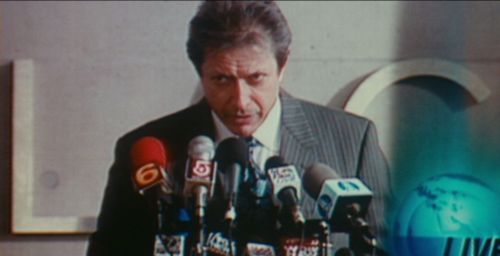
This was exactly the punch line for this movie a mere decade prior to this strange moment in history. With Barry Levinson attached as writer/director, the story is about celebrity comedian Tom Dobbs (Robin Williams) who decides to run for the next president of the free world. Behind the scenes a subplot about a new electronic voting system called Delacroy is preparing to be used for this election too. However an employee by the name of Eleanor Green (Laura Linney) finds a glitch in the programming and tries to warn the head of Delacroy named Stewart (Jeff Goldblum). Fearing she may go public with the info, Stewart has her fired. This is what ends up leading to Dobbs' winning the election. From there after the story focuses on Dobbs trying to pull the information from Green. All the while, Dobbs' manager Jack Menken (Christopher Walken) tries to convince him otherwise. As a political comedy, Levinson could have struck gold if he played his cards more directly. Including the sub thread about Delacroy's glitch was such a misfire.

Of course this was released back in 2006 but the concept was the same on a political level. Voters want change and they want to hear it from an energetic, likable and honest individual. It may have seemed absurd then but compare it to now? By no means am I saying Donald Trump is any of those three but many people heard the man because of his outspoken nature. The only reason why this is being brought up is because it is a very odd parallel. The coincidence is just too well put together. There are just too many similarities. But this is exactly what is demonstrated with Robin Williams' character. Dobbs' is the funnyman; he tells things like they are and isn't afraid to be politically incorrect. It is quite possible perhaps more people would have been interested to see what the outcome would have been if the results for Dobbs winning the election wasn't because of a glitch. I in fact would be in extreme favor of Williams if he had run for president. It's really hard not to believe who wouldn't at this point.

Yet Levinson's script says otherwise when half way through the setup, the focus shifts to Laura Linney's role. When that happens, the story becomes generic and overly reliant on the danger Eleanor Green constantly puts herself into. This is why the movie also suffers from erratic tone fluctuations. When Robin Williams is on screen, he's fun to watch and see him make wisecrack after wisecrack to whomever he's speaking too. This is another thing people might actually enjoy if a politician did this in real life. Would it work? That's debatable (no pun intended) but it would surely grab viewers in for a watch. People want media, which would be a great political campaign. Getting back to the movie, when jumping over to Laura Linney, it's the scared woman being sought after her corrupt boss. Just make the movie about Tom Dobbs as president; forget the whole election conspiracy junk. All the more interesting is that the cast also includes other real life celebrities like Chris Matthews, Tina Fey and Amy Poehler.

"I,...uh....am not....uh....apart of this....uh...movie for long"
Even Christopher Walken as Tom Dobbs' manager is more comedic than Laura Linney's character. Her part is just a waste of a story. For Dick Pope's cinematography, all shots were well executed with no apparent issues. Pope has gone on to work for a number of entertaining films like Bernie (2011) and Legend (2015). Also early on in his career he did work on the iffy movie called The Air Up There (1994), which could have been better. Most shots were stable and keep focus on the matter at hand. The film score was nice to hear although it has never seen a public release. Graeme Revell, who normally produces action related music, made the composition to this movie. Unfortunately due to the uneven tone, the music changes frequently as well. There are cues that sound like they belong to a comedy and there are others that sound like they belong to a horror score. It works for both ends but it just doesn't fit in its entirety. This is also perhaps as to why the score wasn't released. It's a confusing cluster of themes. Though it's different for Revell.

The release of this movie with such a premise feels like it knew itself before its time. The idea of a comedian like Robin Williams running for president is an excellent idea. Somehow though, director Barry Levinson got caught up on adding in a melodramatic subplot dealing with election glitches, which completely takes away half of the comedy.

Points Earned --> 6:10

Saturday, November 19, 2016

Transporter 3 (2008) Review:

There's just something about trilogies that are difficult to pull off. When it comes to making a story extend past its initial rooting, writers need to think outside the box and contemplate what new directions can the characters be taken. For Jason Statham's Transporter series, which started in 2002, there seems to be a lack of interest with the sequels that came after. Although Transporter 2 (2005) was arguably on par with its original, it was The Transporter (2002) that helped excel Statham's name to the level he is at today. Surprisingly with this understanding, one would expect to treat the franchise the same way. Never forget your beginnings. Yes there are cases like Sylvester Stallone's Rocky (1976) films where they took a dive but that spanned many more decades. This series has made three films in under a decade. Times don't change that drastically in order to change the vision of the film. This may be why this sequel is just dull but it’s difficult to say. There are things that fit and others that are just mehhh.

Statham was dabbing before it was popular I guess.....
Written once more by the regular duo who penned the last two films were Luc Besson and Robert Mark Kamen. The story this time follows Frank Martin (Jason Statham) being brought back in to deliver a package because the driver he had take his place, didn't do perform to the standards he expected. The package of concern this time is Valentina (Natalya Rudakova) the daughter of a Ukranian government official known as Vasilev (Jeroen Krabbé). Hiring Martin to deliver Valentina is a man named Johnson (Robert Knepper). All the while Inspector Tarconi (François Berléand) gives advice to Martin along his journey. Is this particular premise any different from the last two entries? No. It practically has the same setup. The only noticeable difference is the running time is longer because like many trilogies, producers want to get bigger and better. Unfortunately by that, many misunderstand that as the production’s look over quality. This is kind of what happens here. The overall story and execution is just "been there, done that".

Directed by Olivier Megaton, the same guy who would later head Colombiana (2011), Taken 2 (2012) and Taken 3 (2014), the run through of predictable scenes are as easy to guess as they come. One of the reasons why the running time is longer than the last two is because of a subplot dealing with toxic waste being dumped once a special document is signed. This really doesn't make a lot of sense however because the people looking to dump the toxic waste are not on the same team as Johnson. Johnson's motivations are explained later on but are quite vague leaving a lot of ground left uncovered. Of the characters themselves, Jason Statham of course is the best part. He still has a number of good lines but his lack of creativity is a bit obvious. François Berléand as Inspector Tarconi isn't involved as much as before but he too has the expected humor that he normally brings to the role. Even Robert Knepper as generic as his casting is, he at least presents himself as someone not to be challenged. Although making him fight Statham seems unfair.

Jeroen Krabbé as the Ukranian official was a surprise to see although his participation was more a plot device than anything that improved the story. The reason why it might throw some people off is that the man has been in plenty of films but most would probably best remember him from Dolph Lundgren's The Punisher (1989) as Gianni Franco. That's two decades from the last big well-known production. However, of all these actors the one that is the least interesting and entertaining to watch was Natalya Rudakova. Being that this was her theatrical debut, it is understandable that her acting may not be as good as the others but that's not even the problem. Rudakova's character is written so blandly that it becomes too difficult to feel anything for her character. And like most females in action movies, she becomes enticed by Frank Martin. Just another cliche that makes her even more boring. For action, there are a number of entertaining scenes but most of them felt clean compared to the grittiness of the original.

Natalya Rudakova
There is one sequence that's out of place and that being car chase. It goes on way too long and looks too much like something from The Fast and the Furious (2001) franchise. The hand-to-hand combat action is great though. For camerawork, Giovanni Fiore Coltellacci's cinematography is alright. There's nothing that's too jarring or shaky to get frustrated with. However it is difficult to determine his credibility based on past experience because most of his filmography are in foreign films. Lastly for music, the film score composed by Alexandre Azaria is sadly forgettable in several ways. Even though Azaria produced the music to Transporter 2 (2002), there has been no improvement between the two entries. The tracks themselves do fit with the scene at hand but there's nothing about it that stands out with any unique cues. The sound itself is mainly orchestra with occasional electronic synths but again there's nothing to recall. It is all very stock sounding when it comes to creativity. Not much else to say.

Most third films to a series are the biggest and over the top and carry very little of what made its original so fresh. This sequel is no different. It's okay to pass the time with but it enhances nothing about Frank Martin and his profession nor does it develop him in any new way. It's all more of the same and that's fine for viewers that like that. Overall it's not good but not bad either.

Points Earned --> 5:10

Saturday, October 22, 2016

The Texas Chain Saw Massacre (2003) Review:

How often are remakes regarded as decent properties? When audiences hear that one of their favorite properties is being rebooted or remade, most roll their eyes and complain. Majority of the time, this is an understandable opinion. Many studios do not understand why remaking a fan’s beloved movie over again is practically complete sabotage. Much of the reason is that producers want to introduce a new generation of viewers to the series. However, many would argue to just watch the original. Yet for some cases, remaking a franchise is probably the best way to go. When a franchise begins to sink so low in its capability to entertain the fewest of audiences, then it's time for an overhaul. After three releases with The Texas Chain Saw Massacre 2 (1986), The Texas Chain Saw Massacre III: Leatherface (1990) and The Texas Chain Saw Massacre: The Next Generation (1994) and all failing harder than the last, it seemed that it was time to take a break. That is until literally in 2003 almost three decades later, it was decided to run the chain saw once more.

The five teens
Surprisingly as tough as it is to get people to come back and see a remake, when a studio fails as hard as The Texas Chain Massacre: The Next Generation (1994), you really can only go up from there. Scott Kosar wrote the script for this remake. Kosar would later write the script for The Machinist (2004), another body horror film. Since it is a remake, the story has similar plot points to the 1974 original but there are a number of changes and added scenes too. Five teenagers in 1973 are reported to be killed. The last being seen near the Hewitt house. Originally headed to Mexico, Erin (Jessica Biel), Morgan (Jonathan Tucker), Pepper (Erica Leerhsen), Andy (Mike Vogel) and Kemper (Eric Balfour) are traveling through the Texas flat lands. However after coming across an emotionally and mentally scarred female pedestrian, the group end up getting involved with a terrifying local family. Directing this in his debut for movies was Marcus Nispel. Mostly known for doing music videos, Nispel does have an eye for horror films too.

What's enjoyable to see about Kosar's remake script is that he easily changes around the reason as to why these teenagers come in contact with Leatherface (Andrew Bryniarski) and his family. On top of that, there's a bit of backstory given about the new Leatherface named Thomas Hewitt. It's not deep in its explanation but it does give insight as to why Leatherface is what he is when seen on screen. This doesn't get rid of the glaring continuity errors though. For example, audiences are introduced to the premise with cops going through evidence. One piece of evidence is a video of cops going through the Hewitt house. How did the cops recover that? Was it sent back to them? Also the fact that this remake is not as bizarrely terrifying as the original predecessor that inspired it is somewhat disappointing too. This remake comes off more direct in its approach when it comes to being grotesque. There's not a whole lot of unknown here especially for those who have been through the first movie and its subsequent sequels.

The one thing to be happy with though is that the tone is much more grounded that of any sequel that came after Tobe Hooper's first. There are no outlandishly over the top actors in this story. The family itself is crazy enough; there's no need to surpass them with family members that are beyond their range. Speaking of which, the acting is fine. All actors including Leatherface and his family are effective on screen. Of the cast Jessica Biel had the best role. Coming in second was Andrew Bryniarski for playing Leartherface as such a hulking monster. Even R. Lee Erney who plays an individual named Sheriff Hoyt has some intense scenes. Although the psychological aspect isn't as terrifying, the horror is still fairly gruesome. The gore itself isn't too disturbing yet it is tough to sit through. The set decoration by Randy Huke had a nice touch. So much of the Hewitt house looks like it could've been condemned years ago. The exterior looks rather similar to that of an insane asylum.

Peak-a-boo,....I C U
Complimenting the visuals was Daniel Pearl as cinematographer. This is a highly respectable addition because Pearl was the original director of photography to The Texas Chain Saw Massacre (1974). Everything from the lighting, the exterior shots and the interior shots of the Hewitt house are all shown to the point where it's enough for the viewer to enjoy. One of the best scenes shown in this remake takes place in a slaughterhouse. It truly is a well-shot sequence. Composing the film score to this production was at the time newcomer Steve Jablonsky. This was Jablonsky's first major theatrical outing in the scoring industry and it is nothing like his later works in the Transformers (2007) series; something he's best known for now. Unlike what listeners would hear from those scores, the tracks are much more natural with less reliance on synthesizers. There is a reoccurring main theme, which is important because prior to this, not one of the past films had a released musical score.

While it may still lack explanations for certain plot points and is not as psychologically scary as the its first parent film, it is by far better than any sequel that came after it. The actors are cast well, the horror is still there, the musical score is a commendable element and the set design plus camerawork help drive home the grounded tone.

Points Earned --> 7:10

Tuesday, October 18, 2016

Halloween V: The Revenge of Michael Myers (1989) Review:

There comes a point in time where a viewer who has seen enough sequels to a horror franchise where it doesn't phase them anymore. When a formula is repeated over and over and over and over again, the redundancy feels more like an attribute of lazy writing versus actually copying out of flattery. It's obvious as to why studios love making sequels but it's crazy as to how they believe one exact formula is necessary for all entries. There has to be some kind of creative brainstorming going on in the background otherwise every entry after the original continues to just rinse and rehash the same concept until the end of its run. After the blunder of Halloween III: Season of the Witch (1982) and the lukewarm return of Halloween IV: The Return of Michael Myers (1988), production studio Magnum Pictures Inc. felt a year later was just enough time to make another sequel. Unfortunately since Halloween III: Season of the Witch (1982), there has been a stagnation of quality in this series. This is okay but nothing to cheer over either.

Michael Myers is back.....again.....
Written by Michael Jacobs, Shem Bitterman and Dominique Othenin-Girard, the story picks up a year later after the last film. After killing her stepmother, Jaime Strode (Danielle Harris) now lives in a child care clinic where she is under the supervision of Dr. Loomis (Donald Pleasence). Knowing that her uncle Michael Myers (Don Shanks) is still alive and well, Dr. Loomis hopes to get whatever information he can from his now mute niece.  Trying to keep a cool head is returning characters Jaime's stepsister Rachel (Ellie Cornell), her friend Tina (Wendy Foxworth) and the local sheriff Ben Meeker (Beau Starr). It sounds like an okay setup but really much the execution is flawed. For the three writers mentioned, all but one had prior horror film making experience so that's already a fairly bad start when it comes to continuing a horror franchise. Directing this sequel was also writer Dominique Othenin-Girard. Girard's direction unfortunately does not improve the viewing experience all that much.

What truly hurts this sequel's performance is how empty the story is on substance and the few frightening moments. This is by far the sequel with the most holes in its plot. There's no explanation to numerous things. No reason as to why Jaime no longer has the Myer's killer instinct. No understanding is made as to why Michael Myers returned exactly one year later when he could've done so much sooner. Nothing is justified as to why Jaime is mute after the events of the first movie. There's even a new character that enters this series and he too is given no background information whatsoever. What gives? The pacing is another problem. Like the slew of other slasher films that were inspired by its original film, many scenes contain teenagers walking around calling out into vacant rooms and saying how much it isn't funny anymore. There needs to be development in some of these characters otherwise, there's no scare factor involved throughout the movie. There are some moments of intrigue that are made as the film gets closer to the finale but that's it.

The kill scenes are also rather disappointing. Only a couple of Michael Myers’ victims have a memorable scene with him. A lot of the other deaths are off screen. There's also nothing wrong with the idea of less is more, but there's nothing new that's added to the end result. However here is what does work. The main actors such as Danielle Harris and Donald Pleasence are the best parts. As much as it's sad to see Pleasence continue to try and make this series watchable, he still carries some kind of dramatic heft. Although his character is becoming less and less useful. Harris was okay although she is mute. Her fear looks real on screen as well when Myers is around. Shanks as Myers was okay too but did miss the opportunity to do several Myers like responses such as the infamous "head tilt". The rest of the supporting cast is all right but they do not add much to the actual narrative. The thing viewers can be grateful for is at least the casting department brought back what was left of the previous cast for another round.

"Tell me why we keep making sequels Jaime!"
The visual aspect of things was decent as well. Robert Draper handled the cinematography. Although he had worked on small and big screen productions, this was Draper's first big theatrical entry. For what was shown, it looked adequate. It was when Draper's skill and the set decorations worked together to create some creepy scenes. Sadly it wasn't very often but when it was seen, it worked. This takes place in the old Myer's house. Returning composer Alan Howarth produced the musical score. Considering he has been apart of the franchise dating back to Halloween II (1981) with John Carpenter, it's reassuring to know there's one more dedicated crewmember. Howarth's score continues Carpenter's memorable theme from the series and includes various other motifs as well. It isn't perfect nor is it entirely effective but it does make up for a lot of the other issues going on with this movie. The score itself is still mainly made up of synthesizer keyboard and that's fine looking at it's origins.

While it may have a decent musical score, returning credible actors and adequate camerawork, this sequel continues to hit the middle of the road. The story is bare bones developed, the reasoning behind several things goes untouched, its pacing is pretty slow and the creep factor is hardly there. It's not worse than any other prior entry starting from Halloween II (1981) but it doesn't bother to add much either.

Points Earned --> 5:10

Friday, October 14, 2016

The Secret Life of Pets (2016) Review:

When growing up as a kid, there's almost a 100% guarantee that at some point a parent will here their child ask for a pet. Whether it's a gold fish, cat, dog, ferret, frog, rabbit, snail or whatever, humans have been domesticating animals for quite some time. There's just something about our pets that we enjoy. The fact that they share and display similar emotions to that of us is so heart warming. They all might express them in different ways but most owners know or understand what their fuzzy friends are feeling. However this is the only thing we comprehend about them on a personal level. They can't speak to us in our native tongue or vise versa and we have no clue what they do behind our backs or how they feel in the moment. When left up to the minds behind Despicable Me (2010) though, viewers will get a completely different perception. Will it make us think differently in what our pets do behind our backs to this extreme - no. But will it let us come up with crazy ideas as to what could happen - of course.

Snowball & Max
This spin off series that runs parallel to the Despicable Me (2010) universe was directed by Yarrow Cheney (his theatrical debut) and Chris Renaud (Despicable Me (2010)). Three writers also collaborated on the script, that being Cinco Paul, Ken Daurio and Brian Lynch (Hop (2011)). The story follows Max (Louis C.K.), a puppy with a good life. His owner took him who found him when he was a baby and gave him everything to his hearts content. Things were great. Then unbeknownst to Max, his owner comes home with another dog named Duke (Eric Stonestreet). Feeling a bit slighted, Max and Duke end up learning that you have to give in order to get. Within that conflict the two end up crossing paths with Snowball (Kevin Hart), an eccentric bunny rabbit whose main goal in life is to overthrow the human race for his fellow abandoned pets. All the while, Max's secret love interest Gidget (Jenny Slate) hopes to gain his affection at some point in time but she's not sure how. Nevertheless she's very determined to make it happen.

The development among characters is proportional to the significance each role has. Through several experiences both Duke and Max learn a lot about themselves. Backstories are given for each, which is why their development works. What's even more effective is how many viewers can relate because of comparable life experiences. Gidget as a love interest isn't written so cliche either. The idea itself is rather turned on its head and that's not seen very frequently. As for Snowball, he doesn't have incredibly deep development but his background is made apparent. For the rest of the supporting characters, there aren't too many complaints to have. The only character that doesn't really have a clear motivation is Tiberius (Albert Brooks) the hawk. According to Tiberius, he's sad to have no friends because his owner locks him away in a cage at the top of an apartment. Yet later on, audiences will see Tiberius being petted by his owner and they seem to be enjoying each other's company,...so why is he upset again?

The other blatant problem in the story's writing is Max's owner and every other pet's owner for that matter. Apparently this whole movie plays out within a day's time. Throughout the running time, Max and company go through a lot of locations in the city. Some not as clean as others. Yet somehow nobody smells his or her pet has been anywhere but home. Surely somebody's pet would be coming off foul somewhere. What are the odds that they remained clean the whole time? That's about as preposterous as Rosie Huntington-Whiteley's role in Transformers: Dark of the Moon (2011) where her white dress did not get one smudge. Also the title is a bit misleading. The adventure the main leads go on is nothing that secret. There a few secret like activities that take place throughout the film, but much of it is so out in the open. Aside from this though the comedy and actor chemistry all blend well together. Both Louis C.K. and Eric Stonestreet practically sound like brothers and Kevin Hart makes Snowball likable and hilarious all at once.

The utterly adorable Gidget
The other supporting character that has a number of great lines and best fits her role is Lake Bell as Chloe the cat. So much of her responses and sarcasm are exactly how many cat owners would expect their cat to react to certain situations. The animation is also enjoyable feature. Heading the animation is Salem Arfaoui as senior animator. Arfaoui has been a senior animator going all the way back with 9 (2009) while also participating in Despicable Me (2010), The Lorax (2012) and Despicable Me 2 (2013). The musical score on the other hand was okay but nothing outstanding. Composed by Alexandre Desplat, the music is appropriate to the surroundings with real orchestral instruments but there's no reoccurring theme for the audience to remember. Especially if this is being planned as another franchise, there should be a main theme too. This is what really helps solidify the characters and story. Desplat was also the composer to Unbroken (2014), Godzilla (2014) and The Imitation Game (2014). Especially for such big films, one would expect something.

Definitely an entertaining family movie for all ages. It's strongest point is that it can relate to almost any viewer because of how frequently we as a human race go through pets in our lives. The writing is mostly well balanced with a few questionable tidbits. The music isn't truly memorable but the actors and animation are fun to watch.

Points Earned --> 7:10

Sunday, September 25, 2016

American Sniper (2015) Review:

When it comes to war in general, the concept has taken many forms for different films. Some glorify it to no end while others give their audiences an understanding of certain tragic events that occurred at specific times. Whatever the case, viewers should understand that war is an act that no right minded individual wants to pursue. However when it comes to protecting others, there are only select groups of people who know that joining the military, navy, police force, firefighters or what have you is the only way to do it. The people who join these groups are the ones who are humble enough to put their own lives at risk for the sake of others. It's these kinds of people that deserve the highest of respect because of their contributions to our safety. And for every war, there have always been decorated war heroes. Most recently the biggest name to be spoken of was Chris Kyle, a registered sniper with 150 plus kills during his time in the service. To most, that is an astounding and an unheard of record.

Forget the Sniper (1993) franchise, this guy's for real
Based on the autobiography of the same name, the movie follows the life of Chris Kyle (Bradley Cooper) from buckaroo cowboy to an all out killing machine. Adapting the book was Jason Hall, the writer to Spread (2009) and Paranoia (2013). The intriguing part to this is that Hall really turned himself around as a writer. Both Spread (2009) and Paranoia (2013) were critically panned when they were released. This production on the other hand was the highest grossing film in January in many years. Perhaps it was in due part that Clint Eastwood served as the director to the movie. Either way the script has several areas to consider that prove to be why the film was so successful when it was released. What moved Kyle to joining the military was after seeing the 9/11 attacks and from there on he was determined to help protect his country and the people who shared his feelings. What's also important to note is that Hall's script includes Kyle's wife Taya (Sienna Miller). Together her subplot represented another critical issue - PTSD.

For several combatants who enter the field, many do not come back the same way they entered. Post traumatic stress disorder (PTSD) is shown in this movie as a layered issue. That's an important point to make because it's not always one event that can cause it. Sometimes it's a culmination of things. This is especially compelling because of the realistic situations that are setup. Some scenes that are depicted in this movie are not what many films would dare to show nowadays. It's a very touchy topic but this is what elevates the tension. Finally after dealing with all these morbid situations, it's difficult to return home and feel the exact same way previously. This is shown properly through Bradley Cooper and Sienna Miller's interactions with each other. As separate thespians, Bradley Cooper practically fully embodies Kyle and that means every aspect. Also not once does Cooper raise his voice, he's always very soft-spoken. Miller on the other hand shows how she gets concerned for Kyle even though she knows he's doing the right thing.

Another interesting aspect about Kyle is the fact that he never asked for or reveled in his status as "The Legend" that everybody loved to call him. Cooper played Kyle as a guy just trying to do what was right. He didn't care about the awards or nicknames, he was there to protect others and that was it. There was one writing flub within the execution though. Chris Kyle's brother Jeff (Keir O'Donnell) changes motivational views on war; the character and topic is never addressed again. It seems that including Chris Kyle's brother was important enough to start out with but then as one brother develops the other fades away. If this was the plan, why even bother including Chris' brother? And this wasn't the plan, why was his character arc cut out of the final print? It doesn't make sense. As mentioned before the tension is pretty high due to the realistic imagery and violence. The kill shots are thankfully not as ridiculously outlandish as the action in other films like Sniper: Reloaded (2011). They do contain blood but it's mild and that's how it should be.

Sienna Miller
Tom Stern was credited as the director of photography to this movie. Stern has also done camerawork for films like The Exorcism of Emily Rose (2005) and The Hunger Games (2012). For this feature, Stern has a number of wide scope panning shots that display the type of terrain and settings that veterans of the military had to withstand. Along side that are the confusing number of houses each team had to check and evacuate when it came to sectioned off areas. Stern was also able to show just how dangerous tasks like these are because of how easily hidden the enemy can be. Strangely enough one strategic element that was mainly absent through the running time was an appropriate musical score. For the 2 hour long movie there were a few synth bass and short piano cues but none of them stood out. Either the music was borrowed or composed by an uncredited composer. Either way the movie mostly works even without the score, but it perhaps could have been even more memorable if it had a recognizable theme to it. Oh well, their loss I guess.

The script has one minor problem with a character and the music is surprisingly mute but in its entirety, the movie makes out fine. Bradley Cooper as Chris Kyle, the legendary sniper is worthy of playing the veteran, the realistic war scenes are quite tense and the development of the lead is thought provoking.

Points Earned --> 7:10

Sunday, September 18, 2016

The Huntsman: Winter's War (2016) Review:

The Brother's Grim fairytale of Snow White seemed to be the popular story to retell for the year 2012. Two polar interpretations of the story had been made that same year. Mirror Mirror (2012) was the more lighthearted take while Snow White and the Huntsman (2012) went the opposite route with darker and edgier visuals. Of the two, the most successful was the movie that starred Kristen Stewart, Chris Hemsworth and Charlize Theron. The production itself looked much more epic in scope, had bigger star power and had a different story to tell. After the success of the film, production began to role for the sequel. However troubles emerged when Stewart did not return as Snow White. Once that happened, the momentum that the studio had gained ended up getting stuck in development. For a while the studio went through a number of directors, including Frank Darabont the guy who made The Green Mile (1999) and The Shawshank Redemption (1994). Eventually the ball started rolling again and this is the end result, which could've been worse.

Hemsworth and Chastain
Directing duties for this movie were given to Cedric Nicolas-Troyan in his debut. For most of his career Troyan has been a visual effects artist for movies like The Ring (2002), Pirates of the Caribbean: The Curse of the Black Pearl (2003) and Pirates of the Caribbean: Dead Man's Chest (2006). He also has some partial directing experience as a second unit director to Snow White and the Huntsman (2012) and Maleficent (2014). Originally stated to be a prequel to Snow White and the Hunstman (2012), the story is actually a prequel and a sequel, in which case there is no word to categorize this whatsoever. First the story explains as to how Eric the Hunstman (Chris Hemsworth) became what he was by the time Snow White and the Hunstman (2012) occurred. Audiences will also learn that he has a wife named Sara (Jessica Chastain). Together they lived under the rule of Freya (Emily Blunt), an Ice Queen and sister of Ravenna (Charlize Theron). Freya believes all children should be torn from their families and made into huntsmen after the loss of her child.

When Freya learns that Sara and Eric are in love, she separates them leading Eric to the events of the prior movie. Then the story begins its sequel where Eric seeks to destroy Freya. Written by Evan Spiliotopoulos and Craig Mazin, this duo's work is acceptable to some degree. Spiliotopoulos is known for writing more Disney movies like The Jungle Book 2(2003) and The Lion King 1 1/2 (2004). Mazin has done more comedies like Scary Movie 3(2003) and Scary Movie 4 (2006). What might amaze the most critical of viewers is that for once the script was written with keeping the missing main characters in mind. Surely Kristen Stewart does not show up on screen once but she is at least referenced verbally and that's all films like these ask for. A simple reference. Along with that is the fact that the new characters help create a bit of depth to the original characters. That's always good to see. However this does not excuse the other problems that arise throughout this movie.

The fact that certain characters return (major or minor) and others don't doesn't make a lot of sense. There's no clear reason given from these individuals as to why they return other than stating vague answers. There's also hazy motivations when it comes to Freya. Freya creates an army of huntsmen warriors to "free" children from their lives and train them as her new army. What exactly is she trying to achieve? Sooner or later there will be no areas to concur. For actors and the roles they play all seem to be enjoying their part. Hemsworth and Chastain have okay chemistry together. Blunt and Theron look like they could be sisters too, although Theron looks to be loving her part the most. There's also appearances from Sam Caflin as Prince William and Nick Frost as Nion the dwarf. The new supporting roles added to the cast are more dwarfs played by Rob Brydon, Sheridan Smith and Alexandra Roach. All of which do not add any context to the story itself and more for just comic relief, which is okay.

"Did you know that I got the same pay as the Huntsman?"
With the director of this film being more experienced in the visual effects department, no doubt would the CGI look decent here. There's a barely a shot here that looks out of place or too obvious to be fake. The liquid gold mirror is still an awesome effect even though it completely references the T-1000 from Terminator 2: Judgement Day (1991). The same could also be said for Freya's ice powers, she may be a villain but she makes things look very pretty. The cinematography goes hand-in-hand thanks to Phedon Papamichael. Papamicheal has had his fair share of cinematic films and it shows. The camerawork for the most part is stable and has plenty of panning wide shots for the audience to get a complete view of the scenery. Working the musical score was James Newton Howard who also worked on the music to Snow White and the Huntsman (2012). Strangely enough Howard doesn't make a new theme for Freya or Eric the huntsman yet keeps Ravenna's memorable theme in tact. And if there was a main theme, it wasn't that recognizable. Come on Howard.

Played like a double-edged sword, this film acts as a prequel and a sequel to that of Snow White and the Huntsman (2012). It may not be as great as the first entry, which isn't surprising but it does make significant connections to the first without dropping everything. It still may lack clarity on certain parts but the action, effects, camerawork and music still entertain.

Points Earned --> 6:10

Saturday, September 17, 2016

Bandits (2001) Review:

Sometimes there are movies that don't give a real reason as to why they should exist. Most movies when released serve a purpose. Whether they are extremely well made or just cheap cash-ins, there's usually an understandable reason. Whether it is ethical or not for making the movie is another question entirely. No matter if it's just making money off the name or because the filmmakers actually have a vision, they both serve as valid reasons as to why they exist. Also in the past, several macho actors from the 1980s have all made a few blunders in their time. Most of these box office bombs were because of being cast in unorthodox roles or ones that just didn't fit them. The genre with most of these examples belongs to the comedy films. As it turns out, Die Hard (1988) star Bruce Willis wasn't done trying his hand out at forced comedic roles until the early 2000s. Oddly enough, this felt like one of those movies that by the end of the showing made the viewer question why they even bothered to watch it. It literally serves no purpose in any way.

"Convincing no?"
Directed by Barry Levinson, this romantic heist comedy is short on almost everything it's supposed to deliver. Written by Harley Peyton, who has penned more TV episodes than anything else, the script is a story that barely engages its viewing audience. The plot involves two nationally recognized thieves known as the "Sleepover Bandits" who end up falling in love with an accidental hostage. Featured on a TV show, the two criminals at large are Joe Blake (Bruce Willis) and Terry Collins (Billy Bob Thorton). The female hostage that they both end up panting over is Kate Wheeler (Cate Blanchett), a rich housewife who loves to cook and can't stand her own marriage. For two hours, this film drags its feet doing nothing particularly important related to the plot. Pacing is one of the film's biggest problems. For such a cut and dry scenario, the length at which this story is stretched to is ridiculous. Especially when the main set of characters barely get the development they need to be likable.

Aside from Wheeler not liking the way her husband kissed her, there is no other given motivation as to why she can't stand the life she lives. On the other side, no explanation is given as to how Collins or Blake got into the profession of robbing banks. Nor is it elaborated on how they got so good at it. Or even if they really are that cold blooded since a few hostages question their actions. That actually would've been more captivating to focus on. There's also another character named Harvey Pollard (Troy Garity) who has his own character arc but doesn't add anything to the main plot. Pollard's goal is to become a stuntman and that particular trait is only utilized once throughout the whole movie. Convenient much? The execution is highly cliche in its play out of the story. There are numerous things that can be seen way before the end credits role. One of the reasons why this is known is because the movie starts off at the finale and then rewinds to the beginning. It hardly creates the required tension to make the movie engaging.

One more nail in the coffin is the chemistry between Bruce Willis and Billy Bob Thorton. The two just don't make the kind of buddy duo one would enjoy. Bruce Willis plays it soft spoken Mr. Mysterious with an ugly mullet and rarely makes a funny line. Billy Bob Thorton oppositely plays his role loud, jittery and obnoxious. Thorton says the name "Joe" almost after every sentence. Is it really that necessary to point out whom you're talking to in every line of dialog? It's apparent that Peyton was trying to define these characters so differently, but they're so exaggerated that they aren't as relatable as they could be. None of the lines these two main leads have to say are worthy of even a chuckle. Every bit of dialog, scenario and end result is just playing on screen to use time. It's not even that it's bad dialog, it's just boring. Watching two oddball characters ham it up about who wants to be with the female hostage feels rehashed and over done so many times. Really, who cares?

Cate Blanchett
The only two redeeming elements to this movie are the music and camerawork. Credited as director of photography, Dante Spinotti has acceptable work here. Giving his talents to other movies like Heat (1995), X-Men: The Last Stand (2006) and Hercules (2014), Spinotti has proven that he can capture clear settings for different scenes. From what was displayed no shots shook around nor did they have any problems showing the audience of which certain things were stationed. For music, the underrated Christopher Young worked as the composer. Strangely enough having Young on board didn't change much of the experience for two reasons. The first reason is that Young does have a some cues that are interesting to hear but they are very short lived. The second reason is that Young is known for composing music to horror films; how in the world did he get hired for this project? It nowhere fits his previous credits in his filmography. Besides, most of Young's work gets run over by all the early 2000s mainstream music. Just great....not.

The film on a visual aspect looks fine and the music is nice even though Christopher Young as composer is not using his skills wisely. Anything else is all questionable. The movie does not prove itself to have a reason for existence. The characters are boring, the premise is boring, and the comedy is boring. It's all boring and overdone.

Points Earned --> 3:10

Sunday, September 4, 2016

Sniper: Ghost Shooter (2016) Review:

It's amazing that the Tom Berenger / Billy Zane thriller Sniper (1993) franchise has made it this far. Has this series cultivated a secret fanbase? Or do the producers believe there is a fanbase and keep on making sequels anyway? It just seems hard to believe that the first film would have made such an impact on viewers. It was well executed movie yes but the crew attached didn't have filmmakers like Steven Spielberg or Clint Eastwood in the director's chair. The man behind the first film was Luis Llosa, the director of The Specialist (1994) and Anaconda (1997). These were both films that people viewed as fairly silly movies. This is probably Llosa's best entry in American cinema but it still won't hold a flame to a lot of other well made popular films. When a series like this has gotten this far in making sequels with no public critical reception, it truly is an anomaly. So how does this sixth entry hold up in the array of sniper films? Well it certainly isn't unwatchable,...yet. Thankfully it works but it has warning signs.

Beckett Jr. & Richard Miller
Directed again by Don Michael Paul from Sniper: Legacy (2014), fans are once again brought back to Sgt. Brandon Beckett (Chad Michael Collins) in the field doing what he does best. Unfortunately after hesitating on an assignment and lashing out at another officer, Richard Miller (Billy Zane) puts him on probation with Russian sniper Andrei Mashkov (Ravil Isyanov). Meanwhile the Colonel (Dennis Haysbert) and assistant lead Robin Slater (Stephanie Vogt) try to find a "ghost shooter" by the name of Gazakov (Velislav Pavlov) who's looking to stop a certain business pipeline. Written this time by Chris Hauty, the screenplay works to some degree but fails to make certain connections clear and answer some questions. For Hauty, this is his fifth writing credit of which this is his first related work to this series. This is possible as to why not everything is clear, but Hauty has written for three other sequels so he should have had some idea as to what constituted as a narrative that continued the story at an engaging level.

Unsuccessfully this isn't the case here. Hauty's inclusion of the probation period for Beckett was okay until it became unnecessarily extended for an action shootout sequence. That in fact could have been substituted in for time with Beckett's other team members like Barnes (Enoch Frost), Cervantes (Nick Gomez), Aungst (Presciliana Esparolini) or just cut it out completely. Ravil Isyanov as Mashkov does have some comical quips with Beckett but the development really should have went to somebody closer. Then there's no explanation for missing persons. What happened to Sanaa (Mercedes Mason) from Sniper: Legacy (2014) or even Beckett Sr. (Tom Berenger) for that matter? Where did these characters vanish to? Where's the consistency? When starting the second trilogy, you brought on Billy Zane, then dropped him for Tom Berenger and then did the reverse again? Fans should demand to see Billy Zane and Tom Berenger on the same screen again. Those are the two old men who started it all, so get them on the same screen.

Now although Zane and Berenger are still not on screen together, Billy Zane returning as Richard Miller is still acceptable. Zane still looks like he's having fun in the role and enjoys playing the sarcastic wise cracking supervisor of Beckett's son. Miller even has a few comments that don't even really make sense but the way he says it is anyway. When it comes to Beckett Jr.'s team, few of them get much development. Sure they have a few moments of flare but nothing really makes the viewer want to see more of them and hope they survive all the shootouts. Of the members, only Cervantes (Nick Gomez) has some kind of arc. Everyone else is just kind of there. As for other actors, there's also appearances from Dominic Mafham and Navid Negahban as a blind connection to Gasakov. Negahban playing a blind man had a great look. Foggy contacts make him look like someone who's real clever and full of knowledge. Mafham as Bidwell "Bulletface" sadly gets less screen time than he did before but when he is shown, it's good to see him.

"Can you believe they didn't bring on Berenger again?"
Action sequences were well executed again. There might've been not as much carnage edited in but it still got fairly messy. The shooting throughout this film is quite abundant so there's bound to be explosions and RPGs. In addition, there are also drones in which are used in firing missiles. Those perhaps are the weakest looking parts because obviously they wouldn't have real drones. The camerawork provided by Martin Chichov looked good. It wasn't easy to tell what was green screen and what was actually filmed. Much of the scenery looked authentic and shot on sight. The film also may not be the ultimate widescreen but there is a number of establishing shots that get a lot of the landscape and it looks great. Composing the musical score for the second time in this franchise was Frederik Wiedmann. Regrettably again, Wiedmann does not have or bother to create a memorable main cue for this franchise but that thought seems to have died long ago. As for music in general, it's decently composed with guitar and Middle Eastern instruments.

Now that this series has completed its second trilogy, maybe the producers and filmmakers can get back to basics once more. The main actors, music, action and camerawork are fun but it's all brainless. The connections are lazily tacked in and some scenes could've been utilized more efficiently.

Points Earned --> 6:10

Les Miserables (1978) Review:

When it comes to all things France related, there aren't too many mainstream stories that have been told and retold again in American cinema. The French Revolution, parts of World War II and even fantasy stories like Disney's Beauty and the Beast (1991) all take place in France. But from as it seems, the most popular of these French stories belong to Victor Hugo's novel of the same name Les Miserables. So far this book has had five major film adaptations; four of which were feature length movies, while another was a mini-series. The two latest adaptations were theatrically released while the second in line was a TV movie release. The difference in years between releases may be a long period (two decades), but the story wasn't drastically varied. The only noticeable change in presentation is having the knowledge of its production date. Knowing it was produced in the late 1970s gives it a much more dated viewing experience. Nonetheless, the story is worth the time to see.

"I'm just a woodcutter...."
As the title would suggest, the plot to this movie is about Les Miserables or "the miserables", "the poor ones" etc. Living in France during 1796, a broke innocent woodcutter named Jean Valjean (Richard Jordan) steals a loaf of bread in order to feed his sister and her children. Not long after being caught by the authorities, Valjean is sent to Toulon to carry out his five-year sentence. In charge of the Toulon camp is the heavy handed Javert (Anthony Perkins), who ends up becoming acquainted with Valjean very quickly and their rivalry percolates into the next thirty years. With time passing before his eyes, Valjean becomes bitter against humanity but realizes his error when a bishop (Claude Dauphin) displays an act of kindness towards him. Determined to live every moment by caring for others, Valjean becomes utterly the opposite of what he once was. Headed by Glenn Jordan (a veteran TV Movie director) and written by John Gay, this film looks dated but still has a significant amount of storytelling.

The development of Jean Valjean is intriguing enough to see play out when looking at his humble beginnings. Over time, Valjean becomes a grizzled man who finds himself being more of an early Hudini than a woodcutter. Even at an elderly age, somehow Valjean finds a way of getting around; that's impressive. Richard Jordan as Valjean doesn't disappoint either. Jordan is one those serious actors who always play his role like it were his own. Along his travels he adopts a widow's daughter named Cosette (Caroline Langrishe) and raises her as his own. Angela Pleasence, the daughter of Donald Pleasence, plays the widow. The part that Cosette plays as to her stepfather isn't as prominent, but she does bring about some compelling situations between Valjean and the ever-vigilant Javert. Speaking of which, Anthony Perkins as Javert is credible too. Although he stands like a giant mast, Perkins can be very intimidating as the lead inspector. He really makes things run like clockwork. By far the best chemistry is seen between Perkins and Jordan.

The odd thing is the relationship that Javert and Valjean have reminisced to that of Batman and The Joker from Christopher Nolan's The Dark Knight (2008). Except this time, the roles and personalities are switched. Valjean is the miscreant who makes Javert's world a chaos to deal with. Yet Valjean's ideals are more unpretentious than say The Joker's. Javert on the other hand resembles that of Batman, wanting order and will stop at nothing to catch Valjean. The parallels are undeniable. It is a little baffling though to see actors playing French characters and not sounding anywhere close to the accent. Saying monsieur doesn't make you entirely French. The other problem that arises is the forced love interest between Cosette and a rebel named Marius (Christopher Guard). All these two characters do is stare at each other once or twice and they both know they're in love. It's certain that most audiences will not buy into this notion and completely believe that. Rarely do individuals know each other are meant to be by just staring.

Anthony Perkins as Javert
When it comes to visuals, the scenery isn't always clear. However, since this took place way before CGI was implemented into film, all props were undoubtedly physical objects. That covers sets and various historical pieces of the time. A lot of the old structures look appropriate taking the setting into account. The cinematography was shot by Jean Tournier, a native Frenchman (gasp!). Like stated before, although there are some darker than normal scenes, the scenes do cover enough to have the viewer comprehend the surroundings of the main leads. That also means even without a widescreen view. The musical score composed by Allyn Ferguson is another memorable element. Sadly there was no official release of the music but the theme is quite endearing. Relying mostly on the strings, Ferguson's main theme to this adaptation consistently appears whenever Valjean is on screen pointing out that the story revolves around him. Surprisingly, that's all the music needed. It would've been nice to have other cues but it's fine anyway.

The fact that the actors weren't directed to have a more authentic French accents and the main character's step daughter having a forced love interest are the only true crimes to this book adaptation. The actors, music, camerawork and especially the writing make this a special story to witness.

Points Earned --> 7:10

Monday, August 29, 2016

Hellraiser V: Inferno (2000) Review:

After films that perform abysmally at the box office, very rarely do franchises survive later on. And this doesn't always mean sequels either. Sometimes films fail right at the start before things get going. Sequels on the other hand are reminders that if a franchise is not taken care of, the critical reception will tend to dip. For Clive Barker's Hellraiser (1987) series, the final theatrical nail in the coffin was Hellraiser IV: Bloodline (1996). With a troubled production of studio interference, inconsistent direction, poor critical and financial reception, it was finally time for the series to enter the home video market. Although the home video market is considered to be films of lesser quality, there tend to be the occasional surprise here and then. Five years later, it seems to have stepped up. This doesn't mean it blows all expectations away, but there are differences between this entry and Hellraiser III: Hell on Earth (1992) and Hellraiser IV: Bloodline (1996).

Craig Sheffer
Sitting in the director's chair for this release was Scott Derrickson in his first long running movie. Derrickson also worked as the writer along with another usual associate being Paul Harris Boardman. Boardman also wrote for The Exorcism of Emily Rose (2005) and Deliver Us From Evil (2014). The story here is much more peculiar than previous entries. Joseph Thorne (Craig Sheffer), a seasoned detective is on the trail of a serial killer whom his first victim opened the Lament Configuration and left a child's finger behind. Hoping to find the child before it's too late, Thorne and his partner Tony (Nicholas Turturro) dig deeper. Unfortunately as the two continue searching for answers, Thorne begins heading down a path only he can travel. The premise itself is quite good actually, but there are other issues. The most noticeable flaw is that this movie makes no attempt to connect this one to any of the previous films in any way. That also doesn't mean forcefully inserting references but the story could have lead to areas of past events.

Along with that is the amount of time that focuses on Pinhead (Doug Bradley) and his fellow cenobite followers. The plot is more of a horror thriller with a smattering of cenobite flavor. Who doesn't want to see more cenobites? As for detective Thorne, his motivations seem to contradict his actions. He gives reasons as to why he makes certain decisions, but not all of it is clear. Thorne has a wife (Noelle Evans) and daughter, yet sleeps with a hooker (Sasha Barrese). There was no sign of his marriage in trouble to begin with so what gives? However for the story, those are the prominent issues. Even with its writing related problems, the whole mystery killer plot is gravitating. On top of that, the end result produces a moral lesson involved with deeper meanings that reference other films like Bill Murray's Groundhog Day (1993). As for characters of significance, Thorne is of main focus. His partner does receive some attention but over time he's dropped. There's also a psychologist played by James Remar that adds some depth to the story.

Although Craig Sheffer's role isn't totally clear, his ability to convey the right emotion is acceptable. Considering he also was in Clive Barker's Nightbreed (1990) a full decade earlier, it feels all the more appropriate. Doug Bradley as Pinhead continues to have all the memorable lines especially towards the finale. The following cenobites such as the Wire Twins and the Chattering Torso all have their moments of grotesqueness and work effectively in being scary. For a budget of only $2 million and being a home video release, the special and practical effects look fairly decent. Even the horror end of things look credible. The gore and violence used throughout isn't always shown on screen but there's still a lot of blood spilled throughout the running time. The devices used for these violent depictions are what you would expect from a Hellraiser film - hooks. Except these hooks are little more practical in their use. Instead of them hanging from the ceiling majority of the time, now they're used as a flail. Ouch.

"Uhhh well this is new..."
Working as the cinematographer was Nathan Hope. Mostly having experience in the small screen, Nathan Hope has done a few big screen productions like this one, Mimic 2(2001) and The Fog (2005) remake. By far though, his most recognizable expertise shines through on the crime show CSI: Crime Scene Investigation from 2003 to 2007. For this movie, Hope's camerawork is still for 80%, but gets shakier near the finale. Thankfully the one technique that Hope avoids that previous DP Gerry Lively used were wide-angle lens shots. Those felt unnecessary. Composing the film score to this sequel was Walter Werzowa. Impressively Werzowa created a score with an hour full of music. The music itself sadly no longer has any main theme close to Christopher Young's but Werzowa makes new ones. Plus, the sound mostly consists of organic orchestra featuring strong deep strings and massive pipe organ cues. Seriously though, who uses pipe organs in their film scores anymore? That's one of the best parts and the score also contains very little jump stings.

Script wise the characters still lack clarity in motivations and connections to the previous films. Also the cenobites don't feel utilized to their potential. Yet somehow this sequel is better than the last two with a more intriguing premise, decent effects, believable acting and appropriate music.

Points Earned --> 6:10

Sunday, August 28, 2016

Suicide Squad (2016) Review:

Ever since Marvel Studios began expanding their films into more shared universes, a trend has begun to follow among other production companies. The most obvious of competitors would be Warner Bros. DC but there are others. Another franchise that is supposedly expanding its cinematic universe is Michael Bay's Transformers (2007) franchise. The concept is a common thing now among high-end money making movie properties. However this is no secret for Warner Brothers. After losing their chance to reinvigorate their universe with Green Lantern (2011), DC tried again with Man of Steel (2013) and finally brought themselves back from a long period of dormancy. So in order to catch up to Marvel's output, the next choice was making Batman V Superman: Dawn of Justice (2016). It certainly brought the studio up to speed but whom are they fooling? There were a lot of missteps taken to get there. Adding to that is this movie which promisingly looked like DC's Guardians of the Galaxy (2014), but with villains. Sadly this was not as great as one would hope.

Rick Flag, Harley Quinn, Deadshot & Capt. Boomerang
This is actually rather shocking considering the cast and crew involved. Crediting himself as writer/director is David Ayer, the same man who headed praiseworthy projects like End of Watch (2012) and Fury (2014). The story is based on the comic about Amanda Waller (Viola Davis) recruiting the worst villains from Arkham Asylum to fight what the regular military would or could not defeat. That means bringing on Deadshot (Will Smith), Harley Quinn (Margot Robbie), Capt. Boomerang (Jai Courtney), El Diablo (Jay Hernandez), Killer Croc (Adewale Akinnuoye-Agbaje), June Moone AKA Enchantress (Cara Delevingne), Slipknot (Adam Beach) and Katana (Karen Fukuhara) under the command of Rick Flag (Joel Kinnaman) to take down a powerful force that only they can stop. Meanwhile on the side, the Joker (Jared Leto) is up to no good  looking to find a way to break his joker queen out of the iron grasp of Amanda Waller. Initially this sounds fine but the story lacks structure.

Close to the start, the conflict begins and the suicide squad is sent out to pacify it. Yet before this even happens, Amanda Waller assembled them to take care of a different reason. This different reason is completely dropped once the main struggle arises. So what was the original mission they were going to be sent on? It's never answered. Either that or editor John Gilroy put the scenes in the wrong order. And Gilroy has been the editor to a number of popular films like Salt (2010) and Pacific Rim (2013). So what gives? Along with that are some backstories that are briefly skimmed over. Why? This film has a two hour run time; Guardians of the Galaxy (2014) has the exact same. Nonetheless even with these written issues, the actors perform well in their roles and are likable to a certain degree. Some of them even have more human backstories than one would expect. The costume/character designs are also commendable. For once, these characters have some color in their suits and aren't so dark and brooding like Bats or Sups.

Speaking of which, Ben Affleck as the caped crusader does have a few scenes throughout the movie. Is it worth it? Sort of from a narrative standpoint but in other ways it just feels like Batman was put in to have more people view the film. The action at least entertains for the most part as well. Deadshot’s ability to be precise in every round he shoots is awesome. Katana use of the sword is sharper than your average kitchen knife (of course). El Diablo knows how to heat up people's nights with his powers and Harley Quinn's gymnastic acrobatics certainly make her a special addition. Regrettably this does not make up for the sections that have CGI overload. Thankfully it does not get as bad as Batman V Superman with its almost PS2 gameplay like cut scenes, but there are still unnecessary moments. Whether it's the adversary the suicide squad has to fight against or even if it's digitally editing Harley Quinn to have booty shorts. It just seems like wasted amounts where this particular effect is abused for the wrong reasons.

"Get me my Task Force X"
Roman Vasyanov was chosen to provide the cinematography to this picture. Vasyanov also worked with Ayer on End of Watch (2012) and Fury (2014). This shows that Vasyanov knows how to make great or accurate looking movies. Fury (2014) had great looking camerawork and End of Watch (2012) made the viewer feel like they were in the movie. None of that's shown here. It's strange too. With all the colorful personalities and costumes, one would think that this movie would have brighter images to show. There are about 2-3 scenes that have daylight in them. Every other scene is in the dark or it's raining. All it does is remind the viewer of how gloomy looking the previous Zack Snyder DC films were presented. It's frustrating. Composing the film score to this movie was Steven Price, another David Ayer collaborator. Price's work is another disappointment. Unlike his past work in films like Fury (2014), there is no reoccurring theme for the suicide squad. And this is the perfect time to establish one for them. But that wasn't done.

Unlike what one would expect, this David Ayer film has its moments due to its cast, action and part of its writing, but that's all it can be given. The music isn't memorable, the camerawork doesn't match the colorful characters or tone and the overall plot doesn't make sense for a two-hour film.

Points Earned --> 5:10

Maverick (1994) Review:

Westerns have a certain appeal that fans of the genre look for. When people think of westerns, the most common of concepts that come to mind are gun fights, saloons, fillies, booz, beards, dirt, horses, the list goes on. For movies during the last half of the 20th century, Westerns didn't seem to be as popular as one thought. In order for these types of movies to work, the right cast, director and crew had to be involved to really get the viewers attention. With previous disasters like Michael Cimino's Heaven's Gate (1980), the genre took somewhat of nosedive in interest among viewers. It was later close to being killed off again after the next biggest (and strangest) disaster being Will Smith's Wild Wild West (1999). With those two bookending those two decades, there were others in between but not a whole lot. However, when learning that the director of Superman (1978) and the lead from Lethal Weapon (1987) would be working together to make a popular television western a major film, could there be a problem? It depends on how you see it.

"Cooper,...high five?"
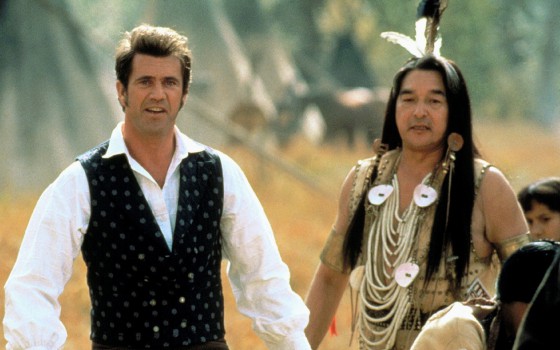
In their respective careers, both Mel Gibson and Richard Donner have made quite a filmography for themselves. Being that they are also from a time where they would remember older shows from the past seems right that they make an older property more mainstream. The script was adapted William Goldman (Butch Cassidy and the Sundance Kid (1969) and Chaplin (1992)), of where viewers are introduced to Bret Maverick (Mel Gibson), a career poker player who looks to enter a major game but lacks the funds. To attain his entrance fee to the game, Maverick goes around looking for ways to make that money, leading to all sorts of comic relief events. Of those moments, Maverick comes across filly thief Annabelle Bransford (Jodie Foster), Marshal Zane Cooper (James Garner) and hotheaded gamer Angel (Alfred Molina). Aside from the main cast, there are several other names to boot like: Graham Greene as pseudo Native American, Geoffrey Lewis playing a friendly banker, Paul L. Smith as a French Diplomat and even Art LaFleur, Dan Hedaya and Danny Glover all as gunslingers.

The problem is even with this, the overall execution of the story does not feel like a western. Very few events that take place in this western setting feel like it belongs to one. Instead, much of it feels like a parody of sorts due to its tone. That's not to say these scenes aren’t funny but the film's trailer presented itself as more a lighthearted western with some comedy. Not the other way around where it's all comedy and less western. This also doesn't mean the actors perform badly either. Mel Gibson as Bret Maverick has a number of good lines that make him a smart and likable character. An ongoing joke is that people call him Bert Maverick, which gets him annoyed. Jodie Foster as the slippery crime filly is fun to watch too. Her ability to trick people just by her looks makes her quite dangerous if one isn't paying attention. James Garner as Cooper has his moments as well, showing both a caring and selfish side. The most creative of the supporting characters is Graham Greene's role. It's interesting that he would play a fake Native.

This could've be one of the funnier parts to the film. What if the Native Americans were just putting on a different face when talking to the Europeans? It's completely oddball and clever. Yet as unique as this is, the film suffers from an over packed running time. There are some particular parts to the story that could've been cut to help slim down viewing experience. The biggest time user of them all is the actual gameplay this movie focuses on. That being Poker. This is also one of the more surprising things about this western. One would expect that since it's a western, the climactic finale would be dealing with a showdown or some kind of deadly match. In place of that, viewers watch Mel Gibson and characters play a poker game with each other until the last individual is standing. Unless one is a true poker fanatic, no one will know how to play the game the right way. This in turn could make the game less tense. How engaging will the game actually be for a nonplayer?

Graham Greene (right)
The cinematography handled by Vilmos Zsigmond is nothing short of great.  Being that Zsigmond has worked numerous projects dating back to the early 1960s, his ability to capture the right look has only gotten better. Just like his work in Heaven's Gate (1980), Zsigmond sets the stage for amazing looking western backgrounds. That means including every bit of the land from top to bottom. There's even a great scene that involves a canyon and it looks so spectacular. Very few cinematographers can master the art of capturing all of the land but Zsigmond seems to have figured that out. The musical score composed by Randy Newman was an interesting addition as well. Considering this score was created only a year before Toy Story (1995), it's funny to hear cues that sound like they belong to Pixar's animated classic. The sound of the music is utilized with organic orchestra that has all the signature themes that only Randy Newman could resurrect. The score itself is fun to listen to and does fit the western setting.

This is a fun western poker game movie but don't expect it to be more western than that. There are some shootouts but majority of the tone is comedic and has more parody like scenes than western ones. Nonetheless, the actors, cinematography and music all make it a tolerable goofy watch.

Points Earned --> 6:10

Friday, July 29, 2016

Westworld (1973) Review:

Throughout his career, science fiction novelist Michael Crichton has had a profound influence on the history of film and stories. Although the variety of Crichton's work doesn't differ greatly, much of his ideas bring up intriguing questions about our existence as the human race. Of Crichton's work, the most popular of his films was Jurassic Park (1993) dealing with re-animated dinosaurs running a muck. Yet 20 years earlier, Crichton had wrote and directed another science-fiction film involving other creatures running a muck. The creatures this time are robots. With technology ever increasing in its complexity, people take it for granted more often than before. The question is, do we realize how realistic this technology has become? Everyday that passes, this applied science gets closer and closer to our personal lives to the point where we can interact with it as well. This is no longer a fantasy nowadays and that can be a scary thing. What happens with these machines become self-aware? Will we know how they'll react?

Richard Benjamin & James Brolin
Taking place some time in the future, the world has created Delos, the "perfect vacation resort". Consisting of three different time capsules; Romanworld, Medievalworld and Westworld, where each visitor can experience life as it was during that time for $1000 a day (oh yeah, pocket change). Helping make these three settings as realistic as possible, the Delos system uses robots that look like real people. The only way to tell the difference between a real human and these fake ones is by looking at their hands. Audiences will learn this after being introduced to Peter Martin (Richard Benjamin) and John Blane (James Brolin), two visitors to the resort; Blane of which is a returning guest. Martin on the other hand has never been to Delos and is excited to experience the authenticity of it. Behind the curtain of Delos, a sophisticated network of technicians and other workers help keep things moving. If a robot breaks down, it's hauled back for repair. However, things are acting up more than usual lately.

According to the Chief Supervisor (Alan Oppenheimer), the robots have been encountering frequent issues for strange reasons. There needs to be answers but no one knows why. How is that? The only answer given is that it's some kind of "disease", which is immediately impeded by another board member saying how could a machine have a disease? But that's as far as it goes. For Jurassic Park (1993), saying that the dinosaurs became smart is somewhat acceptable and if that were the answer that would also work. Nevertheless leaving the inquiry as possibly a disease doesn't solve much. The other noticeable problem with this film is its pacing. As Michael Crichton's first theatrical film he directed, this could be the reason why his direction wasn't on point. There are moments where scenes move slower than usual and some events that take place feel longer than necessary. Plus remembering that he also wrote for this film probably added to the amount of work Crichton had to deal with so it's plausible he was under a lot of pressure.

James Brolin and Richard Benjamin as the main two leads help give viewers a better understanding of what there is to expect from Delos. Benjamin plays the role viewers can relate to since any newcomer would have the same initial opinion. Brolin's role is to assist in cementing the new belief. Co-starring with Brolin and Benjamin are also Norman Bartold playing another guest and Yul Brynner only known as the gunslinger. Bartold's role isn't greatly defined but he does play an important part for the viewer to see. Yul Brynner as the gunslinger may not have a lot to say but his appearance as a robot with reflective eyes is dastardly credible. The inflections in Brynner’s lines have just the right amount of flare to make him sound fake but dangerous all the same. The action / sci-fi & horror elements that show up throughout work too. Though it was given a PG rating at the time, it is far from it. There are blood squibs and some brutal violence throughout. For 1973, the makeup effects did wonders when it came to robotic creatures.

Yul Brynner
Behind the camera was Gene Polito as the cinematographer. Polito's camerawork is solid in every shot that occurs. That means capturing not only each setting's background but also remaining completely still for action shots. There are also a number of slow motion shots that amplify how much Polito was able to capture in each frame. Looking at his entire career, it's likely that this was the movie that he's most widely regarded for. The same could be said for Fred Karlin, the musical composer. Understanding that the majority of the events featured will be in Westworld would incline that some of the score would include country music themes. This does occur and perhaps too exaggerated at points because sometimes it sounds like hillbilly music. However, what Karlin made efficiently dark and scary was the horror of his music. Relying on prepared piano (which is rare in most scores) and scratchy strings truly makes the horror cues much more intense because the sounds or so uniquely constructed compared to other compositions.

Writing in particular is well thought out even though there are unresolved questions. The pacing in some areas may also be a bit slow but it's made up with relatable characters, a twisted film score and well-shot cinematography.

Points Earned --> 7:10

Sunday, July 24, 2016

Batman V Superman: Dawn of Justice (2016) Review:

Since the origins of each character, Batman and Superman have been one of the most iconic characters in comic books. After their print inception, readers and fans alike were impressed to see successful adaptations of each character during the last half of the 20th century. At that point, even during Christopher Nolan's trilogy, nobody knew how soon it would be before Superman and Batman would be seen on the same screen together. After the financial success with Man of Steel (2013), Warner Bros. pushed forward to get the DC cinematic universe expanded. And with that, the next step was to include the Arkham Knight. No surprise that in the time where social media dominates news, the internet exploded. Of course there were people who loved the idea while others felt it wasn't ready. Some criticized this stride as Warner Bros. trying to catch up to Marvel's success in building an expanded universe. Others felt that this plan should be given a chance. Once released, the response was about just as divided if not more.

How several fans came out of the theatre
Chris Terrio and David S. Goyer have written the script to this sequel. Following the destruction of
Metropolis from Man of Steel (2013), audiences are introduced to Bruce Wayne (Ben Affleck) finding a way on how to combat Superman (Henry Cavill) and make sure he will not become an enemy. At the same time, Lex Luthor (Jesse Eisenberg) is also looking for a way to rid of Superman, which requires him getting access to the Kryptonian technology left behind from Man of Steel (2013). Running underneath these two plots is a subplot dealing with Bruce Wayne making connections with Diana Prince (Gal Gadot) and figuring out her origins. This alone is enough but Terrio and Goyer's script is too over packed for its own good. Really Batman Vs Superman is a small section of this film because there are several other things going on simultaneously. This also lessens the amount of development the main leads receive. It is those reasons that give way to some really contrived situations where it happens just because it was called for right then and there.

The acting itself is for the most part fine. Most of the initial cast return from Man of Steel (2013) only for short appearances. Amy Adams still manages to put herself in peril even though she's supposed to be able to take care of herself on her own. For new cast members, Ben Affleck as Batman fits the role. He sounds much more calculative and rough in his delivery. Jeremy Irons as Alfred does a great job too, inserting a few smart-alec remarks as well. Gal Gadot as Wonder Woman although not always around is quite the looker and self sufficient as an Amazonian princess. Last but not least, Jesse Eisenberg as Lex Luthor is average. People will see why many do not favor his performance but not all of it is irritating. He does come off more Joker-ish and the jolly rancher scene is unnecessary yes, but it wasn't repeated more than once. Certainly a much more menacing actor could have been cast as Luthor, but Eisenberg is not ear bleeding bad. The real problem were the short cuts made to make all the pieces fit in for this cut of the movie.

The action sequences themselves have credibility to them but they were also uninteresting at points as well. For the majority of the time, all the Batman scenes that involved fighting were well executed. With director Zack Snyder heading this, it's hard to see Snyder not knowing how to properly make a good-looking action scene. Batman just doesn't care here; if you are bad, you're going to get hurt terribly. However, things begin to get rather tiresome when Superman enters the picture. Unfortunately because Superman flies and does super feats, CGI is needed in order to make this look realistic. This is the drawback though; looking at you Zack Snyder. Even though Snyder knows what he wants in his sequence, there are moments where the CGI is brought up to overkill levels. It's not say that it's unfinished CGI, but it does get to the point where it feels like the audiences may actually be watching cut scenes to a video game because everything is all computer generated. It's just ho-hum.

"Is it over yet?"
As for cinematography, Larry Fong managed the cameras. Fong's experience with big cinematic action films isn't a lot but does cover most of it. Seeing that he has worked with director Zack Snyder on his earlier films like 300 (2006), Watchmen (2009) and Sucker Punch (2011), it's no shock then that Fong was brought on board for this movie. For all the scenes, the camera is fairly stable. The problem with Fong's visuals are the lack of color throughout. The environment surrounding these characters is so drab and ugly, it's no longer appealing to look at. When it came to music, composers Hans Zimmer and Tom Holkenborg (Junkie XL) worked together and it’s rather disappointing. Aside from Superman's theme carrying over from Man of Steel (2013), only Batman's theme is somewhat likable. Luthor's finesse cue is too outlandish and Wonder Woman's track raises too many red flags in tone. It sounds more like it belongs to Luthor with an erratic electric cello in the background with beating war drums. It doesn't add any thematic depth to the listening experience.

For almost all positives this sequel has, a negative can be found to counter it. The basic elements to this movie are here - casting, music, camerawork and action but that's it. The writing isn't focused on the premise the title states, the visuals look drained, the action has too much CGI at times and the music is frustrating to latch onto. Yet, the cast do work well and action is fair.

Points Earned --> 5:10