Tuesday, July 21, 2015

Walking Tall (2004) Review:

Dwayne "The Rock" Johnson has always had a strong fan base. Even starting out early in his film career, he had loyal followers just by playing the lead in the silly and yet fun The Scorpion King (2002). Although not every film The Rock auditioned for had this kind of tone, not many outside viewers could take him as a serious actor. Most of that skepticism was from his other career in the WWE. However no matter the case Johnson kept his feet in the pool and made a couple of movies here and there before he really took on more projects as years passed. For Johnson's rise to stardom, it was his first batch of films that got him seen by more people. This film was one of them along with The Scorpion King (2002) and The Rundown (2003). Is it to say that this film tops or is equal to a lot of other great action/revenge films or the remake of Walking Tall (1973) it was based on - no. But does it still entertain? Yes.

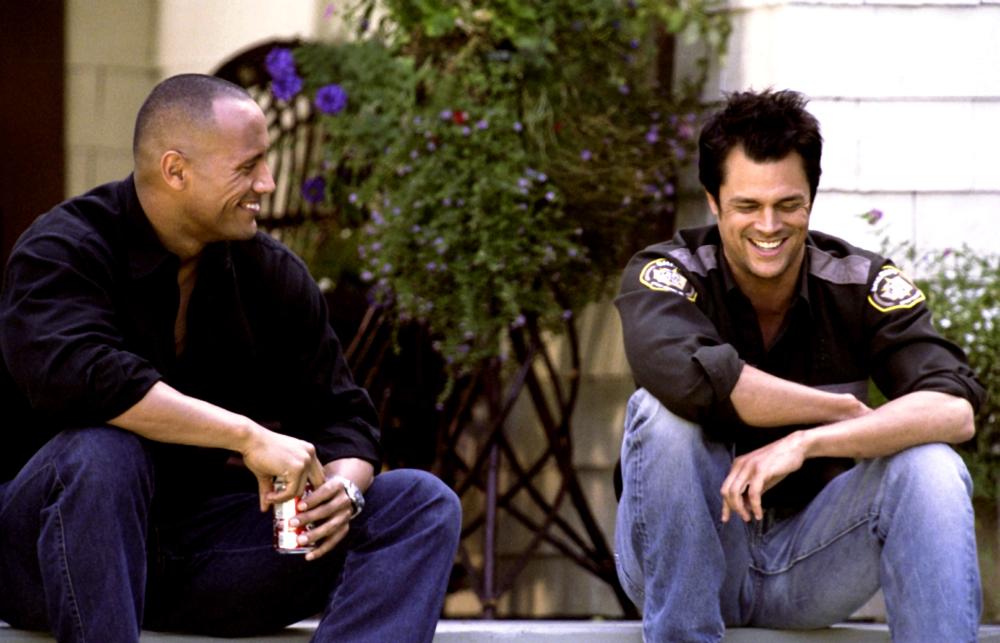
Dwayne Johnson & Johnny Knoxville
Directed by TV show director Kevin Bray and had a screenplay written by four people, this tale of "don't mess with a man's home" certainly shows how hostile people can become when their nostalgia is messed with. Dwayne "The Rock" Johnson plays Chris Vaughn, a military veteran who just returned from service. After visiting his home, he heads out and begins to notice the town he grew up in isn't all that it used to be. The lumber mill factory his father (John Beasley) used to work at is closed down. His young nephew is being influenced by the wrong people and an associate of his, Jay Hamilton (Neal McDonough) established an out of place casino in the middle of town. That's just a few things; as time goes on, Chris begins noticing more and more things that make him realize how far south his hometown has gone. Once Vaughn gets angry enough he grabs a 2x4 and takes matters into his own hands.

Accompanying Vaughn in his self-made mission is Ray Templeton (Johnny Knoxville) and Deni (Ashley Scott). The character of Deni is an important part of the plot because she gives Vaughn another reason to retaliate. As for development, the four writers couldn't manage to make her any different from any other action film. It's not that say the development does not exist, it's just overly predictable and cliche to use. It can be said that for the character of Ray (for people that know of Knoxville's acting) that it's not very different from other Knoxville performances. Yet, Knoxville is funny and lively edition to the cast. He balances out the straight, no games attitude Dwayne Johnson carries around and Ashley Scott's typecast action role. There's several moments where Knoxville is just allowed to go cuckoo and it just makes the appreciation for the character go way up. For all it's worth, Knoxville may just be playing himself, who knows.

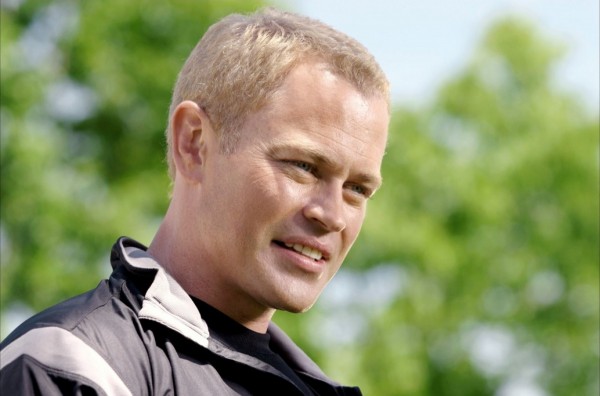
Neal McDonough as the casino owner has a number of deadpan comical moments as well. This is mostly due to how he sees Chris Vaughn and how their relationship changes over time. Kevin Durand has a minor role in this film and although his character isn't likable, his character also has a key part to play in the unfolding of the story. As for action, all sequences are well staged and pack enough energy to keep the film going (even if the end credits take up 12 minutes of time). Dwayne Johnson carrying anything (it doesn't have to be a gun) as a weapon is an instant win just because of how sheer deadly he can be. However, in the writing there was a missed opportunity and that belongs to the finale fight. It's not that it doesn't look good or isn't fun. The thing is, where the fight initially starts actually looks like it would've been a better setting for the final action sequence to take place. Sadly as soon as the setting was introduced, it was quickly moved to somewhere else. Imagine if it did stay there though (for those who saw it already)?

Neal McDonough
The cinematography for this movie belongs to Glen MacPherson. Although a lot of MacPherson's experience is being the director of photography for TV movies, his camerawork looks good here too. Even with a number of scenes taking place in doors, the shots are all well lit and have lots of color. Plus like several other cinematographers, getting shots of landscape is important to give the audience a sense of the scope the setting takes place in and MacPherson did that nicely. The music produced by Graeme Revell was adequate although it was a bit undistinguished. A number of scenes have country/rock soundtrack songs inserted for transition and then there's just instrumental music that are only acoustic. It's difficult to say whether that's Revell or not. However when it came to action cues it was definitely Revell because of his use of tribal drums and electronic clicks. For those parts it reminisced to that of the Daredevil (2003) score. It is weird how Revell doesn't get all of his scores released though. What's the point of making music and not releasing it?

Aside from a missed opportunity in setting for the finale and cliche character development, this is a lean, solid action flick. Dwayne Johnson brings the muscle into the action sequences, Johnny Knoxville brings the energy with the laughs, the music suits the scenes and the cinematography is well shot.

Points Earned --> 7:10

Sunday, July 19, 2015

Breakdown (1997) Review:

There's something about Kurt Russell and a lot of the roles he has chosen over the years in his filmography during the 1980s & 1990s. As far as it has been seen, Russell has three major sides. There's the cult role, where although it wasn't recognized upon release, it became popular later. There's also the comedy or action role he has taken part in that people remember him for fondly for. And then there's Kurt Russell's thriller side of films, where he plays an ordinary man caught in extremely dangerous situations that could happen in the real world. But as far as situations go, this is by far the film that hits closest to home just because of how nerve-rackingly possible it can be. Not to mention but the tag line to the movie says it all - "It Could Happen to You". Great, thanks for reminding us.

J.T. Walsh as Red Barr
The story to this thriller is about couple Jeff and Amy Taylor (Kurt Russell and Kathleen Quinlan) who are moving to California from Massachusetts. On their travels, their car stalls and manage to get a passerby's attention driving an 18-wheeler. The trucker, Red Barr (J.T. Walsh), offers to drive them to a next stop so they can call a tow-truck. Not wanting to leave their car alone, Jeff lets Amy go with Red. After some time, Jeff manages to get his car running and heads to the stop where he was supposed to meet his wife. As it turns out she's not there and nobody saw her arrive. This starts Jeff on a long search and rescue and his findings reveal to him things he never thought possible. Written by Sam Montgomery and Jonathan Mostow (who also directed), this thriller is tense all the way although it becomes more fictitious as it goes on, it still is a thriller that crosses the boundaries of how plausible this situation actually is.

The acting is one of the strongest parts to this story. Although Kurt Russell and Kathleen Quinlan do not have much screen time together, they feel like an authentic couple. J.T. Walsh as the passerby truck driver is also convincing in his performance for the character that he plays. There's also other roles played by other known actors like M.C. Gainey, Jack Noseworthy and Rex Linn as the town police officer. The only part of the writing that doesn't work in favor of the actors is the story's predictability. There really is no surprise. The trailer to the film alone allows some spoilers to slide. But even without viewing the trailer, the execution itself reveals its hand a little early. As to whether the secret was supposed to be kept hidden is unknown but again, it is rather obvious. The bigger question that'll linger on the audiences' mind is what's going on. This is the second strongest element to the film - tension.

As the film progresses, small clue tidbits are given to the audience as to possible outcomes of what happened to Jeff's wife. With that, there's only so many solutions one can create to try understand the problem. Without the audience exactly knowing what happened to Jeff's wife is a great way to get the viewers' imaginations to run wild with thought. This is exactly why this thriller is so much scarier than  running into the Sawyer family from The Texas Chain Saw Massacre (1974) (although it does have small traces of influence). The fact that several people everyday go missing is much more realistic than crossing paths with a chainsaw wielding cannibal, is why this hits closer to home; just like the movie's tagline, "It Could Happen to You". To assume any normal human being would want to be captured would be absolutely insane. Besides, if you wanted to be captured, then you're really not being captured as definition claims the action to be.

"Run run, as fast as you can....."
Thankfully, along with the high tension come some worthy retaliation scenes that involve fighting back. Of course, if you want the protagonist to get what they want, it's going to be fun watching those scenes. Who doesn't like watching antagonists getting what they deserve? The cinematography is a nice addition as well. Handled by Douglas Milsome (Full Metal Jacket (1987)), numerous shots contain what they need to show; barren rock land,...better known as isolation. Yet as gloomy as the setting feels, it is quite beautiful to look at. Bright clear sunny skies, mountain ranges in the background and a single road highway. Definitely a different setting than your usual urban territory. Finally the music composed by Basil Poledouris (best known for his work on RoboCop (1987) and RoboCop 3 (1993)) was decently constructed. There's no recognizable main theme but Poledouris includes a number of tracks that emphasize the bleak emptiness that is the desert area of North America. Even so, his tracks that involve fighting are also well made too. All around, an intense watch.

It has a bit of mystery in its story but much of that is revealed way at the beginning. However with chilling storytelling that concentrates on how it could happen to the person watching it, the events that occur are scary at times. The acting is solid, the music sounds organic and the camerawork looks great; all of which keep the tension high the whole time.

Points Earned --> 8:10

Saturday, July 18, 2015

Bad Boys (1995) Review:

It's definitely something to see when watching a film that kick-started a lot of Hollywood's contemporary stars. Although Will Smith was already a popular sensation with his hit TV series The Fresh Prince of Bel-Air (1990-1996), this would be Smith's first entry into the action genre of films, thus having to never turn back after that. Martin Lawrence was pretty much in the same seat except that he didn't have as much notoriety as Smith. However, this film would too have Lawrence jump into the action film typecast role. Then there's the biggest realization of all. Other than directing a number of music videos, this would end up being the first film helmed by action director Michael Bay. It's interesting that there wasn't even a transition for this man. Straight from music to action blockbusters. Not even a TV movie before this, he must have had some connections.

"You having fun?"
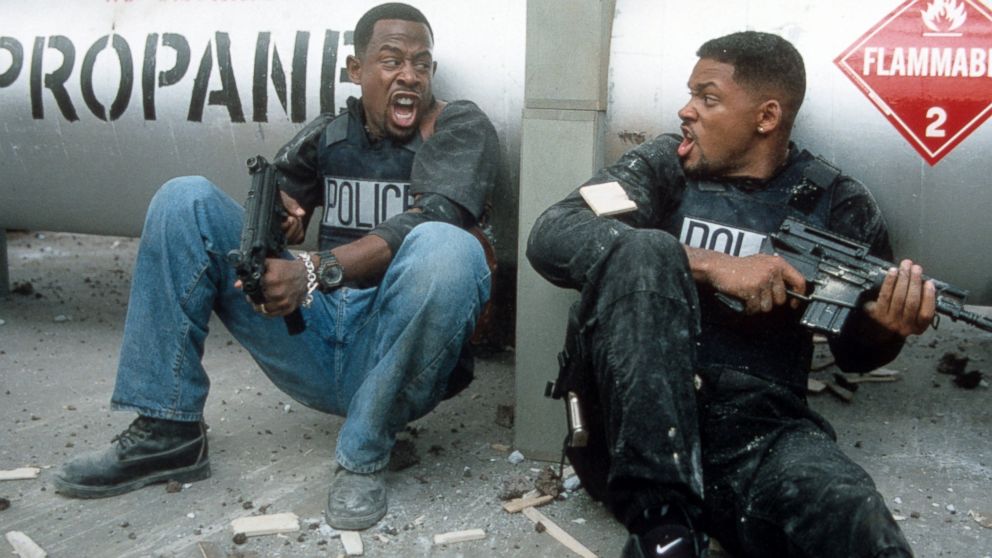
The plot follows a drug heist headed by mastermind Fouchet (Tchéky Karyo) where two cops who grew up together through childhood, Mike Lowrey (Will Smith) and Marcus Burnett (Martin Lawrence) only have a couple days to figure out where the deal to sell the drugs is going down. The only way these two can get the information is by protecting eyewitness Julie Mott (Téa Leoni), who happened to be at the wrong place at the wrong time. For three writers consisting of Michael Barrie, Jim Mulholland (who both wrote for comedy sketch shows for Dave Letterman) and Doug Richardson (Die Hard 2 (1990)), the script actually has nothing that stands out as something without good quality. Will Smith and Martin Lawrence have energetic chemistry and work off each other well. Both also properly emote at the right times and give the right amount of clues to the audience on how each one grew up compared to each other. Will Smith is the smooth, calm and collected one. Even when he's mad, he's still calm. Martin Lawrence plays the opposite; a hyper, loud and rambunctious married man.

Plus, there's a slew of other casting choices that make each scene worthwhile. Theresa Randle (a popular actress during this decade) plays Marcus' wife named Theresa (oddly enough). Joe Pantoliano plays Mike and Marcus' captain on the force that definitely acts like one. And then there's Nestor Serrano and Julio Oscar Mechoso who play another pair of cops who work along side Mike and Marcus. The only actor who isn't interesting in their role is Tchéky Karyo as Fouchet. Aside from trying to get his plan into action without being caught and speaking with his foreign accent, there's not much to say about his performance. Sure, Karyo is an unfeeling man with no conscious but much of his scenes don't involve him interacting directly with the main leads for the majority of the time. It just feels like there's a disconnect. Other than that, Will Smith and Martin Lawrence have some very comical exchanges. Plus, with the film having an R rating, they both can really unleash their thoughts uncensored.

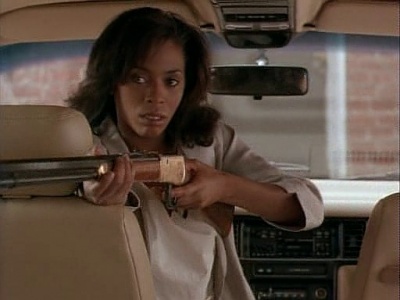
Téa Leoni as Julie also adds some inventive scenes that aren't usually exploited in the buddy cop genre films. Although this film is in that vein, it doesn't feel so much like that here. Does the Julie character act with courage - yeah but does she do it because it's needed - no. It's always good to have a headstrong female character but here, Julie is just there to get Marcus and Mike hot headed. Then there's the action and special effects to this film. From what it looks like, this movie looked like it used no CGI, just practical effects. The action is also abundant as well with plenty of fistfights, shootouts and an occasional explosions. Which again, are all real looking. It's funny to see a movie directed by Michael Bay and see a movie done completely with practical effects and infrequent explosions. It just doesn't feel like the same guy everyone knows of today.

Téa Leoni
However, the cinematography shot by Howard Atherton (best known for Fatal Attraction (1987)) isn't anything to cheer about. There are some camera shots that capture the Miami setting, but much of it is closed quarters. Whether it be in someone's home or warehouse, the angles from inside just don't suffice. There are a number of slow-motion shots (most likely due to Bay's request) that look good but again don't always stand out. Finally the music was an enjoyable listening experience. Composing the film score was Mark Mancina who had his first successful music release with Speed (1994) and then Fair Game (1995). Here, Mancina thankfully has a main theme for the franchise using guitar and what sounds like islander type drums. Considering the setting and who is starring in the film, it sounds appropriate. The action cues, which sound familiar to that of Trevor Rabin (but not entirely synthetic), are also lively enough to match the sequences that are displayed on screen. It's at those points; more percussion is used along with strings and horns. It is certainly effective. It's a fun watch.

The plot's main villain isn't well defined and the cinematography is rather plain looking but the rest is wholesomely entertaining. Will Smith and Martin Lawrence have peppy chemistry along with a number of other cast members. The catchy music and action sequences coalesce nicely too.

Points Earned --> 7:10

Monday, July 13, 2015

Zombieland (2009) Review:

George A. Romero's Living Dead trilogy has left quite an impact on today's culture. Although the actual phenomena has never been a fact, the idea that an outbreak of whatever causes this possible danger could happen, is reason enough to be prepared (just in case). Of course, the concept sounds preposterous but anything is possible nowadays. Technology and science are our greatest weapons no matter how much they excel our lives. With that, multiple zombie genre films have been created decade after decade portraying zombies in new and outrageous ways. However, has anyone every jotted down the key things in every film that tends to get zombies their meal of the day? Well unless you watched them all, the best way would probably be seeing this movie here. Remember that Nickelodeon TV Show Ned's Declassified School Survival Guide (2004–2007), which gave all the tips and sparknote clues on how to survive middle to highschool? Well this is basically the same thing in feature length movie form instead with zombies.

"Get away from my Twinkie"
Written by Rhett Reese and Paul Wernick (G.I. Joe: Retaliation (2013)) as their first theatrical screenplay and headed by Ruben Fleischer in his first directorial debut, this collaborative trio managed to put together a solid horror comedy that is fun in a number of ways. The story follows a group of random individuals living among a planet of unlimited zombies, looking to get to their own specific destination. Audiences are first introduced to Columbus (Jesse Eisenberg), a scrawny geek who has trouble socializing with people and hasn't had one girlfriend. Along his travels he meets Tallahassee (Woody Harrelson), a funky human swiss-army knife that has a hankering for Twinkies. Then comes Wichita (Emma Stone) and Little Rock (Abigail Breslin), a pair of scam-artists that are convincingly good at their craft. The best thing about Reese and Wernick's writing is that majority of the story focuses around the characters and that's important when it comes to development and there's plenty of it too.

The second best point made are the guidelines Columbus refers to the audience about key thoughts one should have in mind if being chased by zombies. If this were real, this would probably be the briefing video on how to pull through. The characters themselves do have personalities of their own but the most memorable character of the bunch was Tallahassee. Harrelson looked like he was having a blast in his role and definitely took advantage of every moment that required some amount spontaneity. The only part of the writing that doesn't work in this film's favor is the comedy. It is funny a number of times but only because of how stupid goofy it gets. By this, it means that the world these characters live in don't take the situation very seriously. For example, "Zombie Kill of the Week",...who's even keeping tabs? It's funny but ridiculously nonsensical. One of the rules mentioned is to "Enjoy the little things", which is fine for some cases but it does seem a little overblown if people are having contests on the best kill on a weekly basis.

Other than that however, the special/practical effects do look convincing for the budget as well as the gore. There's plenty of blood, gunshots, wisecracks and zombies. Perhaps the only other thing that some gore hounds may not like is that there are not enough victims in the movie. Yes, there are people who die in the movie but a lot of the story revolves around the main characters mentioned prior. This may leave some viewers who enjoy the gore a little starved of their usual intake. The poster is also a little deceiving because nobody uses a chainsaw in this movie. But there are things that make up for that (kind of). It's not abundant but there are a couple of special cast appearances throughout the movie. There's one of Amber Heard as one of Columbus' neighbors and an extended cameo of Bill Murray playing himself. It's interesting though to hear Murray reference a few of his own works just to break the fourth wall.

Always follow the given guidelines
The last two components to look at are the cinematography and music. Michael Bonvillain was the director of photography for this project. Although there are areas that look like a lot of other zombie films, Bonvillain does get some good shots of landscape to give the setting some scope. Bonvillain has proven his talent before in Tom Berenger's Sniper 3 (2004). Instead of bright colors here, he has a lot of gray colors to emphasize the lack of life, which also helps the colorful characters stand out. As for music, rock enthusiast David Sardy composed the film score. Prior to this, Sardy only had composed music for 21 (2008) but would later do bigger projects like Ghost Rider: Spirit of Vengeance (2012). All in which Sardy uses a familiar sound of hard rock guitars to indicate his unique score signature. Here is no different; Sardy mixes aggressive guitar chords with organic orchestra compositions to create one interesting score. At times it sounds like it belongs to the horror genre with string stings, other times it's comedy with banjo like cues and other times drama using lengthy chord progressions. It's a weird score for a weird movie. Case in point.

Other than not having enough victims on screen and some absurdly dumb humor (at times), this horror comedy is a fun watch and not just for one time. The characters are written with distinguished funny personalities, the violence is abundant, the camerawork is competent and the film score is wildly experimental but surprisingly appropriate.

Points Earned --> 7:10

Sunday, July 12, 2015

Hellboy Animated: Blood and Iron (2007) Review:

When a live-action movie comes out and then an animated TV movie, this leads mostly to the popular character having its own television series. But for Hellboy (2004), the iconic character went in this direction but then kind of just floated around. How Hellboy Animated: Sword of Storms (2006) did with viewings and ratings are a bit beyond my knowledge. After seeing it, it definitely did not feel like a total waste of time. It was by no means perfect with choppy animation, a confused demographic it was trying to attract and an undetermined setting of which it took place but it still had things to have fun in. If that warranted this second animated feature I'm not sure what the whole point of it was. Was it going to be a TV show or not? Or were they just made to hold over its fans for the upcoming sequel? I don't know, the reason seems unclear. So does this entry improve upon the last - not really. It's just more of the same brainless fun.

Everyone's here,...including that guy on the left
The story to this entry is about when the owner of a mansion begins to suspect it’s haunted. When in fact it turns out years before Hellboy (Ron Perlman) was kicking demon's butts, Dr. Broom (John Hurt) had visited the mansion once before vanquishing an evil vampire queen named Erzsebet Ondrushko (Kath Soucie). Now, Dr. Broom suspects someone might be attempting to revive her. As an overall story, it is certainly not as sluggish in its pacing as Hellboy Animated: Sword of Storms (2006) was. It is a lot more straightforward with its execution. However, the timeline placement is now off. For the prior animated film, Dr. Broom was not seen, so it was assumed what was depicted was after Hellboy (2004). But for this viewing, Dr. Broom is around so this must be before the first live-action film. I guess the writer Kevin Hopps is just picking random stories.

The only part of the writing that isn't clear is a subplot involving Hellboy confronting his destiny with some goddess named Hecate (Cree Summer). It's brought up first at the beginning and then flies in from left field right at the finale. It feels almost unnecessary with how little it has to do with anything else. The characters are still as likable as ever and there's a more of an exclusive cast of voice actors this time around as well. Ron Perlman, Selma Blair, Doug Jones and John Hurt all return as their respective characters and they do a fine job at it. Peri Gilpin as Erzsebet sounds convincing in her role as a deadly youth obsessed vampire. Even Cree Summer as the other goddess sounds fairly terrifying. But the fun part is when you can also pick out the characters that are voiced by Rob Paulsen and Jim Cummings. You just can't go wrong with such talents as those.

When it comes to action, these sequences contain the required energy to keep the movie moving. And considering its Hellboy, there needs to be enough action. Hellboy's has to be punching something at some point and making a wisecrack. The interesting thing is, the violence in this motion picture is even more graphic and edgier than Hellboy Animated: Sword of Storms (2006). There's animated blood all over the place in this entry. But this isn't the only thing that makes it edgy. There's also a slew grotesque imagery, dead people and a fair share of nudity with demons and voluptuous figures. Is it just me or did the animators really not think this through on who this feature film is designated for? The other animated film could be seen as a movie for both old and young ages, but this one totally denies any presence of a viewer younger than 13. The directors to this movie was Victor Cook (Dante's Inferno (2010) and Tad Stones (Buzz Lightyear of Star Command: The Adventure Begins (2000)) of which they direct it fine but represent two opposite sides of the demographic for animated films.

You know.....for kids!
The only thing worth picking on here is the animation, which is again choppy in areas. The only sections that look decently animated are the entertaining action sequences. Other than that, all other animated scenes have rigid character movement in body parts and mouth movement. It's a shame when you have animators like Kirk Tingblad and Andy Chiang who have worked on numerous animated projects and yet here it doesn't feel polished. The final component to the movie that does feel well put together is the film score composed by Christopher Drake. Just like Hellboy Animated: Sword of Storms (2006), Drake maintains Marco Beltrami's main theme for the franchise and even uses some quite horrifically good sounding tunes to amp up the atmospheric setting at which the story takes place. It's still fun but not any different from before.

This feature film is about the same compared to Hellboy Animated: Sword of Storms (2006), with the same choppy animation (except for the action sequences), unclear timeline placement and an unfinished subplot. Yet, the voice cast is still fun to listen too, the edgy tone and violence is respectable along with the appropriate music. The demographic seems more adult focused here than the last one.

Points Earned --> 6:10

Tuesday, July 7, 2015

Army of One (1993) Review:

Adventure / thriller movies are always big on action. At some point through the running time, decisions have to be made whether to accept fate or try and change the oncoming outcome. This kind of balance needs to be checked because if not monitored, either the viewer will end up being stuck in an explosive marathon in nothing but action after action without any story, or too much exposition and no action at all. No matter what the extreme, either or will bore its viewer. Unfortunately, that is the case for this action flick and surprisingly, it suffers from both extremes believe it or not. After being framed for murder of a police officer, Santee (Dolph Lundgren) is sent to a penitentiary only to almost be killed by the man who framed him. After escaping, Santee takes one off-duty cop named Rita Marek (Kristian Alfonso) hostage while having Lt. Franklin L. Severence (George Segal) on his tale close behind.

"Don't mind me,....just gonna steal you for a bit"
Directed by usual stunt coordinator veteran Vic Armstrong (his directorial debut) and written by Steven Pressfield (Above the Law (1988)), this action thriller is very low on the entertainment and high tension meter. There's only a few good areas to point out. Its strongest element are its cinematography captured by Daniel L. Turrett. Although this is Turrett's ONLY cinematography credit to date, it is decent. The rest of Turrett's work is credited as camera operator and although that is a totally different task, Turrett did what he could. The entirety of this movie is set in the desert and Turrett shot as much footage as he could get to include wide landscape and long running mountain ranges. It sure is nice to look at. The second best aspect to this movie are most of its cast and how they act. Sadly, the cast that is respectable are not on screen as much as the actual main cast.

For Lundgren himself, there is no complaint. He has all the best lines and works well with that alone for this particular film. Aside from him though, George Segal as the Lt. Severence is wholesomely uninteresting because of his sniveling voice. Even the young Kristian Alfonso is remarkably banal in her performance. Yet, audiences will have supporting cast performances from the underrated Geoffrey Lewis as the local Sheriff helping Lt. Severence. Backing up Lewis is a younger Nick Chinlund as a Deputy. He's easy to pick out. Then there's the cameos (not really, but because they show up for all of about 5 minutes. Ken Foree (known from George A. Romero's Dawn of the Living Dead (1978) and Texas Chain Saw Massacre III: Leatherface (1990)) plays Eddie, Santee's partner. Along with Foree is another young Khandi Alexander playing Eddie's wife. Too bad they didn't have longer roles. Finally, the last part that works here is the action (partially). What is meant by partially is that the shootouts are well staged and set up. Those are fun.

But now we hit the bad territory. The bad side to the action are the car chases and fist fight scenes. For sequences you'd think would move quickly and get your attention, does not happen here. This is the movie's biggest problem; pacing. When the sequences occur, it gets old really fast. So quickly, in fact it feels like its drawn out just for padding purposes. Then there's the scenes that involve exposition, which don't even get told correctly. This is said because Lundgren's character says nothing about what's going on the whole time. The only way viewers will understand what's going on is by listening to Alfonso's character - why? Because she asks all the questions that don't get answered and she figures them out on her own. The thing is, the information to understanding this plot is held back for such a prolonged amount of time, there comes a point in the movie where the viewer just may not care anymore and wish for the film to end because they won't understand why things are being done without any reason.

The coroner from CSI: Miami knows guns? =o
Pressfield's writing is very mediocre here. Another thing that is eye-roll inducing is how cliche the execution is. You have the protagonist (a muscular dude) out fighting the way he wants to and doesn't care if he dies and runs across this hot young chick. There's no guessing to what'll happen between them because it has been seen time and time again in these kinds of action/adventure thrillers. Of course they're going to hookup, why wouldn't they? There's also a subplot that sort of explains Santee's relationship with an old man played by Bert Remsen but it has no effect on the plot so why it was included was beyond understanding. Lastly, bringing the list of bad components to a close is composer Joel Goldsmith's musical score, son of legendary composer Jerry Goldmsith. Here, Joel Goldsmith's score hardly warrants any recognition even with a couple of repeating themes for certain scenes. Much of the score uses the cheap 1 or 2 instruments that would be required for a Richard Band production and its more disengaging than anything else. Thankfully it hasn’t been released to the public.

The title correctly portrays what it says and that's Dolph Lundgren mowing down bad guys without getting a scratch. But this doesn't happen that often. Besides good looking cinematography and a few actor cameos that tease the audience more than anything else, this cat and mouse chase is boring half the time with bad pacing, cliched writing, and poor sounding music.

Points Earned --> 4:10

The Wiz (1978) Review:

The world is made up of numerous cultures. Of these civilizations, their followers do things differently from every other one. Some may have similarities while others bare no resemblance. When it comes to portraying these customs to a wider audience, it is of great relevance to include key parts that help define it as what people know it for today and why it is the way it is. So the best way to get a viewer’s attention would be to adapt this sequence of events in some way that follows the same lines as other critically acclaimed works. The Wizard of Oz (1939) was phenomenally groundbreaking for its time and is considered to be one of the all time classic movies to see. So why not use this as the foundation for a similar movie but this time using somebody else's culture. For that idea alone, it's ingenious but that also requires a great understanding of the subject matter. Which, this film does mostly get right but doesn't fully take advantage of it the whole way either.

Introducing the Scarecrow
The backbone of the screenplay, of which Joel Schumacher (known at the time for Sparkle (1976) and Car Wash (1976)) is unchanged for the majority of the time. Dorothy (Diana Ross) is caught in a tornado (a blizzard actually) in the middle of New York and is thrown into the land of Oz where she must find the wizard (Richard Pryor) to get home. Sidney Lumet (who’d later direct Prince of the City (1981) also directed the film. This is okay for some things but not for others. What's good about it is that fans of The Wizard of Oz (1939) can pick out the parallels to how the story plays out and see how creative the production got. The problems arise when the execution starts out promising and then ends up becoming just a routine as the running time continues on. It's difficult to say whether this was intentional or not but the best scene that seems to provide the most social commentary is the introduction of the scarecrow (Michael Jackson - in his debut entry). At the start, talking crows (who sound like the crows from Dumbo (1941) oddly enough) that remind him how significant he is hanging on the post and doing nothing surrounds the scarecrow. That alone is an analogy to the unfair "Jim Crow" laws that were pro-segregation – of how African Americans were forced to do nothing but be bullied by the “crow” laws.

However as for the introductions to the Tin Man (Nipsey Russell) and Lion (Ted Ross), the social subtext behind them doesn't feel visible. If it is there, it was a deeply hidden message I guess. Joel Schumacher is actually a good choice for penning the script considering Sparkle (1976) and Car Wash (1976) had predominantly African American cast members and were significant for their time. Aside from the incomplete writing, which was supposed to have an African American undercurrent, everything else was fine performance wise. Diana Ross as Dorothy is sweet, brave and caring. Michael Jackson (who is almost unrecognizable in his makeup) as the scarecrow is goofy, innocent and for a guy who's known for his footwork shows that he can look like he hasn't walked a day in his life. Nipsey Russell as the Tin Man is the soul of the group providing much of the needed energy to quite side of the bunch. Ted Ross as the Lion, who perhaps hams it up a little too much sometimes, is still funny with his cowardice personality.

All the visual elements work nicely with each other. The cinematography provided by Oswald Morris (The Man With the Golden Gun (1974)), which would be his 4th to last work expertly caught shots that had grand matte paintings and other physical set pieces. Even the special/practical effects were very convincing. The dancing also was well choreographed and staged by Louis Johnson who was nominated for a Broadway's 1970 Tony Award. Plus, the dance sequences were a no 3-4 member group count. This was wide scale, 1000 of extras on board all performing the same movement together in unison. That takes skill. As for music, the film features a soundtrack and score, both composed by Charlie Smalls who would unfortunately pass away a decade later. Here, Smalls uses a lot the 1970s style instruments used in song making at the time. That means including synthesizers, electric piano and lots bongo drums. The soundtrack is a different story.

That's a lot of extras...imagine the work to get
that right in one take
The songs, which were also drawn up by Smalls, has a number of catchy themes. Cues like Dorothy's "Is This What Feeling Gets?" (which is the main theme), "Ease On Down the Road", "You Can't Win, You Can't Break Even" and "Don't Nobody Bring Me No Bad News" are only a bunch of jazz/R&B/soul songs that come to mind because a number of the tunes play will get the legs moving. For these songs, the actors sing them and 95% of the emotions feel real especially for Diana Ross; you can tell she's singing that. It's difficult not to get a little choked up. However there are a couple of exceptions. For example, Ted Ross seems to have someone covering for him because he can't seem to look authentic covering the singer's lines. The only problem to bring up was the use of unexplained characters. There's a homeless guy running around the film who apparently becomes a threat later on but for no real reason or motivation (that is given). It doesn't make much sense, but that's it.

The social undercurrent in its writing works at first but then is completely dropped. That and one character in the movie has no real importance and some lip synching isn't all that convincing. Yet, the movie is mostly made up with decent effects, a lively main cast, great looking choreography, cinematography and catchy music.

Points Earned --> 6:10

Monday, June 29, 2015

Unstoppable (2010) Review:

As much as not all-regular commuters take the train on a daily basis, the railroad has always been an important asset to various interests since its commencement during the 1800s. Whether its passenger or freight trains, railways are one of the biggest systems of transportation for anything that needs a direct way of travel. However, this complicated arrangement of simultaneous operations would not work right or be safe enough for anyone to be apart of if it were not for the array of classes that specialize in this field. The train engineer, conductor, signalman, stationmaster and so on all have to coordinate exactly by the book because if one thing is left unchecked, several severe consequences can arise. One of which is loss of property and that is no loose change purchase. It's one of those jobs where if you screw up once, there's really no way your going to be getting a second chance.

"Ehh,...no worries, I didn't want that anyway"
The plot to this "you can't afford to be lazy" thriller is when station master Connie (Rosario Dawson) and her boss Galvin (Kevin Dunn) find out that a rather unqualified train engineer (Ethan Suplee) managed to lose control of a mile long freight train out the yard and onto the public railway line. As soon as this occurs, chaos and mass hysteria ensues for somewhere along the line comes a sharp curve that lies over a populated city that the train won't be able to make. Despite this major problem there are people who can help. Frank Barns (Denzel Washington) a 28-year veteran of the railway and greenthumb Will Colson (Chris Pine) team up to try and slow down the runaway train. Directed by genre action/thriller veteran Tony Scott, once the train leaves the yard the pacing does not slow down from there and rightfully so. Written by Mark Bomback (Live Free or Die Hard (2007)), which was adapted from an actual event that occurred almost a decade before, this intense thriller is one of those cautionary tales about how detrimental one slip can be if your not careful enough (whether it was intentional or not).

Aside from how quickly paced scenes move in this film, there are a number of scenes for character development. Because there are moments that involve trains catching up to each other, this allows room for Frank and Will to talk and emote to each other about their separate lives and what they are currently dealing with. Frank is a widower with two daughters trying to make it through college and Will is a guy who's been put on a restraining order for a rash decision he made. Although at times these two characters bicker they do have heart and that makes them likable. This is important for main characters. Even Connie (Dawson) who comes off as hot headed at times is a sympathetic character because her situation is just as critical as the person whose trying to stop the train. Also, Dawson's knowledge of train terminology is astounding (apparently she has railroad experience in real life). Even for actor Kevin Dunn, who normally plays parent roles plays his character the right way, which represents how business leadership can become tainted over time.

As for the set pieces, there's something to admire about how real this film feels. For a plot that is described as extremely hazardous, it is amazing that a number of the action sequences were done live. Could you imagine being on a runaway diesel train with 30+ cars on the back end? What's great specifically about the runaway train is about how it’s portrayed. Whenever the train appears on screen, it screams metallic echoes that are a bit terrifying even from a passive point of view (from not literally being there). Envision the power behind all that weight and then speed it up,...it is literally a monster that is indestructible. The only visual elements that seem illogical are mostly the technical parts. For majority of the time, the special effects are kept to a minimum but there is one scene that looks like it wasn't touched up as nicely as it could've been. Also like a lot of action films, sometimes the laws of physics are blown off just to have the film go a certain way and here is no different. Some things just shouldn't be possible.

Chris Pine & Denzel Washington
The other two components that work in this film’s favor however are its cinematography and music. The director of photography was handled by Ben Seresin best known for shooting Transformers: Revenge of the Fallen (2009) a year before and went on to shoot for Pain & Gain (2013) and World War Z (2013). Much of Seresin's work has great wide-angle shots of terrain, sky and the rail lines. When it comes to a film like this where everything is on the move, it is definitely important for the viewer to have an understanding of geography within the story and Seresin is able to display that efficiently. The music composed by Harry Gregson-Williams was also a surprise. Although there isn't a truly recognizable theme for the runaway train other than staccotoed notes randomly throughout the score, Williams does have a theme for Frank and Will which to be quite honest is the best tune. The motif is lightly played on the piano and it has real emotion. The action cues do its job at hightening the experience of tension but it isn't as thematically integrated when being listen to alone.

Aside from having some implausible physics and undoctored special effects in a few areas, this thriller goes beyond comfortability with its suburban setting and realistic dangers of what happens when someone isn't paying attention. The actors perform well, the writing develops them nicely, the music gives the right amount of emotion, the cinematography and practical set pieces make it all the more real.

Points Earned --> 8:10

Sunday, June 28, 2015

Hook (1991) Review:

The ability to make sequels to famous movies have been done but have proven to be quite a time consuming task. Even if the end result is lukewarm like Tron: Legacy (2010) or beyond expectation like Terminator 2: Judgement Day (1991), the amount of investment put into these types of cases take much longer to bring to fruition than your typical Hollywood cranked out "every other year" sequel. Unless the producers have a strategically laid out plan that goes beyond a couple years like Marvel Studios, the wait for how long it would take to make such a follow-up is unpredictable. The Terminator (1984) sequel came 7 years later while the Tron (1982) sequel arrived 28 years later, so it's hard to say. Take Walt Disney's Peter Pan (1953) animated feature. An actual animated sequel wasn’t made until 49 years later but only on home video. Yes, it is a sequel but surely not something the studio probably put several decades into.

Hook & Pan
Taking this live-action sequel into account is a whole different ball of wax. Unlike most sequels, this continuation of Peter Pan takes place several years after the events of Peter Pan (1953). Here viewers will see an older civilized Peter Pan (Robin Williams) during the modern day, married to the granddaughter of Wendy (Maggie Smith) from the original Disney classic. It is here that Pan and family travels to see Wendy in the same house the original took place in. Unbeknownst to them, Capt. James Hook (Dustin Hoffman) returns from Neverland and captures Pan's children Jack (Charlie Korsmo) and Maggie (Amber Scott), thus forcing Pan to return to a place he once forgotten. Directed by Steven Spielberg along with writing by Malia Scotch Marmo and James V. Hart, this sequel has its moments that don't all add up but it does have several fun parts as well. The best element to the writing are the characters and its overall message to its audience. Every actor that is shown on screen plays their roles well and even match the same attitude and tone of the 1953 animated feature.

The actor who looked like he had the most fun was Dustin Hoffman who had numerous scenes that were quite comical. Hook still has a fear of clocks because of that pesky crocodile, we all remember that. Complimenting Hook is his partner Smee (Bob Hoskins) who sounds a lot like Jason Statham in this role. Nonetheless, Hoskins has a number of comical moments as well. The biggest subplot is the relationship between Pan and Jack. Charlie Korsmo best known for playing "the kid" in Dick Tracy (1990) is able to act in his role with more dialog this time. For Robin Williams, it is the transformation of his character of what he currently is back to what he once was. For that, the main idea is that no matter how old you get, it's important to never fully grow up and to live a little. For that reason alone, watching the transition of Peter Pan finding his old self is worth the watch. Plus like every Robin Williams performance, there's a bit of humor for everyone. There's also a bit of surprise casting, which include cameos from Jimmy Buffett, Tony Burton, Glenn Close and a couple others.

What doesn't work in the movie's screenplay are its pacing at which scenes move, unexplained continuity and minor subplots. The running time to this movie is 2 hours and 20 minutes - approximately clocking in as your typical Michael Bay time (minus the explosions) and after everything is said and done, it feels as if some cutting could have been made. There are some scenes where for example when Peter Pan reunites with the lost boys, feels drawn out for too long a time. Mind you this is just meeting them not working with them. For continuity, it's not bad in all places like the homages made to the original but when it comes to knowledge some things don't make sense. Do characters that live in Neverland really have the power of the "all seeing eye"? Or do they just carry a magic crystal ball with them wherever they go? In some ways they seem more omnipotent that usual. Even a main character asks this question and no clear answer is given.

Smee
The other issue is a minor subplot dealing with Tinkerbell (Julia Roberts) and Peter Pan. I'm pretty sure it was noticeable in the original that their was some kind of romantic tension between Tink and any other female that wanted to spend time with Pan, but there's one scene where Tinkerbell just comes straight out and kisses Pan and its never addressed again. Okay,...weird. Anything else used in the film however was well made. The special/practical effects for 1991 look well meshed with the live-action and cinematography. Dean Cundey who was director of photography got nice looking landscape shots along with beautiful matte paintings, which look great. As for music, legendary John Williams composed the score. Although the main theme is not as highly memorable as his Superman (1978), Star Wars (1977) or Jurassic Park (1993) motifs, the music is still lively and entertaining. There is one track though that takes place at a baseball field and it sounds like it belongs to The Peanuts. Odd.

For 2 and a half-hour movie, it certainly feels like there was unnecessary padding. That and it has continuity issues and an unfinished subplot. However, other than that the actors perform well, the music sounds good, the cinematography is in large scale and the main message of never growing up is always something to keep in mind.

Points Earned --> 6:10

Friday, June 26, 2015

Sinister (2012) Review:

Coming up with new concepts for movie genres isn't as easy it seems. For every new creation, there's always a bit of material borrowed from prior work. Sometimes these parts are taken from the same creators or from others. As long as it's not done verbatim, most film studios and filmmakers don't receive too much criticism over such details. Other than The Day the Earth Stood Still (2008) remake (which many didn't find engaging), director Scott Derrickson hasn't had much trouble making his own films with lifting various aspects of other films and putting it into his. The ability to do that without being obvious about it is important because it keeps things interesting for generations to come later on. For what is presented here, it shows promise but wistfully, this horror film has about as many positives as it does negatives.

It's investigation time
The story is about family man one-hit-wonder writer Ellison Oswalt (Ethan Hawke) trying to make one more comeback after a series of failures. Oswalt is an unusual writer; instead of writing about fiction or other imaginary things, he delves into actual crime cases and digs further into what may have been missed by police officials. After moving in with his family into the exact home of which a gruesome murder took place, he finds a box full of Super 8 films in the attic that turn out to be snuff films of several murders. The writing, which was drafted by Scott Derrickson and first time writer C. Robert Cargill has a wonderfully interesting premise. The beginning to this story is one giant question and the mystery behind it is purely disturbing. What doesn't work as a whole is the last half of the running time. With not much else said, the execution becomes highly predictable making it a tensionless conclusion.

To say that the actors involved in this production can't act wouldn’t be truthful. All thespians involved act as their character was written. The problem is how the characters were written. Woefully, Ellison is one of those forgetful fathers who tends to lose track of what's important to him when it comes to work and family. Mrs. Oswalt (Juliet Rylance), Trevor (Michael Hall D'Addario) and Ashley (Clare Foley) feel like a family but there's barely a side explored where the they have fun. Most of it is about them having friction against each other and not disturbing daddy from his work. For almost two hours, there could've been a little something added. This is a problem because this doesn't exactly make the family very likable. On the other hand, there are other characters more interesting than they are. James Ransone plays a cop who looks to help Mr. Oswalt uncover more information about the gruesome cases. The other is an uncredited performance by Vincent D'Onofrio as a professor who specializes in the supernatural.

The final actor that makes a notable performance is Nicholas King who portrays the main antagonist (Bughuul) and of whose face of the franchise is represents. Although King doesn't actually give Bughuul much of a distinguished personality, the look of him is quite memorable with such a uniquely ghoulish face. With that also leads to some mostly effective chilling scenes. It is rated R but the gore isn't what makes it that. The gore is in fact almost none existent (which may upset some). It's not so much scary although some jump scares work as well. The cinematography shot by Chris Norr is adequate but isn't anything much to talk about. There's nothing special look to point out. It's dark and well-lit when the script calls for it unfortunately. Norr is competent but lacks a trademark.

Bughuul on the Super 8 film
As for music, the highly underrated horror composer Christopher Young scored the tunes for this movie. For those who are more familiar with Young's classically recorded scores from A Nightmare on Elm Street 2: Freddy's Revenge (1985) and Hellraiser (1987) or even Ghost Rider (2007), it may take some time to get used to this listening experience. It is definitely far from being bad or underdeveloped; it just doesn't sound like your everyday symphonic score. Unlike in his early work, Young now uses a mix of some organic orchestra and more of electronic synths. There are a number of themes composed for different events, the best being for Ellison's investigative work, which involves heavily warped electronic bass beats. Along with that are other tracks that are in more of the lines of soundscaping, this is for the series' main theme. One thing that doesn't work for this movie musically is anything that isn't Young's work, which is used for the snuff films. When these songs are played they are extremely distracting and somewhat annoying. They really should've have just stuck with Young only.

For what it proposed, it definitely looked promising. The villain has a memorable design, the actors efficiently work in their roles, the music is effective and it is unsettling in general. Tragically, the bad evenly outweighs the good with not very many likable main characters, an obnoxious soundtrack from other artists, acceptable but uninspired camera work and a predictable last hour once the ball gets rolling.

Points Earned --> 5:10

Wednesday, June 24, 2015

Police Academy (1984) Review:

Numerous comedies have been made involving a group of misfits coming together under one roof for a common reason. This specific plot has been used in countless comedies and for countless genres. It is by far from the greatest movie made but the one that comes to mind that was quite popular during the 1980s was Hal Needham's The Cannonball Run (1981); a ragtag group of zany car drivers set out on the biggest race of their lives to reach the finish line. A few years later, this movie would be released and its plot isn't a stranger to what was previously mentioned; an ordinary group of schmoes from the city join the police academy after it becomes legal for anyone to join for any reason. If they pass, they are officially apart of the police force. Simple as that, and as bare bones as it is, the movie gets by just fine for the most part. The only difference between the two movies is that one is in an actual race of who will win, while the other is a race of who will graduate.

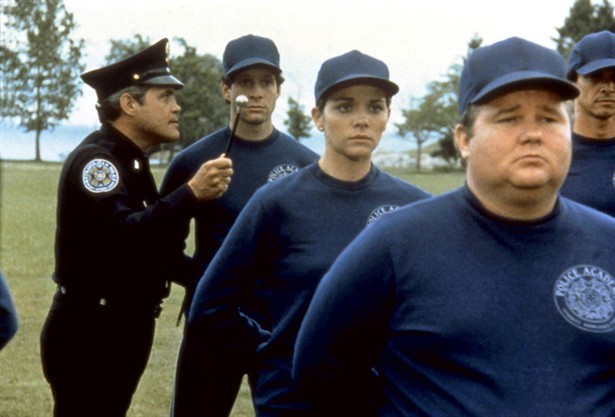
Guttenberg, Cattrall, Scott and Bailey
Written by Neal Isreal, Pat Proft and Hugh Wilson (who also directed) have put together a decent script with a number of positives and only a couple of negatives that clearly needed to be changed. The biggest issue with its script is that it's not a whole story. Since there are numerous characters, there are just several subthreads that run parallel to each other. This also means some characters will have better developed backstories than others. This is usually the sacrifices that are made for bigger ensemble casts. Unfortunately with that come a number of cliches that have been seen in other comedies. Some of which most filmgoers would expect because of how predictable the typecasting is. Yet, this is forgivable because all the main actors who have the majority of screen time are all likable in their roles. This is due to their distinguished personalities.

The big three characters belong to Carey Mahoney (Steve Guttenberg), a labeled troublemaker but only for the wrong reasons, Karen Thompson (Kim Cattrall) as Mahoney's love interest, and Capt. Harris (G.W. Bailey) who strongly loathes Mahoney and wants to remove any other rejects. Bailey continues to be funny in his roles. Every character that he has been cast for remains comical in their own way with his clumsy facial expressions. Then there's gentle giant Moses Hightower (Bubba Smith), the shy Laverne Hooks (Marion Ramsey), sound effects master Larvell Jones (Michael Winslow), the innocent dough boy Leslie Barbara (Donovan Scott), the tough and attractive Capt. Callahan (Leslie Easterbrook), the old forgetful Commander Lassard (George Gaynes), hispanic man George Martin (Andrew Rubin), the gun-totting crazy man Eugene Tackleberry (David Graf) and a couple others.

With all of these personalities on screen it is hard not to find at least one thing to exploit from each character when it comes to comedy. For the majority of the time the comedy works efficiently. It's not falling off your seat hilarious but there are several moments that will create some good laughs. A lot of the gags and slapstick are stupid and goofy but they work because of how ridiculously quick the situations get. However, there are some jokes that are a bit crude. Humping and butt jokes are bit immature even if the tone is to be goofy. For its time, yeah maybe it was funny but now, those kinds of gags are just ehh. One of the bigger surprises is when there's a racial slur thrown out in the spotlight. Umm,...ok, since when did one of these antagonists become filled with that much hate? Thankfully, it is resolved (somewhat). Come on, there's no reason for that. Keep it classy.

Ouchies
 Michael D. Margulies was the director of photography for this feature. Although most of his work was shooting for TV movies, it seems as though he handled it well. Margulies gets a lot of the surrounding police campus and the city scenes don't look boring either. They're not beauty shots but they do work. The music was composed by Robert Folk who would be better known for scoring music to the Jim Carrey vehicle Ace Ventura: When Nature Calls (1995). Although Folk's work isn't easy to physically find other than a couple areas, he at least makes it catchy and easy to listen to. The main theme for the franchise has a memorable motif involving flutes and snare drum to emphasize the military aspect of the police academy. The rest of the tracks have more jazz themed tunes, which isn't the usual way of producing a film score but it works nonetheless.

Its large cast of comedic talents are clever in their own ways even for a largely thin plot. However, some jokes are bit silly and ill-advised even for its goofy tone. These flaws are thankfully made up with music that is unique and memorable and focused cinematography.

Point Earned --> 7:10

Tuesday, June 23, 2015

Easy Rider (1969) Review:

As much as actor Peter Fonda and Dennis Hopper have been veterans of Hollywood and performed in countless films, for many, this is probably the film they are most associated with all the time. During the 1960s, the United States was going through a very different kind of revolution. This revolution was not just one thing, but a multitude of areas that spanned various racial backgrounds and cultures. The Civil Rights movement was a largely significant event going on during the decade. However another significant movement that also went on during this time was the "counter-culture". This movement was about the generation after the 1950s and below that was tired of the traditional "American Dream" and took matters into their own hands. This led to the idea of them "trying to find themselves". This consisted of things people didn't normally do during the time as freely - free roam traveling, drugs, adultery, etc.

"Hey man....how you doin' man?......"
This is more or less the same idea here but portrayed in a positive light. Dennis Hopper and Peter Fonda play Billy and Wyatt respectively as two free flowing traveling bikers out to catch the upcoming Mardigras in Louisiana. On their journey they come across other encounters that show them other types of viewpoints of the time. For the screenplay co-written by Fonda, Hopper and Terry Southern (writer of Barbarella (1968)), it really is quite thin in plot but as minimal a story that it serves, it does have a great depiction of the culture at the time and how other people viewed it too. There's an array of different social statuses that are covered. That means from the rural farmland, suburb communities and even hippie towns. There, viewers will get the experience of seeing the kinds of opinions that existed out in the US when riders like these would show up.

Just because you live easy and travel around doing sight seeing doesn’t always make you look harmless. There are people who don't mind and there are people who do mind. These kinds of views are elaborated on even further by another character named George Hanson by a young Jack Nicholson. Perhaps the only written part that isn't fleshed out is Jack Nicholson's background. Hanson comes on screen after Wyatt and Billy are jailed for parading without a license and Hanson helps them get out. So how did Hanson do that? If he had the power to have Wyatt, Billy and himself released, why was he there in the first place? Obviously for plot's sake but it does feel a bit contrived if only for that reason. Nevertheless the three main actors are adequate for the roles they are cast for and their dialog although quite bereft of intelligence is understandable either way.

Yes, a lot of their dialog is reduced to including the word "man" in every sentence, but again it was apart of the culture at the time so it at least fits. Also, even though Dennis Hopper and Peter Fonda are the main leads, Jack Nicholson's performance is more lively and entertaining than theirs with his unhinged personality. However this does not mean Hopper and Fonda aren’t good. The best part about their performance is that they are not portrayed as mean spirited jerks like the wretched The Wild Angels (1966) Peter Fonda starred in prior. No, they don't follow all the rules everyday citizens do but they are at least polite to the people they meet. On a technical basis of filmmaking there is only one component that doesn't exactly work quite right and that's the editing by Donn Cambern. Occasionally the transition between scenes will flicker with the upcoming shot a couple times before it finally sticking with it. Not sure what that was all about but it was distracting.

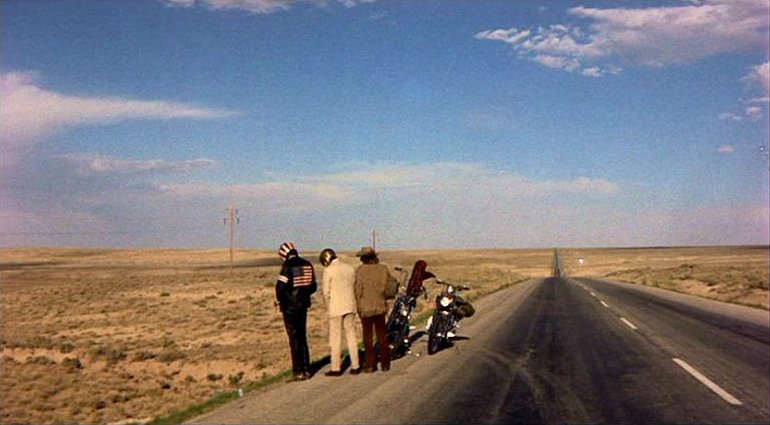
Forget the fact these 3 are taking a wiz,....look at that sky!
The rest however is nothing short of bad. Surprisingly for its time there is no film score to this movie. Instead, whenever Wyatt and Billy are on the road fans of the older music will hear a bunch of their favorite songs. The best and most recognizable would be "Born to Be Wild" by Steppenwolf. "Don't Bogart Me" by Fraternity of Man and "I Wasn't Born to Follow" by The Byrds are all catchy, encapsulate and ooze the 60s era with their cry-freedom lyrics and rocking guitars. The one thing audiences will be blown away most by will be László Kovács cinematography. For a film involving a story with much road riding, you'd hope there would be plenty of landscape shots and that's exactly what you'll get. There are so many great shots of the western rocky desert. It is breathtaking even when you're not physically there. It's too bad Kovács passed away, he really had a good eye.

It has some editing issues, one unexplained character back story and its plot is fairly simplistic, yet understanding the era it was made from kind of makes sense why (somewhat). It has decent acting by its main cast, the cinematography is great, and its music and accurate depiction of the culture back then makes it feel like an adequate history lesson.

Points Earned --> 7:10

Saturday, June 20, 2015

Rocky V (1990) Review:

It is already well known that when a popular franchise starts making sequels well after the first trilogy, there better be something for new audiences and fans a like to enjoy. Although most producers do have this in mind, there's always that group that don't and make rehash after rehash after rehash of the same film. This has been seen in dozens of film series, some of which have pulled themselves out of mindless entertainment to crowd-flocking blockbusters and others from once respected initiators to abysmal box office bombs. The unfortunate thing is, most head down the wrong path. As for Sylvester Stallone's first entry into Hollywood with Rocky (1976), it struck such a memorable chord that Stallone ended up exploiting his fictional counterpart for a decade and then some. Sadly for many, if not all fans of this boxing franchise have found this entry to be the least enjoyable. Of which they are right but it certainly isn't garbage like some have said including Stallone himself shockingly.

Rocky & Son
For what it's worth, although it does have a couple more problems than Rocky III (1982) and Rocky IV (1985), this fifth entry isn't simply a rehash in plot like the last two films. After returning home from his fight with Drago in Russia, Rocky and family head home only to realize they lose everything when they discover Paulie (Burt Young) lent all of the Balboa savings to a shady accountant that ended up committing fraud on their behalf. Having to sell majority of their possessions to have cash on hand, the Balboa family moves back to Philadelphia hoping to start a new. There, Rocky reopens Mickey's (Burgess Meredith) boxing hall but is continuously followed and harassed by George Washington Duke (Richard Grant) who is looking to get him back into the ring to make one more check of big money. However Adrian (Talia Shire) disagrees because after visiting the doctor it seems as if Rocky has irreversible brain damage that could get worse if he continues to fight.

Trying to stay out of the ring, Rocky discovers a boxer named Tommy Gunn (Tommy Morrison) who he ends up taking under his wing. The writing, which was penned again by Sylvester Stallone although a little cluttered, at least has things to discuss. Unlike Rocky III (1982) and Rocky IV (1985), which were very straight cut and predictable this time there's things to think about. For those who are tired of the usual Rocky formula that consisted of "promising to step down, but then is challenged by losing a friend and reclaims respect", this film goes a different direction. The direction by John G. Avildsen (the same director of Rocky (1976)) here is more family oriented, which to be honest is what made Rocky (1976) so compelling. Sure the sports aspect was fun too but it was the human storytelling that worked best. The concept of having Rocky deal with a less publicized life and starting back where he came from is fine. The problems start when Rocky begins focusing more on Tommy Gunn than his own son played by Sage Stallone. Of course events like these do happen in real life but these kinds of moments aren't the changes fans want to see in the main protagonist. It's careless and makes Rocky look like a clueless father.

Even with this though because the original human characters are of more importance, it is better to see a different focus. Although there have been plenty of persistent antagonists before that Rocky has come up against, Richard Grant is by far the man who chews up the most scenery in the series. This man has one the most hammiest performances; talking extremely fast without stopping and continuously showing his teeth to the camera. He isn't a likable character but he is fun to watch. The Tommy Gunn character is fleshed out but unfortunately turns from sympathetic to unsympathetic over time. Here's what's going to turn off people for those who enjoyed the first four films. The biggest change audiences will see is the amount of boxing involved. Believe it or not there are scenes that have boxing in it - but none of them involve Rocky in the ring. The matches still entertain and pack enough energy to keep it lively but of course for anyone looking to see Rocky fight, will be disappointed either way.

Rocky & Tommy Gunn
Another disappointment belongs to the director of photography. Instead of long time camera operator Bill Butler shooting for the production, this time Steven Poster took over. For Poster's work it's not that it was unwatchable or unsteady but it did not have the same feel as Butler's. For the last four films, Bill Butler's work contains numerous wide shots of urban and rural terrain and also concentrated on what was of importance for each installment. Here, Poster just feels like he's shooting because it's his job. There's no aspect to his shots that feel noteworthy of mentioning. Finally, the biggest blow was the music composed by returning veteran Bill Conti who scored every entry except Rocky IV (1985). Conti doesn't change anything, which is good but at the same time doesn't add anything other than updating the themes a tad by adding in a saxophone. Every other track feels like a cut and paste of other tracks Conti had composed from the other films. That's not to say they don't work but each entry should get some kind of an addition.

Its direction is focused on the human characters more than the spectacle of the sport and although all threads don't head down the right path, they at least develop the original characters differently. Also Richard Grant as the antagonist is one hammy actor. But for those who are looking for the engaging boxing matches with Rocky involved, they will be ripped off. That and the music and cinematography are nothing special to mention either this time.

Points Earned --> 5:10

Thursday, June 18, 2015

Superman III (1983) Review:

After witnessing unknown actor Christopher Reeve successfully fill the enormous shoes of Superman in Superman (1978) and then do it again in Superman II (1980), it would seem doing it a third time would be no problem. The question however, that many fans of the first two films can't seem to get a clear answer to, is why was this the turning point for everything else? For most, this entry would mark the point where fans became baffled and disappointed with the lack of care that went into later Superman productions. It's not to say that this film is awful, no it's not unwatchable. However for those who loved how the first two movies complimented each other, this time the experience will feel quite different. After defeating Lex Luthor with Zod & Co. in Superman II (1980), Clark Kent / Superman (Christopher Reeve) runs into his next villain who looks to control the world via global satellite.

The antagonists
This greedy manipulator known as Ross Webster and his sister Vera are played by Robert Vaughn and Annie Ross respectively. There they convince a self-discovered computer whiz named August Gorman (Richard Pryor) to help them acquire their demands by hacking into a global satellite to control the weather. This plot isn't exactly plausible in any respect but, to at least enjoy the positives of this entry, the concept of belief can be suspended (mostly). Unfortunately what really hurts this installment is its writing, which shockingly is written by the same duo (Leslie & David Newman) that penned the first two movies. One big change that is strongly noticeable is its tone. This might be due to director Richard Lester who worked on more comedies than anything else. But here, the comedic bits feel weird, forced and sometimes out of place. This is more for the last half of the running time. There's also a very abrupt change in genre for a small time too. It feels like a totally different movie.

An example of this is always happening when Clark Kent is talking with an old school friend named Lana Lang (Annette O'Toole). Every time they exchange lines, one's asking about one thing while the other answers that question but is talking about something else. It’s always a conversation where one ends up getting confused about who's talking about what. Along with that are unexplained problems and resolutions to those problems. When something occurs and people make assumptions about it without any proof, then it's not credible. So how does an audience accept that if the characters themselves don't even truly know? You can't really, that’s the whole point. The other component that did not fit this entry were the villains. For one thing, Richard Pryor as a sniveling computer hack was not convincing or funny. He was just obnoxious. Even more annoying however was Ross Webster, Vera and some other female that hung around them named Lorelei (Pamela Stephenson). Stephenson was absolutely useless.

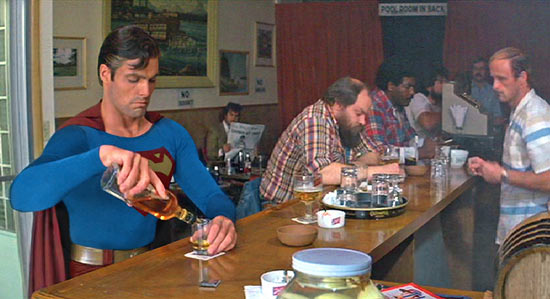
Be that as it may, these parts don't drag down the whole movie entirely. Aside from the writing, the rest of the parts that make up a movie remain well put together. Although the last half of the film feels odd, the first half however reminisces more of the traditional tone. That means more of what everyone was originally used to with scenes like Daily Planet with Perry White (Jackie Cooper), Jimmy Olsen (Marc McClure) and a cameo of Lois Lane (Margot Kidder). Even with Margot Kidder having a reduced role and Annette O'Toole taking her spot wasn't that disappointing. Lana Lang had a different backstory involving a drunk named Brad (Gavan O'Herlihy) who was once a football jock from Smallville. These relationships are acceptable and feel worthy of a subplot. Heck, even the infamous Good Vs Evil Superman subplot entertained at a decent level. Seeing an evil Superman was certainly something Reeve had never played before.

Evil Superman
Speaking of which, Christopher Reeve again verified to his fans in this film, that even with an uneven script he still can play the man of steel with ease. Reeve was undoubtedly still the best part. The cinematography provided by Robert Paynter, who also shot for Superman II (1980) maintained the ability to include great scanning POVs and capture unique set pieces. This blended nicely with the special effects as well, which also had practical areas included. And here I was thinking its effects budget wasn't going to be good for all the negative responses about it before viewing. I was impressed however. Finally for the music, although harder to find an actual copy, composer Ken Thorne returned to score the film. Just like before, Thorne held onto Superman's theme from the last two films and does include new tracks. These themes are mostly for evil Superman. If the script was handled better, it probably would've been easily another enjoyable follow-up. But the attention isn't there.

For what people say for it to be, it isn't THAT bad. If you can suspend your belief, it will be easier to accept because half of it is decently written. It's just the other half involving its annoying antagonists and forced comedic tone that don’t work. Its special effects, music, camerawork and cast of actors from the first two however still remain the best parts, especially Christopher Reeve.

Points Earned --> 6:10

Tuesday, June 16, 2015

The Running Man (1987) Review:

Science-fiction action films with hidden undercurrents are difficult to make in a number of ways. They're job in some respects is to not only entertain but also relay a certain message to its audience about the current culture that is going on around its viewers. This kind of balance has to work evenly in order for the audience to take away that subtext simultaneously while enjoying the movie. A number of sci-fi films have accomplished this like Minority Report (2002), Blade Runner (1982) or even Total Recall (1990). All of which entertained while also having “a say” on their own specific area in science and technology. For actor Arnold Schwarzenegger, it would not be until Total Recall (1990) that he would prove to be in a real engaging sci-fi thriller with such a clear message. That's not to say this film doesn't have that but it certainly is not as effective getting its message across.

I swear that design looks like Metamorpho
Schwarzenegger plays Benjamin Richards, a wrongly convicted helicopter pilot who was framed for the mass murder of innocent people looking for food in an apocalyptic future earth in the year 2017 (a little too soon I think). After escaping prison with a couple of fellow convicts, he attempts to flee to Hawaii with a run-in played by Maria Conchita Alonso. To Richard's dismay, he ends up getting caught and shoved into a live death battle show called "The Running Man" hosted by Damon Killian (Richard Dawson). This also happens to be the most watched TV show at the time. There he must fight his way out or be killed trying to be free, meanwhile billions of viewers watch. The writing, which was handled by Steven E. de Souza, has its positives and negatives. The best thing about his screenplay is that he included plenty of good dialog for Schwarzenegger to spout out to other characters. Since that is one of Schwarzenegger's strong points, it's good that de Souza was able to maintain that. It should not have been too hard though since he also wrote for Schwarzenegger's Commando (1985) as well.

What de Souza does not accomplish is an intuitive and original script. All characters including Schwarzenegger’s role are pretty much exactly as they are portrayed to be. The only actors who get away with it are Schwarzenegger, Alonso and Dawson because they are the characters focused on the most. Aside from Schwarzenegger and his one-liners, Alonso at least will capture her viewers’ attention with her thick Hispanic accent and some close hugging costumes that she wears. I do question the costume design color and texture though. The look of it resembles that of the strange DC comic superhero known as Metamorpho. Richard Dawson is also convincing in his role as the power hungry and slimy TV host. He really makes his character unlikable in a good sense.

Audiences will be able to figure out quite quickly who will live, who will die and which character will be developed further. It's unfortunate too because their are other credible actors like Yaphet Kotto, Jim Brown, Jesse Ventura and Toru Tanaka. This kind of mediocre execution is also notable when director Paul Michael Glaser is in charge. Being that he directed a slew of other unfamiliar, unpopular and unknown films like The Air Up There (1994) and Kazaam (1996), it's surprising that this one gets more attention. But then again it's probably because of Arnie. The action (which is usually obligatory in a Schwarzenegger flick) satisfies however. It's by no means over-the-top or inventive but it does keep the movie going. Pacing is an important part in storytelling so that's a plus.

Toru Tanaka
Sadly, this does not make up for the cinematography and music. This time around, there wasn't a whole heck of a lot to talk about. Thomas Del Ruth was the director of photography for this project. Considering he also shot frames for The Breakfast Club (1985) and Stand By Me (1986) prior to this movie, you would think there would be something to say. It's not like it's bad camerawork; there have been far worse examples. Yet, there's nothing to really highlight here. Other than maybe a couple of nicely choreographed dance numbers, the rest of the movie is just too much the same for every shot. Even more disappointing however is composer Harold Faltermeyer's musical score. Two years later Faltermeyer would compose his all out cheese fest of a score for the buddy cop action flick Tango & Cash (1989), which was beyond catchy with its main theme. Here, Faltermeyer also has a main theme but it is so weak by comparison that it disappoints more than creates a memorable listening experience.

It has its moments with Schwarzenegger one-liners, consistent action and competent acting by its main actors. However, the rest of the components aren't exactly the most original. A lot of the supporting characters are predictable, the music is forgettable, the cinematography is bland and its story, which tries to have a culture related undercurrent, doesn't speak its mind enough.

Points Earned --> 5:10

Saturday, June 13, 2015

Jeepers Creepers (2001) Review:

Every horror franchise has its issues, whether it be a lack of attention to detail or cliched writing there's usually something a horror fan will expect to happen at least once during the running time. Unfortunately like a lot of other genres, these tropes end up making these films too generic in most respects resulting them in either being a one-time watch or possibly not even finished. For director Victor Salva, although this is not his most critically acclaimed piece, it is probably the one that sticks with him the most. For what is given, it's actually not a bad film at all. Regrettably though, it has writing issues that if addressed, could have made it more entertaining than it already is. The story is about a brother and sister heading home from spring vacation through a rural community when they witness a man dropping what appears to be a body down a giant shoot. Curiosity gets the better of them and soon enough, what they go looking for ends up following them.
Justin Long's doofiest shock face
What distinguishes this cautionary tale of minding your own business from other horror films is that its writing contains very little, if none at all of the usual horror tropes. As stated before the main characters are brother and sister. That already is a big difference from other films. Most plots rely either on a group of people (as fodder for the killer) or focus on only one person. Also the people who are killed are not the same either. Even the jump scares aren't as obligatorily noticeable. This is a game changer because a lot of generic horror films are still produced this way and these kinds of antics get old really fast. Now if only Salva was able to fix the rest of his script, then this would've been some horror film. For one thing, the brother, Darry (Justin Long) and Trish (Gina Philips) are not exactly what you would call the most likable of protagonists. It's not that the audience would despise them but they don't exactly cooperate well nor do they have the best of attitudes. I mean yeah, siblings bicker sure, but there's no scene that shows their softer side so it’s hard for its audience to fall behind the main characters. And personally, Justin Long has the doofiest shock face.

The other parts of the writing Salva forgets to elaborate on is the exposition to the antagonist and clearing up other reasons. Along their travels, the brother sister duo meet a psychic named Jezelle (Patricia Belcher) who has the ability to see visions into the future. Mind you she's been having these trances for several years and she has no clue why she has them. Ummm,...okay. As for the antagonist known as "the creeper" (Jonathan Breck), which kind of honestly he is, the reasons why he kills is explained but why he doesn't, goes unexplained. Plus, he has a grotesque side hobby that involves something along the lines of preservation. What exactly is it for? No idea. Since Jezelle is the only one who even knows about the creeper (and for so long) how come she knows so little? She's literally the creeper's creeper. Writer/director Salva could've went into more detail on this but didn't so this doesn't exactly help with fleshing out the villain's backstory.

Aside from this however, the rest of the film will manage to keep its audience's attention. The most effective part to this film's credit is in fact, its creep factor. The idea of knowing that someone is always following you and wants something from you (and you don't know what it is) is beyond unnerving. Plus after seeing what he does with his victims, who would want to stick around? As for the gore aspect of this horror feature, it exists but it's not abundant like one would expect it to be. The good thing is that Victor Salva ensures that certain in scenes when the creeper attacks is not what a viewer would normally predict. The director of photography belonged to Don E. FauntLeRoy who handled each scene nicely by giving it a grainy feel like that of Daniel Pearls’ work from Tobe Hooper's The Texas Chain Saw Massacre (1974). I am curious as to why it’s always in the middle of nowhere that crazy people exist. Why is that? Why is it always the rural communities? Can people really go mad out there that easily?

The Creeper
Bennett Salvay brought the film score forth. Although much his tracks are anonymous sounding with no real signature, there are a couple that demonstrate Salvay is a competent composer. This mostly belongs to the themes surrounding the brother sister duo or other family related subplots. However, his other tracks are just drudging brass instruments, which emphasize the dread headed their way. But even with this, the tracks do help elevate the tension to an intense level because as said before, director Salva doesn't have a script with your everyday horror cliches. There is also one more piece of music that is creepy and that is the actual "jeepers creepers" song from the early 1900s. This is used as a motif for the creeper himself. Because the song sounds so jolly, the fact that its being played with a dark character is, well,....creepy.

Sadly, most of its writing doesn't explain much about its antagonist and the main two protagonists aren't exactly the most enjoyable. However, everything else from its special effects, violence, creep factor, music and cinematography work well together. Its screenplay even contains a number of original ideas that don't follow your regular horror films.

Points Earned --> 6:10