Sunday, September 25, 2016

American Sniper (2015) Review:

When it comes to war in general, the concept has taken many forms for different films. Some glorify it to no end while others give their audiences an understanding of certain tragic events that occurred at specific times. Whatever the case, viewers should understand that war is an act that no right minded individual wants to pursue. However when it comes to protecting others, there are only select groups of people who know that joining the military, navy, police force, firefighters or what have you is the only way to do it. The people who join these groups are the ones who are humble enough to put their own lives at risk for the sake of others. It's these kinds of people that deserve the highest of respect because of their contributions to our safety. And for every war, there have always been decorated war heroes. Most recently the biggest name to be spoken of was Chris Kyle, a registered sniper with 150 plus kills during his time in the service. To most, that is an astounding and an unheard of record.

Forget the Sniper (1993) franchise, this guy's for real
Based on the autobiography of the same name, the movie follows the life of Chris Kyle (Bradley Cooper) from buckaroo cowboy to an all out killing machine. Adapting the book was Jason Hall, the writer to Spread (2009) and Paranoia (2013). The intriguing part to this is that Hall really turned himself around as a writer. Both Spread (2009) and Paranoia (2013) were critically panned when they were released. This production on the other hand was the highest grossing film in January in many years. Perhaps it was in due part that Clint Eastwood served as the director to the movie. Either way the script has several areas to consider that prove to be why the film was so successful when it was released. What moved Kyle to joining the military was after seeing the 9/11 attacks and from there on he was determined to help protect his country and the people who shared his feelings. What's also important to note is that Hall's script includes Kyle's wife Taya (Sienna Miller). Together her subplot represented another critical issue - PTSD.

For several combatants who enter the field, many do not come back the same way they entered. Post traumatic stress disorder (PTSD) is shown in this movie as a layered issue. That's an important point to make because it's not always one event that can cause it. Sometimes it's a culmination of things. This is especially compelling because of the realistic situations that are setup. Some scenes that are depicted in this movie are not what many films would dare to show nowadays. It's a very touchy topic but this is what elevates the tension. Finally after dealing with all these morbid situations, it's difficult to return home and feel the exact same way previously. This is shown properly through Bradley Cooper and Sienna Miller's interactions with each other. As separate thespians, Bradley Cooper practically fully embodies Kyle and that means every aspect. Also not once does Cooper raise his voice, he's always very soft-spoken. Miller on the other hand shows how she gets concerned for Kyle even though she knows he's doing the right thing.

Another interesting aspect about Kyle is the fact that he never asked for or reveled in his status as "The Legend" that everybody loved to call him. Cooper played Kyle as a guy just trying to do what was right. He didn't care about the awards or nicknames, he was there to protect others and that was it. There was one writing flub within the execution though. Chris Kyle's brother Jeff (Keir O'Donnell) changes motivational views on war; the character and topic is never addressed again. It seems that including Chris Kyle's brother was important enough to start out with but then as one brother develops the other fades away. If this was the plan, why even bother including Chris' brother? And this wasn't the plan, why was his character arc cut out of the final print? It doesn't make sense. As mentioned before the tension is pretty high due to the realistic imagery and violence. The kill shots are thankfully not as ridiculously outlandish as the action in other films like Sniper: Reloaded (2011). They do contain blood but it's mild and that's how it should be.

Sienna Miller
Tom Stern was credited as the director of photography to this movie. Stern has also done camerawork for films like The Exorcism of Emily Rose (2005) and The Hunger Games (2012). For this feature, Stern has a number of wide scope panning shots that display the type of terrain and settings that veterans of the military had to withstand. Along side that are the confusing number of houses each team had to check and evacuate when it came to sectioned off areas. Stern was also able to show just how dangerous tasks like these are because of how easily hidden the enemy can be. Strangely enough one strategic element that was mainly absent through the running time was an appropriate musical score. For the 2 hour long movie there were a few synth bass and short piano cues but none of them stood out. Either the music was borrowed or composed by an uncredited composer. Either way the movie mostly works even without the score, but it perhaps could have been even more memorable if it had a recognizable theme to it. Oh well, their loss I guess.

The script has one minor problem with a character and the music is surprisingly mute but in its entirety, the movie makes out fine. Bradley Cooper as Chris Kyle, the legendary sniper is worthy of playing the veteran, the realistic war scenes are quite tense and the development of the lead is thought provoking.

Points Earned --> 7:10

Sunday, September 18, 2016

The Huntsman: Winter's War (2016) Review:

The Brother's Grim fairytale of Snow White seemed to be the popular story to retell for the year 2012. Two polar interpretations of the story had been made that same year. Mirror Mirror (2012) was the more lighthearted take while Snow White and the Huntsman (2012) went the opposite route with darker and edgier visuals. Of the two, the most successful was the movie that starred Kristen Stewart, Chris Hemsworth and Charlize Theron. The production itself looked much more epic in scope, had bigger star power and had a different story to tell. After the success of the film, production began to role for the sequel. However troubles emerged when Stewart did not return as Snow White. Once that happened, the momentum that the studio had gained ended up getting stuck in development. For a while the studio went through a number of directors, including Frank Darabont the guy who made The Green Mile (1999) and The Shawshank Redemption (1994). Eventually the ball started rolling again and this is the end result, which could've been worse.

Hemsworth and Chastain
Directing duties for this movie were given to Cedric Nicolas-Troyan in his debut. For most of his career Troyan has been a visual effects artist for movies like The Ring (2002), Pirates of the Caribbean: The Curse of the Black Pearl (2003) and Pirates of the Caribbean: Dead Man's Chest (2006). He also has some partial directing experience as a second unit director to Snow White and the Huntsman (2012) and Maleficent (2014). Originally stated to be a prequel to Snow White and the Hunstman (2012), the story is actually a prequel and a sequel, in which case there is no word to categorize this whatsoever. First the story explains as to how Eric the Hunstman (Chris Hemsworth) became what he was by the time Snow White and the Hunstman (2012) occurred. Audiences will also learn that he has a wife named Sara (Jessica Chastain). Together they lived under the rule of Freya (Emily Blunt), an Ice Queen and sister of Ravenna (Charlize Theron). Freya believes all children should be torn from their families and made into huntsmen after the loss of her child.

When Freya learns that Sara and Eric are in love, she separates them leading Eric to the events of the prior movie. Then the story begins its sequel where Eric seeks to destroy Freya. Written by Evan Spiliotopoulos and Craig Mazin, this duo's work is acceptable to some degree. Spiliotopoulos is known for writing more Disney movies like The Jungle Book 2(2003) and The Lion King 1 1/2 (2004). Mazin has done more comedies like Scary Movie 3(2003) and Scary Movie 4 (2006). What might amaze the most critical of viewers is that for once the script was written with keeping the missing main characters in mind. Surely Kristen Stewart does not show up on screen once but she is at least referenced verbally and that's all films like these ask for. A simple reference. Along with that is the fact that the new characters help create a bit of depth to the original characters. That's always good to see. However this does not excuse the other problems that arise throughout this movie.

The fact that certain characters return (major or minor) and others don't doesn't make a lot of sense. There's no clear reason given from these individuals as to why they return other than stating vague answers. There's also hazy motivations when it comes to Freya. Freya creates an army of huntsmen warriors to "free" children from their lives and train them as her new army. What exactly is she trying to achieve? Sooner or later there will be no areas to concur. For actors and the roles they play all seem to be enjoying their part. Hemsworth and Chastain have okay chemistry together. Blunt and Theron look like they could be sisters too, although Theron looks to be loving her part the most. There's also appearances from Sam Caflin as Prince William and Nick Frost as Nion the dwarf. The new supporting roles added to the cast are more dwarfs played by Rob Brydon, Sheridan Smith and Alexandra Roach. All of which do not add any context to the story itself and more for just comic relief, which is okay.

"Did you know that I got the same pay as the Huntsman?"
With the director of this film being more experienced in the visual effects department, no doubt would the CGI look decent here. There's a barely a shot here that looks out of place or too obvious to be fake. The liquid gold mirror is still an awesome effect even though it completely references the T-1000 from Terminator 2: Judgement Day (1991). The same could also be said for Freya's ice powers, she may be a villain but she makes things look very pretty. The cinematography goes hand-in-hand thanks to Phedon Papamichael. Papamicheal has had his fair share of cinematic films and it shows. The camerawork for the most part is stable and has plenty of panning wide shots for the audience to get a complete view of the scenery. Working the musical score was James Newton Howard who also worked on the music to Snow White and the Huntsman (2012). Strangely enough Howard doesn't make a new theme for Freya or Eric the huntsman yet keeps Ravenna's memorable theme in tact. And if there was a main theme, it wasn't that recognizable. Come on Howard.

Played like a double-edged sword, this film acts as a prequel and a sequel to that of Snow White and the Huntsman (2012). It may not be as great as the first entry, which isn't surprising but it does make significant connections to the first without dropping everything. It still may lack clarity on certain parts but the action, effects, camerawork and music still entertain.

Points Earned --> 6:10

Saturday, September 17, 2016

Bandits (2001) Review:

Sometimes there are movies that don't give a real reason as to why they should exist. Most movies when released serve a purpose. Whether they are extremely well made or just cheap cash-ins, there's usually an understandable reason. Whether it is ethical or not for making the movie is another question entirely. No matter if it's just making money off the name or because the filmmakers actually have a vision, they both serve as valid reasons as to why they exist. Also in the past, several macho actors from the 1980s have all made a few blunders in their time. Most of these box office bombs were because of being cast in unorthodox roles or ones that just didn't fit them. The genre with most of these examples belongs to the comedy films. As it turns out, Die Hard (1988) star Bruce Willis wasn't done trying his hand out at forced comedic roles until the early 2000s. Oddly enough, this felt like one of those movies that by the end of the showing made the viewer question why they even bothered to watch it. It literally serves no purpose in any way.

"Convincing no?"
Directed by Barry Levinson, this romantic heist comedy is short on almost everything it's supposed to deliver. Written by Harley Peyton, who has penned more TV episodes than anything else, the script is a story that barely engages its viewing audience. The plot involves two nationally recognized thieves known as the "Sleepover Bandits" who end up falling in love with an accidental hostage. Featured on a TV show, the two criminals at large are Joe Blake (Bruce Willis) and Terry Collins (Billy Bob Thorton). The female hostage that they both end up panting over is Kate Wheeler (Cate Blanchett), a rich housewife who loves to cook and can't stand her own marriage. For two hours, this film drags its feet doing nothing particularly important related to the plot. Pacing is one of the film's biggest problems. For such a cut and dry scenario, the length at which this story is stretched to is ridiculous. Especially when the main set of characters barely get the development they need to be likable.

Aside from Wheeler not liking the way her husband kissed her, there is no other given motivation as to why she can't stand the life she lives. On the other side, no explanation is given as to how Collins or Blake got into the profession of robbing banks. Nor is it elaborated on how they got so good at it. Or even if they really are that cold blooded since a few hostages question their actions. That actually would've been more captivating to focus on. There's also another character named Harvey Pollard (Troy Garity) who has his own character arc but doesn't add anything to the main plot. Pollard's goal is to become a stuntman and that particular trait is only utilized once throughout the whole movie. Convenient much? The execution is highly cliche in its play out of the story. There are numerous things that can be seen way before the end credits role. One of the reasons why this is known is because the movie starts off at the finale and then rewinds to the beginning. It hardly creates the required tension to make the movie engaging.

One more nail in the coffin is the chemistry between Bruce Willis and Billy Bob Thorton. The two just don't make the kind of buddy duo one would enjoy. Bruce Willis plays it soft spoken Mr. Mysterious with an ugly mullet and rarely makes a funny line. Billy Bob Thorton oppositely plays his role loud, jittery and obnoxious. Thorton says the name "Joe" almost after every sentence. Is it really that necessary to point out whom you're talking to in every line of dialog? It's apparent that Peyton was trying to define these characters so differently, but they're so exaggerated that they aren't as relatable as they could be. None of the lines these two main leads have to say are worthy of even a chuckle. Every bit of dialog, scenario and end result is just playing on screen to use time. It's not even that it's bad dialog, it's just boring. Watching two oddball characters ham it up about who wants to be with the female hostage feels rehashed and over done so many times. Really, who cares?

Cate Blanchett
The only two redeeming elements to this movie are the music and camerawork. Credited as director of photography, Dante Spinotti has acceptable work here. Giving his talents to other movies like Heat (1995), X-Men: The Last Stand (2006) and Hercules (2014), Spinotti has proven that he can capture clear settings for different scenes. From what was displayed no shots shook around nor did they have any problems showing the audience of which certain things were stationed. For music, the underrated Christopher Young worked as the composer. Strangely enough having Young on board didn't change much of the experience for two reasons. The first reason is that Young does have a some cues that are interesting to hear but they are very short lived. The second reason is that Young is known for composing music to horror films; how in the world did he get hired for this project? It nowhere fits his previous credits in his filmography. Besides, most of Young's work gets run over by all the early 2000s mainstream music. Just great....not.

The film on a visual aspect looks fine and the music is nice even though Christopher Young as composer is not using his skills wisely. Anything else is all questionable. The movie does not prove itself to have a reason for existence. The characters are boring, the premise is boring, and the comedy is boring. It's all boring and overdone.

Points Earned --> 3:10

Sunday, September 4, 2016

Sniper: Ghost Shooter (2016) Review:

It's amazing that the Tom Berenger / Billy Zane thriller Sniper (1993) franchise has made it this far. Has this series cultivated a secret fanbase? Or do the producers believe there is a fanbase and keep on making sequels anyway? It just seems hard to believe that the first film would have made such an impact on viewers. It was well executed movie yes but the crew attached didn't have filmmakers like Steven Spielberg or Clint Eastwood in the director's chair. The man behind the first film was Luis Llosa, the director of The Specialist (1994) and Anaconda (1997). These were both films that people viewed as fairly silly movies. This is probably Llosa's best entry in American cinema but it still won't hold a flame to a lot of other well made popular films. When a series like this has gotten this far in making sequels with no public critical reception, it truly is an anomaly. So how does this sixth entry hold up in the array of sniper films? Well it certainly isn't unwatchable,...yet. Thankfully it works but it has warning signs.

Beckett Jr. & Richard Miller
Directed again by Don Michael Paul from Sniper: Legacy (2014), fans are once again brought back to Sgt. Brandon Beckett (Chad Michael Collins) in the field doing what he does best. Unfortunately after hesitating on an assignment and lashing out at another officer, Richard Miller (Billy Zane) puts him on probation with Russian sniper Andrei Mashkov (Ravil Isyanov). Meanwhile the Colonel (Dennis Haysbert) and assistant lead Robin Slater (Stephanie Vogt) try to find a "ghost shooter" by the name of Gazakov (Velislav Pavlov) who's looking to stop a certain business pipeline. Written this time by Chris Hauty, the screenplay works to some degree but fails to make certain connections clear and answer some questions. For Hauty, this is his fifth writing credit of which this is his first related work to this series. This is possible as to why not everything is clear, but Hauty has written for three other sequels so he should have had some idea as to what constituted as a narrative that continued the story at an engaging level.

Unsuccessfully this isn't the case here. Hauty's inclusion of the probation period for Beckett was okay until it became unnecessarily extended for an action shootout sequence. That in fact could have been substituted in for time with Beckett's other team members like Barnes (Enoch Frost), Cervantes (Nick Gomez), Aungst (Presciliana Esparolini) or just cut it out completely. Ravil Isyanov as Mashkov does have some comical quips with Beckett but the development really should have went to somebody closer. Then there's no explanation for missing persons. What happened to Sanaa (Mercedes Mason) from Sniper: Legacy (2014) or even Beckett Sr. (Tom Berenger) for that matter? Where did these characters vanish to? Where's the consistency? When starting the second trilogy, you brought on Billy Zane, then dropped him for Tom Berenger and then did the reverse again? Fans should demand to see Billy Zane and Tom Berenger on the same screen again. Those are the two old men who started it all, so get them on the same screen.

Now although Zane and Berenger are still not on screen together, Billy Zane returning as Richard Miller is still acceptable. Zane still looks like he's having fun in the role and enjoys playing the sarcastic wise cracking supervisor of Beckett's son. Miller even has a few comments that don't even really make sense but the way he says it is anyway. When it comes to Beckett Jr.'s team, few of them get much development. Sure they have a few moments of flare but nothing really makes the viewer want to see more of them and hope they survive all the shootouts. Of the members, only Cervantes (Nick Gomez) has some kind of arc. Everyone else is just kind of there. As for other actors, there's also appearances from Dominic Mafham and Navid Negahban as a blind connection to Gasakov. Negahban playing a blind man had a great look. Foggy contacts make him look like someone who's real clever and full of knowledge. Mafham as Bidwell "Bulletface" sadly gets less screen time than he did before but when he is shown, it's good to see him.

"Can you believe they didn't bring on Berenger again?"
Action sequences were well executed again. There might've been not as much carnage edited in but it still got fairly messy. The shooting throughout this film is quite abundant so there's bound to be explosions and RPGs. In addition, there are also drones in which are used in firing missiles. Those perhaps are the weakest looking parts because obviously they wouldn't have real drones. The camerawork provided by Martin Chichov looked good. It wasn't easy to tell what was green screen and what was actually filmed. Much of the scenery looked authentic and shot on sight. The film also may not be the ultimate widescreen but there is a number of establishing shots that get a lot of the landscape and it looks great. Composing the musical score for the second time in this franchise was Frederik Wiedmann. Regrettably again, Wiedmann does not have or bother to create a memorable main cue for this franchise but that thought seems to have died long ago. As for music in general, it's decently composed with guitar and Middle Eastern instruments.

Now that this series has completed its second trilogy, maybe the producers and filmmakers can get back to basics once more. The main actors, music, action and camerawork are fun but it's all brainless. The connections are lazily tacked in and some scenes could've been utilized more efficiently.

Points Earned --> 6:10

Les Miserables (1978) Review:

When it comes to all things France related, there aren't too many mainstream stories that have been told and retold again in American cinema. The French Revolution, parts of World War II and even fantasy stories like Disney's Beauty and the Beast (1991) all take place in France. But from as it seems, the most popular of these French stories belong to Victor Hugo's novel of the same name Les Miserables. So far this book has had five major film adaptations; four of which were feature length movies, while another was a mini-series. The two latest adaptations were theatrically released while the second in line was a TV movie release. The difference in years between releases may be a long period (two decades), but the story wasn't drastically varied. The only noticeable change in presentation is having the knowledge of its production date. Knowing it was produced in the late 1970s gives it a much more dated viewing experience. Nonetheless, the story is worth the time to see.

"I'm just a woodcutter...."
As the title would suggest, the plot to this movie is about Les Miserables or "the miserables", "the poor ones" etc. Living in France during 1796, a broke innocent woodcutter named Jean Valjean (Richard Jordan) steals a loaf of bread in order to feed his sister and her children. Not long after being caught by the authorities, Valjean is sent to Toulon to carry out his five-year sentence. In charge of the Toulon camp is the heavy handed Javert (Anthony Perkins), who ends up becoming acquainted with Valjean very quickly and their rivalry percolates into the next thirty years. With time passing before his eyes, Valjean becomes bitter against humanity but realizes his error when a bishop (Claude Dauphin) displays an act of kindness towards him. Determined to live every moment by caring for others, Valjean becomes utterly the opposite of what he once was. Headed by Glenn Jordan (a veteran TV Movie director) and written by John Gay, this film looks dated but still has a significant amount of storytelling.

The development of Jean Valjean is intriguing enough to see play out when looking at his humble beginnings. Over time, Valjean becomes a grizzled man who finds himself being more of an early Hudini than a woodcutter. Even at an elderly age, somehow Valjean finds a way of getting around; that's impressive. Richard Jordan as Valjean doesn't disappoint either. Jordan is one those serious actors who always play his role like it were his own. Along his travels he adopts a widow's daughter named Cosette (Caroline Langrishe) and raises her as his own. Angela Pleasence, the daughter of Donald Pleasence, plays the widow. The part that Cosette plays as to her stepfather isn't as prominent, but she does bring about some compelling situations between Valjean and the ever-vigilant Javert. Speaking of which, Anthony Perkins as Javert is credible too. Although he stands like a giant mast, Perkins can be very intimidating as the lead inspector. He really makes things run like clockwork. By far the best chemistry is seen between Perkins and Jordan.

The odd thing is the relationship that Javert and Valjean have reminisced to that of Batman and The Joker from Christopher Nolan's The Dark Knight (2008). Except this time, the roles and personalities are switched. Valjean is the miscreant who makes Javert's world a chaos to deal with. Yet Valjean's ideals are more unpretentious than say The Joker's. Javert on the other hand resembles that of Batman, wanting order and will stop at nothing to catch Valjean. The parallels are undeniable. It is a little baffling though to see actors playing French characters and not sounding anywhere close to the accent. Saying monsieur doesn't make you entirely French. The other problem that arises is the forced love interest between Cosette and a rebel named Marius (Christopher Guard). All these two characters do is stare at each other once or twice and they both know they're in love. It's certain that most audiences will not buy into this notion and completely believe that. Rarely do individuals know each other are meant to be by just staring.

Anthony Perkins as Javert
When it comes to visuals, the scenery isn't always clear. However, since this took place way before CGI was implemented into film, all props were undoubtedly physical objects. That covers sets and various historical pieces of the time. A lot of the old structures look appropriate taking the setting into account. The cinematography was shot by Jean Tournier, a native Frenchman (gasp!). Like stated before, although there are some darker than normal scenes, the scenes do cover enough to have the viewer comprehend the surroundings of the main leads. That also means even without a widescreen view. The musical score composed by Allyn Ferguson is another memorable element. Sadly there was no official release of the music but the theme is quite endearing. Relying mostly on the strings, Ferguson's main theme to this adaptation consistently appears whenever Valjean is on screen pointing out that the story revolves around him. Surprisingly, that's all the music needed. It would've been nice to have other cues but it's fine anyway.

The fact that the actors weren't directed to have a more authentic French accents and the main character's step daughter having a forced love interest are the only true crimes to this book adaptation. The actors, music, camerawork and especially the writing make this a special story to witness.

Points Earned --> 7:10

Monday, August 29, 2016

Hellraiser V: Inferno (2000) Review:

After films that perform abysmally at the box office, very rarely do franchises survive later on. And this doesn't always mean sequels either. Sometimes films fail right at the start before things get going. Sequels on the other hand are reminders that if a franchise is not taken care of, the critical reception will tend to dip. For Clive Barker's Hellraiser (1987) series, the final theatrical nail in the coffin was Hellraiser IV: Bloodline (1996). With a troubled production of studio interference, inconsistent direction, poor critical and financial reception, it was finally time for the series to enter the home video market. Although the home video market is considered to be films of lesser quality, there tend to be the occasional surprise here and then. Five years later, it seems to have stepped up. This doesn't mean it blows all expectations away, but there are differences between this entry and Hellraiser III: Hell on Earth (1992) and Hellraiser IV: Bloodline (1996).

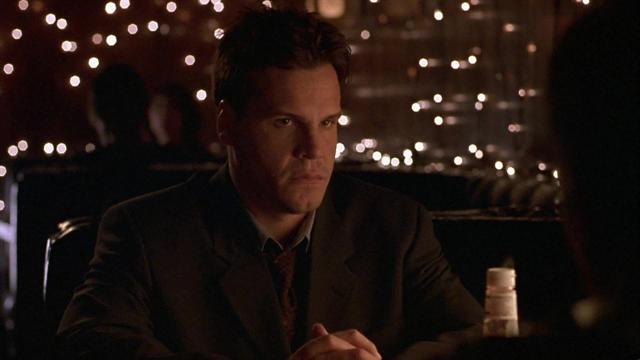
Craig Sheffer
Sitting in the director's chair for this release was Scott Derrickson in his first long running movie. Derrickson also worked as the writer along with another usual associate being Paul Harris Boardman. Boardman also wrote for The Exorcism of Emily Rose (2005) and Deliver Us From Evil (2014). The story here is much more peculiar than previous entries. Joseph Thorne (Craig Sheffer), a seasoned detective is on the trail of a serial killer whom his first victim opened the Lament Configuration and left a child's finger behind. Hoping to find the child before it's too late, Thorne and his partner Tony (Nicholas Turturro) dig deeper. Unfortunately as the two continue searching for answers, Thorne begins heading down a path only he can travel. The premise itself is quite good actually, but there are other issues. The most noticeable flaw is that this movie makes no attempt to connect this one to any of the previous films in any way. That also doesn't mean forcefully inserting references but the story could have lead to areas of past events.

Along with that is the amount of time that focuses on Pinhead (Doug Bradley) and his fellow cenobite followers. The plot is more of a horror thriller with a smattering of cenobite flavor. Who doesn't want to see more cenobites? As for detective Thorne, his motivations seem to contradict his actions. He gives reasons as to why he makes certain decisions, but not all of it is clear. Thorne has a wife (Noelle Evans) and daughter, yet sleeps with a hooker (Sasha Barrese). There was no sign of his marriage in trouble to begin with so what gives? However for the story, those are the prominent issues. Even with its writing related problems, the whole mystery killer plot is gravitating. On top of that, the end result produces a moral lesson involved with deeper meanings that reference other films like Bill Murray's Groundhog Day (1993). As for characters of significance, Thorne is of main focus. His partner does receive some attention but over time he's dropped. There's also a psychologist played by James Remar that adds some depth to the story.

Although Craig Sheffer's role isn't totally clear, his ability to convey the right emotion is acceptable. Considering he also was in Clive Barker's Nightbreed (1990) a full decade earlier, it feels all the more appropriate. Doug Bradley as Pinhead continues to have all the memorable lines especially towards the finale. The following cenobites such as the Wire Twins and the Chattering Torso all have their moments of grotesqueness and work effectively in being scary. For a budget of only $2 million and being a home video release, the special and practical effects look fairly decent. Even the horror end of things look credible. The gore and violence used throughout isn't always shown on screen but there's still a lot of blood spilled throughout the running time. The devices used for these violent depictions are what you would expect from a Hellraiser film - hooks. Except these hooks are little more practical in their use. Instead of them hanging from the ceiling majority of the time, now they're used as a flail. Ouch.

"Uhhh well this is new..."
Working as the cinematographer was Nathan Hope. Mostly having experience in the small screen, Nathan Hope has done a few big screen productions like this one, Mimic 2(2001) and The Fog (2005) remake. By far though, his most recognizable expertise shines through on the crime show CSI: Crime Scene Investigation from 2003 to 2007. For this movie, Hope's camerawork is still for 80%, but gets shakier near the finale. Thankfully the one technique that Hope avoids that previous DP Gerry Lively used were wide-angle lens shots. Those felt unnecessary. Composing the film score to this sequel was Walter Werzowa. Impressively Werzowa created a score with an hour full of music. The music itself sadly no longer has any main theme close to Christopher Young's but Werzowa makes new ones. Plus, the sound mostly consists of organic orchestra featuring strong deep strings and massive pipe organ cues. Seriously though, who uses pipe organs in their film scores anymore? That's one of the best parts and the score also contains very little jump stings.

Script wise the characters still lack clarity in motivations and connections to the previous films. Also the cenobites don't feel utilized to their potential. Yet somehow this sequel is better than the last two with a more intriguing premise, decent effects, believable acting and appropriate music.

Points Earned --> 6:10

Sunday, August 28, 2016

Suicide Squad (2016) Review:

Ever since Marvel Studios began expanding their films into more shared universes, a trend has begun to follow among other production companies. The most obvious of competitors would be Warner Bros. DC but there are others. Another franchise that is supposedly expanding its cinematic universe is Michael Bay's Transformers (2007) franchise. The concept is a common thing now among high-end money making movie properties. However this is no secret for Warner Brothers. After losing their chance to reinvigorate their universe with Green Lantern (2011), DC tried again with Man of Steel (2013) and finally brought themselves back from a long period of dormancy. So in order to catch up to Marvel's output, the next choice was making Batman V Superman: Dawn of Justice (2016). It certainly brought the studio up to speed but whom are they fooling? There were a lot of missteps taken to get there. Adding to that is this movie which promisingly looked like DC's Guardians of the Galaxy (2014), but with villains. Sadly this was not as great as one would hope.

Rick Flag, Harley Quinn, Deadshot & Capt. Boomerang
This is actually rather shocking considering the cast and crew involved. Crediting himself as writer/director is David Ayer, the same man who headed praiseworthy projects like End of Watch (2012) and Fury (2014). The story is based on the comic about Amanda Waller (Viola Davis) recruiting the worst villains from Arkham Asylum to fight what the regular military would or could not defeat. That means bringing on Deadshot (Will Smith), Harley Quinn (Margot Robbie), Capt. Boomerang (Jai Courtney), El Diablo (Jay Hernandez), Killer Croc (Adewale Akinnuoye-Agbaje), June Moone AKA Enchantress (Cara Delevingne), Slipknot (Adam Beach) and Katana (Karen Fukuhara) under the command of Rick Flag (Joel Kinnaman) to take down a powerful force that only they can stop. Meanwhile on the side, the Joker (Jared Leto) is up to no good  looking to find a way to break his joker queen out of the iron grasp of Amanda Waller. Initially this sounds fine but the story lacks structure.

Close to the start, the conflict begins and the suicide squad is sent out to pacify it. Yet before this even happens, Amanda Waller assembled them to take care of a different reason. This different reason is completely dropped once the main struggle arises. So what was the original mission they were going to be sent on? It's never answered. Either that or editor John Gilroy put the scenes in the wrong order. And Gilroy has been the editor to a number of popular films like Salt (2010) and Pacific Rim (2013). So what gives? Along with that are some backstories that are briefly skimmed over. Why? This film has a two hour run time; Guardians of the Galaxy (2014) has the exact same. Nonetheless even with these written issues, the actors perform well in their roles and are likable to a certain degree. Some of them even have more human backstories than one would expect. The costume/character designs are also commendable. For once, these characters have some color in their suits and aren't so dark and brooding like Bats or Sups.

Speaking of which, Ben Affleck as the caped crusader does have a few scenes throughout the movie. Is it worth it? Sort of from a narrative standpoint but in other ways it just feels like Batman was put in to have more people view the film. The action at least entertains for the most part as well. Deadshot’s ability to be precise in every round he shoots is awesome. Katana use of the sword is sharper than your average kitchen knife (of course). El Diablo knows how to heat up people's nights with his powers and Harley Quinn's gymnastic acrobatics certainly make her a special addition. Regrettably this does not make up for the sections that have CGI overload. Thankfully it does not get as bad as Batman V Superman with its almost PS2 gameplay like cut scenes, but there are still unnecessary moments. Whether it's the adversary the suicide squad has to fight against or even if it's digitally editing Harley Quinn to have booty shorts. It just seems like wasted amounts where this particular effect is abused for the wrong reasons.

"Get me my Task Force X"
Roman Vasyanov was chosen to provide the cinematography to this picture. Vasyanov also worked with Ayer on End of Watch (2012) and Fury (2014). This shows that Vasyanov knows how to make great or accurate looking movies. Fury (2014) had great looking camerawork and End of Watch (2012) made the viewer feel like they were in the movie. None of that's shown here. It's strange too. With all the colorful personalities and costumes, one would think that this movie would have brighter images to show. There are about 2-3 scenes that have daylight in them. Every other scene is in the dark or it's raining. All it does is remind the viewer of how gloomy looking the previous Zack Snyder DC films were presented. It's frustrating. Composing the film score to this movie was Steven Price, another David Ayer collaborator. Price's work is another disappointment. Unlike his past work in films like Fury (2014), there is no reoccurring theme for the suicide squad. And this is the perfect time to establish one for them. But that wasn't done.

Unlike what one would expect, this David Ayer film has its moments due to its cast, action and part of its writing, but that's all it can be given. The music isn't memorable, the camerawork doesn't match the colorful characters or tone and the overall plot doesn't make sense for a two-hour film.

Points Earned --> 5:10

Maverick (1994) Review:

Westerns have a certain appeal that fans of the genre look for. When people think of westerns, the most common of concepts that come to mind are gun fights, saloons, fillies, booz, beards, dirt, horses, the list goes on. For movies during the last half of the 20th century, Westerns didn't seem to be as popular as one thought. In order for these types of movies to work, the right cast, director and crew had to be involved to really get the viewers attention. With previous disasters like Michael Cimino's Heaven's Gate (1980), the genre took somewhat of nosedive in interest among viewers. It was later close to being killed off again after the next biggest (and strangest) disaster being Will Smith's Wild Wild West (1999). With those two bookending those two decades, there were others in between but not a whole lot. However, when learning that the director of Superman (1978) and the lead from Lethal Weapon (1987) would be working together to make a popular television western a major film, could there be a problem? It depends on how you see it.

"Cooper,...high five?"
In their respective careers, both Mel Gibson and Richard Donner have made quite a filmography for themselves. Being that they are also from a time where they would remember older shows from the past seems right that they make an older property more mainstream. The script was adapted William Goldman (Butch Cassidy and the Sundance Kid (1969) and Chaplin (1992)), of where viewers are introduced to Bret Maverick (Mel Gibson), a career poker player who looks to enter a major game but lacks the funds. To attain his entrance fee to the game, Maverick goes around looking for ways to make that money, leading to all sorts of comic relief events. Of those moments, Maverick comes across filly thief Annabelle Bransford (Jodie Foster), Marshal Zane Cooper (James Garner) and hotheaded gamer Angel (Alfred Molina). Aside from the main cast, there are several other names to boot like: Graham Greene as pseudo Native American, Geoffrey Lewis playing a friendly banker, Paul L. Smith as a French Diplomat and even Art LaFleur, Dan Hedaya and Danny Glover all as gunslingers.

The problem is even with this, the overall execution of the story does not feel like a western. Very few events that take place in this western setting feel like it belongs to one. Instead, much of it feels like a parody of sorts due to its tone. That's not to say these scenes aren’t funny but the film's trailer presented itself as more a lighthearted western with some comedy. Not the other way around where it's all comedy and less western. This also doesn't mean the actors perform badly either. Mel Gibson as Bret Maverick has a number of good lines that make him a smart and likable character. An ongoing joke is that people call him Bert Maverick, which gets him annoyed. Jodie Foster as the slippery crime filly is fun to watch too. Her ability to trick people just by her looks makes her quite dangerous if one isn't paying attention. James Garner as Cooper has his moments as well, showing both a caring and selfish side. The most creative of the supporting characters is Graham Greene's role. It's interesting that he would play a fake Native.

This could've be one of the funnier parts to the film. What if the Native Americans were just putting on a different face when talking to the Europeans? It's completely oddball and clever. Yet as unique as this is, the film suffers from an over packed running time. There are some particular parts to the story that could've been cut to help slim down viewing experience. The biggest time user of them all is the actual gameplay this movie focuses on. That being Poker. This is also one of the more surprising things about this western. One would expect that since it's a western, the climactic finale would be dealing with a showdown or some kind of deadly match. In place of that, viewers watch Mel Gibson and characters play a poker game with each other until the last individual is standing. Unless one is a true poker fanatic, no one will know how to play the game the right way. This in turn could make the game less tense. How engaging will the game actually be for a nonplayer?

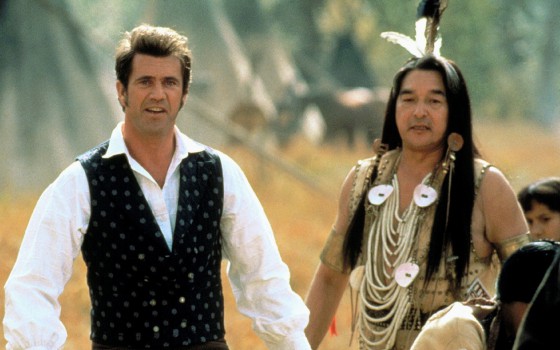
Graham Greene (right)
The cinematography handled by Vilmos Zsigmond is nothing short of great.  Being that Zsigmond has worked numerous projects dating back to the early 1960s, his ability to capture the right look has only gotten better. Just like his work in Heaven's Gate (1980), Zsigmond sets the stage for amazing looking western backgrounds. That means including every bit of the land from top to bottom. There's even a great scene that involves a canyon and it looks so spectacular. Very few cinematographers can master the art of capturing all of the land but Zsigmond seems to have figured that out. The musical score composed by Randy Newman was an interesting addition as well. Considering this score was created only a year before Toy Story (1995), it's funny to hear cues that sound like they belong to Pixar's animated classic. The sound of the music is utilized with organic orchestra that has all the signature themes that only Randy Newman could resurrect. The score itself is fun to listen to and does fit the western setting.

This is a fun western poker game movie but don't expect it to be more western than that. There are some shootouts but majority of the tone is comedic and has more parody like scenes than western ones. Nonetheless, the actors, cinematography and music all make it a tolerable goofy watch.

Points Earned --> 6:10

Friday, July 29, 2016

Westworld (1973) Review:

Throughout his career, science fiction novelist Michael Crichton has had a profound influence on the history of film and stories. Although the variety of Crichton's work doesn't differ greatly, much of his ideas bring up intriguing questions about our existence as the human race. Of Crichton's work, the most popular of his films was Jurassic Park (1993) dealing with re-animated dinosaurs running a muck. Yet 20 years earlier, Crichton had wrote and directed another science-fiction film involving other creatures running a muck. The creatures this time are robots. With technology ever increasing in its complexity, people take it for granted more often than before. The question is, do we realize how realistic this technology has become? Everyday that passes, this applied science gets closer and closer to our personal lives to the point where we can interact with it as well. This is no longer a fantasy nowadays and that can be a scary thing. What happens with these machines become self-aware? Will we know how they'll react?

Richard Benjamin & James Brolin
Taking place some time in the future, the world has created Delos, the "perfect vacation resort". Consisting of three different time capsules; Romanworld, Medievalworld and Westworld, where each visitor can experience life as it was during that time for $1000 a day (oh yeah, pocket change). Helping make these three settings as realistic as possible, the Delos system uses robots that look like real people. The only way to tell the difference between a real human and these fake ones is by looking at their hands. Audiences will learn this after being introduced to Peter Martin (Richard Benjamin) and John Blane (James Brolin), two visitors to the resort; Blane of which is a returning guest. Martin on the other hand has never been to Delos and is excited to experience the authenticity of it. Behind the curtain of Delos, a sophisticated network of technicians and other workers help keep things moving. If a robot breaks down, it's hauled back for repair. However, things are acting up more than usual lately.

According to the Chief Supervisor (Alan Oppenheimer), the robots have been encountering frequent issues for strange reasons. There needs to be answers but no one knows why. How is that? The only answer given is that it's some kind of "disease", which is immediately impeded by another board member saying how could a machine have a disease? But that's as far as it goes. For Jurassic Park (1993), saying that the dinosaurs became smart is somewhat acceptable and if that were the answer that would also work. Nevertheless leaving the inquiry as possibly a disease doesn't solve much. The other noticeable problem with this film is its pacing. As Michael Crichton's first theatrical film he directed, this could be the reason why his direction wasn't on point. There are moments where scenes move slower than usual and some events that take place feel longer than necessary. Plus remembering that he also wrote for this film probably added to the amount of work Crichton had to deal with so it's plausible he was under a lot of pressure.

James Brolin and Richard Benjamin as the main two leads help give viewers a better understanding of what there is to expect from Delos. Benjamin plays the role viewers can relate to since any newcomer would have the same initial opinion. Brolin's role is to assist in cementing the new belief. Co-starring with Brolin and Benjamin are also Norman Bartold playing another guest and Yul Brynner only known as the gunslinger. Bartold's role isn't greatly defined but he does play an important part for the viewer to see. Yul Brynner as the gunslinger may not have a lot to say but his appearance as a robot with reflective eyes is dastardly credible. The inflections in Brynner’s lines have just the right amount of flare to make him sound fake but dangerous all the same. The action / sci-fi & horror elements that show up throughout work too. Though it was given a PG rating at the time, it is far from it. There are blood squibs and some brutal violence throughout. For 1973, the makeup effects did wonders when it came to robotic creatures.

Yul Brynner
Behind the camera was Gene Polito as the cinematographer. Polito's camerawork is solid in every shot that occurs. That means capturing not only each setting's background but also remaining completely still for action shots. There are also a number of slow motion shots that amplify how much Polito was able to capture in each frame. Looking at his entire career, it's likely that this was the movie that he's most widely regarded for. The same could be said for Fred Karlin, the musical composer. Understanding that the majority of the events featured will be in Westworld would incline that some of the score would include country music themes. This does occur and perhaps too exaggerated at points because sometimes it sounds like hillbilly music. However, what Karlin made efficiently dark and scary was the horror of his music. Relying on prepared piano (which is rare in most scores) and scratchy strings truly makes the horror cues much more intense because the sounds or so uniquely constructed compared to other compositions.

Writing in particular is well thought out even though there are unresolved questions. The pacing in some areas may also be a bit slow but it's made up with relatable characters, a twisted film score and well-shot cinematography.

Points Earned --> 7:10

Sunday, July 24, 2016

Batman V Superman: Dawn of Justice (2016) Review:

Since the origins of each character, Batman and Superman have been one of the most iconic characters in comic books. After their print inception, readers and fans alike were impressed to see successful adaptations of each character during the last half of the 20th century. At that point, even during Christopher Nolan's trilogy, nobody knew how soon it would be before Superman and Batman would be seen on the same screen together. After the financial success with Man of Steel (2013), Warner Bros. pushed forward to get the DC cinematic universe expanded. And with that, the next step was to include the Arkham Knight. No surprise that in the time where social media dominates news, the internet exploded. Of course there were people who loved the idea while others felt it wasn't ready. Some criticized this stride as Warner Bros. trying to catch up to Marvel's success in building an expanded universe. Others felt that this plan should be given a chance. Once released, the response was about just as divided if not more.

How several fans came out of the theatre
Chris Terrio and David S. Goyer have written the script to this sequel. Following the destruction of
Metropolis from Man of Steel (2013), audiences are introduced to Bruce Wayne (Ben Affleck) finding a way on how to combat Superman (Henry Cavill) and make sure he will not become an enemy. At the same time, Lex Luthor (Jesse Eisenberg) is also looking for a way to rid of Superman, which requires him getting access to the Kryptonian technology left behind from Man of Steel (2013). Running underneath these two plots is a subplot dealing with Bruce Wayne making connections with Diana Prince (Gal Gadot) and figuring out her origins. This alone is enough but Terrio and Goyer's script is too over packed for its own good. Really Batman Vs Superman is a small section of this film because there are several other things going on simultaneously. This also lessens the amount of development the main leads receive. It is those reasons that give way to some really contrived situations where it happens just because it was called for right then and there.

The acting itself is for the most part fine. Most of the initial cast return from Man of Steel (2013) only for short appearances. Amy Adams still manages to put herself in peril even though she's supposed to be able to take care of herself on her own. For new cast members, Ben Affleck as Batman fits the role. He sounds much more calculative and rough in his delivery. Jeremy Irons as Alfred does a great job too, inserting a few smart-alec remarks as well. Gal Gadot as Wonder Woman although not always around is quite the looker and self sufficient as an Amazonian princess. Last but not least, Jesse Eisenberg as Lex Luthor is average. People will see why many do not favor his performance but not all of it is irritating. He does come off more Joker-ish and the jolly rancher scene is unnecessary yes, but it wasn't repeated more than once. Certainly a much more menacing actor could have been cast as Luthor, but Eisenberg is not ear bleeding bad. The real problem were the short cuts made to make all the pieces fit in for this cut of the movie.

The action sequences themselves have credibility to them but they were also uninteresting at points as well. For the majority of the time, all the Batman scenes that involved fighting were well executed. With director Zack Snyder heading this, it's hard to see Snyder not knowing how to properly make a good-looking action scene. Batman just doesn't care here; if you are bad, you're going to get hurt terribly. However, things begin to get rather tiresome when Superman enters the picture. Unfortunately because Superman flies and does super feats, CGI is needed in order to make this look realistic. This is the drawback though; looking at you Zack Snyder. Even though Snyder knows what he wants in his sequence, there are moments where the CGI is brought up to overkill levels. It's not say that it's unfinished CGI, but it does get to the point where it feels like the audiences may actually be watching cut scenes to a video game because everything is all computer generated. It's just ho-hum.

"Is it over yet?"
As for cinematography, Larry Fong managed the cameras. Fong's experience with big cinematic action films isn't a lot but does cover most of it. Seeing that he has worked with director Zack Snyder on his earlier films like 300 (2006), Watchmen (2009) and Sucker Punch (2011), it's no shock then that Fong was brought on board for this movie. For all the scenes, the camera is fairly stable. The problem with Fong's visuals are the lack of color throughout. The environment surrounding these characters is so drab and ugly, it's no longer appealing to look at. When it came to music, composers Hans Zimmer and Tom Holkenborg (Junkie XL) worked together and it’s rather disappointing. Aside from Superman's theme carrying over from Man of Steel (2013), only Batman's theme is somewhat likable. Luthor's finesse cue is too outlandish and Wonder Woman's track raises too many red flags in tone. It sounds more like it belongs to Luthor with an erratic electric cello in the background with beating war drums. It doesn't add any thematic depth to the listening experience.

For almost all positives this sequel has, a negative can be found to counter it. The basic elements to this movie are here - casting, music, camerawork and action but that's it. The writing isn't focused on the premise the title states, the visuals look drained, the action has too much CGI at times and the music is frustrating to latch onto. Yet, the cast do work well and action is fair.

Points Earned --> 5:10

RED (2010) Review:

Like any human being, we all get old at some point. As our body age, we don't always have the same capability to perform the usual tasks we take on during the day. However when it comes to action related films, that concept doesn't exist as much. Characters have much more freedom to be highly skilled in their older age and still manage to be quite agile. The tone that is used in these films are more serious than comedic. Rarely is the subject of age conveyed in a more comic relief tone. Considering that in the year 2010, DC and Warner Brothers had only found success in making dark, serious comic book movies, it didn't seem likely that a movie of a lighter inflection would be made. Mind you this was also before the failed introduction of Hal Jordan in Green Lantern (2011), changing the formula seemed risky. Yet, as obscure as the comic book was, RED (2010) was a surprise hit after viewers saw it. Other than the campy Batman films directed by Joel Schumacher, there were few other DC comic book films of similar tone until this one.

"Hey Sarah,....think I'm pretty?"
The title to this action comedy is actually an acronym that describes the protagonists; RED is short for "Retired, Extremely Dangerous". Viewers are introduced to Frank Moses (Bruce Willis) a retired veteran agent of the field looking to do something with himself but can't figure out what. After being attacked one night in his home, Moses brings along Sarah Ross (Mary-Louise Parker), a friendly phone operator in order to keep her safe. While on the road, they also reconnect with the rest of the team; cool man Joe Matheson (Morgan Freeman), crazy paranoid man Marvin Boggs (John Malkovich) and Eagle-eye Victoria (Helen Mirren). Together they look to find why they're being hunted, while the hunter himself named Cooper (Karl Urban) works endlessly to stop them. Jon and Erich Hoeber, two writers that do not have much consistency in their projects penned the screenplay adapted from the comic book. For this particular entry though, this has been their most widely acclaimed work.

Having older agents come back into the field and still be lethal is a nice idea and the actors cast for those roles fit them well. The whole conspiracy subplot that involves the main characters can get wordy at times but it is understandable to some degree. The real problems are unsolved questions that appear throughout the movie. Things happen where it wasn't revealed at all and no answer was given by the conclusion. What's the point of that? Nonetheless, the actors themselves work well with the parts they were cast for. Willis, Mirren, Malkovich and Freeman all have acceptable chemistry with each other. This is perhaps one of the few times where Willis doesn't have to act so tough all the time in order to crack a smile. Even Mary-Louise Parker has a good number of quips for how strange Willis' character acts at first. Although the fact that the role of Sarah is somewhat a love interest to Frank is a tad cliche in itself, the real question is, who thought Parker and Willis looked good together? They aren't ages apart but Willis looks too old.

John Malkovich's part is not an uncommon role, and being that his character is a little nutty, it fits right in. Marvin Briggs is the most comedic of the bunch being that he gets anxious to kill. On the other hand, Morgan Freeman slips away with his character practically just being himself but slicker. As for Helen Mirren, her part comes across delicate on the outside and a brutal sniper on the inside. Heck, Mirren doesn't even blink when she fires her weapons. Karl Urban as Cooper is another dangerous agent and although he's mostly cruel, he does have a human side to him. There's also other appearances from other actors like  Richard Dreyfuss, Ernest Borgnine, Brian Cox and James Remar. For action, there are a number of sequences that are quite energetic. With the premise involving secret agents trained to kill, one would expect to have plenty of gunplay and explosive activity, of which it does. Throughout the running time, guns range from revolvers to powerhouse machine guns. Not to mention all the hand-to-hand combat too.

Malkovich & Freeman
Florian Ballhaus handled the cinematography for this film. The shots themselves were well executed but the look itself isn't that impressive. There wasn't much of a visual style to this film. There's not even a whole lot of director Robert Schwentke's "snap-zoom" movements, which is a pretty awesome trademark feature. The picture is wide and does get a number of urban landscapes but it's just not much to look at or to be fascinated with. One would think since Ballhaus has worked on movies like The Devil Wears Prada (2006) and Marley & Me (2008), there would be some kind of appeal. The musical score composed by Christophe Beck is another enjoyable listening experience. Much of Beck's composition mixes his usual sounds of bongos and drums with several different cues. These cues switch between guitar and clicky electronic synths that help elevate the action sequences when necessary. Also with Beck having experience in making music for comedy films, mingling action and comedic cues would make perfect sense coming from his perspective.

The title is obscure just like its comic book origins, but it is one of the few comedic adaptations in the DC canon. The cinematography isn't unique nor is every question answered, but the actors are well cast, the action is fun, the music is great addition and the comedy is well timed.

Points Earned --> 7:10

Wednesday, July 13, 2016

The Brave Little Toaster to the Rescue (1997) Review:

During much of the 1980s, Disney was not performing well financially or critically. Release after release, almost all of their films weren't making the cut. Whether it was based on content or something else, viewers and critics alike at the time were unimpressed. That's not the case now however for many of the once unnoticed movies have found a home for those who appreciate the quality they gave. But of those, there were some movies that got recognized for being well done. A couple years before Disney hit it big with The Little Mermaid (1989), another animated film came out that has made a lasting memory for many children, that being The Brave Little Toaster (1987). As odd as the premise was audiences and critics were surprised to see how mature some of the basic themes and concepts were for the plot. Not surprisingly, Disney went on to release a Direct-to-Video sequel of the original 10 years later. Even though it was a few years in where Disney started cranking out sequels, it could've been bad but it holds up somewhat here.

"What a day to remember...."
Picking up some time after the first events, audiences rejoin the living household items once more but this time, they're in the master's (Rob) veterinary clinic. The master is also ready to graduate and in order to do so, he must submit his 600-page thesis. One night while doing the finishing touches, a power surge occurs causing Rob to lose all his work. Fearing he won't graduate, it's up to the little toaster and friends along with some animals to save the day. Directed by Robert C. Ramirez who's better known for directing The Prince of Egypt (1998) prequel Joseph: King of Dreams (2000) and written by Willard Carroll who served as executive producer to The Brave Little Toaster (1987), manage to put together an acceptable sequel considering the circumstances. It's not at the same level as the original but it's an allowable follow-up. What doesn't work in this sequel are a few components. The most typical of reasons being continuity errors; ones that go beyond the physical realm that the first had established. Things don’t just materialize.

The other two problems deal with characters. The new animal additions to the original group is okay but they do feel a bit tacked on. It just feels very obligatory and one of the main animal's motive changes without reason. Then there's the role of Rob's underling named Mack who works as an assistant to him. Right when the character is introduced, his personality immediately gives away what kind of character he will be. No questions. Aside from these problems, there isn't much else to point out. Even with these problems dealing with development in certain characters, the script still contains some material that is dark when looked at under certain lenses. With that said, credit is due for at least not making the overall execution feel completely pointless. Some sequels get completely diluted and end up having no risk involved. When it comes to characters, unless the viewer wanted to know who voiced them, most would unknowingly discover that the majority of the original cast from the original did not return.

Since the release of this was a decade later, seeing why some actors who voiced childlike characters is understandable. Yet as to why Jon Lovitz, Timothy E. Day, Wayne Kaatz and Colette Savage did not return is beyond understanding. They did after all voice important characters. Thankfully the actors who do replace the old cast maintain the same quality performances. Jessica Tuck who voices Chris, Chris Young as Rob, Eric Lloyd as Blanky and Roger Kabler as Radio all sound very similar to that of the original actors and that's great. Returning from the original is Deanna Oliver as Toaster, Thurl Ravenscroft as Kirby and Timothy Stack as Lampy, which is great to hear as well. For new members of the cast, Jay Mohr plays the voice of Mack, Andy Milder voices the scruffy Ratso, Alfre Woodard voices Maisie the mama cat, Danny Nucci plays a Hispanic Chiwawa, Andrew Daly plays Murgetroid the snake and veteran actor Eddie Bracken voices Sebastian the monkey. There's even a voice appearance from Brian Doyle-Murray playing a computer.

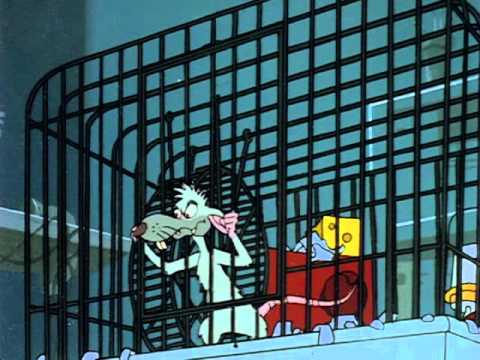
Ratso
The animation is actually another decent quality to this sequel. This is mostly because The Brave Little Toaster (1987) itself did not set such a high bar. If anything, the animation here is on par with its predecessor and that's okay. Taking into account that it was also animated on a smaller budget is important to recognize if the quality remains fairly the same. The film score was unfortunately not composed again by David Newman. In replace of him, Alexander Janko composed the music. This was Janko's first film composition and seeing that he frequently orchestrates more than composes, it's interesting that Janko made out rather sufficiently. The score itself consists of organic orchestra and uses those elements to its advantage. By this, the cues that involve the darker themes work properly. The songs that the actual characters sing aren't that bad either. Tunes like "Remember That Day", "Tap to the Super Highway" and especially "Chomp and Munch" are fairly catchy and can get the viewer to emote.

The sequel itself isn't memorable as to its predecessor but it isn't all fluff either. There are some mature themes involved, the music is composed nicely and the voice cast perform well. It's just all the extra characters and an unexplained motivation that make it feel forgettable to some degree.

Points Earned --> 6:10

Sunday, June 26, 2016

Paul McCartney Really Is Dead: The Last Testament of George Harrison (2010): Review

Conspiracy theories are one of those touchy topics for some people. In a day where as easy as the public has access to almost anything at the touch of their fingertips, one would think hardly anything would be private. Yet some people still believe there are individuals higher up that have their own agenda and continue to push it to this day. Whether it's true or not has yet to be proven and that goes for any other conspiracy theory. Even more of a reason as to why only select groups of people believe in certain theories is because there are so many for each case. Some of which contradict other theories, while some add or remove events or reasons from others. This is why when theories have conflicting proof, many people do not believe the ploy being made. Whether it's been about a celebrity or infamous criminal, there's been several suspicions made for these people. For this film, the premise is to prove that Paul McCartney from the popular English rock group The Beatles, truly is dead via narration George Harrison.

Clues galore throughout
Directed by Joel Gilbert, a producer/director to other documentaries and some conspiracy films, this documentary is the official one made for this case. There have been other films made but as for reaching the public's eye, this is probably the one. According to Gilbert at the film's introduction, his studio, Highway 61 Entertainment received an unknown package in July of 2005 with no return address. Inside it contained mini cassette tapes labeled with writing saying "The Last Testament of George Harrison". In these tapes the voice speaking reveals supposedly the entire true story that indeed Paul McCartney is dead and the one we know of today is actually the winner of a look alike contest who took his place. This alone (like any conspiracy) does raise some eyebrows because, the whole idea is crazy and questions the very nature of how incidents are handled. However, even before bothering to listen to the rest of the story from the cassettes, there are already some glaring holes in this story.

Looking at the packaged received date alone is a problem. The package was delivered in 2005? So who delivered it? George Harrison died in 2001 so who would Harrison entrust to deliver this important information? Also why wait until 2005? What's the significance? Another glaring issues is that Gilbert also states he had the tapes sent to three different forensics labs to determine the authenticity of the voice and match it to Harrison. The answer - "the results were inconclusive" he states. Okay,...then just play the tapes as is anyway and let the audience think for themselves. But no, instead Gilbert hires actor Lance Lewman to perform as Harrison and dub over the actual tapes. Is this to make the story sound more realistic? It won't if the audience knows it’s an actor redubbing the actual audio material. It's almost like Gilbert knew the actual recording wasn't close so they decided to make it sound close. That doesn't sound honest and it's very questionable on an ethical level.

Then there's the matter of execution to this documentary. The way it changes from chapter to chapter is fine but each chapter has clips of what looks like re-enactments but edited to not be very clear in its presentation. This is also a bit strange because it can confuse the viewer. Is it supposed to help the audience think up of what was happening while the story is being told? Even some of the photos used don't exactly look entirely correct and there's a lot more evidence to sift through. How did Lennon have roughly 50 more songs to make after McCartney's death and they all pertain to McCartney if Lennon and McCartney wrote these songs is another weird coincidence. At the same time though, even with all these inconsistencies, some of the evidence is oddly enough real. Things like the backwards replaying and hearing "Paul is Dead, Man, Miss Him Miss Him" or "Turn Me on Dead Man" is quite eerie. And it's not just the recordings that make this story sound plausible to some degree.

McCartney's double before surgery
Seeing all the albums being analyzed for deeper meanings and having certain areas pointed out that appear on all the albums that came out after McCartney's "supposed" death is strange in its own right. Why is it that the McCartney double is depicted with hands only over his head or how come he's always the only Beatle not facing the same way as the rest? It's always McCartney, so there has to be some kind of reason behind it. Since this is a documentary dealing with history, a cinematographer was not needed. But the historical pieces and archive footage from the past is well appreciated and helps give the viewer a better understanding how certain events led to the rest (or so its claimed). The music composed by Wayne Peet is another nice touch. Especially the main tune used in the introduction, the light flute triplets sound like it belongs in the 60-70s and stirs the intrigue a little more when it comes to understanding what allegedly happened in 1966. Who knows, maybe McCartney is who he is or not.

This conspiracy documentary does bring up some valid points and coincidences but there's a lot of contradicting and confusing evidence as well. With a re-dubbed narration and strange re-enactment footage, it doesn't solve or confirm anything. Thinking about it does sound disturbing though and the music helps with that too.

Points Earned --> 5:10

Friday, June 24, 2016

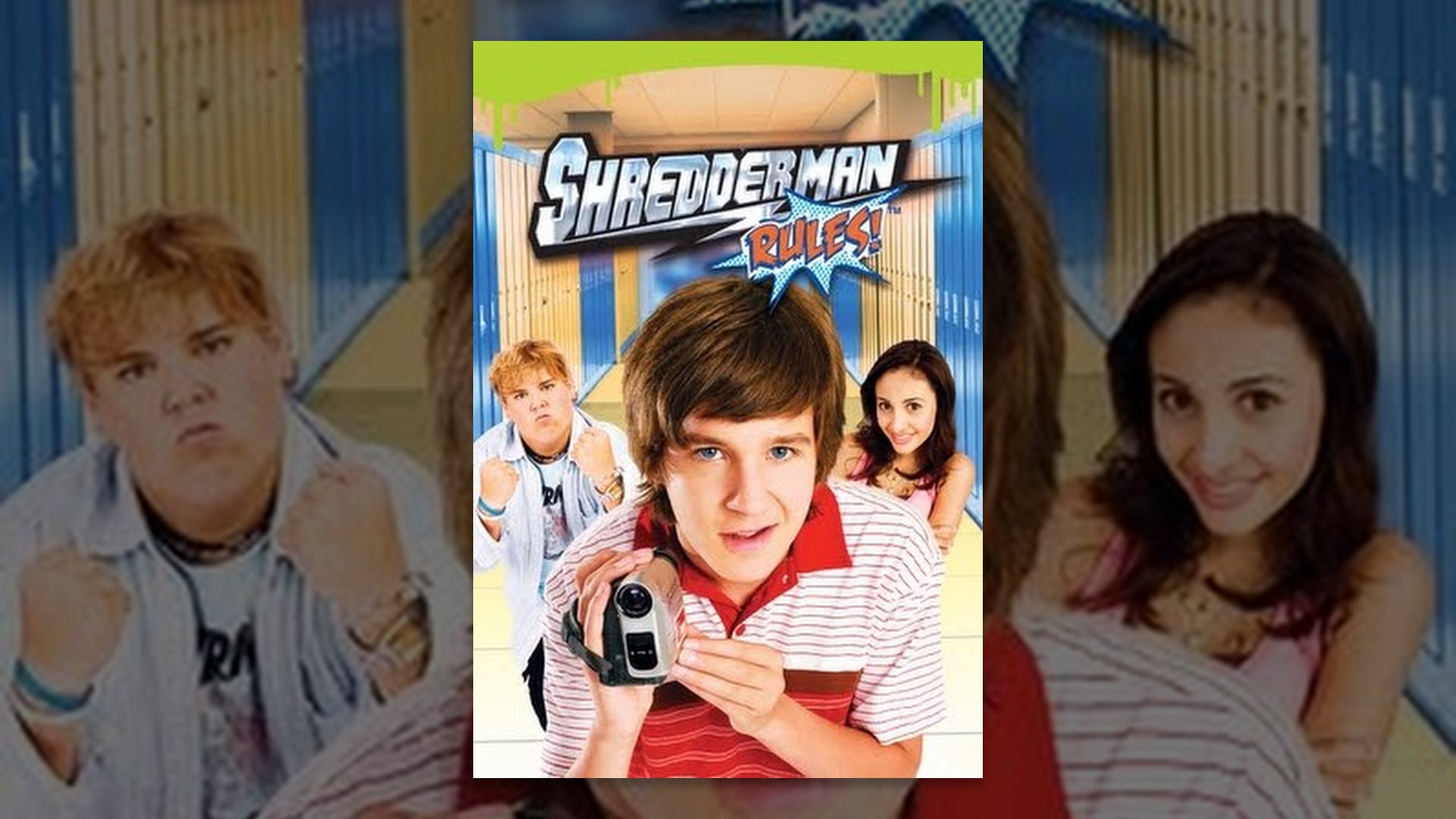
Shredderman Rules (2007) Review:

Growing up and doing acting, as a profession is not always the easiest thing for certain people. There have been plenty of stories time and again of various child actors who hit it big in one film and completely botched it when they hit their double digits. For cases like these, some have recovered, while others never made it (alive even). It's a sad day to see youth like this head down the wrong path. There's no excuse for it. There is still hope though, especially when looking at Nickelodeon's school-friendly TV show Ned's Declassified School Survival Guide. Starring a truckload of child actors, when looking up the cast and where they are now, it's nice to see several of them have gone on made a name for themselves. More importantly the lead character Ned Bigby played Devon Werkheiser, has been the front runner of all them. Coming out with two extended play acoustic albums, jump starting his own youtube series called Devon's Life Survival Guide and continuing to play in movies, Werkheiser has not slowed down.

Not the noogie
Slowly letting go of his schoolboy Ned Bigby image, Werkheiser began with this TV movie
after the series ended. Here Werkheiser plays Nolan Byrd, a nerdy kid who follows all the rules. He studies hard, doesn't bother anyone and has had a crush on a girl named Isabel (Francia Raisa) since he was little and met her at a lake they both liked. Now, Byrd is harassed by school bully Alvin "Bubba" Bixby (Andrew Caldwell), the son of crooked wealthy town sewage owner Bob Bixby (Daniel Roebuck). When being assigned in class by his history teacher Mr. Green (Tim Meadows) to bring an important situation to light, Byrd decides to create an alias known as "Shredderman" who reveals all of Bubba's wrong doings. Written by Russell Marcus and based on a book by Wendelin Van Draanen, this middle/high school comedy isn't that clever. It is a TV movie so that does limit it's budget and resources, but everything comes off as just very generic among all other things. Savage Steve Holland who has headed other Nickelodeon movies also directed the film.

What writer Russell Marcus doesn't understand is how overused all the school tropes that are shown in this feature and how exaggerated they are. Bullying is still a very serious issue when it comes to school but the way it's displayed here doesn't feel that relevant in today's time. Do bullied kids even get "atomic wedgies" or "fish hooked" anymore? If anything, cyber-bullying feels like more of a thing now. Besides, with these particular humiliations, surely someone from the faculty would see this and would not stand for it. Yet this is a continuous thing at this school at least. This leads into the next point - consequences. Sure there are moments where someone will get what's coming to them but it's all contrived due to plot convenience. Any other time that it's due, it will never show its face. How does a student gain access to old personal digital video files? And if they were, what makes them think they can get away with it? There is such a thing as digital tracking and that can go a long way.

Story wise there's nothing to ride home about either. Making the typical school stereotypes even more generic are the cliches that come with them. The fact that Nolan Byrd acts weird around the girl he likes and his crush not understanding him has been done numerous times before. It's also quite obvious to how it'll end too unfortunately. The story doesn't even try to develop them in a way that'll have its audience feel any other way towards it. It's that straightforward. However even with these problems, the film isn't garbage to sit through. All actors perform their roles the way they should play them; no matter how cliche they may be. Shining among all these actors is Devon Werkheiser for his likability as an actor and his ability to work with whatever he's given. Francia Raisa as his love interest is all right but her character's actions only prove to influence Nolan Byrd's motivational choices. There's also another girl named Miriam (Marisa Guterman) who also likes Byrd, but of course the same can't be said.

"Me tired....of cliches"
Miriam is a socially awkward character and written to be continually disliked by her classmates. Wouldn't it have been nicer to have them accept her more? But no. On a side note Daniel Roebuck also resembles that of a cousin to Donald Trump, it's very odd. Plus Tim Meadows plays a super relaxed teacher (which I don't know how he could've been hired) and Dave Coulier as Byrd Sr. The cinematography by William D. Barber, who normally serves as a camera operator works fine here. Knowing that it was a TV movie but had the look of something a little more than that was fine. There are some special effects shots though that weren't needed and they weren't that good. The music by Paul Doucette was okay too featuring a piano theme for Byrd and other instruments like organ and snare drum. Since it is a TV production, expecting an official release of the music would require too much money. So for what it's worth, Doucette's music is fine where it is being only in the film itself. It has its moments but nothing worth remembering.

Unfortunately the cast of likable actors, music and decent camerawork isn't enough to make this school bully story relevant in today's world. There are a lot of cliches in its story and characters that out date it rather than making it close to today's culture.

Points Earned --> 5:10

Sunday, June 19, 2016

Gone in Sixty Seconds (2000) Review:

Seeing actors early on in their transition stage moving from different genres sure can be surreal sometimes. Perhaps for some, their actual screen presence is not as prevalent as it use to be, but the name itself carries a lot of weight when it comes to how successful a film could be (most of the time). Now a days, when the names Angelina Jolie, Nicolas Cage, Scott Caan, Chi McBride and Robert Duvall are mentioned, all have their names connected to some well-known movie. However, when seeing actors in a transition state where their not the main lead or are but are not given the liberties to do what they did in later films, it just feels strange. The title to this film actually sounds like a knock-off of The Fast and the Furious (2001) franchise that started after that. Pricey, shiny cars, looking to be stolen in a heist film? Sure sounds aggressive enough to be one. But does it turn out like it sounds? Ehh,...kind of but it is a bit misguided in areas. Compared to its 1974 original, the story is more of a soft remake than anything else.

"Hmmm,...should I steal 50 cars today?".....
Written mainly by Scott Rosenberg who also wrote for High Fidelity (2000) and with uncredited rewrites by J.J. Abrams and Jonathan Hensleigh, the plot is about retired car thief Memphis Raines (Nicolas Cage) who is brought back to his old profession in order to save his younger brother Kip (Giovanni Ribisi) after a major screw up with car trafficker Raymond Calitri (Christopher Eccleston). The job Raines has to complete is stealing 50 high-end cars and have them ready to ship out, otherwise, Raines' brother dies. So in order to complete this task, Raines gets the help from his old crew played by actors, Angelina Jolie, Scott Caan, Chi McBride, Will Patton, Robert Duvall, Vinnie Jones and some others. All the while, police officers Castlebeck (Delroy Lindo) and Drycoff (Timothy Olyphant) are on Raines’ tail trying to figure out if the retired thief has re-entered his old profession. Directed by Dominic Sena who's only done a handful of films heads this production. Unfortunately, both the writing and direction have their issues.

Going back to what was mentioned before, one would think if the title suggests something will be gone in sixty seconds, then the end result will be a fast paced, action film. The thing is, there is action and fast cars, but the build up to this is slower than necessary. Half of this film is Memphis Raines getting his posse together and over time removing the respective cars from their location. However, when this happens very few times is anybody speeding. It's more like nonchalantly cruising off. That doesn't sound that exciting, especially when considering the padding. For almost two hours, there are definitely some scenes that either could've been trimmed or removed completely. This is in due part with the writing, which has a minor subplot about Memphis Raines and Sway (Angelina Jolie) being in love once. It's brought up at one point, then put on hold before having the cliche of "being back together" later for no real reason. What's the point? Audiences aren't exactly given the clearest of backstory to their relationship therefor so what?

Another problem is the lighting and coloring. According to sources, Sena's trademark look are sepia tone / yellowish colors in his film. However, this practically the only color available because there isn't a whole lot of other things that stand out. It doesn't make the viewing experience that interesting. With that though, there are still some nice highlights. The main leads to this film do have their moments together as a crew. Nicolas Cage plays the fence in his acting changing between calm and ready beat anyone who comes to take him out. Angelina Jolie may not be as active in this feature as her later roles would be but she still has a presence that can't be ignored. Vinnie Jones is a character that never talks and isn't explained as to why but he too has some moments that showcase he's not to be messed with. On the other hand, Chi McBride and Delroy Lindo are probably the most vocal, being that they add some kind energy to their roles. Unfortunately, the rest of the cast aren't engaging because there’s too many and not enough development.
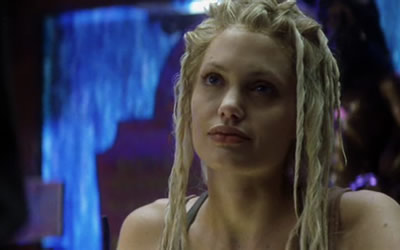
Angelina Jolie (action star "in transition" status)
There are however some nice deadpan comical moments delivered by Cage and that deals with his car named Eleanor who sort of has a mind of its own for some reason. It's dumb but funny. The cinematography by Paul Cameron (Man on Fire (2004) and Deja Vu (2006)) are well shot and work well the action scenes that do occur. Since it's wide screen, the look gives a broad range of view to see what surrounds the characters. The car chases that Nicolas Cage performs are decently exciting and are nicely edited. That's the way the rest of the film should have been executed. The music composed by synth enthusiast Trevor Rabin is a mixed bag. The score itself is pretty short surprisingly, clocking in only at a half-hour. Rabin does compose a main theme to Raines and Eleanor with a synth choir that pops up from time to time, but the rest of the tracks are somewhat muddled. There are some exciting cues that involve deep scratchy synth bases but they don't show up all that often because much of the tracks run on average about a minute. It's okay but could've been better.

The electronic synth musical score, cinematography and main leads make the viewing experience watchable but the premise itself is squandered by slow pacing and infrequent action. To be gone in sixty seconds, the momentum this feature creates takes much longer than that.

Points Earned --> 6:10