Saturday, February 28, 2015

Rocky III (1982) Review:

For the character of Rocky Balboa, success always seemed miles away. Struggling to make it through on a daily basis on the urban streets was never an easy task. His sluggish yet innocent personality made him an obvious target to individuals who wanted to take advantage of him. For all that, everything would change when he went toe-to-toe (twice) with the latest heavyweight boxing champion Apollo Creed. Even after the first fight, Rocky had become nothing short of legend. As for the rematch, it was what solidified his image as the rising star that he was. Rocky (1976) and Rocky II (1979) are the two films that book-ended this story so nicely. Of course there would be a continuation that would be in the form of this feature but did it maintain the same level of quality? It’s there, but not as much. It's still a well-made and captivating entry but it lacks the substance that made the first two so gratifying to see.

We all wanted to see this,...but it wasn't necessary
The film begins like it did with its first sequel by recapping the finale of its predecessor and showing how much of a beating Rocky could really take. After winning the title, Rocky then becomes engrossed in his fame by covering promo ads, photo shoots, celebrity show cameos and interviews. Despite this, Rocky ends up confronting a new opponent named Clubber Lang (Mr. T) and discovers he may not be as prepared as he thought, so Apollo Creed returns to get Rocky in shape one last time. As for Stallone's direction on how he wanted Rocky to develop as a character, the idea was absolutely fine. When someone becomes famous and is offered riches beyond their imagination, who wouldn't indulge? The lesson behind it all is that you can't let your guard down, no matter how comfortable you feel. Nonetheless, Stallone's writing misfires a number of times in compensation for his directing.

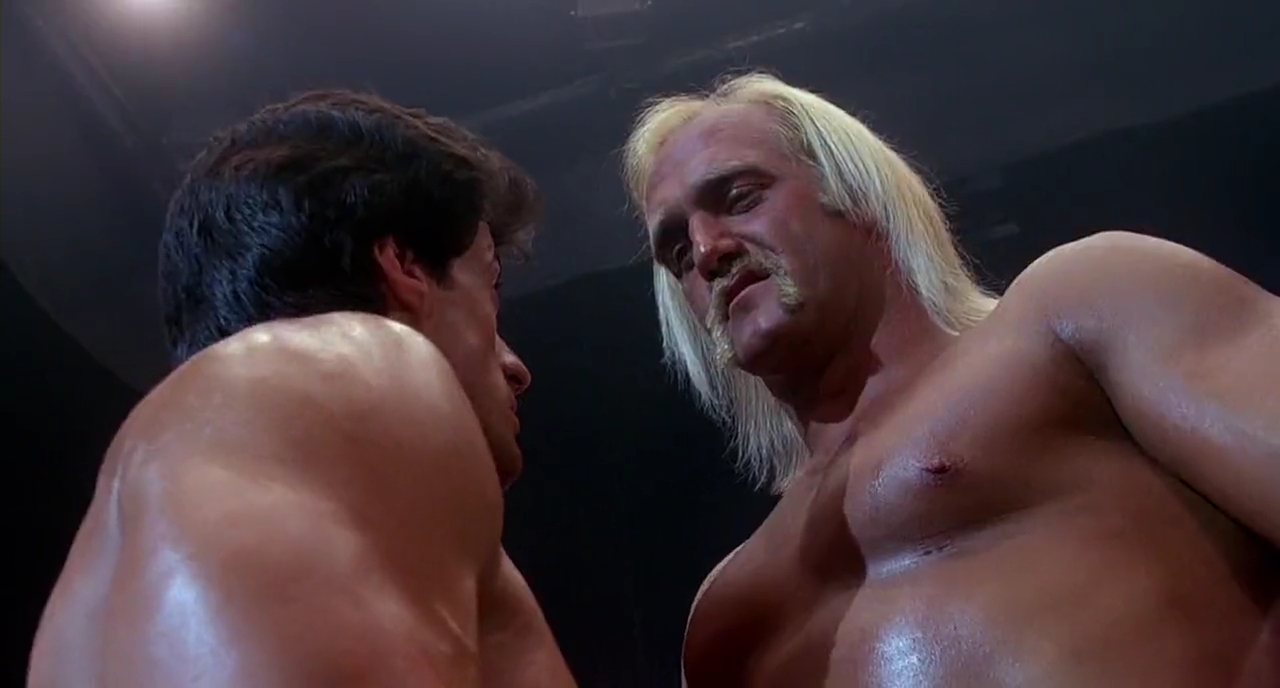
The problems in the screenplay are that unlike its forerunners, there are a couple of scenes that do not add any meaning to the story at hand. Right at the start, Rocky has to confront his Brother-in-law Pauly (Burt Young) about his reckless behavior. Turns out that Pauly is jealous over Rocky's fame, yet the matter is resolved all within the same scene. Another is the charity match between Rocky and Thunderlips (Hulk Hogan). There's nothing wrong with this match up; who wouldn't want to see it? But the fact that it did not move the plot a long in any way other than for the spectacle of Hogan Vs Stallone had no use. These kinds of instances are wasteful. Meanwhile, the audience could have had more sentimental scenes between Rocky and his family. That's not the case though. The audience barely views any family time between Rocky, his wife Adrian and young son.

Instead, fans see Pauly constantly complaining and Adrian saying almost nothing important until close to the final act. Along with developing Rocky and his family, his opponent Clubber Lang receives little treatment either. It's hard to say if Clubber Lang's personality is actually Mr. T being himself or not. It's also another thing when a character is determined by something, but Lang doesn't seem to have a reason. Lang has hatred so strong that there's got to be more of a motive than just Rocky ignoring his demands for a match. No one holds that much resentment for a reason like that. Lang really just appears to be fuming out of nowhere for very little reason. Burgess Meredith as Mickey, Carl Weathers as Apollo Creed and Tony Burton as Creed's coach were really the only true redeeming character additions. Meredith is able to provide a touching scene with Rocky and seeing Creed and his former coach team up with Rocky is also a plus. This particular element helps humanize Creed and his followers and makes them even more likable as characters.

Play nice boys
The other remaining components that do work like before were the music and match fights. The way the fights are choreographed still have life in them and keep the sequences moving at a brisk pace as if to emulate how fast the fists are flying. Credit also goes to Bill Butler, who also was director of photography for Rocky II (1979) and Jaws (1975). Also, because this film represents how far Rocky drifted from his original life (living style), numerous shots contain everything from floor to ceiling of glam and riches galore. It's definitely flashy and displays how much wealth Rocky acquired but it's all style over substance (as explained before). The music composed again by Bill Conti did another efficient job. This time when it came to contemporary music of the time, "Eye of the Tiger" is emphasized more than anything else. "Gonna Fly Now" is still in there but "Eye of the Tiger" was given more priority. The Rocky theme is still played throughout as well along with the softer moments that occur. It's still a decent movie but wasn't executed entirely right.

Sylvester Stallone had the right idea on how to continue Rocky's story but his screenplay misses the point by including scenes that go nowhere instead of developing all of its characters like the first two films. Mr. T as Clubber Lang was certainly the right choice for an antagonist but he too barely has much depth. The music and fight sequences all still please to a point with Carl Weathers returning but without all of its developed characters, the heart of the story doesn't feel as strong.

Points Earned --> 6:10

Friday, February 13, 2015

Jack Frost 2: Revenge of the Killer Snowman (2000) Review:

In the late 1990s, there were a number of low budget holiday horror related movies that received public releases. Some of which were abysmal, while others showed that they were not gold, but did have something to like about them. Aside from being mistaken for Michael Keaton's family holiday film with the same name Jack Frost (1998), Michael Cooney's Jack Frost (1997) was by no means a spectacular film with great production value or any other kind of value for that matter. It had a cheap look in its sets, practical/special effects and not all of its actors sounded fully invested. Yet with a premise that was turned on its head, with a remarkably goofy but memorable villain who had inventive kills, this slasher film seemed to grow on the viewers it was played in front of. Now as for whether this green lit its sequel or not that's a whole other topic of discussion.

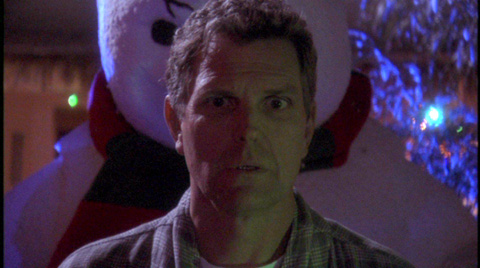
Is that the Stay Puffed Marshmallow Man?
For what's given on the surface, it seems like things are kept to a standard. But that turns out to be proven wrong as the viewer will see that Michael Cooney, who credits himself as the writer/director again made some noticeable changes to this entry. Most of which these revisions undermine what small credibility the first installment made for itself. A year after Jack Frost was disposed of, audiences revisit Sheriff Sam Tiler (Christopher Allport) and his wife who decide that for this Christmas, it's time to go somewhere else. This time by attending a friends wedding in a tropical resort. Seems like a smart choice until someone digs up the buried antifreeze that Jack Frost (Scott MacDonald) was melted in. This already brings up a big question. Who in the world dug up Jack Frost and if it was buried in an unmarked grave, how'd the person find the location? This character is never announced to the audience nor does he play an integral part to the rest of the plot. Wouldn't it have been more interesting if it was someone Sam knew?

This is just the beginning. The continuity is astonishingly bad when it comes to story and reasons. Another example of this is the rebirth of Jack Frost. It makes no sense at all and fails to explain why it worked.  The only thing Cooney successfully gives justification for is Jack Frost's weakness. The other significant modification Cooney makes to this screenplay is making the characters a little too self aware of the story at hand. A good choice for this claim is the reappearance of Agent Manners (David Allen Brooks). Even Allport's character mentions how he doesn't understand how Manners survived/followed him. Instead of actually answering this question, David Allen Brooks ends up playing Manners like that of a parody to what the character of Manners originally was portrayed. Every other actor plays their character alright but not worth remembering. Interestingly enough though, famous actor Doug Jones has a small role (although its nothing memorable either).

Christopher Allport as Sam Tiler again plays his character like before; timid but courageous enough to fight. He and Scott MacDonald, voice of Jack Frost are the two highlights. MacDonald again flexes his voice chops for Frost and it sounds like he had fun once more as the cold-blooded killer. Sadly though, the viewing experience will have audiences thinking there wasn't much of Jack Frost in it either. In fact, there's a good portion of the movie where Jack Frost just vanishes and doesn't show up until the last few minutes to the finale. This all happens when Frost realizes he can create little deadly snow puffball creatures. The idea was fine but the fact that once they were created, Frost took a back seat. Isn't this movie about Jack Frost? Why isn't he in it as much? It is about him right? The cinematography by Dean Lent (who also worked on the first film) did an ok job at getting the standard shots but it still doesn't stand out anywhere. Lent only seems to be good hiding the fact that the cast is not on an island when it comes to inside buildings. Outside though, it’s noticeable.

Hitch hiking again?
The last two elements not covered yet are the effects and music. For the special/practical effects used - it looks somewhat better than before. These are especially distinct when Jack Frost goes from solid to powder snow form. It's not James Cameron good but it isn't awful either for the movie that it is. The gore is perhaps stronger, with deaths more grizzly than before. Some of which are predictable while others not so much. Some of which these kills are wonderfully quoted by MacDonald. The music composed by Chris Anderson (another crewmember who worked on the first) is only mediocre at best this time. Sometimes there will be a unique tune while others there will be recycled material. The track that gets recycled the most is agent Manners which was ok for the first time but wears thin very quickly after every time he says a line. I guess being creative with the music wasn't even in Anderson's agenda this time either. This sequel is kind of watchable but isn't much of a guilty pleasure like the first.

Even with main actors, writer/director, cinematographer and musical composer all returning, only half as much entertainment can be taken from this already mediocre franchise. It's two leads and the violence are the only real redeeming qualities. Michael Cooney's writing worsens with every passing minute and even forgets that the movie is about Jack Frost for a bit, thus leaving its already small fan base rather dry.

Points Earned --> 3:10

Friday, February 6, 2015

The Spongebob Movie: Sponge Out of Water (2015) Review:

There are a couple of factors that come into play when TV cartoon characters have their big screen appearances. The biggest one being that the cartoon became so popular, a movie needed to be made. Sometimes it also signals the end of the series. The Spongebob Squarepants Movie (2004) was originally creator's Stephen Hillenburg's finale to the TV series. However, after exceeding box office predictions, Spongebob was renewed for several seasons later. One would think after that showing would also warrant another big movie to be made soon after. Well it came,...surprisingly really late compared to how well received movies get a green lit sequel so quickly afterward. Sometimes, though the time is worth the wait and this can be said for Spongebob's 2nd big screen entry with some of the usual flaws (most obvious being continuity).

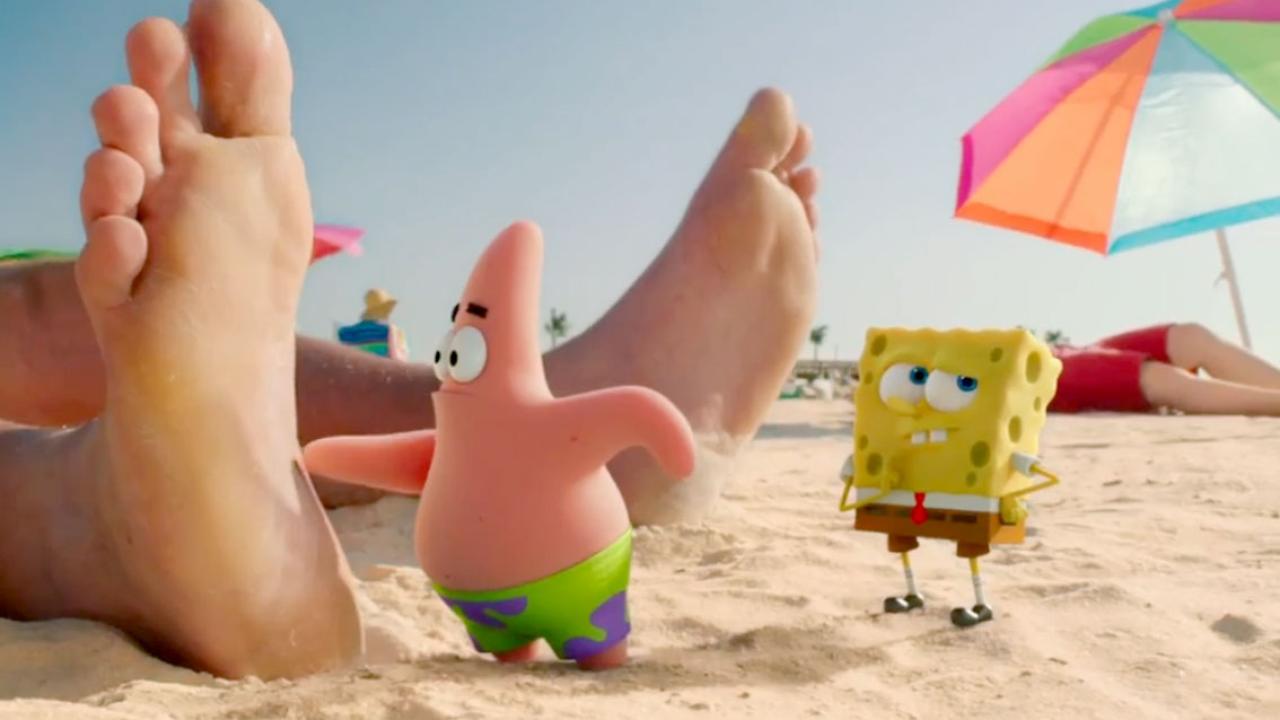
They look more real than before!
Like many other Spongebob episodes and the movie before this, Plankton is up to his old tricks again; attempting to steal Mr. Krabs' secret Krabby Patty formula. Except this time, there's more going on involving the secret formula than even Plankton knows. Out of nowhere, Krabs' secret recipe vanishes among the city of Bikini Bottom when a mysterious individual named Burger Beard (Antonio Banderas) enters the picture. With that, the city of Bikini Bottom descends into chaos, so Spongebob decides he needs to find a way of getting the recipe back in order to restore his hometown into a tranquil society. The writing headed by Glenn Berger and Jonathan Aibel who were also the brains behind Kung Fu Panda (2008) and Monsters Vs Aliens (2009) accomplished what most fans of the series should enjoy. And although Stephen Hillenburg is not directing this time, his right hand man Paul Tibbitt is.

As an overall presentation there aren't many issues with this production. One of the most notably different things about this movie is that it doesn't exactly stay in line with the previous story of the last film. It's really difficult whether to classify this is a sequel or not. It feels like more of a reboot (for those who are debating). Nonetheless this is a minor flub. All the memorable voice-actors from the TV show return once again to voice their undersea counterparts and that's always important. Antonio Banderas as Burger Beard was certainly an interesting choice only because who could've thought Banderas could play such a convincing pirate? He proved himself of that and for his age, he still gets around quite well (which was also proven in The Expendables 3 (2014)). The dialog also leads to number of funny moments, all of which each main character gets even screen time to make a funny. Many of which these moments break the 4th wall.

This also can be a weak point unfortunately in the screenplay because being silly is fun, but the comedy sometimes goes a bit overboard. What the first film has that this one doesn't is a sense of realism. Here, some scenes get a bit nonsensical to where it denies the universe that The Spongebob Squarepants Movie (2004) established. The reasons behind these frivolous events are explained, which is appreciated, but this is what detaches this entry from its last and what makes it questionable to whether it is a sequel or not. Then again, with these outlandish ideas come alternative animation visuals. For Spongebob's traditional animation sequences, the scenes are perhaps even more honed than the first entry; it looks crisp, clear and bright. Yet, what stands out even more is the live-action animation (also directed by Mike Mitchell, best known for directing Sky High (2005)). The character textures and 3D renderings look very well unified in their own right. Spongebob and friends almost look touchable and that's awesome.

Antonio Banderas (Pirate form)
Next in line with that are some very entertaining action sequences. This is more of the focus when the story hits its third act but it’s worth the wait. Honestly for a Spongebob feature, seeing this much action never seemed like a possibility or interest the producers would ever want. Case in point, that was an incorrect assumption. A number of action sequences actually become quite inventive with how the conflict ensues. Well done. Phil Meheux's cinematography for the live-action scenes are also well constructed. Seeing that he was also the guy with the eye in The Mask of Zorro (1998),...which also had Antonio Banderas, seems only fitting. Much of the camera shots are well lit and wide enough to get a clear view of the scenery. John Debney, a composer who has previously scored multiple family comedy and action related films maintains his style by making the scenes appropriate where they need to be while including the Spongebob theme. Although there is one scene that doesn't belong to Debney which is where the film crew directly takes a snippet of Ennio Morricone's music from The Good, the Bad and the Ugly (1966). This is still fun though.

Spongebob's second big screen outing is rightfully made bigger and more profound. The animation is more spot on, the returning voice-actors / live-action performance from Banderas, action and comedy all work hand in hand to make a fun ride. Occasionally though, it does go out into left field a bit more than its predecessor.

Points Earned --> 6:10

Sunday, February 1, 2015

The Texas Chain Saw Massacre 2 (1986) Review:

Sequels in general are hard not to be ignored and they are also very well known for not satisfying audience's expectations. So far though, horror film franchises are the most prone to failing at being better than their initial entry in cinema. For one reason, it's understandable if the founder left the project entirely because then the sequel may not be in the best hands to carry the story. That's not the case here. Director Tobe Hooper, the man behind the first movie comes back to direct his long awaited sequel that almost seems like he forgot what made his original so horrifyingly stimulating. But he didn't forget, Hooper admitted that he wanted this entry to be less serious. And for what it shows, in some ways it is goofy but its dark humor doesn't always save it.

 Stretch (Caroline Williams) & Lefty (Dennis Hopper)
Taking place 14 years later, audiences are introduced to Lefty Enright (Dennis Hopper), a man looking to find the cannibalistic Sawyer family who killed his brother's kids and friends from the first movie. To Lefty's dismay, trying to convince the police that the killers exist hasn't been going well. Fortunately for him, he meets a radio host named Stretch (Caroline Williams) who happened to record one of their killings over a live broadcast. With that, Lefty asks Stretch to help him make the public aware of the current threat. As an entry continuing the story, it does have some key moments that show thought did go into it, but overall there's less plot than before. Of what seems to be a subplot to expose the Sawyer family is then abruptly dropped for Dennis Hopper going on the hunt himself. What was even the point of making him apart of the police department if he decided he was going take matters into his own hands?

There are some intriguing moments that screenwriter L.M. Kit Carson does include in this entry but not much of it feels completed. For continuity sake, Carson accomplished that. He not only makes reference to the original verbally but physically as well so that shows he had the right idea. As an interesting token, Carson also sheds some light on the Sawyer family. Specifically, that Drayton Sawyer (Jim Siedow, the 'ol pop) is a renowned chili cook. This is some of the dark humor because the audience realizes what Drayton belongs to but the characters don't. Another weird side note is that audiences get to see Leatherface actually display what almost seems like a little more humanity than before (almost). This key moment occurs whenever Leatherface is around Stretch. It's these elements that show Carson had some appealing ideas but only some of these character threads are fully realized. There are still some things that don't make sense though. An example of this is Bill Moseley, who successfully replaces Edwin Neal's role as the hitchhiker. How'd he get so horrid looking? No explanation for that.

Dennis Hopper as Lefty isn't all the most believable because of his straight face performance. However, there are times where he blows a gasket and it's entertaining to see. Caroline Williams as Stretch doesn't play much of a memorable character. She does show some courage at times, but mostly she's screaming widely to the point of ridiculousness. Although Jim Siedow was the only original actor to return for the Sawyer family, the entire group still acts as if they were apart of the first movie. Bill Moseley copies Edwin Neal's performance nicely, Siedow had no trouble reconnecting with his original character and Bill Johnson who replaces Gunnar Hansen as Leatherface still looks terrifying. The camerawork was largely forgettable throughout. With an extended running time by 17 minutes from the original, there were only a couple shots that look good with the lighting. Everything else was a rather mishmash of ideas. It's as if Tobe Hooper didn't have much of a direction on how he wanted anything to look this time.

The secret recipe to his chili is the meat X_X
The only other good aspect to this horror film is the violence. With practical effects master Tom Savini helping, the kills are bloodier and the props are much grosser. Gorehounds should enjoy the grossness. As for scariness, it's not much of scarefest because audiences have a clear idea of what the Sawyer family is all about. The music provided again by Tobe Hooper and additional composer Jerry Lambert doesn't waste time in ditching the atmosphere so cleverly crafted from the original. Instead of incorporating bonesaw noises, chicken squawks and what sounds like clanging kitchen tools, has been replaced with the all around generic synth piano.  The notes are frantic to induce panic and scares but because there's no atmosphere to the tune, it sounds largely uninspired and bland. Even for its conclusion, which felt rushed to begin with, feels almost nonexistent or effective in its delivery.

Like other average horror sequels, it has a number of scenes that proved its writer had the ideas but could not completely stitch them together properly. The lead actors are middling in their performances, the music has no atmosphere and the story has a thinner plot than the last. The only things worth mentioning are its ability to still be gross in its visuals and the minor unfinished character threads.

Points Earned --> 5:10

Monday, January 19, 2015

Biography - Ed Gein (2004) Review:

Horror icons are not always made up in the fabrication of the mind. Clive Barker, a literary horror novelist who created the memorable cenobites to his film Hellraiser (1987) was unique and was a fabrication by him alone. However, Freddy Krueger from Wes Craven's A Nightmare on Elm Street (1984) was not. Craven conjured up the idea after he did some research on people in Asia who died in their sleep for mysterious reasons. Krueger was only created to create a reason for it. But did anyone ever think that Tobe Hooper's The Texas Chain Saw Massacre (1974) or Alfred Hitchcock's Psycho (1960) production was based off of a single man that actually live in the North America? Most likely not. Unless research was done on it prior, very few people actually suspect that these couple of films were (loosely) based on events that actually happened. It's these kinds of stories that make the movies sound less scary and the real ones more frightening.

Ed Gein
The story itself is about a quiet town in Wisconsin called Plainfield. There in 1957 a series of shocking discoveries were made by the head of the police department. These sightings were found in the house of man named Ed Gein, a what looked to be a simple and mellow town man. But this is only what seemed to be what was portrayed on the outside, for what lied beneath his exterior was something inhuman that can't be explained clearly by any analyst. As a for a short TV documentary, this roughly hour long video is fairly effective in its job at making viewers’ skin crawl. The biggest component to that feeling is that the story is true. That alone is bone-chilling enough but here's where the rest of the production really hits the nail on the head.

Alex Flaster's writing shows he did his research. The story covers from exactly when the unbelievable encounters were made, up to the end of Ed Gein. There is some back-story that sheds light on Gein but much of it is too muddled for anyone to truly know if it was true. The interesting thing is once it's been seen and understood, viewers will understand the correlation to how Psycho (1960) and The Texas Chain Saw Massacre (1974) relate specifically to this estranged man. The narrator David O'Brien, who doesn't have much for a filmography certainly gave it his best shot when it came to creeping out his audience. O'Brien's voice is oily slick and gives the story telling a much uneasier feel.

Another element to this documentary that pushes the uncomfortability level was the music provided by Jim Gaynor. Gaynor's music consists of electronic piano and other synth instruments but it is worked in a fashion that does create a sense of frantic nervousness to the tale being told. I must say though, it does sound like a score than composer Richard Band would create because it sounds awfully cheap. Yet, Gaynor's score is much more compelling than Bands. The other aspect to the story that takes the cake is interviews/Q&A's held with various individuals who worked on the Gein case. Whether it be a News Reporter, homeowner from Plainfield or someone who personally looked after Gein, the fact that they were there and took part in what was considered one of the most alarming stories of the mid 1900s is just mind blowing. It seriously must have been a scary thing to learn when everything was all revealed as time went on.

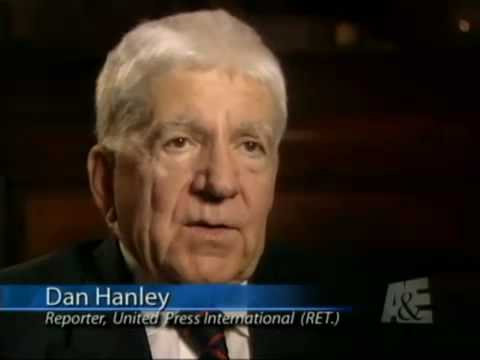
The names there,....he's a reporter (obviously)
Unfortunately, even with how effective a lot of these supporting sections give to the documentary, there are still two big flaws; both of which try to work off each other. This flaw is when the story is being told, it is done so as a recreation - as if the viewer is watching it as it was being filmed the day of. For 1957, it's obvious that no one would even have a hand held recorder, so why try to convince its audience now? But because they did this, the other error they commit is trying to make the still photographs (which are real) look 3D. There's absolutely no need for that. If the material is graphic, let it be graphic. War is graphic and you don't see documentaries on those being vaguely lit. It's also not like these pictures aren't visible but it would be nice to see just how much of twisted man Ed Gein really was and that means seeing the whole thing from top to bottom. Yet, even with these minor things, it is still a moving documentary.

As a short TV documentary its writer certainly packed in enough information to help its audience comprehend just how weird this man is. The visual elements are a bit flawed but the music, narration and interviews help elevate its story telling experience to one ghastly night.

Points Earned --> 7:10

Fast & Furious 6 (2013) Review:

By this point in any movie franchise, if a series of films all related and connected to each other reach beyond two sequels, there must be a loyal following behind it. That also means something is being done right to the franchise (for some). Now although Universal's The Fast and the Furious (2001) feature film debut and subsequent sequels all do not have glowingly positive and overwhelming reviews, the production managed to find its demographic. When The Fast and the Furious: Tokyo Drift (2006) came out with writer Chris Morgan and director Justin Lin handling the project, who would've suspected that they would have collaborated for three more films in the franchise. Amazingly even with writer Chris Morgan back tracking by introducing a later sequel earlier, the franchise persuaded its loyal fans to stick to it and keep following the later entries.

Time for another round?....ehh why not?
After breaking free of the law and living in a secluded life from trouble, newly appointed father Brian O'Conner (Paul Walker), wife Mia (Jordana Brewster) and Dominic Toretto (Vin Diesel) finally could enjoy the time they always wanted together. Or so they thought; Luke Hobbs (Dwayne Johnson) returns to Toretto showing him recent pictures of what Dominic thought was his dead girlfriend Letty (Michelle Rodriguiez) who turns out is working for a group deadly mercenaries headed by a man named Shaw (Luke Evans). Upon this newly discovered information, Hobbs and Toretto agree that if Hobbs gets Shaw, Toretto will get Letty. So in order to capture Shaw, Toretto regroups once more with the crew he gathered from Fast Five (2011) in hopes reclaiming Letty and helping Hobbs out. For what started all the way back in The Fast and the Furious: Tokyo Drift (2006), Chris Morgan's screenplay finally,....finally realigns itself to the timeline it initially broke from. Out of all things, this was one of the most crucial things that needed to be fixed and by golly it’s wonderful to see everything add up again.

But aside from this, Morgan shows that he had an appreciation and respect for the films he did not write for earlier because of how he treats the characters. Dominic Toretto's underlining factor to why he's so good is because of the family he has. In the early entries it was about racing, hot girls, slick cars and understanding one's place among all that. Later on, it turned into revenge and then fleeing the law. Now, it's just about family. It doesn't get anymore selfless than that and it feels more genuine than ever among all the previously established characters (including the recently new ones). Now everyone works together for a common cause. There's no second-guessing this anymore and that's just the writing alone. The fact that this is written into the script and the actors can pull it off without having to act as so much as being themselves is also a plus. The installments before this did have emotion and arguments related to family matters, but this film feels authentic in every sense of the word when it comes to feelings.

Every actor plays off each other like it was another day in the life of the job they do daily. There's no tension at any point between any of Toretto's crew because they know what makes each other tick and that makes it all the more preferable to see when it comes to interactions. Luke Evans also feels like the most formidable villain Toretto and O'Conner have ever come up against. Not only is he smart, agile and callous but also tends to be one step ahead of Toretto and Co., even Hobbs. For once, Toretto can't keep up and to see him challenged is definitely a new thing. The action that ignites between Toretto and Shaw's gang is much more interesting to watch this time too. Although it is still way over the top (if not more than before) and the physics behind such reactions remain unlikely, the sequences feel much more creative this time. This is probably due to that this particular plot is no longer a heist; it's more of a rescue.

I believe I can fly.....
However that still does not go over easy when people go flying into things or roll around in cars and handle walking it off only with a few scratches. Some of these particular events are simply impossible for the human body to withstand at once or all in one day. Sometimes it feels almost like a superhero movie because of how invulnerable some of these characters are portrayed. Again though, it’s only for certain scenes. Stephen F. Windon again gives his audience the usual airy and spacious cinematography that almost every other entry in the franchise has received. Lots of road and aerial views for audiences to see how big of an issue these chase scenes get. The music is a puzzling choice however. Instead of Brian Tyler scoring the film, this time composer Lucas Vidal is doing the job. This is Vidal's only mainstream film score and to be honest it sounds a lot like Tyler's anonymous music. I guess Tyler was over scheduled for other films this time. Nothing sounds that much different though; it does sound good but not memorable in any way. It's just there like all the other scores to this franchise. All in all though it is still one of the better films.

Justin Lin's latest entry contains lots of the same generic music and over-the-top action that feels physically flawed, yet it entertains better with Luke Evans' imposing presence and a story that is more about unity than it is about who has the faster car. Also after watching this, the confusing timeline will finally come into place.

Points Earned --> 7:10

Kim Possible: So the Drama (2005) Review:

When it came to this movie in particular, it seems as though this would have been the finale to Kim Possible's TV run as a cartoon. Turns out fans of the series protested to the mouse house and demanded another season. Talk about dedication. What makes this final TV movie of baby sitter turned World Saver Kim Possible more enjoyable than Kim Possible: A Sitch in Time (2003) or any other feature is that it nicely ties together the loose ends for Kim Possible in her academic career and personal life. Kim Possible: A Sitch in Time (2003) just had Possible and Stoppable correcting the altered past caused by Dr. Drakken and his goonies playing with the magic time monkey idol. It was good but did not move anything forward, just fixing the past. Here, Dr. Drakken gets even more personal than before to disrupt Kim's livelihood. The best part is Dr. Drakken actually having the upperhand on everybody for a while.

Friend Zoned like a boss
When a new boy named Eric comes to Kim's school, she begins to fall for him. This results in Ron Stoppable becoming jealous, thus having himself reassess his feelings for her. There really isn't much to say about what isn't good about this TV feature. The only thing that's worthy of a critiquing is that the running time could have been longer so Kim Possible could have went out with a bang. Then again, perhaps it was also kept short because fans were demanding another season after this, so it's difficult to say where it really should've concluded. Everything else manages to entertain with ease. All the voice actors return for their respective roles and give enjoyable performances too. Christy Carlson Romano and Will Friedle voicing the comedic action duo still have the skills to do their characters justice.

Nancy Cartwright as Rufus also is another fun role. Even the minor characters return; Wade (Tahj Mowry), Monique (Raven-Symoné), Ned, the Bueno Natcho Cashier (Eddie Deezen) and even Maurice LaMarche (best known as The Brain) plays a character. And of course Shego (Nicole Sullivan) and Dr. Drakken (John DiMaggio) return too as the villain duo that just can't seem to ever get it right when it comes to world conquest. As a side note, April Winchell voices a news reporter and it’s hilarious to hear the way she speaks for this character. As a story, Disney writers Robert Schooley and Mark McCorkle made good use of what happens when you take people for granted. Ron Stoppable was so used to being around Kim Possible that he didn't realize what would happen if another guy entered Kim's life that took more precedence over him. It is a very common issue that friend zoned guys come in contact with. Viewers should also have fun watching Stoppable notice that Dr. Drakken still doesn’t know his name after so long.

That action though
As an animation feature, everything is done accordingly. Since this isn't an official film feature, the animation wasn't polished because it still looks like it belonged to the cartoon. It's nothing to get fussy over though. The action and music also satisfy as usual. Director Steve Loter, who has worked the Kim Possible TV series and the Buzz Lightyear of Star Command TV series definitely knows how to make the action fun. There's plenty of explosions, fight sequences and other things that not every cartoon now a days displays for younger audiences. Lastly, the music provided by TV composer Adam Berry is fine. Berry continues to play the Kim Possible theme and even includes "the naked mole rat" number for Rufus. Any scene in between is used appropriately too. Not much else to say other than a fun time.

Except for not being longer than 70 minutes for Kim Possible's last TV movie, all the other components work like they have been. The voice-actors, action animation, music and comedy continues to entertain fans of the series.

Points Earned --> 8:10

Sunday, January 18, 2015

A Nightmare on Elm Street 2: Freddy's Revenge (1985) Review:

It's truly sad to see when a promising franchise starter manages to shoot itself in the foot after its first sequel. Of course for Wes Craven's A Nightmare on Elm Street (1984), was not the only movie franchise in general to achieve mainstream popularity and have a sequel made right after it. Like many others, whether it be "Part 2" or just labeled with the number 2 after it, its successor ended up financially blowing away its competition but lost its critical flare that the original had. The reason behind these flaws was either the lack of the creator's involvement with the further projects or the producers decided otherwise what should be the next step in the franchise. As of right now, there's only one horror sequel that manages to complete its narrative in two successful steps and that's John Carpenter's Halloween (1978) and Halloween II (1981).

"I'm baacckkk,....wait, who do I want revenge on?"
Here fans are introduced to Jesse Walsh (Mark Patton), the newest tenant living in 1428 Elm Street, the same house that Krueger appeared in 1984. After a few nights of some intense dreams involving Krueger (Robert Englund) wanting Jesse to kill for him, his friends Lisa Webber (Kim Myers) and Ron Grady (Robert Rusler) begin to notice and try to figure out what's going on. The sequel to A Nightmare on Elm Street (1984) doesn't make sense in a number of areas. As his first writing job, David Chaskin didn't modify the script in any way to enhance the story that was told prior. His first mistake is the title; Freddy's Revenge? Who is Krueger getting revenge on? He got his revenge at the end of the first entry. This also completely puts into question what are Freddy's motivations. Why does Freddy want Jesse to kill for him? If its to avoid having people think Freddy Krueger is back, the reason seems pointless. Nobody believes what they don't see anyway.

Jack Sholder's direction in the plot is interesting but if looked at deeper, it just doesn't add up. The only thing Chaskin does correctly is continuing to maintain connections to the first nightmare by introducing Nancy's diary, which gives the characters a sparknotes edition of the events before. Although even that may come into question because I don't clearly remember Nancy ever writing down anything about her experiences. The main actors do give believable performances for the situations they encounter but unfortunately, they aren't attachable. Mark Patton and his co-stars can portray emotion but they just aren't the same likable cast. The only actor who comes out unscathed is Robert Englund just because he's playing Krueger like he always has. The only difference here is that he no longer has a connection to these specific characters other than one of the individuals living in 1428 Elm Street.

Even actor Marshall Bell has a minor role but for those who are familiar with Bell's other roles, they might already know where he's headed. The cinematography provided by Jacques Haitkin (who worked on the first nightmare) and Christopher Tufty manage to keep the look of the first with various lighting and colors. However, the creativity behind the dream sequences isn't as frequent anymore either. And when the scene shifts to a dream, the scenes focus more on the surroundings than what Krueger can do. Instead, the big thing going for when Krueger is around is that everything gets molten hot. That's nice because in some cases it did look good for the practical and special effects used. However more could have been done too. A good example of this is one dream sequence that is skin crawling. For a minute I actually thought it was real.

Robert Rusler
This leads to the horror aspect of the picture. Is it scary? Well, for horror fans no but they should still have fun watching it. As for anyone else who's not used to Krueger already, they will be scared. The makeup on Krueger is still slimy and gross and his method of killing is still grotesque and ugly. Can you imagine being killed by rusty claws? Ewww,...at least clean them. The music produced by horror composer Christopher Young is an unfortunate let down too. Young who would later prove himself with Clive Barker's Hellraiser (1987) score, manages to only make the score to this sequel only creepy and not scare inducing. For some reason, Young also did not include composer Charles Bernstein's original theme from the first movie and its sad because Young probably could have enhanced such a unforgettable cue. Here Young does include drawn out clashing string tunes and one-two mystery notes. That's it and regrettably, this is Young's only score to this franchise. Sigh.

The special/practical effects still look good and the story's direction is new but with little to no clarity, the reasoning barely makes sense. Although every actor is new other than Robert Englund, none of them give showings that are remotely memorable. Grievously, even with Christopher Young composing the musical score, he too cannot help the film be but only mediocre.

Points Earned --> 5:10

Saturday, January 17, 2015

Blackhat (2015) Review:

For a large part of his career up until now, Australian actor Chris Hemsworth has been riding the successful road in the realm of Hollywood movies. After finding success in Marvel's Thor (2011), The Avengers (2012), Thor: The Dark World (2013) and critically acclaimed Rush (2013), it seemed as if there wasn't a role Hemsworth couldn't pull off that people didn't enjoy. But in everyone's success story there are always slips and mistakes along the way. This movie highlights one of Hemsworth's errors. One of the more surprising things though is that it's not just Hemsworth's mistake either. There are a lot of mistakes that belong to several other professionals that have proven before they are better than this. Most notably, this belongs to director Michael Mann.

Chris Hemsworth & Wei Tang (background)
Although not a mainstream director of popular movies, Michael Mann has produced a number of films that people recollect as being highly entertaining. The Last of the Mohicans (1992) and Heat (1995) to name a couple are of his most well respected films he has directed. This however is a totally different problem. The story to this movie is about a cyber-hacker AKA a "Blackhat" working its way into certain country's government systems and using whatever they can manipulate for personal gain. After first being sited when it activates a nuclear meltdown in China, Chinese Computer Security Agent Chen Dawai (Leehom Wang) and his sister Chen Lien (Wei Tang) ask for Nick Hathaway (Chris Hemsworth), a convicted hacker and friend of Chen Dawai to help them figure out who's behind the cyber-hacking. However, because Hathaway is a convicted felon, Carol Barrett (Viola Davis) and another guard comes along to make sure Hathaway doesn’t leave the project.

As a story, the concept and premise is compelling. In an age where digital information is recorded and stored in private databases in a central processing unit, hacking is a contemporary issue that results in many people's cyber issues related to either social media profiles, personal email accounts or leaked footage (that the movie companies can't seem to handle yet). But aside from this, the execution isn't cleaned up. Of the cast, only three actors will make any kind of impression on its audience and that belongs to Leehom Wang, Wei Tang and Viola Davis. The characters they portray at least have some existence of humanity in them and carry a bit of charm to their personality. Chris Hemsworth on the other hand is about as dry old provolone cheese with not one sarcastic statement sounding the least bit humorous. Sadly, this is the least of the film’s crimes because there's more to discuss.

The villain in this movie is unknown. His name isn't mentioned once and trying to find the cast member name without a proper picture doesn't help. His performance wasn't worth much either. As for characters on an individual basis, from thread to thread it’s incredibly cliche and predictable. Does it even need to be said what'll happen when a best friend meets his best friend's sister? Adding to it is that these particular subplots weren't needed. It didn't develop the characters in any unique fashion. And with that, the result ends up being a 2-hour snooze fest of stuff viewers have already seen. These flaws are quite vivid when looking at the writer Morgan Davis Foehl, who's prior positions belong to film productions as an assistant editor. That's not a good sign and why didn't Foehl edit this picture? Apparently the four editors to this film did barely anything.

Viola Davis
The only other minuscule plus to this movie is that there are shootouts and fights. However even they are not particularly entertaining because cinematographer Stuart Dryburgh couldn't keep the camera still for hardly any scene he filmed. There are some scenes that involve no motion at all and Dryburgh still manages to have the camera shake. Why? Does it create realism? Kind of but it makes the movie feel more like a found footage genre movie than a cinematic traditional thriller. The music is another mixed bag. Harry Gregson-Williams worked with two other composers; Atticus Ross and Leopold Ross. However according to Williams almost none of his work was put in the movie. So for that I cannot say anything about him but for the Ross brothers (if that is their work), the music they produced isn't the least bit inviting. Much the music consists of deep bass synths and dense percussion that don't really appeal to anything that goes on through the movie. Williams’ music would probably been more appropriate considering his past work involves much more of a hybrid mix between synths and orchestra. Some much was wrong here.

It has some ok action scenes, a few good performances and has an interesting premise that pertains to today's culture but fails to be clever in any way in its execution. The story is badly written with cliche character threads, very slow pacing, a dull showing by Chris Hemsworth and unappealing music.

Points Earned --> 4:10

Clive Barker: The Art of Horror (1992) Review:

Influential people exist all over the world and they affect different people in their own specific ways. There are the people who workout, comic book lovers, novelists, computer scientists; the list goes on. For each group there was at least one person who is treated as a household name that influenced the interest. For horror fanatics, Clive Barker (although not the only one i.e. Stephen King) is frequently mentioned at the top of people's lists. Now, when it comes to understand that particular individual, it's very important to digest and comprehend all the factors that played in that person's life; that made them what they are now. For Clive Barker, knowing a documentary would be made about him at some point was obvious after the release of his franchise starter Hellraiser (1987) and its sequel Hellraiser II: Hellbound (1988).

Must have spoken to Schwarzenegger prior....
The thing is for this documentary; the title would infer more that it's about Clive Barker explaining the art of horror. For that premise alone, its interesting enough to find out because only Barker and a few other writers would actually know what makes good horror. Unfortunately, this documentary somewhat accomplishes this task but not as efficiently as it should have. Here's what Barker does talk about. First and foremost, Barker quotes the first horrific thing he ever encountered was the childbirth his mother went through to have him brought into this world. "We come out kicking and screaming, or we get the screams smacked into us"; it is a view that probably not many even thought about. Childbirth can be violent and can be horrific at times. I don't know if this is what inspired him because it would be hard to say whether he remembered that from such an early age, but I'm sure it did inspire him when he wrote.

Barker also explains how he got to starting Hellraiser (1987), after two initial failures to try and write for Hollywood Studios. Along with that he includes what particular elements he finds interesting and arousing when it comes to writing and how they relate to him. The thing is, these components that he mentions can be disturbing or are things that are normally spoken in hushed terms because of how gratuitously macabre they can sound. Plus like many other celebrities, he gives a small amount of advice for anyone who's attempting to follow what they're good at. One of the more stimulating conversations that Barker has said pertains more to how people’s culture view society. Now of course, this is for 1992 back then when it was filmed, but it shows that even by today's standards, the attitudes for various activities haven't changed.

An example of this is Barker explaining how he sees people at the gym working out and getting tans all just to be beautiful and attractive. Barker sees this as a trance these individuals are in, so focused on their goal that it becomes routine to a point of being robotic. When in fact there's more to life than just "the flesh" which is what Barker emphasizes a lot in his written works. These particular aspects of what Barker has to say are enlightening indeed, but that doesn't exactly bring to light everything the title suggests. Other than this, running in only a half-hour this documentary is extremely brief on information for what makes horror an art. It's very condensed. Also the amount of material given is heavily based on some of Barker's written works and for those who are only fans of his movies won't exactly understand every reference Barker makes.

Ewww,..take it easy Barker
On a technical standpoint as a documentary everything else is for the most part acceptable. The musiccomposed by Christopher Young nicely matches whatever is put on screen. This goes for the horrific pictures edited in between dialog or even the comedy bits that mock critics Siskel & Ebert or just building a model of Pinhead. Surprisingly, the crew that made this documentary are barely in film at all now. The only person to keep moving on other than Christopher Young and Clive Barker was producer Mark Terry. Everyone else just disappeared; even Robert Russell who sounded decent as the narrator only did this job. What happened? The camerawork is the last thing and its possibly the only other issue to this film and that it's just not that interesting other than it panning over a number of grisly images that pertain to Barker. The only other thing worth mentioning is that there are a few shots that give audiences an idea of the hairstyles back then,...yikes.

As a documentary it does have Clive Barker giving some deeply enthralling thematic material related to himself and the products he's worked on. But for a title describing that Clive Barker will explain the art of horror; it isn't done in the clearest of fashions. Plus with its 30-minute running time, viewers will only get a very condensed understanding of what it takes to truly make something horrific so beautiful.

Points Earned --> 6:10

Friday, January 16, 2015

Dark City (1998) Review:

Director Alex Proyas is not what you would consider to be a mainstream or cash-grab filmmaker. Although he hasn't produced several outputs, his productions have more than not have had great feedback and has taken years to make. Unlike The Crow (1994) which was more heavily inspired by a comic book, this film starts Proyas' film career as the director who will include the themes of individualism and human life for next couple of entries. This would follow through in I, Robot (2004) and Knowing (2009). However, this particular entry in that field is probably the most surreal and bizarre. When a man named John Murdoch (Rufus Sewell) wakes up after not remembering a thing about himself or what he was doing, he makes it his life mission to figure it out. This decision of course is only made after he receives a strange phone call from Dr. Schreber (Kiefer Sutherland) warning him of the danger he is in.

Rufus Sewell
The screenplay was written by a combination of Proyas, Lem Dobbs and famed to be comic book writer, David S. Goyer. Together they produce a written work that will surely have the hooks to grasp its audience and have them pay attention. The basis of individualism and uniqueness is the story's strongest point. The fact that being human is one of the most important qualities in life is essential to our biological existence. Nobody is exactly the same and if we were, what would make anyone of us special or different from the others? Unfortunately, with this very thought provoking underlining topic come unexplained errors and loopholes. These of which cannot be elaborated on in much detail due to how critical it is to the viewing experience. To put it briefly, there are certain things that don't seem logically possible to accomplish physically. Thus producing big questions for how the plot unfolds.

The characters in this movie are memorable in some ways but not all. Rufus Sewell as the protagonist is convincing as a wanderer and grows later on with proper development. Yet, his presence isn't exactly the most ground shaking of performances. Also for anyone who has OCD, it may annoy them that occasionally Sewell will suffer from a lazy eye. Jennifer Connelly who plays Murdoch's wife also gives a believable performance for her attempts to try and jog her husband’s memory. Along with her, she also teams up with Inspector Bumstead (William Hurt) who look to understand what is going on around them. Additionally co-starring these actors is Richard O'Brien, Bruce Spence and Colin Friels, all of which have key roles in the story being told. Still, the most interesting character is Dr. Schreber played by Sutherland. The knowledge that he carries and the rhythm at which he speaks is rare compared to the rest of the cast.

Lots of urban terrain
The finalizing attributes to the film are also well done. The cinematography administered by Dariusz Wolski (who also worked on The Crow (1994)) looks good. For a set that looks awfully similar in several locations, Wolski manages to show different angles and not make it the same view every time. Plus when it switches over to special effects, the integration is mostly unnoticeable. And because this is Alex Proyas directing, the visual style will be heavy handed and it's very creative. For music, composer Trevor Jones took the helm. Although more of an organic composer when it comes to instruments, Jones seems to operate the orchestra with synths with ease. The synths are played to represent memories which kind of sound like "scrapping" notes. For the villains, their theme is much more traditional with horns and percussion. The best however belongs to Emma (Connelly's character). It is very soft and sounds tragic too with background guitars and a leading flute. It's the most memorable piece.

Its plot holes are its biggest issue, which is located in its spoiler filled screenplay. To understand them, it has to be seen. Other than Rufus Sewell not having the most commanding of performances, the acting is serviceable, with appropriate music, decent special effects and a fascinating underlining theme of humanity.

Points Earned --> 7:10

Thursday, January 15, 2015

Fast Five (2011) Review:

Once Fast & Furious (2009) came back on the scene, reuniting Brian O'Conner (Paul Walker), Dominic Toretto (Vin Diesel) and the rest of his crew, knowing sequels were on the way was more than just foresight. The hints were given not only with films prior, but also with teaser footage in the post credits. Amazingly, it has also been one of the few franchises that keeps on going no matter what critics have said previously. However, this is the film that not only topped all of the other installments and was favored the most by critics, but also began to bring the franchise full circle (kind of). Continuing immediately after the last film, O'Conner and his crew break out Dominic Toretto and flee to Brazil. Nonetheless, this does not stop the US government from sending another federal lawman to bring in O'Conner and Toretto. His name is Hobbs (Dwayne Johnson), and he's determined to get the job done that O'Conner failed to do time and again.

Time to round it up!
Once in Brazil, Toretto and Co. decide that the only way to be free of all the trouble they've been in for for the last number of films is to rob Reyes (Joaquim de Almeida), a drug lord who controls the local area and use his money to disappear entirely. To do this, O'Conner and Toretto call in their contacts, which span from the prior sequels. Joining the gang is Roman Pierce (Tyrese Gibson), Tej Parker (Ludacris), Han (Sung Kang) and others. The great thing is, the fans of the franchise will definitely enjoy seeing the characters combine forces from beginning to end. Screenwriter Chris Morgan has certainly been improving the way the stories are being told for these characters. My question is since Morgan only began writing for the franchise at The Fast and the Furious: Tokyo Drift (2006), did he plan this from that point? If so, he certainly knows how to plan ahead.

Sadly for timeline continuity, Chris Morgan still hasn't made any sense to why The Fast and the Furious: Tokyo Drift (2006) was written first if that came later. It gets annoying to think about when trying to make sense of it all. To be honest though, the best part about Morgan's screenplay to this entry is the fact that it no longer focuses on revenge, trying to pick sides or anything near that. It's all about breaking free from old chains and it's something everyone strives for in life. There's nothing to say about acting because anyone watching this movie has either followed this franchise from the start or will become attached from here. All the actors maintained their characters charm and personality. It is surprising to see how some of the actors look now though. A lot of the male actors have beefed up considerably, from Vin Diesel, Dwayne Johnson and Matt Schulze. They got huge!

Another impressive visual component is that the cars used are no longer on a high color pallet with neon paint and LED lights made to look and sound like your regular urban crotch rocket. Here, they use slick, dark colored, modern high performance cars and it looks less infantile in style and that’s good. The action / racing is another good element that entertains to a point. I say this because at some points in the movie, the physics do not exactly apply and because this is in a "real-world" setting, what happens in some action scenes aren't the most plausible. There's only so much strain a regular car chassis can handle compared to a van or compared to a truck. Another thing that might annoy people depending on ethnicity is that no subtitles are used for when people speak in foreign languages. It's one thing if its brief but it happens more than enough times for people who are not fluent in the language to get confused.

Because coming off without a scratch is 100% guaranteed
The final visual aspect to the film is Stephen F. Windon's cinematography. Considering that he's been on board this franchise since The Fast and the Furious: Tokyo Drift (2006), it seems that he knows what to look for as well. Plus, since this is a car-related movie, one would need a nice backdrop for viewers to look at while things are going on and that's what Windon does here. Much of his shots include beautiful scenery of the Brazilian landscape; from the mountains to urban terrain. Finally, completing the listening experience is Brian Tyler's musical composition. Like much of the other music he produced for the prior entries, again going back to The Fast and the Furious: Tokyo Drift (2006), it’s fairly generic music. However, Tyler is able to convey the right tunes for the sentimental moments and action cues. To do this, like he's done in the past, he's used a mix of electronic synths and an actual orchestra. So far, he's doing a good job but hopefully he'll make a more memorable theme for the franchise at some point.

Viewers should enjoy the direction in which their favorite characters go from here. Plus, rejoining the cast from prior entries, adding new characters and maturing the visual style is an added bonus. The only quip fans may have are the omitted subtitles and the action does entertain, but may get a bit out of control for its realistic setting.

Points Earned --> 6:10
Monday, January 12, 2015

The Spongebob Squarepants Movie (2004) Review:

Who knew creator Stephen Hillenburg would have made such a success off of the concept of a talking sponge? After five years of running Nickelodeon's Spongebob Squarepants (1999) TV series, it was time for the little square dude to hit the big screen. By 2004, Spongebob had quickly gained traction as a popular and memorable children's icon, so there was no doubt that in order to boost popularity (and of course profitability) a theatrical film had to be made. However, that doesn't mean it was an easy task. The reason for this being is that cartoon adaptations (whether live-action converted or not) have had trouble before extending their 10-20 minute running time into a full length feature. Failures like this happened frequently all the time due to poor advertising, basing the movie on older cartoons that not many kids at the time were familiar with or because the original cartoon only relied on a single gag. It's definitely a risk. Thankfully, Hillenburg was directing so he oversaw everything and for what it's worth, it turned out well.

Plotting much?
Like many other episodes prior to this, Plankton is still trying to find a way to steal the secret Krabby Patty formula from Eugene Krabs, owner of the Krusty Krab. After Krabs earns enough money, he decides to open up another Krusty Krab restaurant. So to get back at Krabs, Plankton devises his most evil plan by stealing King Neptune's crown and framing Krabs for the crime. It's at this point that Spongebob decides that it's his destiny to return Neptune's crown back to him. However, he only has 6 days, for if he doesn't come back in time Krabs will be burnt to a crisp. Starting with the characters themselves, it is nice to see all the major characters in this feature and some added bonuses. Unlike other children TV show turned movies, not every character makes it the screen, but that's not the case here. All the important voice-actors return to their specific roles with no vocal changes or other differentiations. Although I must question why Jeffrey Tambor voiced King Neptune, when originally it was John O'Hurley.

Even actors Scarlett Johansson, Alec Baldwin and David Hasselhoff play a role of which are important. Johansson plays Mindy, Neptune's daughter of which Patrick has a crush on (and yet somehow hasn't appeared in any other episode after this). Baldwin plays a bounty hunter named Dennis who makes good use of his gruff voice to sound menacing enough to be a villain. Along with the preservation of all the original characters, comes the preservation of the comedy which remains in tact. All the characters audiences’ will know and enjoy see no drastic change to their favorite character and that's good. Spongebob is still light-hearted, Patrick is still dimwitted, Squidward still self-centered, Krabs still greedy and Plankton still evil. However there is one scene that depicts the act of being drunk and although there's no alcohol being shown, it is questionable to why that would be shown. Yes it is adult content and something for older viewers to get but it's not something we would want kids to learn about so early would we?

The only other issue the writers (whom all have worked with the TV series prior) are a bunch of continuity errors. In TV, it is more acceptable due to the budget, lack of materials and short running time. Yet for an hour and a half, there are so many things that slip by the viewers eyes that bring up a few "Hold up" moments. An example of this is when two people are traveling in the same direction and yet the one who's further behind makes it to the destination first without the other person seeing them. How does that work? Of course there is more than one way to go places but here it is depicted quite linearly so it contradicts itself. Another good example is that nobody in the fictional town of Bikini Bottom seem to remember that Plankton's evil. How is that the case? Is everyone that crazy about food so much that they can't find another eating establishment to go feed themselves? Yikes. But I digress because these kinds of things are only if one wants to take this particular universe so seriously.

Look at the concentration
Besides this though, making it noticeably better are the visual effects to the film. The animation is more fluid and looks more defined with brighter colors. There's also a small bit live-action animation which looks well made too. Credit to Mark Osborne for directing this particular section of the movie. The live-action cinematography by Jerzy Zielinski also looked good. It didn't make the animation stand out, it just blended nicely. Lastly the musical score composed by Gregor Narholz is decent enough to pass as entertaining. There is one pivotal scene in the movie where it can be quite emotional and it's important that a composer can bring that out in the audience and Narholz proves he can do it. Although because it already has had music composed, Jeremy Wakefield's signature tunes will pop in from time to time and that's fine.

Aside from some glaring continuity errors and one scene that is perhaps too adult oriented, Spongebob's first theatrical big screen movie is entertaining as his TV show. The characters remain unchanged for the better, which keeps their charm and comedic timing. The animation, live-action footage and music are well constructed too.

Points Earned --> 7:10

Fury (2014) Review:

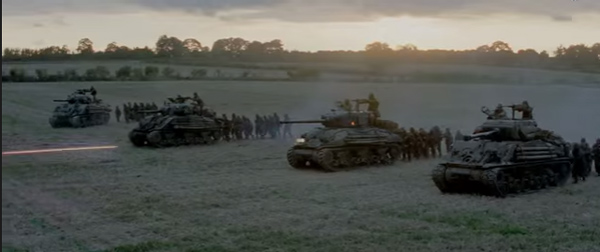
War films aren't the easiest to depict for a number of reasons. Depending on the era the war took place; the period had certain items. These items range from weapons, tools, clothing and vehicles. Not every item from every era exists nowadays. Even if they are still in mint condition, that does not mean it will be available for use. This kind of permission only happens when the people making the film really know what they are doing and have the respect to take care of it and use it in a way that not only shows it in its prime but glorifies it when it's over. The production behind this movie did exactly that The story follows Don "Wardaddy" Collier (Brad Pitt) and his small crew that end up accepting a reassigned typist turned rookie soldier (Logan Lerman). Together, they face incredible odds to break what's left of Hitler's Nazis.

Brad Pitt and his crew
As a war drama, this film has it. Writer/director David Ayer displays that he worked hard for what he puts up on screen. The realism is definitely illusive, with lots of blood, explosions and ugly ways to die. It'll make audiences wonder how does one accept such a horrific fate or if they survived, how does one cope with what they saw. The best sequences however do not belong to the gun shootouts in the field or urban terrain. The notable scenes belong to the Sherman tanks. Visually watching these behemoths literally punch holes in anything they launch their projectiles into is enticing to see. This also goes with the mechanics behind how trained soldiers operate and direct these monsters. The operations also do not always take place from the inside, to give a better idea of what the tanks try to accomplish, cinematographer Roman Vasyanov also shoots from a bird’s eye view. It's a different angle and it works in helping the audience understand. Vasyanov also gets other good shots of the urban and rural terrain, either by infantry POV or just showing the devastation. The sound quality is also praiseworthy; much of it sounds like what you would hear from the old Call of Duty games.

The acting is also very good along with most of each one's development as an individual. Although this isn't Brad Pitt's first war film, he continues to show that he can immerse himself in the role that he plays. Here, Pitt portrays his character as a softy but only when it comes to his men and Fury; everyone else he could care less. Surprisingly as much as he continues to trash his reputation, Shia LaBeouf demonstrates that he can act too and not like the punk character of Sam Witwicky from Michael Bay's Transformers (2007) sequels. For once, LaBeouf is a man and that deserves a thumb’s up. Logan Lerman's performance is a great representation of the relatable character for the audience. This is due to his combat experience and how he sees warfare. As time progresses, audiences will understand why his view on war changes. Michael Peña as "Gordo" the only soldier in the crew to give a little foreign flavor provides much of the dry humor (it is done appropriately) that is easily understandable for the situations the crew gets into. Finally is Jon Bernthal who plays a somewhat uneducated soldier but even with his lack of respect for certain things, he also exhibits some likeable humanity from time to time.

The only real blunders this movie makes, belongs to its writing. The characters are developed accordingly but backgrounds are left out entirely except for a few tidbits. Aside from Lerman's character, nobody has any kind of back story other than the crew used to have more tanks and first met in Africa. Okay that's when they met, but what about family at home? This would not only flesh out each individual but also give them a more human persona than just military guys who have nothing but their comrades. Then again, that may be the case but it’s never stated clearly. Also, how is that Wardaddy knows fluent German? And why couldn't subtitles be put for those moments when German was spoken? It's not like they were the most pivotal points in the film but it would've been nice to know what was being said.

The tank battles are truly something
Besides these two components, the only other part that felt sluggish and extended for too long was a dining room table scene. Here, Wardaddy and Lerman's character take some time to settle down in a German woman's house. There they have them make a meal and sit down to eat. At that moment, the rest of the crew comes up and sits down with them. This scene drags, and in some ways feels intentional while also being unintentional. My guess is that the intentional was supposed to emphasize the importance of enjoying the moments of rest soldiers had. However, the unintentional may be that it went on for too long of "enjoying the moment" and forgetting where the time went. I guess the editors (who have worked for other well respected movies) forgot to trim this scene. On the other hand, the music composed by Steven Price was a new listening experience. Price included choirs that highlighted the doom and gloom of the Nazis and the horrors of war for the Allied troops. When it came to the tank scenes, the instruments kept the scene very tense by using deep brass and percussion. Considering he's only scored a few films, score collectors should keep an ear out for his next entry.

Writer/director David Ayer's story omits character back-stories and has one scene that drags but everything else works wonderfully. The acting is solid by all actors, the music matches the period's tone and the tank warfare is highly engaging.

Points Earned --> 7:10

Friday, January 9, 2015

Insidious: Chapter 2 (2013) Review:

Most of the time if sequels to popular movies are not drastically changed, the movie will either perform just as well or slightly below. Even if reviews tend to be fairly low, some sequels continue to push onward. The very best example of this kind of feat is Michael Bay's Transformers (2007) franchise. Insidious: Chapter 2 (2013) is no different. After surprising and/or scaring many with his first entry, horror director James Wan returns to conclude where viewers ended with Insidious (2010). The fact that Wan and writer Leigh Whannell decided to continue the story from the previous film is definitely a plus. For some fans, they might think it wasn't necessary while others perhaps wanted to know how it went down. The question is, is it done well? Well, it requires more than a one-word response.

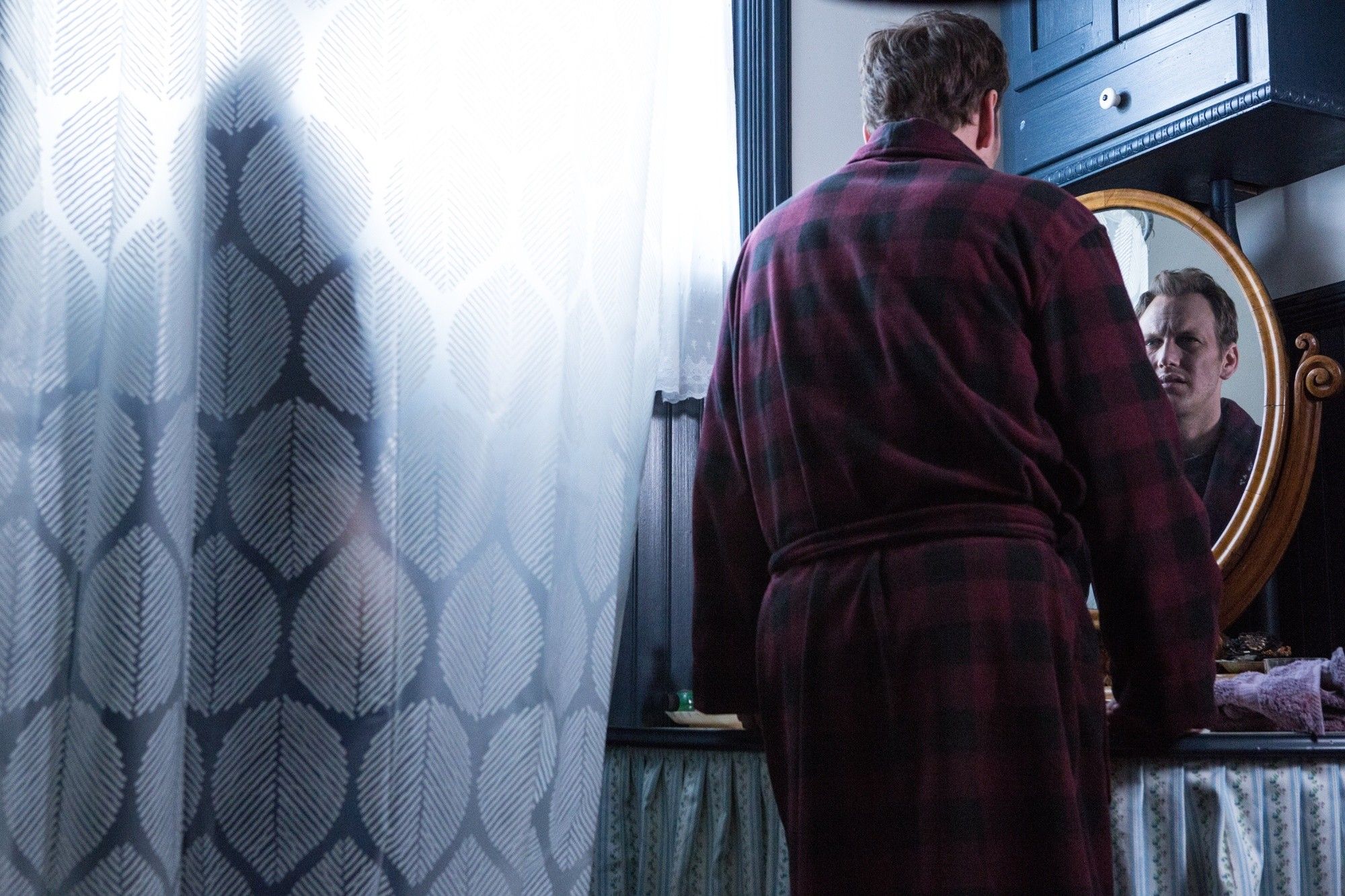
Not feeling yourself today huh?....hmmmm
can't imagine whyyyyy
Like many other sequels, the continuation does not stray far from where the last entry ended. Ideally, the main cast of actors return to reprise their roles. After finding Elise's (Lin Shaye) strangled body by her husband Josh (Patrick Wilson), Renai (Rose Byrne) begins to suspect that her spouse is not feeling himself. Not long after, Renai begins seeing more ghostly figures roaming around. Plus Dalton (Ty Simpkins), their son who can dream outside his subconscious, can also notice differences in his father's actions. Once Josh's mom (Barbara Hershey) becomes aware, she calls upon Elise's helpers Specs (Leigh Whannell) and Tucker (Angus Sampson) to find out what's wrong. If this were the plot itself, there would be nothing wrong. However, screenwriter Whannell begins to slip. The reason is that Whannell piles in too many variables for the story to actually hold. This results into a story that has promise but is overly complex for no reason.

One unfinished subplot to the story was the police investigating Elise's murder. Initially it starts off like it could go somewhere, however it ends up just going cold and shoots itself in the foot. Apparently the hands that strangled Elise was not Josh's hands. Ok so, who's was it? This attacker is revealed later on but not by the police, which brings up the question of why they couldn't accomplish that task. Or why wasn't Josh's handprints on Elise's neck. This is one set of loopholes that doesn't quite add up. Another is that somehow people can still bring physical objects with them into The Further realm. How is that? It's a bit hard to imagine that nonliving objects can dream out of their subconscious too. This flaw also occurred in the first movie, but this time it occurs a little more frequently, thus becoming more obvious.

There's also a slight change in the way the plot is executed. The difference is now the execution will act like a crime scene mystery where people look for clues to get answers. This requires digging through files and searching old records by breaking into abandoned infrastructure. Yet somehow, these significant acts do not have an effect on the characters. Are the police that oblivious? However, these errors mentioned are nothing compared to the next biggest head-scratching component to this movie. Whannell actually brings in the idea of time travel and crossing different dimensions in time. For some reason, it feels like there could've been an easier way to get over this hurtle. The idea here is that somehow The Further realm can now access the memories of other people. This in turn ends up explaining past events that have already happened. It's not that this added trait is bad, but it feels like a lazy way of just solving the problem instead of giving a reasonable answer. Reasonable doesn't have to mean logical because The Further concept itself denies that entirely, but it still should have reasonable laws that define it.

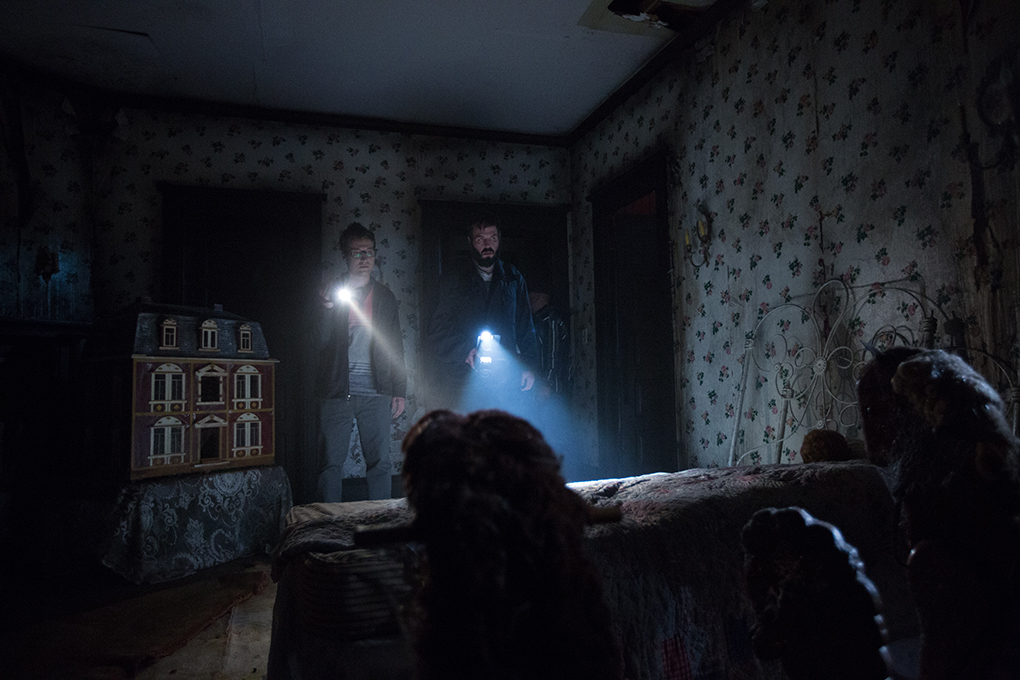
"Like, it's a creepy bedroom Scoob!"
The acting is still good in this installment. All characters are as they were and still have the same amount of charm as they did before. Patrick Wilson also displays his range of acting by showing what he's capable of. The special/practical effects are still noteworthy too. John R. Leonetti maintains steady cinematography and the ghouls continue to look frightening. With regret, the scares are not as strong as before. The way the story plays out, it'll evoke more chills than scares. An actress by the name of Danielle Bisutti plays a ghost and she is perhaps the scariest thing in the film (although she's not the main villain). Joseph Bishara again returns to score the music for the film and again it is effective when it needs to. This counts for either soft tunes or the stings. Bishara has a way of working the strings with no percussion so that they don't sound so typical for like so many other horror film scores. It can still entertain but not as strong of a performance.

There's no doubt that a lot thought did go into making a decent continuation of Insidious (2010). The acting, music, visuals and story are preserved but the screenplay forgets to cover up several of its flaws. Plus it includes methods of deduction that don't quite fit the genre like it should.

Points Earned --> 5:10

The Cabin in the Woods (2012) Review:

Joss Whedon is one of those talented screenwriters and directors many people consider to be a Hollywood name. Whether after working on several productions that redefined how people see movies or creating new characters and the universes they live in, Whedon has had wide success in the film industry. Most notably, the latest work that most people think of is Marvel's The Avengers (2012). Second in line was this little creature feature which gained a cult following for a very subtle reason. If anyone has seen it, all that they will say is "See it for the ending". Sadly, this reason alone should not exactly be it's best selling point, but this is how the filmed gained its momentum in popularity. Sadly, this film did have some promise but most of it was used in the wrong manner.

Geee,....this cabin oddly looks like the one from
The Evil Dead (1981)
The premise is the first thing audiences have to accept. The beginning starts off like many other isolation horror films where a group of young teenagers go out to a secluded area away from home for fun. As cliche as it is, Whedon and writer/director Drew Goddard turn the horror genre on its head in its early head start on why various horrific things happen. In spite of that once the ball starts rolling, the screenplay begins to collapse on itself for being so convoluted. The idea is just very foolish and may in fact annoy people to think this kind of story line is anyway beyond the writing of a goofy college student. It is because of its self-destruction that there is barely a build up at all and once it occurs, it may not feel like it was worth it. The only other notable component to the writing are the multiple references made to the horror fans. Night of the Living Dead (1968) is definitely one. Then there's The Ring (2002), The Evil Dead (1981), Hellraiser (1987) and even a Jurassic Park (1993) reference.

Even with all the inside nods to the audience and fans, the writing continues to miss. A big flaw is the focus on characters, mainly in comedy. There are numerous scenes where it is supposed to be funny but is viewed at from the wrong angle and therefor the viewer won't feel like laughing. It's like watching Tobe Hooper's The Texas Chainsaw Massacre (1974) and rooting for Leatherface and his family to kill everyone they come in contact with. It feels wrong and somewhat uncleanly. Delightfully although it too is a horror genre cliche, our main characters played by Kristen Connolly, Fran Kranz, Chris Hemsworth, Jesse Williams and Anna Hutchison do combat there opponents. Not much needed to say after that because this is a horror movie so people will die. Obviously. Speaking of which there is plenty of gore to behold. It's not consistent in its frequency of delivery but when it begins, it just keeps getting messier.

Want to guess which one dies first?
This, the special and practical effects for various creatures also mesh in nicely with their surroundings. This is also most likely credited to the cinematographer for getting some nice shots of the woodsy exterior around the cabin and various other places throughout the movie, especially later on. If there's anything else to talk about it is the music composed by David Julyan. The audio sounds like a horror score but it never engages the viewer to feel like they’re in one. This is partially because the writing and tone don't assist it in its cause. Instead, it goes for the usual string stings and creeping tunes but it never works. This isn't Julyan's first horror score either. Most likely it would have been much more effective if the script had the correct tone and used it the right way. So sadly it did not and instead, we get this weird stew of a soup.

It has decent special/practical effects, the appropriate horror, praiseworthy nods to other horror movies and even acceptable acting. But that's it, the screenplay messes it up entirely with a tone that was either unnecessary or directed to focus on the wrong characters. Plus when it’s all over, it almost felt like a waste of time more than a proper buildup.

Points Earned --> 4:10