Saturday, June 22, 2019

Oscar (1991) Review:

Parodies among various genres can be tough to pull off correctly. It must lightly make fun of the subject it is presenting without stepping on anyone's toes. It can be challenging, because swinging either way to an extreme will make the story not funny at all. It'll either insult the audience watching it, or it'll be just flat out boring. For Sylvester Stallone, comedy was never a strong point of his. In the few that he did partake in, nobody found it funny nor did he get positive recognition from it. However, there is one film that proves he could do it and this is the feature. Whether it's because he was involved with the right crew or if he found the right material to work with, both of these possible solutions are what helped in the viewing experience.

Stallone as "Snaps" Provolone
Stallone plays Angelo "Snaps" Provolone, an Italian mobster who is forced into a change in lifestyle when his dying father Eduardo (Kirk Douglas), asks him to go into a different profession. Soon after, "Snaps" moves into the banking business, but needs to convince a set of bankers first that he qualifies. The day of this meeting, he learns his accountant Anthony (Vincent Spano) wants to ask his daughter for her hand in marriage. Turning things even more upside down is learning that his daughter Lisa (Marisa Tomei) is pregnant but from a fired employee of "Snaps" called Oscar. All the while, the cops led by Lt. Toomey (Kurtwood Smith) is trying to pin "Snaps" for something illegal.

The script was written by Michael Barrie and Jim Mulholland, who would later write for Bad Boys (1995) and then the Late Show with David Letterman. Directing the feature was John Landis, famously known for his widely popular The Blues Brothers (1980). The writing to this feature only has one critical flaw and that is, it may move just a little too fast for some viewers. Mainly because the plot written above contains only some of the complexities to this story. However, this is also what makes it so intriguing to watch because of how many subplots cross, and yet they manage to all stay on track and resolve themselves over the course of the running time. That is impressive since many stories suffer from this kind of pitfall.

The comedic elements to this feature are a bundle of laughs. Stallone gives a great performance thanks to his googly eyed reactions, quick retorts and 4th wall breaking looks he gives to the camera. His henchmen led by (Aldo) Peter Riegert and Connie (Chazz Palminteri) go with the flow. These three are the ones who more or less fall into the parody genre since they have tropes that make fun of Italian mobsters. Marisa Tomei as Lisa is fantastic, being that she would later become Aunt May, it was a rather wonderful surprise. Even Tim Curry shows up for some fun as Dr. Poole, a teacher in linguistics to help "Snaps" get better at talking like a normal person.

"I Marisa Tomei,...will become Aunt May in the future!"
That and the rest of the supporting cast work well off each other. There's also appearances from Yvonne De Carlo, Don Ameche, Eddie Bracken, Art LaFleur, Martin Ferrero and Harry Shearer. For cinematography, the camera was handled by Mac Ahlberg. Having worked on other films like Hell Night (1981), Re-Animator (1985), House (1985), DeepStar Six (1989) and Robot Jox (1989), Ahlberg's work uses all of the settings to his advantage for clear and picturesque views. Lastly Elmer Bernstein composed the score for this film. Unfortunately the score isn't as much as some would hope, but it does fit the film very well. The film also utilizes older music too from other artists like Bing Crosby.

For parodies on the Italian mobster, this film is as good as it gets. The script has some sharp dialog and a very interesting plot. The actors all do a swell job, the camerawork is competent and the music is all easy on the ears. Just be sure to keep up with the pacing.

Points Earned --> 8:10

Sunday, May 26, 2019

The Lego Movie 2: The Second Part (2019) Review:

In 2014, Phil Lord and Chris Miller's The Lego Movie (2014) was a surprise hit and turned out to be one of the more successful movies of that year. Prior to that, the Lego brand had delved into motion pictures before, but none in this fashion. The animation was unique because it was not completely animated in CGI and the cast of actors assigned to the characters had a much bigger presence. On top of that, the overall message behind the film hit most families close to home being that many have experience playing with the brand before. Shockingly, getting a sequel to the big screen seemed to be the biggest challenge for the sequel, instead of actually making the sequel itself. Usually studios want one within two year’s time, but five is unorthodox. And like most sequels the freshness was not as new but it is still a very good continuation.

"Coffee?.....It's Decaf....."
With story still being written by original directors Chris Miller and Phil Lord, the story was bound to be handled adequately. The directing though was handed over to Mike Mitchell, who's mostly known for Sky High (2005) and Shrek Forever After (2010). Literally five years after the end of The Lego Movie (2014), what was once Emmet's world is now a dystopian future. In real life, it was Finn's (Jadon Sand) lego universe being invaded by his younger sister Bianca (Brooklynn Prince) and her creations. The world around Emmet (Chris Pratt) has become tougher including his girlfriend Lucy (Elizabeth Banks), except Emmet has not. When the leader abducts Emmet's friends, he decides to go after them, only to cross paths with someone who inspires him to become tougher. His name is Rex Dangervest (also Pratt).

For majority of the film, things remain as they were from the original movie. All the supporting characters like Batman (Will Arnett), Benny (Charlie Day), Metalbeard (Nick Offerman) and Unikitty (Alison Brie) return and continue the charm that made them memorable to begin with. There's also additions like General Mayhem (Stephanie Beatriz), Ice Cream Cone (Richard Ayoade) and Queen Watevra Wa'Nabi (Tiffany Haddish) who come from the universe Bianca creates with her Legos. Sadly, other characters from the original do not appear for long like President Business (Will Ferrell) and even Good/Bay Cop (Liam Neeson). And then there are random cameos like Bruce Willis playing himself, Jason Momoa playing Aquaman and Will Forte playing Abraham Lincoln.

The parts of the narrative that doesn't work are two things. First, is the fact that the feud between Finn and Bianca has been active for five years. That's a long time. The other issue being is the continuity between that time and how it connects to the plot. In some ways it makes sense, and in other ways not at all. However, aside from this the rest of the aspects to the film work really well. The animation still has that stilted look like it was almost filmed completely in stop-motion animation and yet it still has a natural visual appeal to it. This also goes for the live-action sequences where the audience sees how the real life decisions affect the lego universe it pertains to. Much of which have pretty cute ways of renaming the land that it references.

Rex Dangervest
For camerawork, Chris Ekstein provided his experience to this. While it wasn't abundant nor was it for long periods of time, the scenes shot work well with what is shown. For the musical score, Mark Mothersbaugh has provided his talent to this franchise once more. After creating the score to the original and to other films like The Lego Ninjago Movie (2017) and Hotel Transylvania (2012), the music is quite appropriate for this feature too. Thankfully a score got released for this feature but with even more content than the last film. This is always a great thing for any film score collector. And while there are some other songs sung throughout the movie, the most memorable is the "Catchy Song", which is bound to be one of the most positive ear worms to date. Nice job Mothersbaugh!

Aside from being slightly off the mark when it comes to how things work in this lego universe, all other components to the film work together like it wasn't an issue. Everything is solid for this sequel, from the actors, music, dialog, and animation.

Points Earned --> 8:10

Pirates (1986) Review:

Long before Disney's Pirates of the Caribbean franchise took center stage in mainstream films, Hollywood had tried to produce action films involving pirates before. Sadly, pretty much all of them were dead on arrival, including today's feature film. All managed to accrue massive budgets with little to no pay off when they were released theatrically. All of which also were much more light in tone and more about being a family friendly adventure. However, for the infamous director Roman Polanski, he wanted to make a film in the same vein (involving comedic elements), but also sought to use the usual tropes that are commonly associated with pirates. That's rare because not a lot of pirate films utilize these attributes, mostly because they just aren't very nice things to do.

"Jack Sparrow ain't nothing without me"
The story is about a pirate named Captain Red (Walter Matthau) and his first mate Frog or Jean-Baptiste (Cris Campion). While out at sea, they happen to cross paths with the Neptune vessel, owned by the Spaniards. Aboard is Don Alfonso de la Torré (Damien Thomas), Boomako (Olu Jacobs) and María-Dolores de la Jenya de la Calde (Charlotte Lewis). Upon being captured by the Spaniards, Boomako shows Capt. Red and Frog a special artifact on the ship located in the armory. With that Capt. Red makes it his mission to take over the ship and take the treasure for himself. All the while, Frog and Maria begin having feelings for each other. The script was written by Gérard Brach and Roman Polanski and for the most part the film entertains quite well. For just a random adventure of two main characters, a lot happens.

The are two weak areas to the script though. First is the relationship Maria and Frog have for each other. It's not the strongest of chemistry's, neither does it completely get fleshed out. It is definitely not the same magnitude as Elizabeth Swan and Will Turner. The other issue is the highly attractive artifact Capt. Red has his eyes fixed on. At one point, the captain of the Neptune states that it holds a curse, almost like the ark of the covenant from Raiders of the Lost Ark (1981). But nothing comes of it,...so what was the point of even bothering to mention it? Aside from this though the rest of the film sticks to what it does best. While Walter Matthau is no action star nor are the action sequences themselves choreographed like they are today, the adventure is still there and so is the energy.

There's swashbuckling sword fights, blood, musket shoot outs and all kinds of sneaky things going on. This specifically is where the comedy works too. Being that Walter Matthau has comedic chops, his facial expressions and reactions to various situations will produce the needed levity to all kinds of situations. Even the other actors like Damien Thomas, Charlotte Lewis and Olu Jacobs have a couple scenes that features them. It's also quite amazing just how detailed everything is when it came to the practical effects. The costume design is very authentic and the way the actors play the royal Spaniards is downright uncanny. As compared to Matthau who plays it equally as memorable but to the exact opposite that the others play their roles.

Charlotte Lewis
The set pieces are astonishing to look at being that nothing was green screen at all. The Neptune ship itself is massive. This is depicted exceptionally by Witold Sobocinski, the films cinematographer. The sweeping shots of the ship and ocean surrounding it is as real as it comes. Not to mention the land scenes as well. Perhaps the most impressive supporting component though was composer Philippe Sarde's musical score. While his credits rarely delve into the domestic territory, this collection of tracks is definitely a film score enthusiast should have. There may not be a reoccurring main theme for this film, but the tunes created for each scene is charismatic and appropriate to the situation without losing its character. A great selection of pieces.

The script may not be fully complete with a couple subplots falling short and the fact that it's directed by Roman Polanski. However, the cast of actors, the fantastic cinematography, the action, the comedic scenes and music all make up for that with a pirate film that has gone widely forgotten.

Points Earned --> 7:10

Driven (2001) Review:

Fast cars and racing is usually an exciting activity. There's lots of energy surrounding the sport and octane only amps it up to intense levels. That's the kind of feeling a viewer should get when watching a film related to such an activity. At least, that's what one would think. It can be confusing when the opposite occurs because it just doesn't seem to fit at all. In that case someone should have said that to the people behind the production of this movie. Sadly, the early 2000s was not kind to Sylvester Stallone who stars in this feature. And this one is quite possibly the reason why nothing worked out right, because, this film is just boring. Kind of shocking when it's directed by Renny Harlin, who has worked with Stallone before.

"Do you think I look believable enough?"
The story revolves around Jimmy Bly (Kip Pardue), a rookie racer who's making his way up to the big leagues and may have the chance at winning the world competition. Managing him from behind is Carl Henry (Burt Reynolds) and his brother Demille (Robert Sean Leonard). Looking to win as well is Bly's competitor Beau Brandenburg (Til Schweiger). Both Brandenburg and Bly begin to lose focus of their goals when they get caught up between one girl, Sophia (Estella Warren). Noticing the slips, Henry calls in Joe Tanto (Sylvester Stallone) to get Bly back on track before he ruins his upcoming major break. The screenplay was also written by Stallone, and whatever he did, did not make much sense at all. The focus of the story is very much generic and bland.

Aside from this main thread, Tanto also has a subplot going on about him between an old flame Cathy (Gina Gershon) and a reporter he begins talking to named Lucretia (Stacy Edwards). Unfortunately, this doesn't really go anywhere because the old flame already has a new main squeeze; Memo (Cristián de la Fuente). The biggest issue with this film's story is the pacing. The movie isn't overly long in reality but majority of it feels like an eternity. Renny Harlin should know better, but the story just drags. Most of the main leads do not help in making it any more watchable. The only character to actually feel worth rooting for is Til Schweiger's character. Partly because he's the one has an interesting arc, while the others don't. Kip Pardue is as lifeless as they come and some of his character's decisions make no sense.

It's even worse when veteran actors like Burt Reynolds and Sylvester Stallone are not even a highlight to the picture. They really have no charisma to their characters at all, which is sad to see. The love triangle between the Stallone and Pardue characters are cliché and overdone. It's just baffling to think this is still a thing. Not even the racing scenes are that entertaining. While there is some tension on what'll happen to certain characters, much of it is flat and random. Again, this is disappointing when Renny Harlin and Sylvester Stallone both have worked together and have done action before. There are crash and burns, but it has no weight almost all the time.

Kip Pardue & Estella Warren
Then again, half the time those scenes weren't very clear because the editing team on this feature butchered it so haphazardly. There are scenes in consecutive order where they are different angles of the same shot. It is bizarre to watch. Thankfully the cinematography shot by Mauro Fiore looked professional. Fiore who would also be a cameraman for Get Carter (2000), Smokin' Aces (2006), Avatar (2009), The A-Team (2010) and Southpaw (2015), makes the scenes filmed look decent enough. This doesn't take away though from composer BT's stock score to the film. Even if BT has the skills to produce complex synthesized music, here it's not very prevalent. Oh well BT, maybe film scores aren't your thing.

Cinematography and literally one character stand out as the things to like with this film. The action isn't anything special, the cast of actors are not impressive with their performances and the story is a giant snooze fest. That's rough considering it involves high speed vehicles.

Points Earned --> 3:10

Saturday, April 27, 2019

Robot Jox (1989) Review:

People have always painted the future as either bleak or bright. No matter what though, the thought of the future having robots involved has always been a thing. Whether they’re being used as tools by man to help them do things or just coexisting, robots will continue to remain as a staple of the future. However, the idea of using robots to fight in the place of humans is an even smarter idea seeing that war has plagued mankind for centuries. If the fight could be isolated to just a single match that would depend on the success or failure of another party, then the war would be avoided altogether. This is at least the idea that was brought to life by Stuart Gordon for this feature and it does have some replay value.

Mecha suits before they were a big deal
The story by Gordon and script written by Joe Haldeman is about a group of individuals called Robot Jox in an apocalyptic future. Where superpowers win wars by having people fight in giant robot suits. Whoever wins, wins for the place they represent. The premise itself sounds very entertaining and is an interesting way of settling major combat. Fighting for the Americans is Achilles (Gary Graham), while Russia is fought by his sworn enemy Alexander (Paul Koslo). As Achilles enters the end of his contract with his 10th match coming up, he plans to make it his last. All the while, it seems that important information is leaking out about secret weapons being used in the robot suits. Supporting Achilles is his boss Tex Conway (Michael Alldredge) and weapons developer Dr. Matsumoto (Danny Kamekona).

Gordon's premise for the film is an intriguing and creative one. Feeling like a test film for Guillermo Del Toro's Pacific Rim (2013), the setup is almost the same. There are also feels to be inspiration from Japanese mecha suit animes. To see it performed in live-action though is a completely different spectacle. This is a separate topic of discussion though. While the setup looks good, the main cast isn't as magnetic and the story execution is unfocused. Achilles also meets Professor Laplace (Hilary Mason) who is developing genetically modified people known as tubies. The one standing out among them is Athena (Anne-Marie Johnson), where Achilles and her form some kind of connection. But this is where it ends, because it never goes further than that.

This unfortunately leaves a couple of subplots left unresolved and the leads lacking character development. Gary Graham as Achilles is okay at what he does. But as a romantic lead, not so much, especially when his co-star looks much younger. Not sure what Haldeman was thinking for the script on this but he didn't go to write for any other movies after this. Paul Koslo does make Alexander a fun villain to watch. The visual aspect entertains too. When Achilles and Alexander are in their robot suits fighting, the stop motion animation is really enjoyable. Being that it's an older special effect, it really gives the action sequences much more energy and character. Seeing the giant pieces of machinery use all kinds of tricks and mechanical weapons looks great.

"Never thought I'd have such a ridiculous career....."
These components also go hand in hand with Mac Ahlberg's cinematography. With other pictures under his belt like Re-Animator (1985), House II: The Second Story (1987) and Deep Star Six (1989), Ahlberg did a fine job here too. The mixing between models and actual large scale sets is practically seamless. Then there's the musical score provided by Frédéric Talgorn. While Talgorn is not as well known in the mainstream realm, his music is just as exciting as if he were. Not only does he create a main theme for the feature, but it's all organic. This is rare considering many composers resorted to synthesizers during the 1980s. It's very well composed and it helps all the more bringing in some kind of emotion into the story.

The premise to this feature is fun, but the characters aren't fully fledged out. Graham and his co-stars try, at times though they seem confused. Several supporting elements to this film work really well though. The premise sounds fun, the special effects are worked in competently and the music is a nice surprise.

Points Earned --> 6:10

Sunday, April 14, 2019

Hellraiser VI: Hellseeker (2002) Review:

After the final theatrical installment of Clive Barker's Hellraiser (1987) series with the release of Hellraiser IV: Bloodline (1996), everything went to home video release. While this usually means a decrease in quality, Hellraiser V: Inferno (2000) wasn't as bad as it could have been. For a home video release, it actually had a slight advantage over the film before it and Hellraiser III: Hell on Earth (1992), because of how plot was executed and the direction headed by Scott Derrickson. Even for a script that wasn't initially going to be related to the series, the way it was used wasn't perfect, but it did use them differently as opposed to being totally wasted. It's unfortunate though, because this film had larger potential and missed the opportunity.

Kirsty & Trevor
Just like Hellraiser V: Inferno (2000), the script was originally going to be just a crime thriller. However, it was decided to jam in Barker's Hellraiser characters again. Except this time, the insertion of them into the story was not done well. Trevor (Dean Winters) and Kirsty (Ashley Laurence), from the first three films, are a couple who get into an accident. As Trevor wakes up in the hospital, he discovers Kirsty is missing. Determined to find out what happened to her, he begins talking with Detective Lange (William S. Taylor). All the while, Trevor continues to suffer from weird hallucinations and headaches. The screenplay was written this time by Carl V. Dupré (Detroit Rock City (1999)) and Tim Day in his writing credit debut. Even with that said, it's surprising what these two initially tried to do.

The fact that both Dupré and Day both tried to tie back this video sequel to the original film is commendable. They actually tried to explain a little more to Kirsty's background after the events of the first movie. And with Kirsty missing, the mystery of the plot is intriguing at first. Rick Bota, the director to this feature also tries but this is where the effort ends. While the premise is fine, the use of its title characters is widely undercut. Doug Bradley as Pinhead, our favorite lead cenobite and Ashley Laurence are barely around for the feature. The horror aspect to the film is there but it involves very little of the cenobites. There's blood, gore and other usual gruesome things but it all can be dreamed up. Nothing unique about it.

Making things worse is that the lead, Dean Winters. Mr. Mayhem himself from Allstate's Insurance commercials is very bland. Nothing he says stands out or has one change in vocal pitch. He just walks around confused, thus leading to the audience being confused. For once, he's in the midst of the mayhem instead of actually causing it. The character who is the most interesting though, is William S. Taylor because he's the one who outputs the most energy into his character. Taylor was also in The Fly II (1989) so he does have some horror film experience. Special effects weren't awful for home video release. There'll always be some areas that don't look as good, but mostly it holds up. Thankfully otherwise that would be even worse.

"Mmmmm,....acupuncture...."
The rest of the visuals aren't that good though. The editing by Anthony Adler and Lisa Mozden wasn't enjoyable. There were way too many cuts in the same scenes. Some of which were the same shot right after another. There's no point to that. The camerawork by John Drake isn't much more notable either. There's not a large variety of locations and much of them are rather forgettable. Apartments, bus interiors, and police departments are really the only places featured. Thankfully music was a small saving grace thanks to composer Stephen Edwards. By no means is his work a match to prior scores, but he does try and there are a couple themes heard that go with Pinhead and Trevor's. Edwards also composed the score to Bloodsport II (1996).

As a semi followup to the original film years later, it's apparent someone had the right idea. Unfortunately, that's it. The music and the premise are okay, but the with main stars barely around, the lead being highly dull and the camerawork being rather uninspired, this direct-to-DVD sequel is the least entertaining thus far.

Points Earned --> 4:10

Sunday, April 7, 2019

Twisted Pair (2018) Review:

Neil Breen has come a long way since his debut back in the mid-2000s. While his features Double Down (2005), I Am Here...Now (2009) got him on the road, it was Fateful Findings (2013) that got people talking about him. Since then, his reputation has inflated to bigger proportions. His next film Pass Thru (2016) was an even bigger success, which has led us to this. Twisted Pair (2018) is by far Mr. Breen's most ambitious project to date. It's apparent that Breen truly has a passion for what he does, but his ambition can only go so far. Every single one of his features have all had similar topics of discussion and this one is almost no different from before. The only real change displayed is the visual style, but that's it.

Neil Breen's new visual effects
The plot to this film of Breen's is about as nonsensical as the rest that came before it. Neil Breen plays a set of twins Cade and Cale Altair. Both were given extraordinary powers at a young age. One was able to excel with their power, while the other became corrupt with it. One does his best to help others, while other acts as a vigilante to "help" others his own way. The rest is very much the same kind of subplots, There's drama between the twins and their respective significant others, there's deception among the public with wealthy figures and super human feats shown. These are all the usual tropes Breen has resorted to for all his other features and it's beginning to get old. What made Fateful Findings (2013) entertaining was that it felt like the point of which Breen perfected his talent of bad film making.

Here though, it feels like he went into hyper mode and amplified it to where the spectacle is just boring. With similar things happening in every film he makes, the charm is beginning to wear thin. The bland acting by the cast is no longer amusing. About half the dialog is Neil Breen doing voice over narration and even some dubbing over certain scenes he very well could have just recorded initially. The rest of the cast is even more forgettable. Sara Meritt who plays Alana, the good brother's wife is no different from past love interests. And Denise Bellini who plays the agency director in charge of the good brother for his missions is dull. There's even a muse (Ada Masters) who flies around spreading magic dust. For what reason, it's never given.

Padding is still as atrocious as usual. There's loads of scenes that drag on with pauses longer than needed. Breen's script repeats several lines throughout his film. In consecutive order no less, so that gets annoying. There's scenes with people doing the exact same action they were doing earlier or later in the story. Responses don't feel connected or timed properly with the events going on around them. It just feels extra lazy with all the rip-offs Breen pulls from his other films. The story also has trouble trying to put together what antagonist to focus on. The evil twin or the actual character who's evil enough to have his voice distorted almost to the point where their lines are inaudible. The visuals are really the only strong point to this feature.

"Look how convincing my facial hair is?.......not"
Of all of Breen's features, this has the most action in it. And while the action itself is also very lame, it's the first time he has actual explosions going off. John Mastrogiacomo is finally serving as Breen's cinematographer and for the most part, it is shot decently. Being that this is Breen's first film with no day scenes, it is certainly a different setting. There are no desert scenes and nothing involving computers surprisingly. This is also Breen's first time using green screen effects, which in some cases look better than expected for his regular standard of filming. Music though was still disappointing with much of the cues being cycled over and over with hard bass blasts that make scenes more intense for no reason. He's obviously trying but his focus is all off.

It may be Neil Breen's biggest film production, but the interior quality of it is possibly more lackluster than his prior efforts. There's less unintentional comedy and more boring things. The only aspect that stands out are the visuals because it's never been done in any of his other films.

Points Earned --> 3:10

Frida (2002) Review:

It truly is an odd sight to get to understand the history of someone's life of someone so famous. It is the public perception that all famous individuals live a life of luxury and no concerns. It is far from truth because many artists have similar issues and sometimes in larger volumes. Frida, a Mexican artist who is known for her work is celebrated by many and yet her back story of how she became what she's known for is so saddening. Being an artist is not always an easy thing like it is portrayed to be. But the crew involved with making the biopic of this Latin American woman really put in the time to make this film as good as it is. It still has an issue but not compared to the rest of its strengths.

Molina & Hayek
Basically covering Frida's view of life before and after her turning point accident, the script has lots of great details to cover. It's surprising too when looking at who helped write the script. Clancy Sigal and Diane Lake are two of the four involved who had no history before or after working on major films. This usually hits a red flag. However, the other two, Anna Thomas and Gregory Nava had worked on projects and the fact they were able to all put it together deserves applause. Julie Taymor serves as director to this feature, which is also rare recalling how many female directors were around. A few years before Taymor also directed Titus (1999), which received strong reviews too.

The cast of actors hired to play their parts do a great job at diving into their roles. Salma Hayek as Frida very much captures the essence of the artist in multiple ways. From the visual look, actions and dialog. Viewers will really sympathize with her role seeing the kind of roller coaster her life becomes. Playing her right hand man (literally) is Alfred Molina as Diego Rivera, Frida's real life on and off lover. Not only does Molina show what kind of person Diego Rivera was, but viewers may also sympathize with him too as wildly unpredictable he ends up being. Both Molina and Hayek have great chemistry together and display it well on scene. There's one part to them that doesn't get much clarity though.

Character motives seem a little out of place at times. This occurs mostly for the two leads, but it also happens with some other supporting characters. Not much detail is given so it doesn't make a lot of sense as to why a certain character will make a decision on something. It's almost like it was impulse only. However, the supporting actors are great to watch too. Frida's father Guillermo (Roger Rees) plays a likable parent for his open mindedness. Valeria Golino plays an ex-wife of Diego Rivera and even talks to Frida about various topics. Golino was also in Rain Man (1988) and Escape from L.A. (1996). There's also appearances by Edward Norton, Ashley Judd, Mía Maestro and Geoffrey Rush.

Frida's actual painting
The visual look of the film is also well done. Shot by Rodrigo Prieto, a native to Mexico, handles the cinematography. The film contains much of what Mexico looks like including some very old architecture. There's even a stop motion animated scene that reminisces to that of something Tim Burton or Tom Sellick would like. The music is also another well accomplished component. Featuring a mixture of Latin singers and a score by Elliot Goldenthal, the soundtrack to this picture is elegantly structured in a way that really flows well. Goldenthal's transition cues blend nicely with the scenes until the Latin singers take over. All in all very well represented.

Watching this film will show fans of the artist the kinds of issues Frida had to deal with on a frequent basis. With the right actors, music, writing and visuals, viewers will come out knowing what kind of tough cookie she was.

Points Earned --> 8:10

Sunday, March 24, 2019

Dark Blue (2002) Review:

Officers of the law are supposed to be and created for a means of protection. To keep the innocent safe and put away the corrupted. And while that is majority of the case, there's always one bad apple who fouls it up for everyone else. When these kinds of reports hit the news, it becomes harder for the public to trust those who sworn to uphold the law. However, in cities where crime is up far beyond the capabilities of the local departments, judgement can get skewed on what's right and wrong. For James Ellroy, best known for his novel L.A. Confidential, cops seem to be a common theme in his works. While according to him his written work was not adapted at all here, it sure fits his mode of thought. The product here is definitely an entertaining piece because scenarios like this can happen in the real world.

"Alright guys,....how long we gonna be waiting here?"
The plot is about a special unit within the L.A. Police Department that work to take out all the bad people in town. The problem is, their method of getting the job done isn't always proper. Kurt Russell plays Eldon Perry, a detective who grew up in L.A. learning from his Father how to be a cop. Working under Jack Van Meter (Brendan Gleeson), Perry will do what it takes to get the job done. Under Perry is new recruit named Bobby Keough (Scott Speedman) who is still learning what to do. However, after an encounter gone wrong involving two perpetrators Gary Sidwell (Dash Mihok) and Darry Orchard (Kurupt), another official named Arthur Holland (Ving Rhames) is on the tale of both Meter and Perry. All the while, Keough is having a fling with Beth Williamson (Michael Michele) and Sally (Lolita Davidovich), Eldon's wife is having second thoughts about their marriage.

Writing the screenplay to this feature was David Ayer, who also wrote for Training Day (2001) and The Fast and the Furious (2001) at the time. For not baring any relationship to Ellroy's work, Ayer's interpretation is well covered for the most part. The story is compelling enough to believe both sides of the argument. While it may seem like putting away people who committed crimes but not for that reason seems validated, it isn't justified in that way. People should go to jail for the crime they committed, not for someone else's. It's this kind of conflict in morality that helps develop several of these main characters. It also displays to the audience how rough it can be choosing sides when it feels like both sides are right in their own way. Ron Shelton heads this picture and his direction is fairly focused aside from one plot point that gets dropped. Shelton's also the director of White Men Can't Jump (1992) and Cobb (1994).

The cast of actors brought on for this feature perform well too. Kurt Russell as usual does his very best to embody his role to the fullest. While he seems rough around the edges, he does have his softer side. Scott Speedman and Michael Michele work well off each other too. Of the two though, Michele is the stronger half showing great emotion in her role. Then there's Gleeson's character who really puts the command in his orders. As for Ving Rhames, a little more focus could have been put on him. Rhames plays his character calm, cool and collected even with other people breathing down his neck. Even Lolita Davidovich and Khandi Alexander who play Eldon and Arthur's wives, do an adequate job considering they fit in just for sub plots. It can be a real challenge to fit all the characters in for enough time, but this was done fairly well.

Ving Rhames
Supporting components to the story did their job. Since this was more of a thriller, the action in this film is not as abundant. So for those who are looking for some energetic action, they might be disappointed. However, the cinematography shot by Barry Peterson works for the setting. While urban terrain usually ugly and unappealing, Peterson is able to give the setting scope and depth showing just how out of control L.A. has gotten. Peterson would also shoot for 21 Jump Street (2012) and Central Intelligence (2016). As for music, composer Terence Blanchard took the lead. Incorporating all kinds of instruments like flute, drums, organ and bass guitar, the sound is not from the typical film score. This is what makes it sound all the more unique. Occasionally a trumpet is included as well to emphasize a more dramatic scene. Well done.

The action and one part of the story is weak but that's it. The story is an interesting look at corrupt and loyal officers of the law and how it affects society. The main cast do a good job, the camerawork matches the mood and the music stands out from many other film scores.

Points Earned --> 7:10

Saturday, March 16, 2019

Halloween VI: The Curse of Michael Myers (1995) Review:

Watching the deterioration of a franchise that began so strong is quite disheartening. John Carpenter's Halloween (1978) and following sequel of Halloween II (1981) were films that told a tense but gripping story. After the flop that was Halloween III: Season of the Witch (1982), producers wanted to turn back to the Myers story, thus leading to Halloween IV: The Return of Michael Myers (1988) and Halloween V: The Revenge of Michael Myers (1989) revolving around Laurie Strode's daughter Jaime. Unfortunately, the attempt wasn't enough with the last two having a bunch of continuity issues and other subplots being introduced without exploration. This entry really doesn't conclude that.

Paul Rudd as Tommy Doyle
It's six years later and viewers see that after the events of the last film, Jaime Strode (J.C. Brandy) is back but now with a newborn child. With the same cloaked villain from the last entry on the chase, she flees to get away from not only them but Michael Myers (George P. Wilbur) himself. Meanwhile, more Strode relatives such as Kara (Marianne Hagan) and her son Danny (Devin Gardner) move into the house that belonged to Michael Myers, however they don't know that. Next door is Tommy Doyle (Paul Rudd) who ever since the first film has been studying Michael to understand him better. At the same time, Dr. Loomis (Donald Pleasence) is requested from colleague Dr. Wynn (Mitchell Ryan) to come out of retirement.

Written by Daniel Farrands, the screenplay to this sequel tries to make sense of the confusion but fails in almost every way. While the story itself did go through several re-edits, it still suffers from lack of clarity. The unknown cloaked man is touched upon now as well as the new thorn tattoo that was featured in the last film. But this doesn't really solve the haphazard story. Kara's son Danny sees visions of the cloaked figure but the reason for them influencing him isn't explained. Nor was it really explained as to why exactly Michael Myers is involved with all this. It's just very muddled and adds unnecessary complexity to it all. The film was directed by Joe Chapelle, who has had no experience with the franchise prior to this. Sounds about right.

Of the characters, the only two to come out seeming somewhat likable was obviously Donald Pleasence as Dr. Loomis since he's been at it since the beginning, and Paul Rudd as Tommy Doyle. Everyone else from Marianne Hagan, Devin Gardner and even George P. Wilbur don't really don't stand out. They're just actors playing characters that feel highly remote to the story at hand. It's actually more surprising Paul Rudd even has a role in this film considering where he is now being Ant-Man and all. The fact that his and Donald Pleasence's role have a connection to the beginning is what makes it more interesting. Yet, that's really all the audience has to go on because everything else is so remarkably dull.

"Hmmm,....it needs a little straightening"
For a horror film, it too is a bumbling mess. The violence and gore is fine if weren't chopped up so much by editor Randy Bricker. Having all kinds of flashing lights and random scene cuts is annoying. Hopefully his skills improve. The cinematography by Billy Dickson isn't that great either. Having much more experience filming for TV movies, his camerawork isn't that special nor does it even try to emulate past DPs from other sequels. Thankfully music is a slight bit better. While the re-edited score contains guitar rips from Paul Rabjohns (most likely), Alan Howarth returns once more to score the film. And while it's not as great as his past scores, it still manages to hold up.

With the second story timeline coming to a close for the silent killer, this entry in a string of sequels neither concludes all of the questions from the past film nor answers the new ones it creates. While the gore, music, Paul Rudd and Donald Pleasence remain the highlights, the rest of the cast is boring, the cinematography is uneventful and the editing is obnoxious.

Points Earned --> 4:10

Sunday, March 10, 2019

From Paris With Love (2010) Review:

Action fluff pieces are workable projects. They may not always produce a large volume of devoted followers, but they do have their own set of admirers. For actor John Travolta, who has had his fair share of ups and downs, he has also shown to be a versatile performer. Playing in musicals, drama, science-fiction and action films, Travolta has been all around. But like many other actors, Travolta has also chosen certain roles that don't seem either plausible or just a good match. This film however seems to disprove that to some degree. Produced by a team of people who have worked with John Travolta and Luc Besson's wife to boot, this film is an odd mix of comedy and action set in the spy genre. The thing is, even with that said, it's still a mindless shoot 'em up.

"Do I look like I belong here?"
Written by Adi Hasak, who hadn't penned a script since Shadow Conspiracy (1997), surprisingly was able to create a story not too derivative for such a long hiatus. The plot involves James Reese (Jonathan Rhys Meyers) a fresh employee to the US Ambassador of France, seeking to ramp up his profession. He recently gets engaged to his fiancé Caroline (Kasia Smutniak) only to be assigned on a top notch job that may change his life for good. The job is stopping a suspected terror plan to happen at a summit and the only person who can help is a man named Charlie Wax (John Travolta). Wax who's from the United States, follows no rules and is quite unreasonable, yet makes the time to snort coke and enjoy occasional fornication. Sounds like a really nice guy to work with.

For what it's worth, the whole concept behind the story is absolutely ludicrous. Why on earth would the US Government hire someone like Travolta's character to do jobs like this? Viewers are not let in on Charlie Wax's background so there's really no understanding as to how he got the way he is. Sure, films like xXx (2002) is about as equally silly, but, viewers knew where the character was coming from. Whether it be Darius Stone or Xander Cage. Where is Charlie Wax from, profession wise? Why is his name Wax, because of his head? The same could actually be said for Johnathan Rhys Meyers' character too. In the run time, certain pieces of information are revealed that will have the viewer asking, "Why hasn't he learned this yet"? Some of these instances involve very simple things, which seem so obvious when seen in hindsight.

While these are critical aspects to the character depth, the rest of the feature works okay. While Charlie Wax and James Reese are nowhere near being a great match or a memorable action duo, they do have some chemistry on screen. James Reese does receive character development while on the job with Wax. That and the dialog exchanged between the two can be funny at times seeing that Wax is serious but takes it easy doing his work. While Reese is more uptight and unsure of how to do what Wax does. The action also entertains. Being that it's rated R, blood is readily available to flow, but really it's just Wax and his foul mouth. Some of the more energetic scenes though involve gunfights, hand-to-hand combat and various other loud weapons.

Caroline
With director Pierre Morel heading this feature, it's understandable why the action is suitable. He was the one who directed Taken (2008) which was heavily praised for that reason. For visuals the cinematography was not that engaging. Michel Abramowicz who also worked on Taken (2008) and would also film for The Thing (2011) didn't provide a whole lot to look at. Most of the terrain is urban and in cramped quarters. Not a whole lot is seen. Music on the other hand was adequate. Composed by David Buckley, the score incorporates a blend of synths, guitar and percussion for most cues. Though sometimes a trumpet or piano is highlighted for softer moments. While it's not the most memorable score, it is certainly better than his score from Parker (2013).

An action film that's more fluff than anything else, John Travolta and Jonathan Rhys Meyers can be interesting leads, but the writing behind their characters are underdeveloped. Even with uninspired cinematography though, the action sequences are fun, the chemistry between the leads work and the music is sufficiently engaging.

Points Earned --> 6:10

Sunday, March 3, 2019

xXx: State of the Union (2005) Review:

When Vin Diesel starred in xXx (2002), the concept behind it was similar to that of The Fast and the Furious (2001). The Fast and the Furious (2001) was to try and popularize the craze of underground street racing. The early 2000s was also the time where things were trying to be emphasized as the next generation of "whatever". xXx (2002) was about trying to popularize stunts and extreme sports, which was what the character Vin Diesel played was all about. And while the film itself was loud and stupid at times earning middling reviews, it was granted a sequel. However, Vin Diesel did not return. Thus a last minute recasting was done and a short was produced titled The Final Chapter: The Death of Xander Cage (2005) showing exactly that. Was it the best call? Ehh,..no but the following execution probably was more the issue.

Ice Cube, Xzibit & Scott Speedman
After being ambushed at their headquarters, Augustus Gibbons (Samuel L. Jackson) and Agent Shavers (Michael Roof Jr.) recruit Darius Stone (Ice Cube) as the new "xXx". Being that Stone had a history in the military, Gibbons felt like he'd be a good fit to take over. The problem is, there is a concern that a mole within the president's cabinet is secretly plotting a coup. The person in question is George Deckert (Willem Dafoe) who serves as secretary of defense to the president (Peter Strauss). Writing wise, the script is very basic and not that interesting for a couple of reasons. One being that having Willem Dafoe as the antagonist is not even surprising. He has played so many other villains in the past, his performance doesn't stand out.

The script for this sequel was the debut for writer Simon Kinberg, the same person who would go on to write for X-Men: The Last Stand (2006), X-Men: Days of Future Past (2014) and X-Men: Apocalypse (2016). Sadly, as a first for Kinberg, it shows. For one, the motivation for Willem Dafoe's role feels very unclear. General Deckert shares a past with Gibbons and Stone, however what specifically Deckert wants to accomplish as an end goal is muddled. That and the other being that the dialog relies too heavily on referencing the first movie when this story acts as a completely different animal. The style and themes presented in the picture don't involve anything related to sports and acrobatic stunts. Because Stone is from a military background, there's more military type action sequences involved. Yet it still tries to be like it's the same xXx.

Directing this feature was Lee Tamahori, best known for Die Another Day (2002), another spy film and Once Were Warriors (1994). Sadly, with this experience, he doesn't seem to know how to transform it into a spy film. If anything it just boils down to a standard action romp and nothing more. The action is entertaining though. Anything using a tank to punch holes through thick walls is always fun and while some other scenes are entirely unrealistic, it is entertaining. Even Ice Cube, Michael Roof Jr. and Samuel L. Jackson do their best to keep scenes interesting. It's just the rest of the cast like Scott Speedman, Xzibit, Sunny Mabrey, Nona Gaye and John Gleeson Connolly who don't add much to it. All play characters that are just there for convenience of plot.

"Do I look evil enough?"
Visuals are also a mixed bag. The special effects are a hit and miss at times. Being that it's from 2005, depending on the scene it can look out of place. Though the cinematography by David Tattersall was decent. Capturing as much as possible, Tattersall made sure to include as much action as possible, whether it be on a train, aircraft carrier or in the white house. Tattersall was also credited to The Green Mile (1999), Star Wars: Episode I - The Phantom Menace (1999), Star Wars: Episode II - Attack of the Clones (2002) and Star Wars: Episode III - Revenge of the Sith (2005). As for music, Marco Beltrami replaced Randy Edelman as composer. And while there is a main theme, it's not as memorable as Edelman's. However, seeing that the lead has changed and is more rough, Beltrami's sound fits more with this version.

While there are still some strong components to the feature, the sequel is regrettably not as good as the original. Ice Cube and the returning cast try, but the dialog relies too much on reminding viewers of the first film. The villain's motivations also are a bit hazy as well as some of the special effects.

Points Earned --> 5:10


Sunday, February 24, 2019

Clash of the Titans (2010) Review:

Remakes in general have a pretty big hill to overcome. Whether producers, actors and studios alike think they're doing the fans a service, it is still very likely approval will be low. A remake of an original work can't have tributes alone to satisfy viewers. But this is also the problem, a remake has to do something different from the original but also not completely alter everything, or it will alienate its base. The only way a remake can truly have success is if the original was either not that good to begin with or it manages to step up its game. Most of the time, these kinds of opportunities are far and few between. For this remake, competing with the original Clash of the Titans (1981) was already a tough call. With so many aspects of the original enjoyed by many, this film had to meet some high expectations. And while it wasn't as well received, it did manage to still produce some popcorn fluff. Just not in all the right places.

Sam Worthington
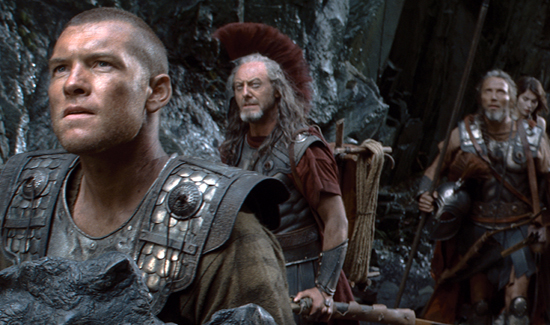
With Travis Beacham (who would later work on Pacific Rim (2013)), Phil Hay and Matt Manfredi (Æon Flux (2005)) as writers to this film, it is apparent that they tried to make it similar to the original. When a man named Perseus (Sam Worthington) witnesses his family's death to a god, he sets it his mission to fight back. This motivation is only reinforced when the city of Argos, a rebellious city is threatened by Zeus (Liam Neeson) to be destroyed. With Hades (Ralph Fiennes) being granted permission to let the kraken loose on the city thanks to the queen (Polly Walker), Perseus and Argos' strongest men seek the answer on defeating it. Directed by Louis Leterrier, a guy with many action films tied to his name like Transporter (2002) and Transporter 2 (2005), certainly has what is needed for a film that needs lively energy. The biggest issue though is the script and Sam Worthington as the lead.

While Worthington can grimace, yell and move athletically, his emotional range needs some work. Being that the script relies more on the loss of his family and less about romance, there lacks an emotional balance in the story. There's barely a time where Perseus even cracks a smile or wise remark. As a result, the lead feels less charismatic and more just a pawn in the story. With the writers' screenplay failing to incorporate more of this, it feels as though they forgot the heart of the story. Yet somehow they did remember to include charming and more favorable dialog for the supporting actors like Mads Mikkelsen, Liam Cunningham, Hans Matheson, Ashraf Barhom, Mouloud Achour and Nicholas Hoult who play Argos' top warriors. So, not sure how that works. Even Ian Whyte who plays some mysterious humanoid scorpion creature is more interesting to watch.

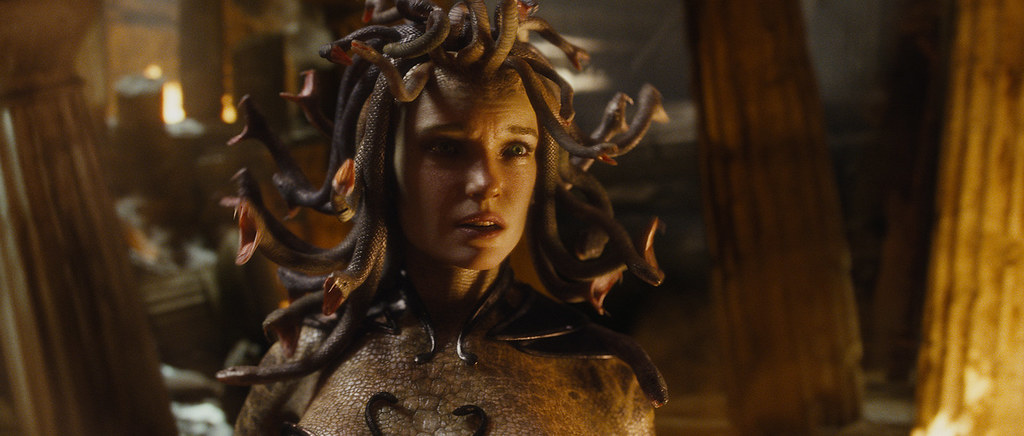
Aside from this, the writers do include some other references to the original like Jason Flemyng who plays the cursed Calibos. Even Bubo the mechanical Owl appears for a cameo. Action sequences are by far the strongest this film has to offer. Whether the fighters are fending off other human attackers, human sized creatures or giant monstrosities, the action is lively and engaging. The best set piece is when Perseus and company come across super-sized scorpions. Even the battle between Perseus and Medusa (Natalia Vodianova) is fairly entertaining even though it won't ever top the original. The weakest was probably the one between Perseus and Calibos. All this is most likely due to Louis Leterrier's experience working with action set pieces. Believe it or not though the graphic content is turned down. Although that's probably just to attract a wider audience.

"Does this CGI really make me look bad?"
Visuals to the film are an unfortunate mixed bag. While the imagery, makeup effects and creature designs are creative, their CGI counterparts tend to suffer. Although watching movies can be used as an escapist activity, to watch actors walking around and interacting with various settings that are CGI ruins the whole experience. There's barely a place that feels like it is physically tangible. The cinematography by Peter Menzies Jr. (The 13th Warrior (1999) and Lara Croft: Tomb Raider (2001)) was adequate, it was just the CGI scenes that felt the least credible. Producing the music was composer Ramin Djawadi, who had worked on Blade: Trinity (2004) and Iron Man (2008). Relying heavily on strings and electric guitar, Djawadi makes an interesting interpreter for the film. Sadly, it has very little resemblance to that of the upbeat and adventurous sounding score from the original.

The supporting components to this remake are probably the best thing it has to give. From the supporting cast, to the music, cinematography and action. Yet the fault in the foundation are the CGI effects, a less than charismatic lead and rather unemotional screenplay revolving around the lead. It's fun but not for frequent revisiting.

Points Earned --> 6:10

Monday, February 18, 2019

Funny Girl (1968) Review:

Movie genres can be combined to make any kind of hybrid production. This can lead to different levels in how the story is told and how audiences may react or take the movie. Musicals in general can incorporate any genre and make it into an interesting showing. It may be more unlikely that a horror film could be turned into a musical, but it's not impossible. It takes the right balance of everything to make sure that whatever is trying to be depicted gets across correctly to the audience. However, it can be confusing when the title and genre of film suggest one thing, and later on show nothing of the sort. That seems to be the problem with this movie; or so it seems.

Related image
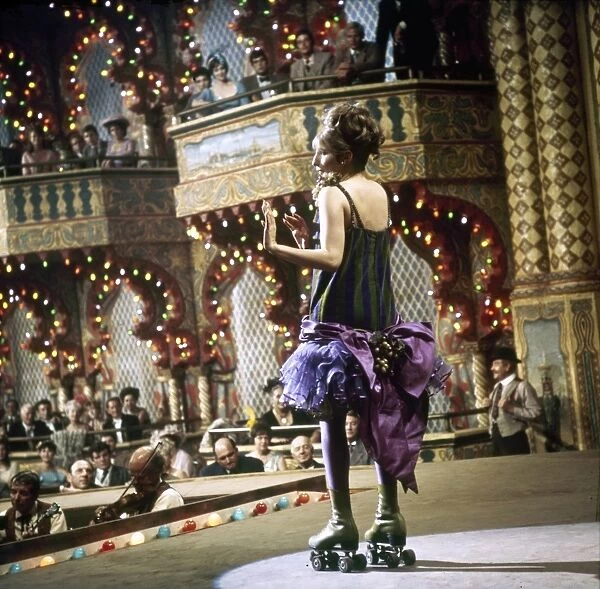
"Ummm hi, I don't have stage fright,....promise"
Featuring the debut of Barbra Streisand, a vocal powerhouse at the time, plays real life comedienne Fanny Brice. The plot follows her start of showbiz, her rise to fame and her relationship with Nick Arnstein (Omar Sharif). The script, written by Isobel Lennart, as her last credit, has no issue with showing Brice's career progression whatsoever. With credits to other films like It Happened in Brooklyn (1947), Lennart must have had some kind of experience to produce a good screenplay. The problem however is in the title and execution. Was this William Wyler's issue as director? Hard to say, with having films like Carrie (1952) and Ben-Hur (1959) attached to his resume, who knows.

Somehow though, the tone of the script and the performances from the cast do not match on a regular basis. This film falls into the category of a comedy, drama and musical. Yet there's mostly drama and music. For a title with the word "funny" in it, there aren't many laughs to be had except for some sporadic ones. Adding to that is the 2.5 hour run time. While the production design is well constructed and elaborate, there are a bunch of overly padded scenes that seem to take longer than usual. This does not however discredit the actors involved in the film. Although the cast in this film is small, the amount of extras used in the background is horrendously large (but all for good reason).

Streisand and Omar Sharif have plenty of chemistry to share with each other. The emotions displayed on screen feel properly acted and emoted well. Sharif who played in Lawrence of Arabia (1962) definitely has the chops to be a suave husband for the love interest. There's also Walter Pidgeon who plays Florenz Ziegfeld, who ends up moving Brice into the spotlight. And while these actors work, the script fails to show a struggle for almost none of the showing. While at first it seemed as though no one wanted to have Fanny Brice in their shows, once she met Nick, her success never stopped. That, and when things didn't seem to work out Brice made decisions that contradicted her motives. The actions do not really make sense when someone enjoys that much success and it doesn't make them truly likable either.

Related image
Omar Sharif as Nick Arnstein
For visuals and music though, this feature had it in the bag. Harry Stradling Sr. was the man behind the camerawork. With experience in other films like Over the Moon (1939) and Gypsy (1962), it's no wonder the shots filmed look so large in scale. With musical writers like Jule Styne ("Don't Rain on My Parade") and Walter Scharf, composer to Rock-a-Bye Baby (1958), the musical pieces are enjoyable to listen to. That and having Barbara Streisand's solid vocals makes the performances all the more authentic. Unfortunately, because the execution to the story is so tonally confused, the music does not have the same emotional impact as it should.

Everything about the production is well done. From the camerawork, to the musical compositions, to the production design and the actors’ performances. Yet, the script gets so lost in telling a story with very little conflict that it doesn't feel like there's much to get behind. Not to mention the padded timing and very few scenes being funny either.

Points Earned --> 5:10

Police Academy 4: Citizens on Patrol (1987) Review:

It's really something when a franchise begins its second trilogy. While many critics had found only the first Police Academy (1984) a mixed bag, the later sequels earned even less stellar opinions. Yet somehow, the series continued to push onward. While Police Academy 2: Their First Assignment (1985) was more or less retreading the same ground, Police Academy 3: Back in Training (1986) stepped back up to the plate for some fun. The cause of this was more of having the original cast learning new skills, which reminisced more of the first film. Here, the story is now putting them in the trainer shoes. All because of an idea their ever so absent minded commander had one day out of the blue.

Image result for police academy 4
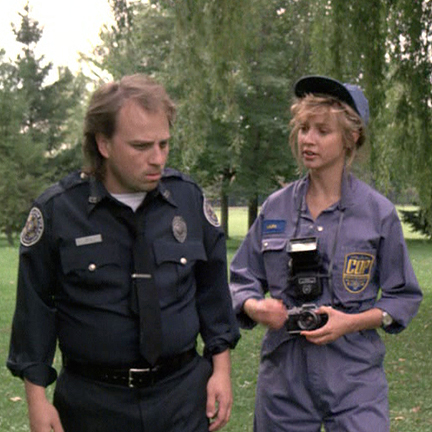
"Excuse me miss, you remind me of Kim Cattrall"
Written by Gene Quintano, who also penned the prior entry, was the sole writer for this film. The story begins with Commandant Lassard (George Gaynes) having the brilliant thought of making relations better between the police and public by having a new program involving both. The program is called Citizens on Patrol (COP - how clever), and it would allow citizens to actively partake in making sure crime isn't committed. Seeing it as a lousy decision, Captain Harris (G.W. Bailey) returns with Proctor (Lance Kinsey) to fill in for Lassard as he makes his way to London to promote the concept. Meanwhile, it's up to Mahoney (Steve Guttenberg), Hightower (Bubba Smith), Jones (Michael Winslow), Tackleberry (David Graf), Hooks (Marion Ramsey), Sweetchuck (Tim Kazurinsky) and assorted others to make sure COP succeeds.

So the plot itself is really not very different. If anything the premise feels all too familiar because it's more or less a soft version of the first movie, which encouraged regular citizens to participate in the police academy. Here though, citizens do not become police officers but instead act more as like a subdivision of the department. The only new feeling is that now the original cast members are the ones doing the training, but that's where it ends. Jim Drake as the new director was okay, but there were scenes that felt too padded. What does work in the script's favor are the homecoming of familiar faces and jokes. Having G.W. Bailey come back for another entry was great because he was after all the first antagonist in the series. Plus, seeing him get acquainted with Steve Guttenberg's character brings back fun antics.

Although not all the jokes induce laughter, there are some better than average moments. One being actress Billie Bird who plays Mrs. Feldman, a charismatic old woman who enjoys the thrill of being a police officer. She produces some good laughs but she's literally one of very few new recruits in the COP program that stand out. The only other character that is a new addition and develops another character is Laura (Corinne Bohrer). While uneasy at first she develops a soft spot for the reformed gang member Zed (Bobcat Goldthwait). Aside from this though, no one else is really has development. There is however an appearance from a young Sharon Stone and a debut performance from David Spade.

Related image
Zed & Laura
For cinematography, Robert Saad shot for the film. While he provided additional photography for the first film, he really took over in the last sequel, which was shot differently. The same could be said here. There are scenes that are filmed in the city, but Saad also captured shots from the sky and it's impressive. Figuratively and literally, Saad has visually taken the series to a new height. Music has enjoyably remained the same, with another score composed by Robert Folk. The main title theme is always jolly and the rest of scenes work where they should. Now, all that is needed since the first film are the scores released for all the sequels that came out.

If you've been enjoying the films so far even after all the character swaps, this sequel should still provide some good laughs. The cinematography is still shot well, the music remains entertaining and the reunion of Mahoney and Capt. Harris bring back so good jokes. However, the plot feels very similar to the first, very few new characters receive development and the jokes don't always work.

Points Earned --> 6:10

Jeepers Creepers 2 (2003) Review:

While success did not come right away for Victor Salva early in his career, he was able to land in the spotlight eventually. Jeepers Creepers (2001) may have not been the most ingenious horror film, but it did have certain aspects to it that made it stand out from the usual traps horror films fell in to. The story was unique, the characters weren't the usual bunch and the music had its moments to shine too. And after that movie proved itself profitable, it's obvious as to why a sequel was made. Surprisingly, while it isn't much better, it still remains to watchable. The faults are now just in different places. With Victor Salva directing again, it's understandable as to why the film feels the same in quality.

Image result for jeepers creepers 2
"Hey man, do you think we are safe in a bus?"
The script for this feature was also written by Salva who smartly keeps the continuity close by having the events of this story happening shortly after the first film. Not bad, considering most follow ups to horror films either reset the story completely or retro actively undo everything that happened in the prior film. Here a group of high school students are headed home after a game, only to soon find out their lives are in the cross hairs of the creeper (Jonathan Breck). Meanwhile, a vengeful father (Ray Wise) is on the hunt for the creeper after he was too late in saving his youngest son who was snatched away. These two plot threads end up converging on one another, which create an interesting brawl as things develop.

The whole setting of having students trapped in a school bus is not commonly used. That and the efforts Ray Wise's character goes through to hunt the creeper shows dedication. He's also probably the most likable character too even though he doesn't emote much. Unfortunately, the rest of the cast aren't that likable, which was an issue the first movie suffered from too. While the actors who play the high school students act the parts, they just don't seem to have the charm in order for the audience to get behind. There's only one character, Minxie (Nicki Aycox), who manages to learn the history of the first film through dream sequences. Of course that goes unexplained. She even gets to see Justin Long for a cameo and exposition dump; how convenient.

That particular aspect of the film doesn't completely ruin the experience though. Jonathan Breck as the creeper still makes a fine antagonist for the franchise. While this time, he was given a little more free range to play his part with personality. While the creeper is special in his own way, this time he'll make gestures which are very Freddy Krueger-esque. It's not a vast change, but it does give the character a more comedic personality which may not really fit. Aside from this though the horror is still there with a number of gruesome moments. Salva also cranks up the action into the picture too with Ray Wise's trigger happy role that he plays. It actually mixes quite well.

Related image
Ray Wise as tough dood
For the rest of the visuals, the cinematography is handled well. Shot again by Don E. FauntLeRoy, the camerawork is steady and mixes well with its surroundings. Even the CGI and live-action practical effects look good to this day. What would have been more interesting to see was the creeper's new lair from the last film. Being that it was only briefly shown and what he does there, that's something that should be explored. The musical score also saw the return of Bennett Salvay. Being that the feature mixes more action with its horror, Salvay also beefs up his score as well as making it sound even more robust to match the action sequences. Not bad at all.

This is a sequel that maintains its level of quality compared to its predecessor. That's a good and bad thing. While the script still shoehorns in certain plot elements and still has very few likable main leads, the viewing experience is still fun. The gore has more action in it, with an appropriate score, credible cinematography and a script that still keeps fairly good continuity.

Points Earned --> 6:10