Wednesday, April 30, 2014

Gingerdead Man 3: Saturday Night Clever (2011) Review:

It's weird how film concepts get lost in translation. When the The Gingerdead Man (2005) was released, it had a certain level of groundwork that it needed to cover. Unfortunately, it only covered enough to make the practically hour long movie far from anything worth more than one watch - even with its minimal strengths. Then came Gingerdead Man 2: Passion of the Crust (2008) which was even less of an entertaining installment. The continuity was loose, the characters were even less likable and the whole motivation behind the killer cookie was dropped. Now we have this movie, which quite honestly is baffling for several reasons. Nothing makes sense here.

He's just not convincing anymore!
The movie starts off with an actress knock-off look alike of Clarice from Silence of the Lambs (1991) looking to interview the gingerdead man. But wait, didn't the gingerdead man get burnt to a crisp in the last film? And before that wasn't he burnt to a crisp then too? How does he keep coming back? One word - continuity. Also, the place where the gingerdead man is staying is at a psychiatric ward of homicidal baked goods. So the writers mean to say that Millard Findlemeyer wasn't the only serial killer who had a mother who knew witchcraft in homemade pastries? This is really poor writing. Why does William Butler, a person who has exceptional credentials allow an at least potentially fun franchise go down the wrong path of a good production.

A few minutes in, the gingerdead man escapes and happens to find two scientists completing a time machine. So what does Mr. Findlemeyer do? He jumps in of course a decides to use it to help him evade the authorities. The end result is seeing him land in the middle of a discotech in 1976. This ends up pissing the evil (and stupid) cookie off, but he ends up finding a way to cope. How? By killing various people of course. Don't get to excited though because it takes an awfully long time for anything to get going. At least in the first movie it only focused on a small group of people. Here, the audience is introduced to a ton new individuals that don't excel or help move what little plot there already is.

Cherry (right) & her aunt?
The main focus is given to a character named Cherry, a parody of Stephen King's Carrie (1976), the difference being that it takes place at a discotech instead of a prom. Other than that, no other actor makes their characters stand out among the rest. In fact, this movie loves to show a lot of scenes of nothing - specifically scenes of girls giggling and screaming for really silly things. It's just annoying. There was one scene that viewers may enjoy but that's it. The only other thing that helps boost the quality of this picture is the CGI but even then it's too late in some cases. Specifically during the kill scenes, instead of using practical effects, they were replaced with CGI and it looks bad. Topping it off is the fact of adding a ridiculous idea of time travel to an already ridiculously silly (although potentially entertaining) concept of a possessed cookie.

It may make viewers laugh in a scene or two,...maybe. This better than average low budget production still has practically no plot, transparent characters and poorly executed kill scenes.

Points Earned --> 2:10

Friday, April 25, 2014

Contracted (2013) Review:

Diseases and viruses are something no one wants to catch. They make our body's act abnormally and gives us side effects that aren't comfortable. Mind you, a cold is the simplest of infections yet is just as much a pain. Anything beyond that pretty much can be unbearable for some individuals. Thankfully, in today's age science has come up with various methods of preventing these problems. Condoms are one of the big proprietors of it. So if there's one thing that should be worn during intercourse, it's that.
It's not that this film will have viewers convinced that without a condom they'll suffer as much as this main lead here, but either way, unless the person is clean - wrap it up.

We go from no problem being in public......
This is basically all the plot is about. Audiences will be introduced to Samantha; a female introvert who is attends one of her friend's drinking parties. There, she makes the mistake of consenting to having sex with male stranger who ends up raping her. Well now, that escalated quickly. Apparently, that night was also a night of unprotected sex - thus Sam catching a strange disease that begins to take a serious toll on her for the next number of days. This particular plot line works fine but the story contains numerous other subplots that have finishes to them, but feel rushed. Perhaps this was under the circumstances that new director Eric England was directing and writing simultaneously. It's understandable that it's not an easy task but he also should've seen that there was too much to cover.

Each person that the main lead (Sam) has a connection with has some type of subplot connected with them. Sam's single mother deeply cares for her yet it's never explained what she does off screen. Sam is also a lesbian, but can barely show any chemistry with her lover Nikki. The random guy that raped Sam has mentions within the running time yet is never confronted face to face seems almost like he never existed. Even Sam herself had a personal goal she was attempting at completing but seemed abruptly cut off coming to the finale of the film. Another question, if this dangerous disease is so powerful that it affects it's host within only a few days, how is that the guy she consented to have sex with didn't seem like he had it? He couldn't have just gotten it otherwise he wouldn't have known.

Another thing that doesn't work a lot of the time in the film is the dialog. A lot of these moments are slow and seem almost awkward at points. Was that intentional or just bad direction? Even the actions characters take are rather illogical. Why would you make contact with someone if you can tell they're diseased? Sigh. However, what does help raise these flawed elements to at least an average rating are the effects and imagery. The practical effects are done well from skin texture to other anatomical discolorations. Even some of the sounds are cringeworthy which was a nice touch.

To being shady...
The music was provided by the composer of Gears of War (2006) - Kevin Riepl. What viewers may enjoy about his music was that it was atmospherical and tried to elevate the level horror more psychologically. But, unfortunately his efforts didn't help greatly. After a while viewers will understand at which the direction the story is heading. Once they know that, the element of suspense and terror pretty much leaves the screen. It's sad because it's buildup almost got somewhere. If you're a horror film fanatic looking for something different, you'll get that experience here. Just remember though, to get to those areas that are different, the viewer will have to trek through several other things that'll stick out like a fresh rash.

Its concept is a mix of fresh and used ideas and displays some believable gross moments. However its dialog is slow and its numerous under developed subplots clutter the story.

Points Earned --> 5:10

Thursday, April 24, 2014

Coneheads (1993) Review:

Dan Aykroyd is known for making good comedy films. Whether it's The Blues Brothers (1980) or Ghost Busters (1984), Aykroyd had something during his prime that made people gravitate towards his comedic films. Along with performing with other cast members of SNL, this particular title was an actual skit ten years before in 1983. My question is, who thought it would be a great idea to make it a movie a decade later? Was the skit that memorable? That's taking a large gamble. The story is about a group of aliens with cone shaped heads that crash land and have to conform to life on earth. It's not even close to an original concept (except for the conehead aspect), but it does have some have positive ends to it.

Yup,....no problem here
Playing the coneheads are Dan Aykroyd, Jane Curtin, and Michelle Burke - all three of which have faded from today's contemporary films. Their acting isn't bad but the personalities either come off as too dry or too familiar. Aykroyd plays his role like the shadow of Raymond Stantz from Ghost Busters (1984), with fast dialog and vocabulary that is either never heard of or too scientific for most viewers. Curtin plays her role to match Aykroyd but rarely will audiences feel a connection to them. Burke's role is possibly the only connection that most audiences would have, considering she sounds normal and not like her robotic parents. Even then, her character arc isn't developed fully.

Even more surprising is not only was this idea from SNL, but the writers behind this movie including Dan Aykroyd, were from SNL. I'm not sure how these guys created a screenplay that has obvious continuity errors and issues that aren't addressed. For example, why does Michelle Burke's character have normal teeth while her parents have pointed teeth? Or, how is that everyone that the coneheads run into are totally fine with their deformed craniums? Is everybody this accepting here on planet earth? Surely someone would make a buzz over it; considering that the head of deporting illegal immigrants, Gorman Seedling (Michael Mckean) wants to send them back to where they came from. How come he's the only character who finds them abnormal? Comedy works when people notice and react to strange events. But in this film, rarely do people react at all to the conehead family as if they were aliens. This creates a disconnect in the audience. Also, how is this film rated PG? There is some sexual humor in here that I don't think is suitable for a PG rating.

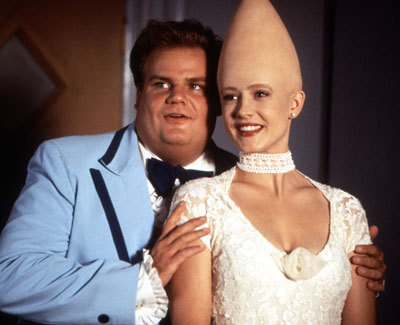
Mr. Chris Farley
Neglecting this though, there are scenes that do have their moments. Particularly the life style that the coneheads live is cooky. Helping with some of these chuckle moments are the special and practical effects. Some of it is noticeably and other times it's not. Overall that element was ok. Adding to some of the nostalgia of this 90s film is the large cast of the "in crowd" stars. Celebrities like David Spade, Sinbad, Drew Carey, Jon Lovitz, the late Chris Farley, Jason Alexander (with a full head of hair) and even Adam Sandler have appearances. Some have bigger roles than others, but it's commendable enough just to even see them. The music provided by David Newman was heard but it was forgettable. There weren't any tunes that really stood out. It's by no means bad - it's just average for a comedy.

The main leads try their best to give their characters charm, but the comedy only seems to work when other well-known faces are on screen. This leaves the in between scenes with nothing to remember them by, making only a part of the film worth a watch.

Points Earned --> 5:10

Saturday, April 19, 2014

National Security (2003) Review:

It's difficult when it comes to buddy cop genre films. For the most part, unless the crew has some creative writers or there is some other aspect to the film viewers have not experienced before, it'll be hard to impress film goers. This particular story is about as generic as they come - two security guards who are basically polar opposites in every respect are put into a situation where they must work together to solve their problems and gain the respect they desire. The only thing that distinguishes itself from other buddy cop films is that the two main characters aren't cops, their security guards. So the hilarity is supposed to be based on the fact that they're acting like cops but don't have the authority to do so. Does it work? Ummmmm not exactly.

At odds,....what a surprise
Our two main leads are Hank (Steve Zahn) and Earl (Martin Lawrence) who only encounter each other by chance. When in fact, their paths were bound to cross after Hank loses his original partner in a robbery bust - but they both didn't know that. Jay Scherick and David Ronn's writing aren't anything out of the ordinary from other projects before this. It also shows that their creativeness hasn't improved much since they've been in the industry with all the ratings they got after this movie and it shows. Hank and Earl go through the typical character arc of being at each others throats and then realizing they're living the same kind of life - almost. This kind of realizations comes more as a joke than reality, yet this helps the two characters connect. Is that really the strongest bond they have between each other - a joke?

The direction provided by Dennis Dugan, who has had his fair share of good and bad movies with audiences, at least keeps the flow of the movie consistent. If there's one word to call the pace of this movie, it’s that it's steady. It's not super fast nor is it terrifyingly slow. This would be ok if anything else really felt worth a watch more than the first time seeing it. Acting wise, Steve Zahn plays Hank straight like any guy would in his situation but it doesn't make him stand out much. I also swear that I've heard his character being called different names during the film - Henry, Nick....ummm do the actors know the characters name? Martin Lawrence on the other hand works at making his character stand out even though his character is just a forgettable as his partners. Saying "what the problem is?" consistently is not going to make the character sound any smarter or any funnier. It just means that Mr. Scherick and Mr. Ronn could not come up with a better phrase to say. Martin Lawrence can say much funnier things than that.

Bill Duke
Surprisingly, these aren't the only other recognizable actors that show up in this comedy. Colm Feore from John Woo's Face/Off (1997) and later in Thor (2011) heads the police department. Bill Duke, best known for having a role in both Schwarzenegger films Commando (1985) and Predator (1987) plays one of the chiefs along side Feore's role. Eric Roberts plays one of the villain's henchmen and like many other films, Roberts is just there. Heck, even Stephen Tobolowsky has a small role where he's some genius metal technician guy that can relay top secret information to our two main leads. Tell me how that makes any sense? That's one flaw that really stands out in the film.

Speaking of which, what was the villain's motivation for the stolen items from the robbery bust? It was explained what its use was for and that it costs a ton of money but the story never got to a point where the actual stolen property would be used in an application. Feels a bit underdeveloped. Other than that, the  comedy may only produce casual chuckles among viewers. It isn't even regularly funny. The special effects and action scenes are executed professionally but aren't anything unique. Even more shocking is that composer Randy Edelman produced the music to film but it is barely heard at all. Edelman can produce a quality score,...why has he been pushed aside? For shame.

With acting that only goes so far and writing that makes sense half the time, this buddy cop film aims for average and that's all it is. Even the addition of other sporadic cast members and a steady pace doesn't make it any more unique.

Points Earned --> 5:10

Sunday, April 13, 2014

The Fast and the Furious: Tokyo Drift (2006) Review:

When franchises start with a strong footing in film, it is important to keep the elements that made the first installment just as great in every shot for each future installment that comes along. This includes direction, cinematography, action, music and characters. The writing behind the sequel should really be the only thing that changes because if the writing were the same, it would just be a rehash of previous movies in the franchise. For the most part, this sequel gets a number of the components right but there are also parts of the movie that are dislodged from the past films.

As if we haven't seen a duo like this in 2 Fast 2 Furious (2003)
Starting totally fresh with an entire new cast, viewers will follow the troubled life of Sean Boswell (Lucas Black), a Southern schoolboy who loves to drive cars to their limit. He also can't cut a break with the authorities or doing well in school. After relocating several times, Sean's mother decides to send him to his father who lives in Tokyo Japan. However, Sean still can't keep his hands off a steering wheel. He ends up befriending a classmate named Twinkie (Bow Wow), who then brings him to street race where he learns a new word called "Drifting" - thus the title. Along with Twinkie, Sean also meets D.K. (Brian Tee), Han (Sung Kang) and Neela (Nathalie Kelley).

Character wise, none of the actors are terrible but they do lack characterization and acting skills. Lucas Black can handle a Southern accent (unless that is his real voice) but displays that smirking and frowning are his only two facial expressions. Bow Wow is just a replacement for Tyrese Gibson. Neela is supposedly Australian but slips frequently in speech. Sometimes she'll sound Australian and other times like some other ethnic group. She was the weakest of the bunch - I guess this because this is her first movie role? Brian Tee was able to pull of his role with ease for his muscular physique and gangster like image. Sung Kang is the most likable actor here. His character is smooth and easy going. In some respects, you would think he should've been in the title role.

Han the chill man
As far from the last two films have come, surprisingly, The Fast and the Furious: Tokyo Drift (2006) does have a connection. It is a very small but significant connection. Chris Morgan's writing behind this installment isn't bad when it comes down to the fleshed out action scenes but again it's the characters that suffer. It's understandable that The Fast and the Furious franchise is about the cars, but audiences have to have characters to connect to. If the cast keeps changing frequently, it's going to get really tiresome.

Thankfully the one thing that keeps getting more creative are the driving sequences. In other words, the "drifting". If it weren't for the drifting in the action sequences, there would not have been anything new to see here. Although the racing wasn't as crazy as The Fast and the Furious (2001) and 2 Fast 2 Furious (2003), the slick driving and stylish craft of drifting really helped make the racing scenes fun. Stephen F. Windon's cinematography is able to catch a lot of the nice shots of Tokyo, which is also cool. Lastly, another composer was brought in, this time Brian Tyler. Surprisingly, Tyler's score is barely prevalent in the running time. It's not that Tyler created a bad score, it's just barely there. Perhaps the finale is when it's heard the most. Other than that, the soundtrack takes over. After the last two films, score collectors are still waiting to hear some noteworthy tunes.

It's an equal match to the 2 Fast 2 Furious (2003) but for different reasons. It's new hook which involves "drifting" is cool, some of the characters stand out and it shares a connection with the last two films before it. With it however, comes weak characterizations, average acting and little emotional attachments.

Points Earned --> 6:10

Saturday, April 5, 2014

The Great Gatsby (2013) Review:

Leonardo DiCaprio just can't keep himself away from movies like these can he. To many novelists, F. Scott Fitzgerald's The Great Gatsby is of the most popular of romance drama stories. Nor is it the first time that this particular story has been adapted to the big screen. However, add a dash of DiCaprio and the whole magnitude of the movie changes completely. There's no doubt about it - Leonardo DiCaprio is a very talented actor. It's not only apparent in how he acts in the role he chooses, but also the role he chooses specifically. Each character that he has mostly chosen in the past do not stray far from each other, which displays his watchful eye of what role he can fulfill.

Jay Gatsby (DiCaprio)
What makes the storytelling unique is that of like most romance dramas where the story consistently revolves around the character of main focus, it is instead told from a third person perspective. The person describing to the audience his view and feelings is Nick Carraway (Tobey Maquire), a man deeply affected by Gatsby. This is a better mean of characterizing Gatsby artistically - so audiences don't have to come up with the description themselves. Baz Luhrmann and Craig Pearce's writing reflect that not only in creativeness but also in dialog, texturally speaking. Most of the vocabulary is upper class and the words reflect various visuals. The one I didn't understand are the glasses on the billboard - the significance?

For the most part, it is all very good writing - especially by the end where practically everything is explained. The only things that should've been fixed were Maguire's character and a Chicago subplot. It is great that Nick Carraway does most of the explanation to the story but his development as an individual takes a backseat. This may leave some viewers frustrated that the main focus was Gatsby but Carraway received little attention (even though he’s not of main focus). Also throughout the movie Jay Gatsby (DiCaprio) receives frequent calls from Chicago about SOMETHING. However, that something is never talked about openly - the end doesn’t even explain that one. What was the importance of that if it was never elaborated on?

Other than that, everything else is fantastic. Viewers will find the idea of contemporary pop culture music and early 1900s fashion together, will blend nicely during the party scenes. This is one film that is able to defy those rules where putting contemporary music into a film significantly dates it. Here it's the total opposite. It feels timeless. The cinematography by Simon Duggan is beautiful, although I'm not sure why I didn’t find it as prevalent in Killer Elite (2011) or Knowing (2009). Craig Armstrong who produced the score did a decent job as well. Since there was also a soundtrack, his music wasn't always around, but when it was heard, his tunes helped with the emotions. They weren't anything that defined the film though.

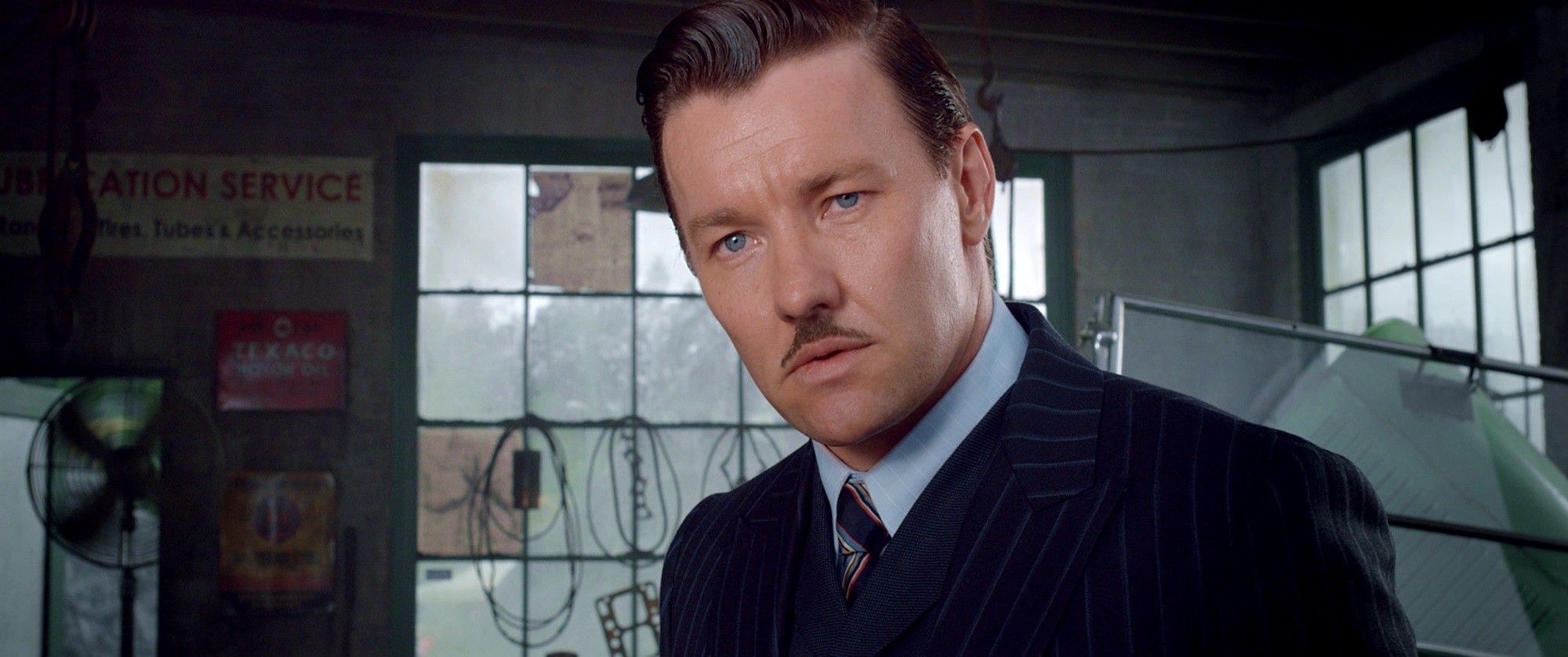
Tom Buchanan (Edgerton)
Lastly, the characters (besides Maguire's) were well performed and as developed. DiCaprio portrays Gatsby with likability, even when he's nervous. Carey Mulligan as Daisy Buchanan is sweet and gives her character the same kind of emotion any girl would if they were in the situation that she was in. But the guy who gave probably the second best performance was Joel Edgerton as Tom Buchanan. Buchanan has a pompous attitude and business tycoon voice. The man is quite versatile. But, if there's one thing everyone should learn from this tale, is that secret love triangles NEVER work. It is a very difficult connection to keep together.

With an adaptation that'll have English teachers fainting, DiCaprio and the rest of the cast give respectable performances. The visuals are saturated with literary references as is the high quality dialog. Just a few areas in the writing should've either been expanded on or left out completely.

Points Earned --> 8:10

Friday, April 4, 2014

Superman (1978) Review:

Before 1978, Jerry Siegel and Joe Shuster's Superman had been put on the screen in the past. With multiple actors donning the suit of "truth, justice and the American way", it was hard for fans to really pick their favorite actor who portrayed the Kryptonian. But when this movie came out, there was no decision that had to be made. Richard Donner's Superman (1978) is THE superman. Viewers who are closed-minded and don't like watching older films must try to make an attempt to see this. It does not have the crisp well-blended look like most of our films today but for what it had, it was astounding. It's not just the look either; everything else included as well.

Tell me that's not a beautiful shot
The story follows the original that we all know and love. With Krypton on the rise of destruction, Jor-El sends his baby son Kal-El to Earth where he can start a new, and be the hope and inspiration for all humans. Upon arriving to Earth, Kal is adopted by farmers Pa & Ma Kent and renamed him Clark Kent. As he grew up, Clark journeys to discover his heritage and answers to his questions. He then moves to Metropolis where he secretly puts on his suit and cape whenever help is needed. But it's not at this point where things become amazing; everything described that leads up to this point is just as great.

The writers behind the screenplay took extreme care with the how the viewer sees the growing process of Clark. Seeing Clark and his world change along with his loving stepparents are by far the strongest of character development scenes in the film. There are moments of pain and frustration and there are also moments of joy and power. The emotions are equally balanced throughout the film. With that, the positive tone of the film feels bright and optimistic. This mixes well with our main protagonist because Superman (Christopher Reeve) is an optimistic person. He is a symbol of hope.

The other characters in the film are just as likable. Margot Kidder as Lois Lane portrays her role accurately with a mind only a reporter could truly understand. Although his scenes are limited, Glenn Ford as Pa Kent provides significant depth to Clark Kent and his morals. Even as a villain, Gene Hackman as the notorious Lex Luthor provides a comical performance that viewers should enjoy. Speaking of which, comedy is another aspect this movie got right. The comedic elements do not push for camp. The funny moments feel natural as if anyone would react in the same manner. Nor does any of the funny scenes involve dark humor, the jokes are more innocent than they are intentional.

That's awesome
The other things that'll stand out are the effects, which co-exist with the action, music and cinematography. For 1978, the mix of green screen and practical effects look great. This helps make the action scenes look very professional (including props to editor Stuart Baird). One thing that stands out about the action is that it relies more on the brain, of how to take care of certain situations instead of having an all out brawl or frequent explosions. In fact, there's really only one true explosion in this film and that's all it needed. With the action comes one of John Williams' best known scores. It is by far still, the best of all Superman scores. The main theme is there, along with a love theme that may create goosebumps for some. Lastly, the most visually beautiful aspect of the film is the cinematography by Geoffrey Unsworth. He captured so many shots that'll take viewers’ breaths away. See it for everything.

Christopher Reeve is the original Superman. There is no argument. The music, action and characters would be nothing without the pristine writing and optimistic tone.

Points Earned --> 10:10

The Brave Little Toaster (1987) Review:

What exactly was novelist Thomas M. Disch imaging of when he created this story? I mean, this can be asked of for any novelist but I guess the fact that the idea seems so out in left field, just makes it so much more significant to ask. Did Mr. Disch have a connection between himself and the appliances he had at his house? It is definitely a creative idea but what inspired him to come up with it? In some ways it presents itself as a premature movie that inspired Toy Story (1995) (considering John Lasseter was on the animation team originally), and in other ways in dives into territories some viewers may not expect.

You choose your favorite!
The story follows the travels of five appliance items who long to hear from their master, or the kid who consistently used them from their childhood. Come to find out, their master has moved on permanently. Refusing to be left alone or to be taken over by another person, the group of appliances set out to find their owner. To do this, they test the fates by stepping outside the house and venture out to accomplish their mission. Along their journey they will also learn some very startling truths that the real world has in store (no pun intended).

The screenplay written by Jerry Rees and now deceased Disney veteran Joe Ranft is praiseworthy for its creativeness and heartfelt characters. The voice casts behind the characters are great. Jon Lovitz as the radio is probably the most comical of the bunch for his quick remarks and energetic attitude. That's not to say the others aren't memorable either. Deanna Oliver as the toaster is by far the most memorable for her soft voice and caring heart. Every viewer will find his or her own character to latch onto. However, with good characters come some flaws that need to be addressed in the story. One of them is continuity - if the group needs an outlet so they can move; the story cannot all of a sudden drop the need for one.

The master
The other flaw that needs to be addressed is the element of death. A family picture has every right to portray a death in a story. The world is not always happy-go-lucky and that's something people learn to understand as they grow up. So the idea that this exists in the movie isn't the flaw - the flaw is how some scenes portray the death. A dramatic death is the best type to be used in a kid’s film. But ones that involve torture or mutilation? That may be diving a little too deep for young viewers. Of course it's ok because guts and blood are replaced with nuts, bolts and battery acid, but that's just as graphic as portraying it to a kid as is blood and guts to an adult. I mean props for taking on adult material but why is it handled with such care as if it were for a horror film? Take it easy guys.

Other than that the rest of the film provides solid entertainment. Along with likable characters, are unique songs (although they may not stick), colorful animation and appropriate film music. David Newman, who produced the score didn't create a theme for these characters but it does match the scenes effectively and do convey the correct emotion. If a family film is what you're looking for, this is definitely one that can be on your list. Hopefully for young one's now a days it shouldn't be too scary.

Its story does suffer from minor continuity errors and portrays death fairly harsh for young viewers, but that doesn't stop the characters from being any memorable than they already are today. It may seem kiddy when in fact it is more adult like than some may know.

Points Earned --> 7:10

Thursday, March 27, 2014

Teenage Mutant Ninja Turtles (1990) Review:

In the last half of the 1980s, comic book readers were introduced to the Ninja Turtles created by Kevin Eastman and Peter Laird. As over the top and ludicrous as it sounded, it captivated many people and soon the 1987 cartoon was produced thus spreading the enthusiasm all over the place - soon after making movies about the famous characters in the 1990s and late 2000s. In light of today being the day Mr. Michael Bay releases his reboot trailer of his TMNT franchise, I thought it was a good idea to view the first theatrically released film of the TMNT back in 1990. There's good reason to see it too before the reboot. It's not by any means a highly developed piece of cinema but it definitely has a lot going for it.

High three? 
The story begins with reporter April O'Neil (Judith Hoag) who is covering an important story dealing with the city's crime rate sky rocketing and no one has any idea why. On her way home, some robbers almost mug her, if it weren't for a humanoid ninja turtle quartet. With them, O'Neil also meets Master Splinter, an old humanoid rat who is the trainer and caretaker of the TMNT group. Upon this journey they also make headway with self-proclaimed amateur vigilante named Casey Jones (Elias Koteas). Lastly, the leader behind the enormous crime spree is The Shredder, a mysterious villain who is proficient in martial arts as well.

For all of these characters, their development is even for the most part. The only thing that really had me thinking was how was The Shredder was able to persuade all of the youth in the city to rebel. How did he do this to begin with? Also, what exactly is his motive? What did he plan on doing once everything had been stolen? He obviously wanted to get rid of O'Neil for spreading the word about his operations, and he wanted to take out the ninja turtles but what was his overall intent? It never was expanded upon. Other than that though, the story has flow and doesn't bore.

The first time writers behind this movie created a decent script for the characters. All of the ninja turtles have their respective Italian Renaissance names and their own personality, which gives them a considerable amount of charm. Master Splinter is portrayed as a genuinely father like character with all the traits a good father should have. Casey Jones is probably one of the more underrated characters because of his spontaneity and improvising behavior. Even, O'Neil as a character develops in some ways. Maybe Hoag was a perfect choice to play April, but she has her moments. Even The Shredder is cool to watch in some scenes.

Casey Jones
Perhaps the most interesting element this film has to offer is the action material and practical effects. For 1990, the ninja turtle costumes are done extremely well. The facial expressions are accurate and are fairly consistent with voice and mouth coordination. Also, the use of costumes help make the film feel more realistic, instead of trying to make CGI look real altogether. The action scenes though are by far the most fun to watch. Martial arts are always entertaining, but how do you get the sequences done right with people in bulky costumes? Well I'm not sure, but it looks good. The actors seem to have no trouble moving, hopping, kicking or rolling around in the costumes. Jim Henson's production crew is something else.

Besides The Shredder being a slight bit under developed, there are a couple of other things that could've been tweaked. John Du Prez's music captured all the right emotions for each scene and overall tone, but didn't create a main theme which is kind of silly since it would help viewers identify with what theme it belonged to. Also, the idea of adding music that involves pop dates the movie severely. It does create a nostalgic feeling, but the film itself does that already - music doesn't need to added. Lastly, would be the settings. Much of the setting of the movie is in the city, which is fine, but it seems to be always at nighttime. I'm sure other people wouldn't mind a few day scenes or so. Eh...what can you do?

An old, yet still an enjoyable family action film that has charming characters and remarkable practical effects. Character development isn't too bad either, although some explanations are needed.

Points Earned --> 7:10

Friday, March 21, 2014

G.I. Joe: Retaliation (2013) Review:

Stephen Sommers' G.I. Joe: The Rise of Cobra (2009) was not an amazing film but it was a fun one. With a lighthearted tone, energetic action sequences and different characters, it was a summer movie most people ended up watching. Surprisingly, it took four years for the next chapter of the Joe's to be told. Even if movies don't fair well with critics (like this one did), if it earned enough money, a sequel will most likely be produced. With all this time one would think that the crew had enough time to perfect this project so it connected with its parent well. Eh....it kind of does....and doesn't.

Snake Eyes, Roadblock & Joe Colton
Starting off pretty much where the first ended, the Joe's are still among the highest regarded force in the
world. They are also still on red alert for losing Cobra Commander and Zartan (who is now disguised as the American president). Audiences are then brought back to Duke (Channing Tatum) where we see that he is well integrated in the Joe system and has new friends - Roadblock (Dwayne Johnson), Flint (D.J. Cotrona) and Lady Jaye (Adrianne Palicki). That's not all though, Cobra Commander has also added a new team member - Firefly (Ray Stevenson). Thus bringing up the first flaw, character continuity. Where is it?

Writers Rhett Reese and Paul Wernick must not know what a sequel script to a movie entails if a story is being continued. Though they have proven they can write; Zombieland (2009) is the prime example. Here, Reese and Wernick return, exclude and eliminate various characters as if they weren't an integral part of what made the first movie work. What happened to Ripcord, Breaker, Scarlett, Baroness and Heavy Duty? A visual appearance isn't even needed, the writers could just have included a verbal cameo about them mentioning what happened to them. Is it too hard to include? It shouldn't be. Also the return of Storm Shadow is questionable. The first movie he was killed,.......so how did he survive? No explanation.

Explaining things seems to be an issue for this movie. Not only for the old but the new. For example, when did Duke meet Roadblock and the rest of his new found buddies? Who is Firefly? Where did he come from and why does he have an obsession with exploding mechanical fireflies? It's frustrating because these characters have respectable personalities but very little of it is looked at. The only new characters that are really given any kind of a back-story are Jaye and Roadblock. But even then, their stories sound unfinished and slim. One thing that surprised me was that a question of mine from the first movie was answered here. Who is the real G.I. Joe? Well I got it - it's Bruce Willis, what a shock. Even Willis' background is brushed over, which fans may feel like they were given the slip.

However, the acting isn't bad. Dwayne Johnson and his Joe counterparts work effectively together. The Cobra Commander is still a faceless enemy (which they actually got the correct look for this movie), but his voice should've been higher pitched and not so deep. Cobra Commander was never supposed to sound demonic, he was kind of like a new age Skeletor. With the commander comes Firefly (Ray Stevenson), a snarky southern man with a nasty scar on his face who can actually hold his own against Dwayne Johnson. Why doesn't Hollywood see the opportunities in this man? Stevenson is about as underrated as his other Punisher counterpart Thomas Jane. Both are immensely capable of action movies and no one bothers to hire them.

Cobra Commander & Firefly (Ray Stevenson)
Directing this sequel is Jon M. Chu who is better known for directing the "Step Up" sequels (which is where Tatum started surprisingly) and the first two Justin Bieber documentaries. Mr. Chu doesn't have a track record with action films and for his first time, he did well. Much of the action sequences were executed professionally. Then again, that could be the work of Jim May and Roger Barton's editing skills. The cinematography is good thanks to Stephen F. Windon. Lastly, Henry Jackman's score was executed nicely too. He had the right emotion and tone set for each scene but what did surprise me is that he didn't include a theme like Alan Silvestri did for the first movie. A franchise like this has to have a main theme. It is still entertaining but it has big loopholes.

It's not bad sequel at all to the first movie, but its continuity is all over the place. Dwayne Johnson and Bruce Willis with big explosions only goes so far. Without accounting for the new and old parts in plot, the story begins to have a disconnect.

Points Earned --> 6:10

Thursday, March 20, 2014

The Transporter (2002) Review:

Jason Statham is popular for obvious reasons. Most audiences enjoy Statham just for his sharp British accent and his athletic action chops. Of course, there is more to that when telling a story in film because that can't be the only thing the plot centers on. It just has to placed in the correct moments for the storyboard to move with flow. For this film, it definitely can be said for sure, that the flow of this movie is even. Yes, there are other things to address but those things will come. This is perhaps one of the few films people can enjoy that deals with consistent movement (like the The Fast and the Furious (2001) franchise in a way).

Transporting is the job (but not like this)
The story is about an ex-military man, Frank Martin (Statham), who is covertly working as a transporter for hire - a man who basically moves things from one place to another. No questions are asked about what he's transporting; that's not apart of his deal. If the deal is broken, so are the rules and that's basically how things unfold. Upon taking what seems to be a routine job of "transporting", Martin discovers there may be more at stake and breaks his code of the deal. Thus ensuing him in a load of trouble. Of course, nothing he couldn't handle though and that's actually the surprising part of this movie.

The screenwriters behind this movie are Luc Besson and Robert Mark Kamen. Before this time, Besson was best known for writing Léon: The Professional (1994) and Kamen had written for The Karate Kid (1984). To many, those are extremely well written works. In six years they would write for Liam Neeson's Taken (2008). I guess they're writing slipped a little in quality around this time. That's not to say their writing is bad, it's just predictably cliched. There are only a few areas that stand out. The areas that are cliched are the one's dealing with character development in the protagonists and the knowledge of the antagonists.

Statham playing an ex-militant is pretty much the same as how most ex-militant characters are written. They like working alone, but yet end up finding a love interest. They also have retained their martial arts and survival skills since their retirement, which allows them to fight their opponents with ease. It was actually more interesting in the beginning of the movie because it wasn't all about taking on 5 times as many opponents as it was getting the job of "transporting" done. Before the action finale to the film, Statham played a much slicker character - almost like a cheaper version of a James Bond. It was cool to watch him be clever and evade authorities by his driving skills or name changing license plates.

Accompanying Mr. Martin in his travels is the thing that makes him break his rules; a girl named Lai (Qi Shu). Here, she explains to Martin in her best English about a crate shipment of people that are being given to some wealthy guy. It's actually not clearly stated what is purpose of this. Illegal immigration? Slave labor? What? Matt Schulze plays the wealthy bad guy and he doesn't play badly at it either. In fact, viewers may find his performance a little more energetic than Statham's. Not sure if it was meant to be that way, but Statham pretty much plays it straight faced. I would like to know how Schulze's character was able to track Martin whereever he went though. It's a little preposterous since there was no clear indication on how Martin's place of living was discovered.

Matt Shulze's evil face
When it comes to action sequences however, that's a different matter. Since Statham is well equipped for this type of genre, there is no doubt Statham knows what he's doing, and those scenes filmed will be entertaining. Which leads to a very specific moment that must be pointed out - the oil slick fight. This particular scene isn't something action fans may see every day. It's a very unique action sequence and it's quite baffling to know how it could've been executed. The music provided by Stanley Clarke was an interesting take too. The sound mix contained some orchestra but mostly jazz work tones that actually meshed well with the scenes that were filmed. It surprised me. Overall, it's your standard Statham film. Nothing far from what's already been made.

The Transporter had a good premise and started out with class (thanks to the music). By the end though, it's a standard Jason Statham action movie that has consistent flow and doesn't have bad pacing.

Point Earned --> 6:10

The Texas Chain Saw Massacre (1974) Review:

There's something about the title of The Texas Chain Saw Massacre and how people think of it. Many just think of it of being about a chain saw wielding killer who stalks people and cuts them up for fun. However, that is just skimming the surface of this particular horror franchise. What some may not realize about this story is that there is more than one could expect to see - and that doesn't include scares. There's another aspect about this movie that first time director Tobe Hooper included that will have the audiences baffled, stunned and amazed. That aspect is the sheer bizarre atmosphere that is this film.

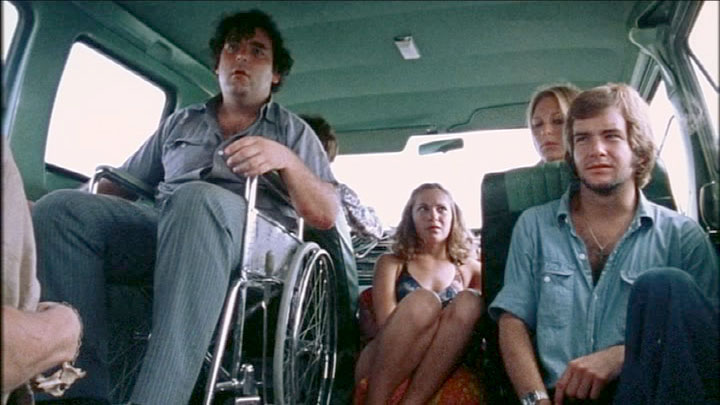
5 friends on the road,...end up meeting
Viewers will follow the path of five friends who are on the road, heading toward a relative's house. On their way, they run low on fuel and look for a place to rest for the night. What they don't know, is that they're not going to see the light of day. Unbeknownst to them, something, a danger so unspeakable is headed their way that quite frankly if anyone ran into, should high tail it out of there. This danger is a family of psychotically deranged cannibals that have no conceivable conscience. But, the most deadly individual is the man (if he is one) known as "Leatherface".

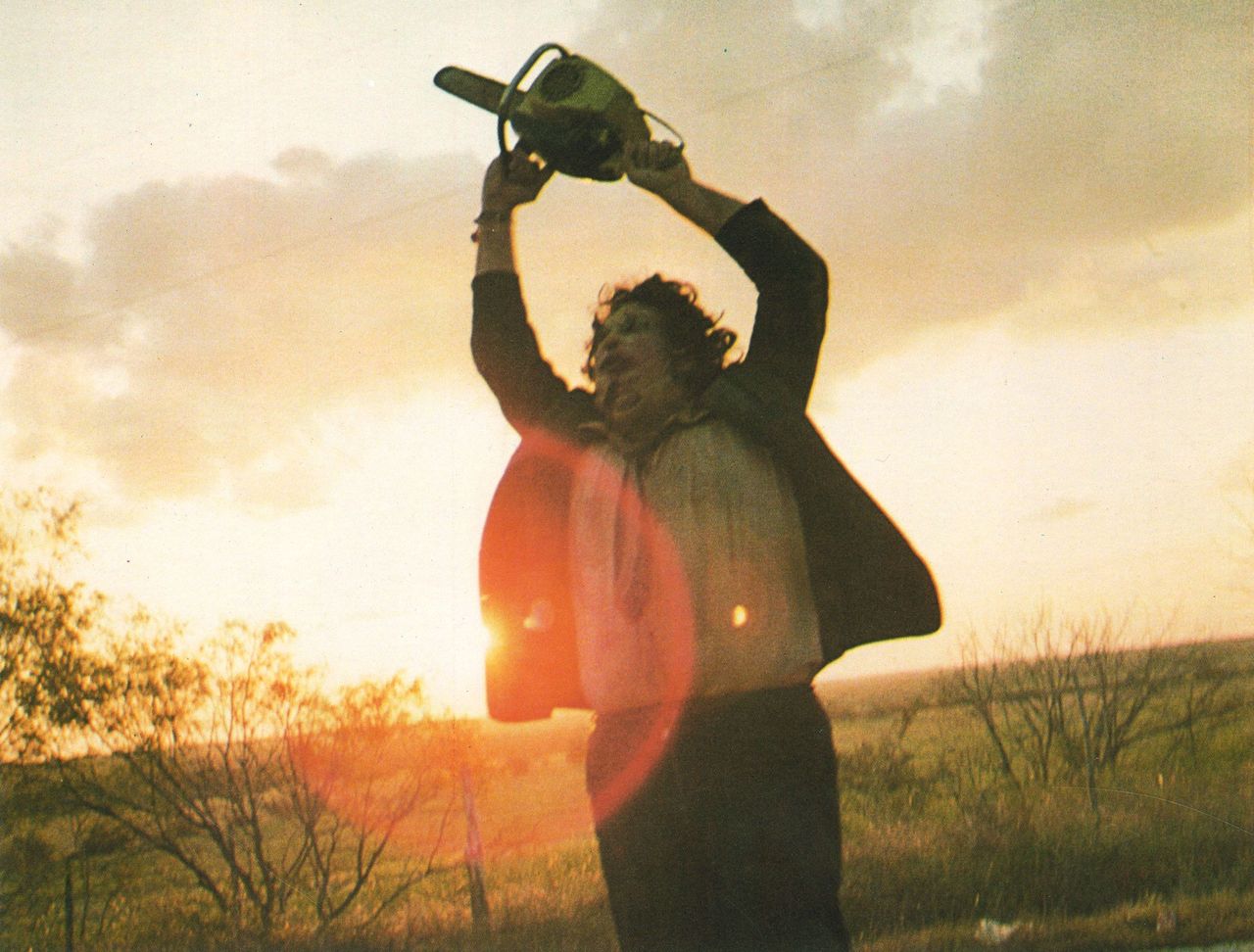
This guy is not to be messed with. He is the towering, chain saw wielding killer and can this beast run! Strangely enough, he and the rest of his cohorts were the ones who were given the most attention to when it came to character development. The audience actually gets to understand his place in the family and how the overall family acts. This is also a major flaw. With the antagonists more developed, this left our main characters on the sidelines and are basically only fodder for Leatherface. Sure, audiences' will understand that they're friends but what else is there to learn? Not much else - or at least from what's given to us. Along with that is a rather underwelming plot. There really isn't much of a plot at all. Friends travel and end up running into the goons. Not much else. There are a few twists but nothing that wasn't too oddball or unpredictable.

THIS GUY O_O
However, in place of this is the bizarre aspect that was mentioned earlier, credited to Tobe Hooper. The way of life that takes place with these killers are something to behold. It will make the viewer question to themselves, "Who enjoys this kind of thing?". It's that bizarre. Another element that viewers should enjoy is how the movie pushes the endurance meter. To see how long one can watch the screen without turning away or closing their eyes is a serious plus. Adding to this is how little music is in the running time. It is almost to the point of completely absent, yet when it is heard, it's distinct. Still, it should've been more prevalent because there were areas that could've used the emphasis of terror. With all this, it still amounts to a decent horror film.

It's surprising that with uneven character development, lackluster music and a very thin plot, that this movie made the impact it did and will for future viewers. With an atmosphere and characters so bizarre, it's hard not to sit down and wonder how things will turn out.

Points Earned --> 7:10

Tuesday, March 18, 2014

He Said, She Said (1991) Review:

Remembering what happened in a relationship is tough for some people. Majority of the time it comes down to only the guys because most of the time, women remember things better. But it has to be understood that the truth is frequently stretched in both directions to help prove the testifier is in the right. Men and women see things differently on a lot of topics and the most debated about subject are relationships. He said "this" and she said "that". Whose memory or interpretation is more accurate in telling the truth? That's the kind of story audiences’ get here.

Kevin Bacon and Sharon Stone
The plot revolves around a couple Dan Hansen (Kevin Bacon) and Lorie Bryer (Elizabeth Perkins) who see their way of living quite differently. Hansen feels that he wants to live his life as a lone wolf and doesn't want to settle down any time soon. Bryer on the other hand is looking for that guy in her life who is like a wolf but would like to settle down at some point. To think that their eventual meeting would happen so coincidentally was far from their thoughts. When in fact, that's what happened. Unfortunately, the ride is very bumpy and soon there's a point to where they need a break from each other. But to understand why they need this break is where things can get tiresome.

The explanation behind this break is displayed through flashback sequences. The flashbacks are done in two segments. The first segment is told through the eyes of Dan and the second segment is told through the eyes of Lorie. Flashbacks are an ok method of explanation, but the idea that this movie consistently relies on it can get tiresome and feel long, considering that the running time itself is close to two hours total. Plus, with these two segments the viewer will be watching what they saw from the first half of the film again. The feeling will get repetitive and too familiar for the audience to want to see more of almost the exact same scene. The exchanges are varied because of the point of view, but some it isn't as different as one might expect.

Elizabeth Perkins and Nathan Lane
With this, leads to some comical exchanges but not anything that'll have people rolling on the floors. Kevin Bacon has a few good moments as well as Elizabeth Perkins, but the laughs are too few short. Perhaps the one actor who stole each scene he was in was Nathan Lane's. For most, it's because of his voice and how he reminds every viewer that he IS Timon from the Lion King (1994), even though at the time of 1991 no one saw it coming. Along with him, was upcoming star Sharon Stone (who plays Dan Hansen's ex-girlfriend), Stanley Anderson (who later plays in RoboCop 3 (1993)), and veteran actor Phil Leeds (who plays an old tenant  where Dan Hansen lives).

As for anything else, props should still be given to the directors for at least carrying out the concept of this point of view movie. It at least gives insight to how the mechanisms of the male and female minds work. Thus maybe giving us (the viewers) a better idea of what the opposite sex expects from us in a relationship. Adding a little bit to the emotion is Miles Goodman's score to the film. This is also the composer to the popular film Little Shop of Horrors (1986) and a year later, the beloved  Muppet Christmas Carol (1992). It is a slightly above average rom-com.

Its actors are well chosen and the concept is very intellectual but its direction can be long and monotonous, while the comedy is a hit or miss leaving the story itself carrying the emotion.

Points Earned --> 6:10

Monday, March 17, 2014

Terror Toons (2002) Review:

It's one thing to make a bad movie. There's also the concept of creating a movie so bad that it's good. Lastly, there's that movie that accomplishes none of that and ends up just being really bad. When it comes to these movies, it can be hard to say what the determining factor is that threw the production of film off course. As for this movie though, it is blatantly obvious to why it falls completely flat and should not be even bothered to be seen. At points it brings up the idea that it could be a guilty pleasure movie but it all depends on how the viewer sees the situation.

Dr. Carnage & Max Assassin
The story is about two sisters who are left by themselves in their house with a duo of goofy terror (as one could only put it). The terror is brought on by packaged DVD called Terror Toons. Upon visiting this film (within this film), the credits read that it was produced by THE Devil, you know, the devil himself. Yet, (if this were to be real) no one pays attention to this and passes it off as minor detail and doesn't consider  the possibility that it could be real. When in fact, this is the exact case. Inside this product are the main antagonists - Dr. Carnage and Max Assassin. The weird thing is, these are the only two toon like characters in existence.

The reasoning behind this is because they are the only characters with exaggerated faces and google eyes. There is a segment at the beginning of the video, which runs like a cartoon, but even the characters that take part in it are a combination of live-action and animated humans. It's not all cartoons as it says it's based upon. It's like a cheap trick, either that or a really bad knock off of a Richard Band production. Adding to the frustration are the poorly developed characters and villains. The Doctor and Max do not say barely a thing. The dialog that was worked out for the actors are not passable either. Much of it is either awkward exchanges or scenes that are supposed to contain emotion and have nothing close to it.

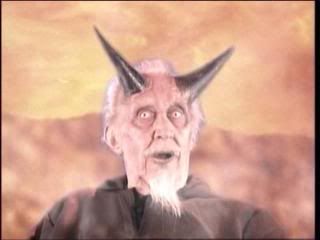
The Devil
Special effects and sounds are another thing. For the budget that this movie had, it does demonstrate some good practical gore effects, but when it comes CGI related scenes, they're just flat, boring and not believable. Even when characters are running it doesn't look real. The feet don't match the pacing - wouldn't it be easier to just film them running instead of moving the character while they're running? What's the point? Along with these bad green screen effects are the horrendous repetitive sound effects. It is appropriate that the characters make cartoon noises but the fact that the sounds are heard every 10 seconds doesn't make it funny. Even the music wasn't helpful, it was appropriately matched to the goofy homicidal cartoons but it didn't increase the entertainment level any bit. Just a poor poor attempt.

With characters that barely look like cartoons, acting that is not good at all, and cheap special effects, the idea of terror only comes to mind when watching this movie because of how terrifyingly bad it truly is.

Points Earned --> 1:10

Saturday, March 15, 2014

Dawn of the Dead (1978) Review:

George A. Romero's Night of the Living Dead (1968) was as much a critically successful movie as it was a controversial one. With very few films pushing the boundaries of realistic horror and gore, Romero not only created a universal icon but brought upon a wave of new horror films to come. Who knew he would even make a sequel 10 years down the road from his original masterpiece. Nor is any less of greatness expected. Here is another example of a highly defined sequel that matches its parent very closely. Some may even consider it better than the first.

The group of regular people
This second "dead" sequel  starts a story about a group of strangers who come together under a common roof and try to survive against the ongoing zombie invasion. Upon their travels, they'll come across many obstacles and end up taking refuge in a shopping mall inhabited by zombies. It may not seem like much of a plot, but in fact it still packs in quite a lot of material into the running time - considering the time is now almost up to two and half hours. Out of the four people, two of them are military buddies and the other two are a couple.

Interestingly enough, George A. Romero, who wrote the screenplay did another great job at giving depth to these characters. The more and more these characters spend time with each other, the more of a bond a viewer will begin to see between them. This allows for character development and the ability for the audience to actually feel invested in the story that they are watching. Witnessing how this group of regular people fight to survive the every day occurrence of running into a zombie is a mixed bag of emotions. Why? According to what these characters do, you can still have fun during a zombie apocalypse, you can tease them, you can throw pies in their faces, and you can even run over them with vehicles.

They just don't quit!
The thing is, you'd also learn not to let your guard down. It's all fun and games until someone gets hurt unfortunately. When incidences like these, happen, you (the viewer) will feel the loss of that investment that was put into those believable characters. Helping make these losses feel realistic are the groundbreaking special effects for the gore scenes handled by Tom Savini. It is still not a frequent event but there is plenty of blood and a few disgusting moments. Perhaps the only thing that didn't feel in place was the soundtrack. In various scenes it does work but in others it doesn't at all like the memorable but goofy end credit song to the film. Other than that it’s hard to debate about things that could've been improved because there's not much to not enjoy.

George A. Romero produced a sequel that not only has better production quality but still maintains the ability to capture its audience with a story that compels with such a small cast.

Points Earned --> 9:10

Friday, March 14, 2014

Red Scorpion (1988) Review:

Once Mr. Dolph Lundgren began pursuing an acting career, it wasn't until he played He-Man in The Masters of the Universe (1987) that he began approximately putting out a movie per year. Next in that line up was this action film. It's also probably the last time Dolph Lundgren ever played a Russian character. Good thing too because being typecast as a certain character frequently doesn't give the viewer something more to look forward too. Here, he plays a devoted Russian soldier who is trained and highly skilled in the art of killing. But as the story continues, he realizes maybe he's not seeing the whole picture.

Mr. Red Scorpion
With a screenplay written by first timer Arne Olsen, it isn't great nor is it terrible. The story does contain some meaningful moments, but most of them are frequently overshadowed by scenes that are predictable enough that regular viewers could see it coming a mile away. There are also some points in the film that would make the viewer question "How does this pertain to the development of the character?". It can be far fetched at times. Like how is learning the way of a hunter open one’s eyes to reality? Is it really that powerful of a activity?

That's not to say the actors perform badly though. Dolph Lundgren portraying a Russian is accurate. He’s a blonde, large, hulking mass of muscle and can speak with the basic accent. Al White plays an African  rebel leader who is also legitimate in his role. M. Emmet Walsh plays a an American reporter who accompanies Al White's character. My question is though, how did an American reporter get caught in the middle of this? Lastly, Brion James makes an appearance too, who would play the British character, Requin in Tango & Cash (1989) a year later. It's an alright cast for this movie.

However, the way the action is executed reminds me of Arnold Schwarzenegger's Commando (1985). There's lots of explosions and plenty of shootings. Just like Schwarzenegger, Lundgren runs around in war paint firing his machine gun without getting a scratch. But perhaps what helped this movie to excel further than Commando (1985) was the human aspect of it. Al White's character leads a bunch of poor followers who seek freedom from the Russian oppression. And when the audience sees them fall, it's hard to watch. Assisting those particular segments was Jay Chattaway's music to the film. In some places it worked but the rest didn't. It was an average listening experience.

M. Emmet Walsh & Al White
At least, the film was directed by a competent person. Joseph Zito, the man behind Chuck Norris' Missing in Action (1984), Friday the 13th: The Final Chapter (1984) and The Prowler (1981) knew what he was doing. Also accompanying him is cinematographer João Fernandes who has also worked with Zito in the past. Fernandes was able to get nice shots of the arid terrain, which at least allows the audience to believe the place Lundgren was set in wasn't forgiving. In the end, it's not great or terrible. It's just average film making.

As Dolph Lundgren's last film to play a Russian character, it comes off as a better rip-off of Commando (1985) but doesn't take the story in any direction that hasn't been explored. Just average on the whole.

Points Earned --> 5:10

Thursday, March 13, 2014

Killer Elite (2011) Review:

Jason Statham and Robert De Niro both have their respective fan bases. They both have made films that have defined their career. Did anyone ever expect to see these two pair up in an action spy thriller? Mmmmm, hard to say. It's also hard to say what convinced both of these actors to even consider playing a role in this story. It's questionable to what really works in this film. There are pluses but in the end, it doesn't satisfy like the trailer originally promoted.

Jason Statham and Robert De Niro
The story is based off of a book written by Ranulph Fiennes - claiming about a secret agency of highly trained killers set out to right the wrong of someone else's trouble. At least, that's what could be understood, and this is where the movie just doesn't work. The story is very messy, convoluted and long. Both writing and directing positions were given to first timers. Matt Sherring's screenplay of the book is very disoriented. For the first quarter of the film, the setting consistently changes from country to country no more than a minute each. The audience will feel like there isn't a real footing in where the story takes place.  Adding to that is Gary McKendry's direction which follows Sherring's hopscotch writing.

Along with that comes some weak character development. Stathom and De Niro play a duo who have a history together in the business of killing others but not enough information is truly given on either character. De Niro's character states he has a family and children but is never explained to how his family deals with what he does. Same goes for Statham - his wife, girlfriend (she was never labeled), originally there was friction between them about not being fully open about one’s life but then by the 3/4 mark, the topic was just dropped. Ummm, ok. Also, there really wasn't much chemistry between the actors. A big reason for this was that De Niro was barely on screen. His presence was only about a fifth of the running time.

Also Statham's character has other connections that he uses throughout the plot which aren't given much of a background either. It's kind of strange that advertising it as a De Niro and Statham film, you'd expect to see them quite frequently. But no. What was interesting to watch in this film was the overall area that the story finally took place in as the plot finally settled. This movie comes off more as a British made film than American. Kind of like Stand-Off (2013) where the majority of actors were Irish. For here, the majority of actors are British. It's a different listening experience, especially when various American words are replaced with British jargon. It gives the audience something to pay attention too.

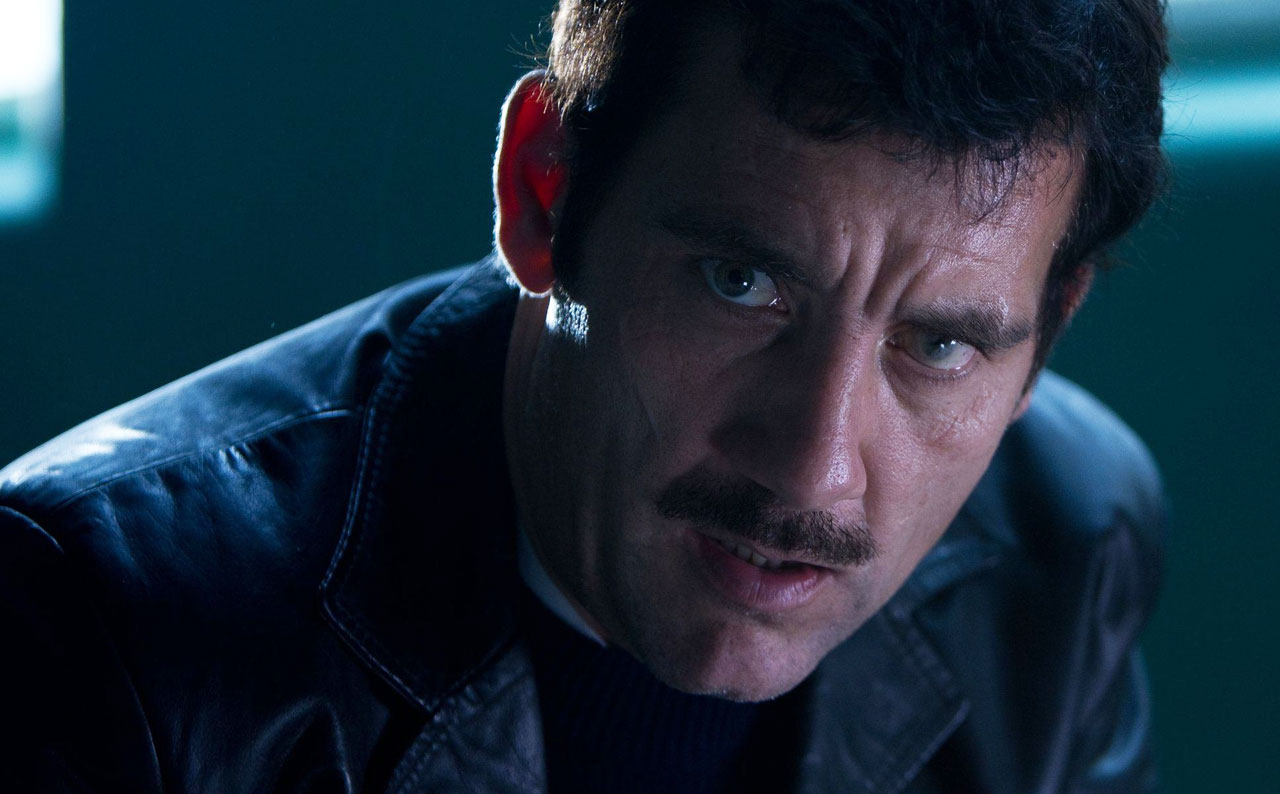
Clive Owen
Along with that, leads to Clive Owen, who isn't anymore defined as a character as to Statham or De Niro, yet Owen's character is perhaps more fun to watch because of his stiff upper lip, discolored eyes, bushy mustache and British accent. Owen also gets into multiple scuffles with Statham because, well that's the action oriented part of the movie. To say the action is bad wouldn't be appropriate. The action scenes are well executed and somewhat inventive but since the characters aren't defined well enough, it can be hard for a viewer to really appreciate who the protagonist is fighting. Attempting to help elevate the entertainment is Reinhold Heil and Johnny Klimek's score to the film. Their music does contain some pieces that are relative to the scene at hand but also contain frequent screeching violins and that may annoy listeners. It's not poorly made but it could use improvement. All of it is just average.

The entire crew to this film tries, from the actors to music department but the inconsistent plot lacks control and focus to what little it had to begin with - making just an average action film.

Points Earned -- > 5:10

Friday, March 7, 2014

Cop Land (1997) Review:

It is rare for people to step out of their comfort bubble. Even actors, for as successful as they are, they too suffer from breaking what they are comfortable at performing in. Here's a film that not every Stallone fan might see everyday - similarly to that of The Truman Show (1998) a year later with Jim Carrey. This particular role is so far in left field for Sylvester Stallone that it almost seems like the wrong choice. When in fact, it proves that Stallone by far can still back a punch even when he's not pulling a trigger every five minutes.

De Niro, Stallone and Keitel
Stallone plays Freddy Heflin, the Sheriff of a small town in New Jersey called Garrison. All seems fine and well with the town and Freddy himself until an incident occurs on the George Washington bridge that connects the New York and New Jersey police departments. After the problems arise, Freddy is challenged on his thoughts and beliefs that he had never considered before. This is where things get interesting and dangerous simultaneously. As time goes on, Heflin begins to dig and as he digs, he discovers that everything is not as he thought.

The writing is something to behold here. Directed and written by James Mangold, the same man behind Walk the Line (2005), 3:10 to Yuma (2007) and most recently The Wolverine (2013), created a screenplay that not only defies the normal typecasts that most actors have, but also adds depth to the main character of Freddy Helfin. If it weren't for any of the background given to Stallone's character, the audience would have no idea about Heflin's past and why he acts the way he is in the movie. When it is revealed though, it's a heartfelt story that contains a lot of emotion. Even more interesting is how little Stallone uses a gun. Not only is Stallone overweight but he barely even raises his voice - which is rare. The character of Heflin is very self contained and covers it up well.

Also playing a role that is out his usual casting role is Ray Liotta. For anyone who's not familiar, Liotta frequently plays scumbags and creeps. A good example of this is from Unlawful Entry (1992) and a bad example is from Turbulence (1997). But what wasn't seen coming was Liotta playing not only a supporting character but also a tactical one. There is one scene where he explains to Stallone's character how he should take on convicted felons and the advice he gives is extremely noteworthy. Liotta, you should be doing this more often my friend. Along with him are Harvey Keitel, Robert De Niro, future director Peter Berg, Robert Patrick, Noah Emmerich from The Truman Show (1998) (how coincidental!), and just for laughs Mr. RoboCop 3 (1993) himself, Robert John Burke. All the actors, even the ones not mentioned do a fine job.

Ray Liotta
What also makes this movie a fish out of water role for Sylvester Stallone is how human the story makes him look. This isn't a movie where Stallone mows down villains with a rapid-fire gun without taking any hits. Stallone's character is flawed and limited, humanizing him for the entire running time. That's something serious. Adding to the realism of the story is the cinematography where most scenes take place in the suburbs or along the shore outside the city. Finally what helps complete this feeling is Howard Shore's score to the film. It isn't the strongest of film music but it does contain some very simple themes that help bring out the emotion of various scenes. Overall a very strong drama / thriller.

It's not your regular Stallone shoot 'em up and that's fine. The entire cast in the movie performs great. The music isn't complex but is well supported by a strong cast and character driven story.

Points Earned --> 9:10

Friday, February 28, 2014

2 Fast 2 Furious (2003) Review:

With the help of Paul Walker and Vin Diesel's chemistry and some intense racing scenes, Rob Cohen's The Fast and the Furious (2001) was an instant hit among racing fans. And like most franchises with critical financial success, a sequel started to be put into the works. Similar to many other sequels, it was distributed two years later and it's difficult to say whether it pleased fans as much as the first one did. According to this site, this is lowest score the franchise has. It wasn't bad at all but it was missing a few elements of the first movie, which left a more entertaining feeling.

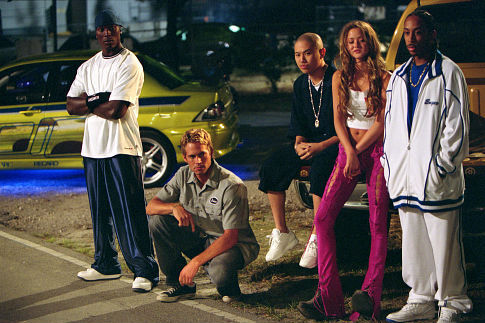
Paul Walker & his gang
The story follows ex-cop Brian O'Conner (Paul Walker) back to Miami from Los Angeles where he's enjoying his time racing street cars only to be pulled back by the authorities that he dropped. Heading the authorities is Agent Bilkins (Thom Barry) from the first installment and this time he wants O'Conner back one more time to take down a drug lord. And O'Conner can't refuse because he'd go to jail if he didn't accept. Plus, if the drug lord is turned in, all of his criminal charges will disappear. Why does this plot sound like Vin Diesel's xXx (2002) plot line (except it doesn't deal with a drug lord)? Speaking of which, why didn't Vin Diesel return? That's one thing that this franchise consistently needs. Paul Walker is the central character but Vin Diesel's presence was the icing on the cake.

Is was nice though that the writers kept the continuity together. The characters do reference material from the first film which shows the producers want to keep the story going and not divert completely from the original. But if there's one thing that comes into question, it is the concept of getting caught having a love interest in the business. This happened in the first movie and it blew O'Conners cover. Here the same thing happens in a similar way. You'd think the lesson was learned. Sigh. The new interest is Eva Mendes and she plays her character well enough. Accompanying O'Conner is Roman Pearce (Tyrese Gibson) an old friend who originally has a grudge for some of his own issues. Even with this though, their chemistry works well.

Cole Hauser
Playing the drug lord is another interesting actor - Cole Hauser. He has a very smooth deep voice and resembles a very young Tom Berenger. He's also able to make his character seem dangerous enough to hurt someone. That's it for characters. The music produced by David Arnold of Stargate (1994) sounded better than BT's score from the first film but it wasn't evident enough. Barely heard a thing. As for action scenes, the racing is still fast paced and contains much of the same film making as the first, which kept the feeling the same. Other than that, the story feels the same as before but without Vin Diesel.

It's not a bad follow up to the first movie, but not casting Vin Diesel wasn't smart - it's like missing a piece to a puzzle. Other than that, it's still a decent watch with better music and well-staged action sequences.

Points Earned --> 6:10

Thursday, February 27, 2014

Duplex (2003) Review:

Ben Stiller is one of Hollywood's most talented comedic actors and has proven in other films that he has the ability to make some really great and funny films. But I am extremely confused to how this idea for a story ever sounded hilarious. Never have I witnessed such mean spiritedness to such likeable characters, and to make matters worse have those likeable characters stoop to a level that is degrading enough that it crosses the line between what is funny and what borders on the edge of lunacy. And to top it off, Danny DeVito directed it; this comedy should've worked.

The couple and the old woman
The story is about a young happy couple (Ben Stiller & Drew Barrymore) who decide to buy a bottom floor to a duplex. While on the top floor is an elderly woman who seems fine enough to live with. Hah! It's  a shame to see this movie come to full circle, it's so sad to the point where you regret knowing how things will turn out in the future. Just why? How is it funny? What were they thinking? The only credit I'll give to this movie is for the actors attempting to make the movie funny. That's it. The main actors try and so do some other less important actors but it feels so difficult to accept how low brow the comedy became.

The problem is once the couple has moved in, the old woman on the top floor is everything nobody wanted in their life,...EVER. She consistently asks for help on impossible tasks, forgetting names, playing the television during all hours of the night. You know, something every old person does? It's understandable that stereotypes can be funny but it doesn't work here. All this will do is annoy viewers and feel just as restless as the couple on screen dealing with the same senselessness. And it doesn't get any better. In fact, the comedic elements become so derivative, that at a point in the movie it qualifies the subject of MURDER as an ok thing to do. What? Even Ben Stiller's directed film, The Cable Guy (1996) didn't drop to those immoral levels.

This cop is so gullible!
And with all the time and money spent on trying to rid the duplex of this old woman, the couple could've moved out a long time ago and found a much more suitable place to live. Instead, things become so out of control that it would make the viewer question, "Who in the world would want to live here now?". It's baffling. Also, even though the actors play their characters the best they can, the logic and reasoning behind some of the situations are absolutely absurd - especially if one person is making an accusation against two people and they both witnessed what happened and the situation being described is nothing like the one they took part in. Who is this thickheaded to be convinced of it? How is it believable? How? How? How? Other than this, the production is fine and David Newman's score is ok although it's just another unreleased set of music. It tries but fails badly.

What seems to be a decent comedy turns out to be an extremely incompetent mean spirited story. It also could send out the wrong message about senior citizens.

Points Earned --> 2:10